

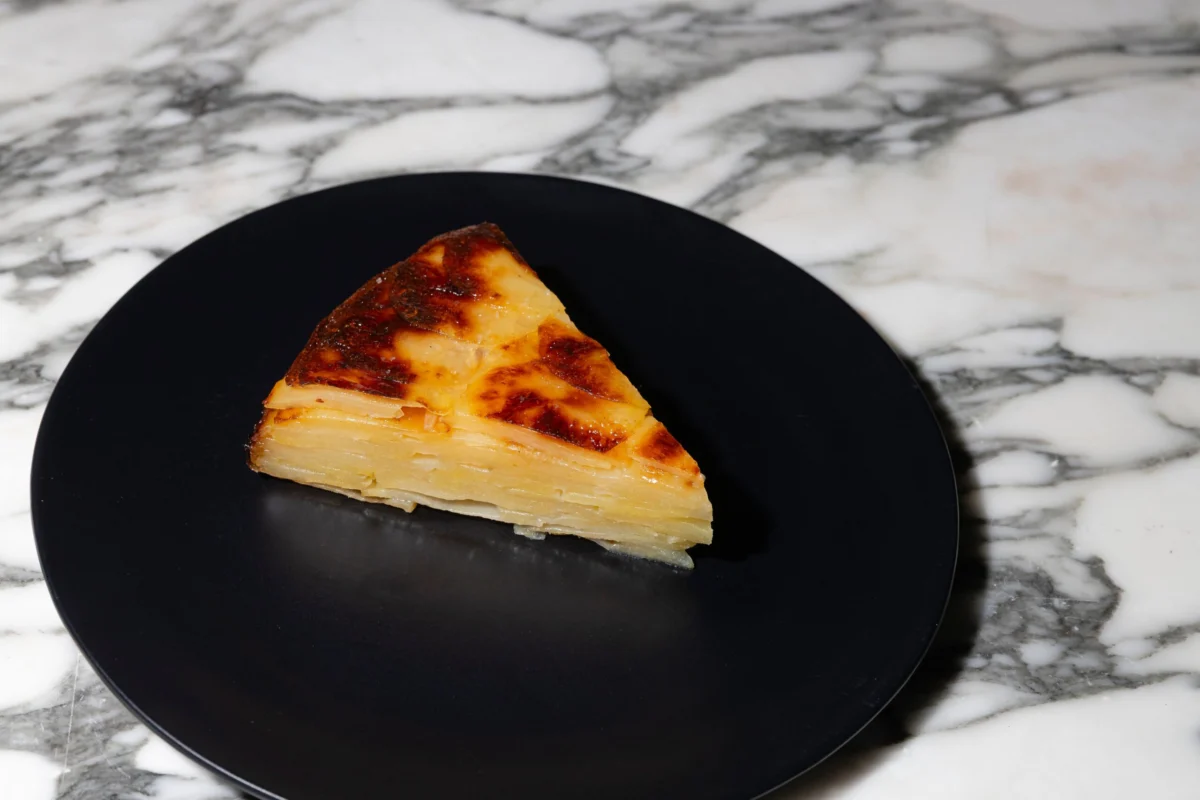
Pommes Anna stands as a remarkable testament to the enduring power of French haute cuisine, a dish that, despite its humble components, achieves a dramatic and sophisticated presence on the plate. This classic French potato cake, composed solely of thinly sliced potatoes and butter, transforms these basic ingredients into an architectural marvel. Baked meticulously in a skillet, it is then inverted to reveal a striking, graphic spiral of golden-brown potato layers – a visual signature that has captivated diners and challenged chefs for over a century. Chef Alexia Duchêne, at the helm of Le Chêne in New York City, exemplifies this commitment to classicism, adhering to the traditional method of layering paper-thin potato slices with generous amounts of butter. Her rendition, celebrated for its perfect balance, yields a cake that is exquisitely crisp on the exterior while maintaining a tender, yielding interior.
The Illustrious Genesis: Tracing Pommes Anna’s 19th-Century Parisian Roots
The history of Pommes Anna is as rich and layered as the dish itself, deeply embedded in the gilded age of 19th-century Parisian gastronomy. The dish is widely attributed to Adolphe Dugléré, one of the most celebrated chefs of his era, who served as the head chef at the legendary Café Anglais in Paris. Established in 1802, the Café Anglais became synonymous with refined dining and innovative culinary creations, catering to an elite clientele of aristocrats, artists, and courtesans. It was within this hallowed culinary institution, during the Second French Empire, that Dugléré is believed to have conceived Pommes Anna.
The precise identity of "Anna," the dish’s namesake, remains a subject of romantic speculation. The most popular theory links it to Anna Deslions, a renowned courtesan and actress of the era, celebrated for her beauty, wit, and magnetic presence. Another prominent theory suggests the dish was named after Anna Judic, a celebrated French operetta star. Regardless of the exact muse, the naming convention itself speaks volumes about the culinary landscape of the time, where dishes were often christened in honor of prominent figures, adding a layer of intrigue and glamour to the dining experience.
The mid-19th century was a pivotal period for French cuisine. It marked the transition from the elaborate, often heavy, culinary styles of the past to a more refined approach championed by figures like Marie-Antoine Carême and later Auguste Escoffier. This era emphasized precision, presentation, and the elevation of simple ingredients through masterful technique. Pommes Anna, with its elegant simplicity and dramatic visual appeal, perfectly encapsulated these emerging principles, quickly earning its place as a staple of haute cuisine. It represented a departure from more rustic potato preparations, showcasing how careful execution and quality ingredients could transform the humble potato into a dish worthy of the most exclusive tables.
Deconstructing the Masterpiece: Ingredients, Technique, and Culinary Science
The apparent simplicity of Pommes Anna belies the exacting technique and profound understanding of ingredients required to execute it flawlessly. At its core, the dish relies on three fundamental elements: potatoes, butter, and salt, each playing a crucial role in achieving the desired texture and flavor profile.
The Potatoes: The choice of potato is paramount. Large Yukon Gold potatoes are often preferred, as specified in Chef Duchêne’s recipe. Yukon Golds are waxy-starchy hybrids, offering a good balance of moisture and starch. This characteristic allows them to hold their shape when sliced thinly, yet become tender and creamy when cooked, without disintegrating. Russet potatoes, while starchier, can also be used, though they might yield a slightly drier result. The critical step is slicing the potatoes to a uniform, paper-thin thickness – typically 1.5 to 2 millimeters. This is where a mandoline slicer becomes an indispensable tool. Consistency in thickness ensures even cooking, allowing all layers to crisp and soften simultaneously. Any irregularity can lead to some layers being undercooked and firm, while others are overcooked and mushy. Peeling the potatoes is standard practice, ensuring a refined presentation and texture.
The Butter: Butter is not merely a cooking medium in Pommes Anna; it is an integral ingredient that contributes immensely to the dish’s flavor, texture, and visual appeal. Chef Duchêne’s recipe calls for two types of butter: clarified butter and unsalted butter.
- Clarified Butter (Ghee): This is butterfat rendered from regular butter, with water and milk solids removed. Its high smoke point (around 450°F or 232°C) is crucial for preventing burning during the long baking process, especially when the potatoes are pressed and browned. Clarified butter also provides a pure, intense buttery flavor without the risk of the milk solids browning too quickly and imparting a bitter taste. It acts as the primary fat for cooking and crisping the initial layers.
- Unsalted Butter: Sliced unsalted butter is strategically layered between the potato slices. As it melts, it permeates the layers, basting the potatoes from within, contributing moisture, richness, and aiding in the caramelization process. The significant quantity of butter – often exceeding a full stick for a single cake – is not excessive; it is fundamental to achieving the dish’s characteristic crispness and deeply savory flavor. The fat lubricates the potato layers, preventing sticking, and conducts heat efficiently, ensuring even cooking.
Seasoning: Kosher salt is the primary seasoning. Its larger crystals provide a more controlled salinity and adherence to the potato slices. While some chefs might add a touch of freshly ground black pepper or a whisper of nutmeg, the prevailing philosophy for Pommes Anna is restraint, allowing the inherent flavors of the potato and the richness of the butter to shine through unadulterated.
The Skillet and the Technique: Traditionally, a cast-iron or copper skillet with sloped sides is used, ideally one that can withstand high oven temperatures and has a well-seasoned, non-stick surface. Copper pans are prized for their exceptional heat conductivity, ensuring even browning. The process begins by generously coating the bottom and sides of the skillet with clarified butter. The potato slices are then meticulously arranged in a concentric, overlapping spiral pattern, starting from the center and working outwards, creating a visually appealing rosette. Each layer is seasoned with salt and dotted with slices of unsalted butter before the next layer of potatoes is added. This layering continues until all the potatoes are used, forming a compact cake.
Once assembled, the cake is cooked on the stovetop over medium heat for a period, allowing the bottom layer to crisp and brown. It is then transferred to a hot oven (often around 400°F or 200°C) and baked. A critical step involves placing a weighted lid or another heavy pan directly on top of the potatoes during baking. This pressing action serves multiple purposes: it compresses the layers, ensuring they fuse together into a cohesive cake; it expels excess moisture, promoting crispness; and it maximizes contact between the potatoes and the hot butter, facilitating uniform browning and caramelization. The total cooking time can range from 45 minutes to over an hour, depending on the thickness of the cake and the oven temperature.
The dramatic climax of preparing Pommes Anna is the "turning out." Once baked to perfection, the skillet is carefully inverted onto a serving plate, revealing the stunning, golden-brown spiral crust – the "graphic spiral of spuds" mentioned in the original description. This moment, often performed tableside in grand restaurants, transforms a humble potato preparation into a theatrical culinary event.
Chef Alexia Duchêne’s Homage to Tradition at Le Chêne
In the vibrant culinary landscape of New York City, Chef Alexia Duchêne’s Le Chêne stands out for its dedication to classic French cuisine, executed with a contemporary sensibility. Her commitment to a "classic" rendition of Pommes Anna is not merely an adherence to historical recipes but a profound respect for the foundational techniques and principles that define French gastronomy.
At Le Chêne, Duchêne’s approach to Pommes Anna embodies the philosophy that true culinary innovation often lies in perfecting the classics. By layering paper-thin slices of potatoes with abundant butter, she ensures that every component contributes to the dish’s ultimate success. This meticulous process results in the quintessential Pommes Anna: a golden, crisp exterior that shatters delicately with each forkful, giving way to a rich, tender, and intensely flavorful interior. Her focus on ingredient quality—selecting premium Yukon Gold potatoes and high-grade butter—underscores the belief that exceptional raw materials are the bedrock of exceptional dishes.
Le Chêne, under Duchêne’s guidance, positions itself as a bastion of authentic French flavors, where dishes like Pommes Anna are not just served but celebrated. Including such a technically demanding and historically significant dish on the menu reflects a kitchen’s confidence and mastery. It signals to diners a commitment to culinary heritage and a promise of a truly authentic experience. For Chef Duchêne, featuring Pommes Anna is likely a nod to the timeless elegance and sophisticated simplicity that defines the best of French cooking, showcasing how humble ingredients can be elevated to extraordinary heights through precision and passion.
The Enduring Legacy and Broader Culinary Impact
Pommes Anna is more than just a potato dish; it is a culinary icon, a benchmark of technical proficiency, and a symbol of French gastronomic excellence. Its influence extends far beyond the dining table, permeating culinary education and inspiring countless chefs.
A Pillar of Culinary Education: In culinary schools worldwide, preparing Pommes Anna is often a foundational exercise. It rigorously tests a student’s knife skills (for uniform slicing), patience (for meticulous layering), understanding of fat and heat dynamics, and precision in timing. Mastering Pommes Anna is considered a rite of passage, demonstrating an apprentice’s readiness to tackle more complex classical preparations. The dish teaches fundamental principles of ingredient transformation through careful technique, emphasizing that even the simplest ingredients demand respect and skillful handling.
Symbol of Elegance and Transformation: The dish embodies the French culinary philosophy of elevating basic ingredients through technique and presentation. It takes the humble potato and transforms it into a dish of unparalleled elegance and visual drama. This concept of sublimation is central to French cuisine, where everyday fare is rendered extraordinary through artistry and precision.
Influence on Potato Preparations: While unique, Pommes Anna exists within a broader family of classic potato dishes, each showcasing different techniques and textures. It stands distinct from the creamy, gratinated layers of Gratin Dauphinois, the finely shredded and pan-fried Rösti (a Swiss specialty with French influences), or the precisely turned (tourné) potatoes served alongside many roasts. Pommes Anna’s distinct character lies in its tight, compressed layers, its crisp, singular crust, and its minimal seasoning, allowing the pure flavor of potato and butter to dominate. It has inspired variations and simplified versions globally, but the original remains the gold standard.
Cultural Significance: Pommes Anna has found its way into countless classic cookbooks, culinary encyclopedias, and historical culinary texts. Its mention often conjures images of opulent 19th-century Parisian dining, cementing its place in the collective consciousness as a quintessential French dish. It represents a period of culinary innovation and refinement that continues to shape global gastronomy.
Beyond the Plate: Supporting Data and Implications
While primarily a culinary article, a brief look at supporting data can illuminate aspects of Pommes Anna’s practical implications.
Nutritional Profile: Given its generous use of butter, Pommes Anna is a calorically dense dish, rich in fats. A typical serving can contain significant calories and saturated fat, making it a luxurious indulgence rather than an everyday staple. However, potatoes themselves offer essential nutrients, including potassium, vitamin C, and dietary fiber. The dish is a testament to the era it originated in, where richness and satiety were highly prized aspects of fine dining.
Ingredient Cost and Accessibility: The core ingredients – potatoes and butter – are relatively inexpensive and widely accessible. However, the sheer volume of high-quality butter required, particularly clarified butter, can elevate the cost of preparation. The investment, therefore, is more in time, skill, and careful execution than in exotic ingredients. This makes it an appealing dish for home cooks seeking to elevate their skills, as well as for professional kitchens.
Sustainability: Sourcing quality potatoes and dairy products responsibly is a growing consideration in modern gastronomy. Chefs like Alexia Duchêne likely prioritize suppliers who adhere to sustainable farming practices, ensuring that even classic dishes align with contemporary ethical and environmental standards.
Expert Perspectives and Enduring Allure
Culinary critics and leading chefs consistently laud Pommes Anna as a masterpiece of balance and execution. "It’s a litmus test for a chef’s precision and understanding of basic ingredients," noted one prominent food writer. "To achieve that perfect golden crust and tender interior with just potatoes and butter—it’s truly an art form." The dish’s enduring appeal lies in its ability to evoke a sense of comforting familiarity while simultaneously offering sophisticated elegance. It is a dish that transcends trends, remaining perennially relevant because its fundamental principles of flavor and texture are timeless. Its visual drama, too, ensures its continued popularity in an age where food aesthetics are increasingly valued.
Conclusion
Pommes Anna stands as a magnificent emblem of French culinary heritage, a dish that transforms simple ingredients into an extraordinary gastronomic experience through meticulous technique and unwavering precision. From its origins in the grand dining rooms of 19th-century Paris to its present-day rendition by chefs like Alexia Duchêne at Le Chêne, it continues to captivate with its dramatic spiral, crisp exterior, and tender, buttery interior. It is a dish that not only delights the palate but also tells a story of culinary evolution, embodying the enduring principles of French haute cuisine: elegance, precision, and the profound art of elevating the humble to the sublime. As long as there are chefs dedicated to mastering classical techniques and diners who appreciate the beauty of perfectly executed simplicity, Pommes Anna will undoubtedly retain its esteemed place as a cornerstone of the world’s most revered culinary traditions.
