

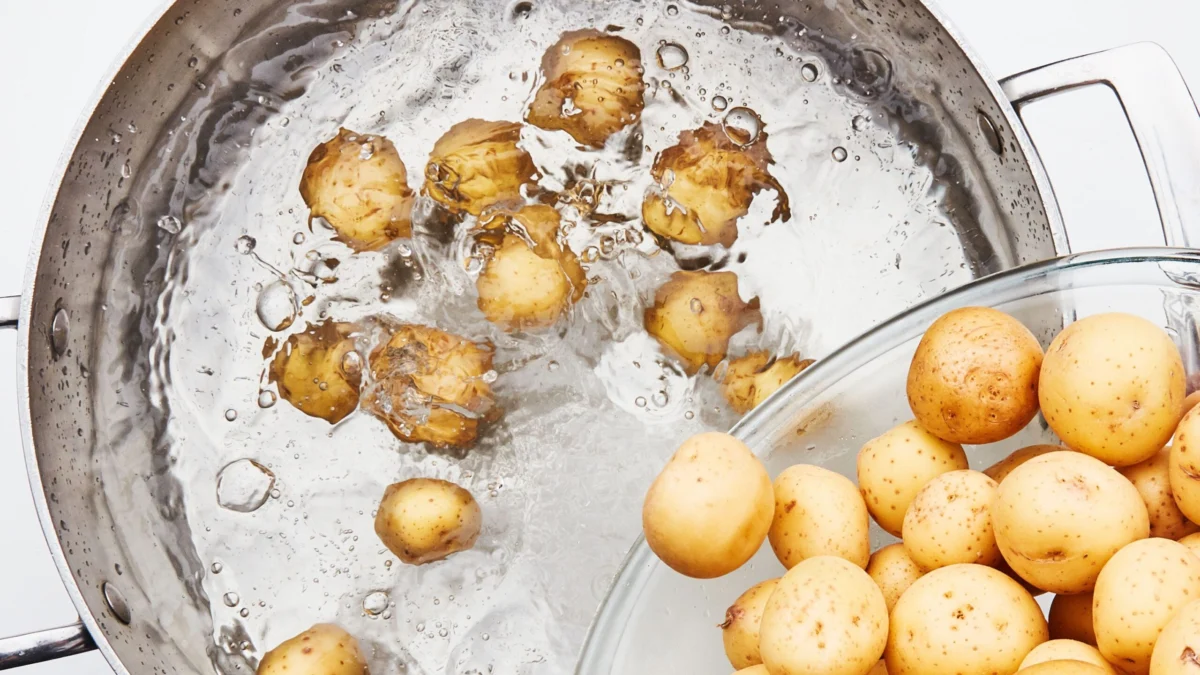
The seemingly simple act of boiling potatoes is, in fact, a foundational culinary technique that underpins countless dishes worldwide, from rustic mashed potatoes to delicate gnocchi and vibrant potato salads. While many recipes begin with the straightforward instruction, "Boil the potatoes," this seemingly innocuous directive often belies a nuanced process fraught with questions: Should they begin in cold or boiling water? How much salt is truly necessary? And what is the precise duration for optimal tenderness? Navigating these variables is crucial for transforming a raw tuber into a perfectly cooked component, ready to absorb flavors and contribute its unique texture to a dish. This guide delves into the scientific principles and established best practices for boiling potatoes, ensuring consistently excellent results for home cooks and seasoned chefs alike.
The Crucial Cold Start: A Principle of Even Cooking
One of the most critical, yet frequently overlooked, tenets of boiling potatoes is to always begin the cooking process with cold water. This fundamental principle is not merely a suggestion but a scientifically sound method for achieving uniform tenderness throughout the potato. When potatoes, particularly larger specimens or those destined for mashing, are plunged directly into already boiling water, the rapid application of intense heat causes the exterior layers to cook and soften much faster than the dense interior. This differential cooking rate leads to a common culinary frustration: an overcooked, mushy exterior juxtaposed with a firm, sometimes even raw, core.
The physics behind this phenomenon relates to thermal conductivity and heat transfer. Potatoes are dense vegetables, and their cellular structure requires time for heat to penetrate evenly. By starting them in cold water and gradually bringing the temperature up to a boil, the potatoes and the surrounding water heat in unison. This allows for a gentle, progressive transfer of heat from the water to the potato’s surface, and then slowly into its core. The result is a potato that cooks evenly from the outside in, ensuring that the starch granules gelatinize and the cell walls break down uniformly, leading to a consistently tender texture from edge to center. Food science experts, such as Dr. Kenji López-Alt, often emphasize this gradual heating process as essential for preventing textural inconsistencies in dense foods.
Strategic Salting: Infusing Flavor from Within
Beyond the correct water temperature, the strategic application of salt during the boiling process is equally paramount for flavor development. Potatoes, being dense and absorbent, possess a remarkable capacity to take on seasoning from their cooking liquid. Seasoning only the exterior after boiling, while still beneficial, cannot replicate the deep, integrated flavor achieved when salt penetrates the potato during cooking.
The mechanism at play here is osmosis. When potatoes are boiled in well-salted water, the higher concentration of salt ions outside the potato drives the movement of water and dissolved salt into the potato’s cells, balancing the solute concentration. This process ensures that the potato is seasoned from its very core, rather than just superficially. For a standard volume of approximately three quarts of cold water, culinary authorities recommend incorporating a significant amount of kosher salt – typically one cup of Diamond Crystal kosher salt or a half-cup of Morton kosher salt. The difference in quantity is due to the varying crystal structures and densities of these popular brands; Morton salt is denser and therefore more potent by volume. While a substantial portion of this salt will be drained away with the cooking water, the concentrated saline bath provides the ideal environment for the potatoes to absorb sufficient seasoning as they cook. This internal seasoning becomes a foundational layer of flavor, enhancing any subsequent dressings or additions to the dish.
Precision in Simmering: Achieving Optimal Tenderness
Once the potatoes are submerged in cold, well-salted water, the next step involves bringing the water to a rolling boil. This initial high heat rapidly elevates the water temperature. However, maintaining a vigorous boil throughout the entire cooking duration is generally counterproductive. A hard boil can agitate the potatoes excessively, causing their delicate outer layers to break down prematurely and become mushy, particularly if they are starchy varieties or have been cut into smaller pieces.
Instead, once the water reaches a boil, the heat should be reduced to a gentle simmer. A simmer, characterized by small, continuous bubbles breaking the surface, maintains a consistent cooking temperature without the aggressive movement. This controlled environment allows the potatoes to continue cooking through gently and evenly, preventing damage to their structure while ensuring thorough heat penetration. The exact duration of simmering is highly variable, influenced primarily by the potato’s size, its specific variety, and its intended culinary application. Cooking times can range from a mere 8-15 minutes for small, baby potatoes destined for smashing or quick salads, to 30-40 minutes or more for large chunks of russets being prepared for a creamy mashed potato dish. Monitoring the potatoes visually and tactilely, rather than relying solely on a timer, is crucial for pinpointing the moment of perfect doneness.
Determining Doneness: The "Fork-Tender" Standard and Its Nuances
The universal indicator for properly boiled potatoes is the "fork-tender" test. This involves piercing a potato with a fork, cake tester, or paring knife to assess its internal resistance. However, the precise degree of tenderness required varies significantly depending on the final dish. A potato intended for mashing will require a different level of softness than one destined for a potato salad where structural integrity is key.
-
For Mashed Potatoes, Purées, and Gnocchi: When preparing potatoes for dishes that require a completely smooth, uniform texture, such as mashed potatoes, purées, or gnocchi, the potatoes should be cooked until they are thoroughly tender throughout. A knife or cake tester should slide into the potato with virtually no resistance and, crucially, slide out just as easily. There should be no firm or crunchy spots whatsoever, indicating that the starch granules have fully gelatinized and the cellular structure has sufficiently broken down, making them ideal for ricing, mashing, or puréeing into a creamy consistency. Overcooking slightly here is less detrimental than undercooking, as the potato’s breakdown is desired.
-
For Potato Salad and Other Dishes Where Potatoes Stay Intact: For preparations like potato salad, niçoise salad, or roasted potato dishes where the individual pieces need to retain their shape, a different level of doneness is sought. Here, a knife or tester should slide in easily, indicating tenderness, but meet a slight, discernible resistance upon withdrawal. This subtle resistance signifies that the potato is cooked through but its cellular structure remains sufficiently intact to prevent it from crumbling or becoming mushy when tossed with dressings or other ingredients. Achieving this precise balance requires careful monitoring and often means removing the potatoes from the heat just as they reach this stage of al dente tenderness.
Varietal Wisdom: Selecting the Right Potato for the Task
While nearly any potato can be boiled, selecting the appropriate variety is a cornerstone of achieving optimal texture and flavor for a specific dish. Potatoes are broadly categorized by their starch content, which directly influences how they behave when cooked.
-
Starchy Potatoes: The Fluffy Foundation: Varieties such as Russet (Idaho), King Edward, and Maris Piper are characterized by their high starch content and relatively low moisture. When boiled, their starch granules swell significantly, and their cell walls break down readily, resulting in a light, fluffy, and somewhat crumbly texture. This makes them the quintessential choice for mashed potatoes, baked potatoes, and French fries, where a dry, fluffy interior is desired. Their tendency to absorb liquids makes them excellent for incorporating butter, milk, or cream into mashed dishes. However, their delicate structure also makes them prone to becoming waterlogged and falling apart if overcooked, necessitating careful monitoring. Culinary historians note that these varieties became particularly popular in North America due to their versatility and suitability for deep-frying and mashing.
-
Waxy Potatoes: The Firm and Fulfilling Choice: New potatoes, Red Bliss, Fingerlings, Charlotte, and kipfler are examples of waxy varieties. These potatoes have a lower starch content and higher moisture, along with a firm cellular structure that holds its shape exceptionally well after cooking. When boiled, they maintain their integrity, making them ideal for dishes where distinct, intact pieces are desired, such as potato salads, gratins, roasted potatoes, and casseroles. Their firm texture also means they are less likely to absorb excess water and become mushy, offering a more robust mouthfeel. The skins of waxy potatoes are often thin and delicate, making them suitable for boiling unpeeled after a thorough scrub, adding color and nutrients.
-
All-Purpose Potatoes: The Versatile Performer: Yukon Gold potatoes stand out as a prime example of an all-purpose variety, bridging the gap between starchy and waxy types. They possess enough starch to yield a wonderfully creamy mash, yet retain sufficient structure to hold their shape in salads or roasted preparations. Their distinctive buttery flavor and golden hue make them a favorite in professional kitchens and among home cooks for their remarkable versatility. Yukon Golds are often cited by chefs as the ideal potato for ultra-creamy, buttery mashed potatoes, striking a perfect balance that makes them a reliable choice for nearly any potato-centric dish. This adaptability has contributed to their widespread popularity since their development in Canada in the 1960s.
Preparation Ponderings: To Peel or Not to Peel, To Cut or Not to Cut
Beyond selecting the right variety, how potatoes are prepared before boiling significantly impacts the final outcome.
-
The Role of the Skin: Nutrition and Texture: Whether to peel potatoes before boiling depends largely on the potato variety and the intended dish. Thin-skinned potatoes such as Yukon Golds, red potatoes, and fingerlings can often be boiled with their skins on after a thorough scrub. The skin contributes additional nutrients, fiber, and a rustic aesthetic, particularly in dishes like smashed potatoes or some potato salads. For thicker-skinned varieties like Russets, peeling is generally recommended, especially when an exceptionally smooth final texture is desired, as in classic mashed potatoes or purées. The skins of these varieties can be tough and detract from the desired consistency.
-
Uniformity in Cutting: A Key to Consistency: Large potatoes, regardless of their variety, should always be cut into evenly sized pieces before boiling. Attempting to boil a whole large Russet potato, for instance, will invariably lead to an overcooked, mushy exterior long before the dense center has reached tenderness. The exact dimensions of the cuts are less critical than their consistency. Cutting pieces roughly the same size ensures that they will cook at approximately the same rate and reach doneness simultaneously, preventing some pieces from being undercooked while others are overcooked. Small potatoes, such as baby potatoes or fingerlings, can generally be boiled whole due to their smaller overall mass and more uniform heat penetration.
The Perils of Overcooking: Safeguarding Potato Integrity
While undercooked potatoes are undeniably unappetizing, overcooking poses its own set of problems. Cook potatoes for too long, and they can become waterlogged, mushy, and even start to disintegrate. This is particularly true for high-starch varieties like Russets, whose cell walls break down more easily. Waxy varieties tend to be more forgiving in this regard, holding their shape better even with slightly extended cooking times.
- Understanding Cellular Breakdown: The process of cooking involves the breakdown of pectin, a polysaccharide that acts as a structural glue in plant cell walls, and the gelatinization of starch granules. Overcooking accelerates this breakdown beyond the desired point, leading to excessive water absorption and a loss of structural integrity. The result is a potato that is unpleasantly watery, lacking in texture, and often bland due to the dilution of its inherent flavor. Professional chefs and food scientists consistently advise initiating checks for doneness at the lower end of the estimated cooking time range, relying on tactile assessment rather than rigid adherence to a timer, to prevent this common pitfall.
Historical Context and Culinary Significance: The Humble Potato’s Global Journey
The potato (Solanum tuberosum) has a rich and transformative history, originating in the Andes Mountains of South America, where it was cultivated by indigenous populations for millennia. Its introduction to Europe in the 16th century by Spanish explorers initially met with skepticism, often being viewed with suspicion or as animal fodder. However, over centuries, its remarkable caloric density, nutritional value, and adaptability to various climates propelled it to become a global staple.
The widespread adoption of the potato played a crucial role in preventing famines and supporting population growth across Europe and beyond, fundamentally altering dietary habits and agricultural practices. Its culinary versatility, showcased through myriad preparation methods—from boiling and baking to frying and mashing—underscores its enduring importance. Boiling, as a primary cooking method, has been central to this journey, transforming a raw, inedible tuber into a foundational component of countless national cuisines. From Irish colcannon to French aligot, German kartoffelsalat, and countless other dishes, the boiled potato remains a testament to its profound impact on human sustenance and culinary tradition. The principles of boiling, therefore, are not merely about cooking a vegetable but about respecting a foodstuff with deep historical and cultural resonance.
Expert Perspectives on Mastering the Boil
Leading culinary educators and food scientists consistently reiterate the importance of mastering basic techniques like boiling potatoes. "The foundation of great cooking often lies in perfectly executed simple steps," notes Chef Antoine Dubois, head of culinary arts at a prestigious European institute. "Beginning potatoes in cold, well-salted water isn’t just a tradition; it’s a scientific necessity for achieving optimal texture and flavor penetration. It ensures that every cell in the potato is equally respected by the heat."
Dr. Eleanor Vance, a food chemist specializing in vegetable physiology, adds, "The osmotic pressure created by a properly salted cooking bath is crucial. It’s not just about taste; it’s about altering the water activity within the potato, which can even impact its susceptibility to enzymatic browning and overall shelf life after cooking." She emphasizes the distinction between salt types, explaining, "The purity and crystal structure of kosher salt, particularly Diamond Crystal, make it ideal for this application, dissolving quickly and evenly without imparting unwanted mineral flavors often found in less refined salts." These expert insights underscore that seemingly minor details in the boiling process are underpinned by significant scientific principles that collectively contribute to culinary excellence.
Conclusion: Elevating Everyday Dishes Through Foundational Techniques
The humble boiled potato, a staple on dinner tables worldwide, transcends its simple description when approached with intentionality and an understanding of foundational culinary science. By adhering to the principles of starting potatoes in cold, generously salted water, maintaining a gentle simmer, and precisely determining doneness based on the intended dish, cooks can consistently achieve potatoes that are perfectly tender, deeply seasoned, and structurally ideal for any application. This mastery of a seemingly basic technique elevates not just the potato itself, but the countless dishes it contributes to, affirming that even the simplest instructions in a recipe hold layers of wisdom waiting to be uncovered. As culinary landscapes continue to evolve, the foundational art of boiling potatoes remains a timeless testament to the power of precision and understanding in the kitchen, proving that true culinary perfection often begins with the most fundamental steps.
