

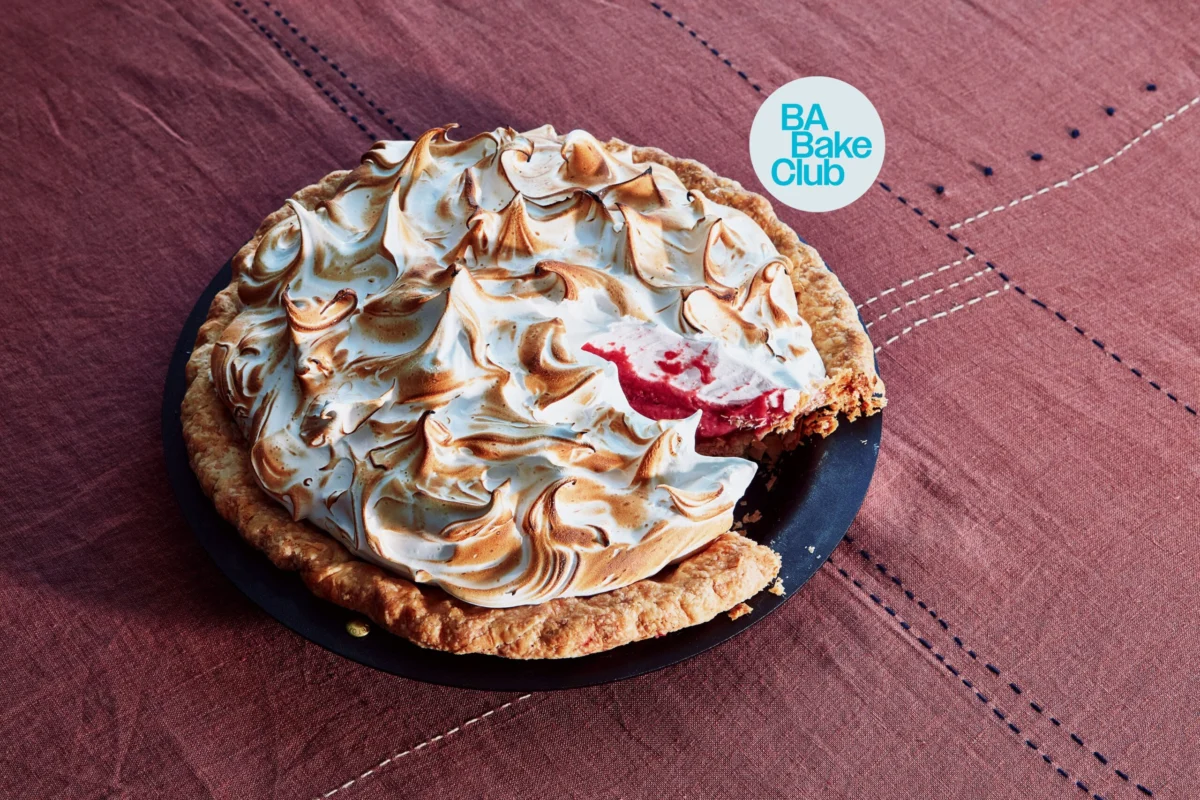
The culinary landscape is abuzz with the introduction of Bon Appétit’s latest feature for its acclaimed Bake Club: a sophisticated Cranberry Meringue Pie designed to elevate holiday dessert tables. This innovative creation, distinguished by its "big, billowing cloud of meringue" and a vibrant, tart cranberry curd, represents a strategic reimagining of the classic lemon meringue pie, imbued with seasonal flavors. The recipe, meticulously developed by the Bon Appétit Test Kitchen, emphasizes precision in preparation and a deep understanding of flavor dynamics, positioning it as a centerpiece for festive gatherings and a significant undertaking for home bakers seeking to refine their skills.
Anatomy of a Holiday Masterpiece: Deconstructing the Cranberry Meringue Pie
At the heart of this seasonal offering lies a meticulously crafted balance of contrasting elements. The towering meringue, a hallmark of its visual appeal, serves not merely as a decorative cap but as a crucial counterpoint to the intense tartness of the crimson cranberry curd beneath. This curd, described as "made even more sour with a generous amount of lime juice," is the flavor engine of the pie, delivering a bright, acidic punch that prevents the dessert from becoming overly sweet. The inclusion of lime juice is a deliberate culinary choice, leveraging citrus’s ability to enhance and balance the natural astringency of cranberries, creating a multi-layered taste experience that resonates with sophisticated palates.
The foundation of this impressive dessert is Bon Appétit’s own "Perfect Pie Crust." This recommendation is not arbitrary; a robust yet flaky base is paramount for supporting the substantial filling and meringue without succumbing to sogginess or structural failure. The crust recipe itself is a testament to thoughtful ingredient selection, incorporating all-purpose flour, kosher salt, baking powder, chilled cream cheese, and chilled unsalted butter. The cream cheese, often a less conventional addition to pie crusts, contributes to a tender, more pliable dough, while the precise layering of chilled butter is critical for achieving the desired flaky texture upon baking. This emphasis on a high-quality crust underscores the Test Kitchen’s commitment to foundational excellence, recognizing that even the most exquisite filling requires an equally impressive vessel.
The Strategic Imperative of Preparation: A Timeline for Culinary Success
A critical instruction accompanying the recipe highlights the necessity of starting the pie "the day before you plan to serve it." This directive is not a suggestion but a fundamental requirement for the successful execution of the Cranberry Meringue Pie. The cranberry curd, like many fruit-based custards, relies on a prolonged chilling period—several hours, specifically—to achieve its ideal set. This allows the various components within the curd, including the eggs, cornstarch, and butter, to properly emulsify and stabilize, transforming it from a liquid state into a "sliceable texture."
Ignoring this crucial chilling period carries direct consequences. As the recipe explicitly warns, cutting into the pie prematurely will result in the curd running onto the plate, creating a "messy—albeit delicious—slice." This speaks to a broader principle in baking: patience is an ingredient as vital as flour or sugar. The molecular structure of starches and proteins within the curd requires time and refrigeration to fully interlink and solidify, contributing to both the aesthetic presentation and the textural integrity of the final product. For home bakers, this timeline instills discipline and encourages forward planning, characteristic traits of accomplished culinary practitioners.
The Bon Appétit Bake Club: Cultivating a Community of Curious Bakers
The Cranberry Meringue Pie is presented as a featured recipe within the Bon Appétit Bake Club, a dynamic online community spearheaded by senior Test Kitchen editors Jesse Szewczyk and Shilpa Uskokovic. The Bake Club concept extends beyond merely sharing recipes; it fosters an interactive environment where members are encouraged to "bake and learn with us." This initiative represents a significant trend in digital culinary publishing, moving beyond static content to create engaging, participatory experiences.
The club provides a platform for members to "ask questions, share pics, listen to our podcast, and lots more," with a dedicated group chat hosted on Substack. This multi-channel approach leverages various digital tools to build a robust community around the shared passion for baking. Szewczyk and Uskokovic, as the editorial guides, play a pivotal role in demystifying complex techniques, explaining the scientific principles behind successful baking, and fostering a supportive atmosphere for both novice and experienced bakers. Their monthly selection of "must-make recipes" serves as a curriculum, guiding members through diverse baking challenges and expanding their culinary repertoire. The Bake Club, therefore, functions as both an educational resource and a social hub, reflecting the growing demand for interactive, community-driven content in the digital age.
Essential Tools and Techniques: The Indispensable Bench Scraper
Beyond the ingredients and methodology, the Bon Appétit Test Kitchen frequently highlights essential tools that streamline the baking process. For the Cranberry Meringue Pie, and indeed for any endeavor involving dough, the metal bench scraper is championed as an indispensable utensil. The article specifically endorses a model from Gestura, underscoring the importance of quality tools in achieving professional results at home.
The utility of a bench scraper extends far beyond its name suggests. As detailed, it is invaluable for tasks such as "cut butter, fold dough and nudge it into shape, transfer it from counter to plastic wrap, trim edges, cut strips, and, sure, scrape flour off your counter." This versatility makes it a cornerstone in any baker’s arsenal, demonstrating how a simple, well-designed tool can significantly impact efficiency and precision. Its flat, rigid blade allows for clean cuts, efficient dough handling, and thorough cleanup, reflecting a pragmatic approach to kitchen mechanics. The emphasis on such a tool provides practical advice, bridging the gap between professional kitchen practices and the home baking environment.
Ingredient Science and Culinary Principles: A Deeper Dive
The success of the Cranberry Meringue Pie is deeply rooted in the interplay of its carefully selected ingredients, each serving a specific chemical and textural purpose.
- Flour (All-Purpose): The backbone of the crust, providing structure through gluten development. The precise measurement (208g) emphasizes accuracy, critical in baking.
- Salt (Kosher): Not merely for flavor, salt plays a role in tempering gluten development and enhancing other flavors. The distinction between Diamond Crystal and Morton kosher salt acknowledges their different densities and salinities, guiding bakers to adjust accordingly.
- Baking Powder: A chemical leavener in the crust, contributing to a slight lift and tenderness.
- Chilled Fats (Butter and Cream Cheese): These are paramount for a flaky crust. When butter is kept cold, it creates pockets of steam during baking, separating the dough layers. Cream cheese adds richness and pliability, making the dough easier to work with.
- Cranberries (Fresh or Frozen): The primary flavor component of the curd. Their high pectin content aids in thickening, and their natural acidity provides the characteristic tartness.
- Granulated Sugar: Sweetens the curd and stabilizes the meringue. In the meringue, sugar helps create a stable foam by dissolving into the egg whites, forming a syrup that strengthens the protein matrix.
- Lime Juice: Provides a sharp, bright acidity that cuts through richness and amplifies the cranberry flavor, preventing the curd from tasting flat. The acid also helps prevent sugar crystallization in the meringue.
- Cornstarch: A key thickening agent in the curd. It forms a gel when heated, contributing to the curd’s smooth, firm texture.
- Eggs (Whole Eggs and Yolks for Curd, Whites for Meringue): Eggs are essential emulsifiers and binders. Yolks contribute richness and color to the curd, while the proteins in both whole eggs and egg whites coagulate upon heating, setting the curd. Egg whites, when whipped, trap air to form the meringue’s voluminous structure.
- Vanilla Extract: Adds a layer of aromatic complexity, rounding out the flavors.
- Cream of Tartar: An acidic salt added to egg whites for meringue. It stabilizes the foam, prevents over-whipping, and contributes to a whiter, more stable meringue by denaturing proteins.
The precise quantities and specific temperatures (e.g., chilled butter, room temperature butter, room temperature egg whites) are not arbitrary but reflect critical points in culinary chemistry. For instance, room temperature egg whites whip to a greater volume than cold ones, while room temperature butter incorporates more smoothly into a curd. These details underscore the scientific rigor inherent in Bon Appétit’s recipe development.
Broader Implications: Shaping Holiday Traditions and Home Baking Culture
The launch of the Cranberry Meringue Pie through the Bon Appétit Bake Club has several broader implications for home baking and culinary trends. Firstly, it reinforces the ongoing trend of sophisticated home baking, where enthusiasts are increasingly willing to tackle complex recipes that were once the domain of professional patisseries. This signals a maturation of the home baking market, driven by accessible online resources and a desire for artisanal quality.
Secondly, the pie’s seasonal focus and innovative flavor profile—"holiday-ified lemon meringue pie"—suggest a continuous evolution of traditional holiday menus. Consumers are seeking fresh takes on familiar themes, moving beyond conventional desserts to explore more dynamic and visually striking options. This pushes boundaries while still honoring the spirit of festive gatherings.
Thirdly, the community aspect of the Bake Club highlights the power of digital platforms in democratizing culinary education and fostering shared experiences. In an increasingly digital world, these communities provide a vital space for learning, sharing, and connecting over a common passion. The guidance from experienced editors like Szewczyk and Uskokovic transforms what might otherwise be an intimidating recipe into an achievable goal, fostering skill development and confidence among home bakers.
Finally, the detailed attention to tools and techniques, such as the endorsement of the Gestura bench scraper, points to the influence of culinary media on consumer purchasing decisions. Such recommendations not only provide practical utility but also elevate certain products, contributing to a vibrant market for specialized kitchen equipment.
In conclusion, the Cranberry Meringue Pie is more than just a recipe; it is a meticulously engineered culinary project, a testament to the scientific principles of baking, and a catalyst for community engagement within the Bon Appétit Bake Club. Its strategic release during the holiday season aims to inspire home bakers to embrace challenge, refine their techniques, and ultimately, to craft a memorable dessert that embodies both tradition and innovation. This initiative solidifies Bon Appétit’s role not just as a publisher of recipes, but as a leader in cultivating a passionate, knowledgeable, and connected community of culinary enthusiasts.
