

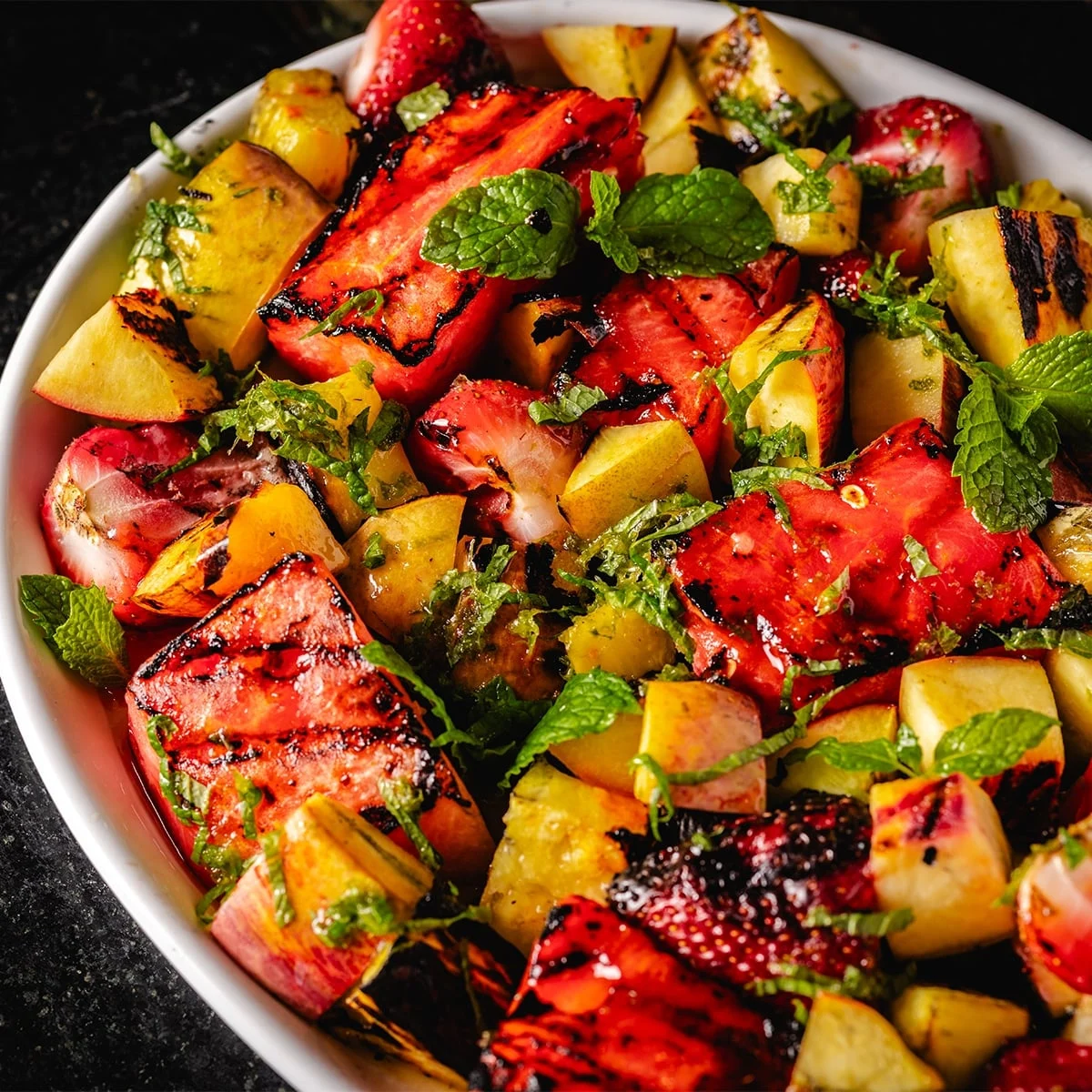
The landscape of backyard barbecue is undergoing a significant transformation as seasonal produce moves from the periphery of the plate to the center of the culinary experience. Traditionally dominated by heavy meats and starchy sides, the modern cookout is increasingly incorporating sophisticated, plant-forward dishes that leverage the unique capabilities of outdoor grilling. Among these emerging staples is the Grilled Fruit Salad, a dish that utilizes the Maillard reaction to enhance the natural sugars found in late-summer fruits. By subjecting a medley of peaches, pineapple, strawberries, and watermelon to direct heat, cooks are able to achieve a complex flavor profile that balances smoky char with vibrant acidity. This preparation method, which typically requires approximately 30 minutes of active time, represents a broader trend in American gastronomy where traditional dessert ingredients are reimagined as savory-sweet accompaniments to main courses.
The integration of grilled fruit into the standard barbecue repertoire is not merely a matter of aesthetic preference but a calculated culinary technique. When fruit is placed on a high-heat surface, such as a grill grate, the moisture on the surface evaporates, concentrating the sugars and allowing for caramelization. In stone fruits like peaches and fibrous fruits like pineapple, this process creates a structural change, softening the flesh while adding a layer of smoky depth. The addition of a lime and mint dressing provides a necessary counterpoint to the intensified sweetness, ensuring the dish remains refreshing rather than cloying. As health-conscious consumers seek lighter alternatives to traditional barbecue fare, the Grilled Fruit Salad has emerged as a versatile solution that bridges the gap between nutrition and indulgence.
The Science and Selection of Seasonal Produce
The success of a grilled fruit salad depends heavily on the selection of ingredients and an understanding of how different fruit structures respond to thermal energy. For the specific combination of peaches, pineapple, strawberries, and watermelon, each component offers a different chemical reaction when exposed to the grill. Peaches, being stone fruits, contain high levels of natural pectin and sugar, which develop a rich, jam-like consistency when heated. Pineapple, characterized by its high acidity and bromelain content, undergoes a dramatic transformation as its sharp edges are mellowed by the charring of its exterior.

Watermelon presents a unique challenge and opportunity in this context. Composed of over 90% water, it requires a high-heat, short-duration sear to achieve grill marks without losing its internal integrity. When grilled correctly, the texture of watermelon changes from crisp and granular to something more reminiscent of a rare steak, a phenomenon that has made "watermelon steaks" a popular meat substitute in various culinary circles. Strawberries, the most delicate of the group, require minimal time on the grates. Their inclusion adds a bright, red-fruit acidity that cuts through the deeper caramel notes of the grilled pineapple and peaches.
Culinary experts suggest that the fruit should be firm and slightly under-ripe to withstand the rigors of the grill. Over-ripe fruit tends to collapse under heat, leading to a loss of texture and a messy presentation. By selecting produce that is at the peak of its structural integrity, the cook ensures that each piece retains its shape after being tossed in the dressing. This attention to detail reflects a more professionalized approach to home grilling, where the nuances of ingredient selection are prioritized alongside temperature control.
Procedural Chronology: From Prep to Platter
The preparation of a Grilled Fruit Salad follows a specific chronological order designed to maximize efficiency and flavor development. The process begins with the preparation of the grill, which must be cleaned and preheated to a medium-high temperature. A clean grate is essential to prevent the delicate fruit from sticking or picking up residual flavors from previous meat-based cookouts.
- Ingredient Preparation: The fruit is sliced into large, uniform pieces. Size is a critical factor here; pieces must be large enough to span the gaps in the grill grates to prevent them from falling into the fire. Peaches are typically halved or quartered, pineapple is cut into thick rings or spears, and watermelon is sliced into wedges.
- The Grilling Phase: The fruit is placed directly onto the hot grates. This phase is relatively brief, usually lasting between 2 to 4 minutes per side. The objective is not to cook the fruit through, but to achieve distinct char marks and a slight softening of the exterior. The fruit is monitored closely to prevent burning, as the high sugar content can lead to rapid carbonization if left unattended.
- Cooling and Cubing: Once the fruit has been "kissed" by the heat, it is removed from the grill and allowed to rest. This brief cooling period stabilizes the internal juices. Once manageable, the fruit is cut into bite-sized cubes, revealing the contrast between the charred exterior and the fresh, vibrant interior.
- Dressing Application: The final step involves whisking together the lime juice, honey, and chopped mint. This dressing is drizzled over the fruit just before serving. The acidity of the lime acts as a flavor enhancer, while the mint provides an aromatic freshness that lightens the overall profile of the dish.
This entire process, from the first slice to the final toss, is estimated to take 30 minutes. This efficiency makes it an ideal "live" dish for entertaining, as the grilling can take place while guests are present, adding a theatrical element to the meal preparation.

Nutritional Analysis and Dietary Implications
From a nutritional standpoint, the Grilled Fruit Salad offers a dense profile of vitamins and minerals with a relatively low caloric impact. According to data provided by culinary nutritionists, a standard serving of this salad (approximately one-eighth of the total yield) contains roughly 80 calories. The macronutrient breakdown is dominated by carbohydrates, totaling 21 grams, of which 15 grams are natural sugars and 3 grams are dietary fiber.
The micronutrient content is particularly noteworthy. A single serving provides 63 milligrams of Vitamin C, meeting a significant portion of the daily recommended intake. This is supplemented by 434 IU of Vitamin A and 247 milligrams of potassium. The inclusion of fresh lime juice and mint not only adds flavor but also introduces additional antioxidants and phytonutrients. Because the dish is naturally low in fat (0.4g) and sodium (7mg), it serves as an excellent heart-healthy option for those monitoring their intake of processed additives common in many BBQ side dishes.
The dietary versatility of the Grilled Fruit Salad also contributes to its rising popularity. It is naturally gluten-free, dairy-free, and vegetarian. For vegan adaptations, the honey in the dressing can be easily substituted with agave nectar or maple syrup without compromising the integrity of the flavor profile. This inclusivity ensures that the dish can be served at diverse gatherings without the need for multiple versions to accommodate different dietary restrictions.
Market Trends and the Evolution of Outdoor Cooking
The emergence of recipes like the Grilled Fruit Salad is indicative of a larger shift in the outdoor cooking industry. Market research suggests that the "Outdoor Living" sector has seen unprecedented growth over the last five years, with consumers investing more in high-end grilling equipment and specialized accessories. This investment has led to a desire for more diverse recipes that go beyond the standard burger and hot dog.

Susie Bulloch, the founder of the BBQ resource Hey Grill Hey and a prominent figure in the grilling community, has been a vocal advocate for expanding the definition of what can be prepared over an open flame. Her approach emphasizes the grill as a versatile tool for all courses of a meal, rather than just the protein. This philosophy is reflected in the digital landscape, where platforms like the Hey Grill Hey App and various social media channels have seen a surge in engagement for "alternative" grilling recipes.
Furthermore, the economic impact of seasonal produce cannot be overlooked. As inflation affects the price of beef and poultry, many home cooks are turning to seasonal fruits and vegetables as a cost-effective way to bulk out their menus while maintaining a high standard of quality. In the late summer months, when peaches and watermelon are at their most affordable and flavorful, dishes like the Grilled Fruit Salad provide a high-value option for large gatherings.
Expert Insight and Culinary Context
Culinary experts note that while grilling fruit may seem like a modern innovation, it has roots in various global cuisines. In Brazilian churrascarias, grilled pineapple dusted with cinnamon is a traditional palate cleanser served between courses of meat. Similarly, in many Southeast Asian cultures, the caramelization of fruit over charcoal is a common street food technique.
The application of this technique to a "salad" format, however, is a distinctly Western adaptation that aligns with the "bowl culture" trend seen in modern fast-casual dining. By combining multiple types of grilled fruit with a herbaceous dressing, the dish moves away from being a simple snack and becomes a structured component of a meal.

Professional chefs emphasize the importance of the "bright, refreshing lime and mint dressing" as the element that bridges the gap between the various fruit flavors. The mint, in particular, serves a functional purpose; its menthol properties provide a cooling sensation that contrasts with the warmth of the grilled fruit and the ambient heat of a summer afternoon. This sensory contrast—hot and cold, smoky and sweet, acidic and herbaceous—is what defines the dish’s success.
Broader Impact and Future Outlook
As the boundaries between sweet and savory continue to blur in contemporary cooking, the Grilled Fruit Salad stands as a prime example of culinary cross-pollination. Its success suggests a future where the grill is used as much for its ability to transform plant-based ingredients as it is for searing steaks. The implications for the BBQ industry are clear: there is a growing market for tools, techniques, and recipes that prioritize freshness and nutritional density.
The Grilled Fruit Salad is more than just a side dish; it is a reflection of a changing American palate that values complexity, seasonality, and health. As more backyard cooks embrace these techniques, the traditional image of the barbecue will likely continue to evolve, incorporating a wider array of colors, textures, and flavors. Whether served alongside rich smoked meats or as a standalone light lunch, the combination of fire-charred fruit and zesty dressing has secured its place in the modern culinary canon. Moving forward, the industry can expect to see further experimentation with grilled produce, as the "Backyard BBQ Hero" of the future looks to the orchard as often as the butcher shop for inspiration.
