

The global publishing industry in 2022 was characterized by a profound shift toward narratives of resilience, historical reclamation, and the intersection of science and sensory experience. As the world transitioned into a post-pandemic reality, readers and critics alike demonstrated a heightened appetite for works that addressed chronic illness, intergenerational trauma, and the preservation of marginalized cultures. This shift is exemplified by a curated selection of titles that gained prominence throughout the year, ranging from deep-dive culinary explorations to rigorous scientific inquiries into the human condition.
The Evolution of Culinary Documentation and Regional Gastronomy
The year 2022 saw a significant movement in food writing away from simple recipe collections toward "culinary ethnography." This trend is led by Naomi Duguid’s The Miracle of Salt: Recipes and Techniques to Preserve, Ferment, and Transform Your Food. Duguid, an award-winning writer known for her immersive cultural studies, explores the fundamental role of salinity in global food security and tradition. According to industry data from 2022, the global fermented food market was valued at approximately $35 billion, reflecting a consumer trend toward gut health and traditional preservation methods. Duguid’s work provides the historical and technical framework for this interest, spanning continents to document the use of miso, sauerkraut, and brined eggs.
Parallel to this is the rise of South Asian regionalism in the culinary world. Cynthia Shanmugalingam’s Rambutan: Recipes from Sri Lanka and Romy Gill’s On the Himalayan Trail: Recipes and Stories from Kashmir to Ladakh represent a critical move toward specificity. While Indian cuisine has long been a staple of the North American market, these titles highlight regions—Sri Lanka, Kashmir, and Ladakh—that have historically been overshadowed or inaccessible due to political instability. Gill’s work, in particular, serves as a preservation project, documenting the recipes of conflict-prone regions before they are lost to cultural displacement.

Narrative Fiction and the Exploration of Multi-Generational Trauma
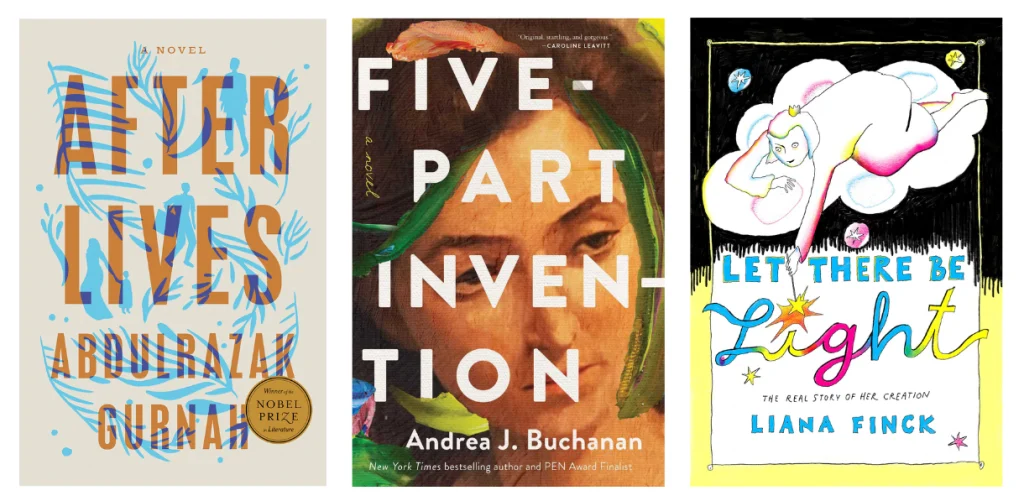
In the realm of fiction, 2022 was marked by the North American release of Afterlives by Abdulrazak Gurnah. Following Gurnah’s 2021 Nobel Prize in Literature, Afterlives examines the impact of German colonial rule in East Africa. The novel’s focus on the "Schutztruppe"—African soldiers forced to fight for colonial powers—provides a necessary historical correction to Eurocentric narratives of the era.
Domestically, fiction began to mirror the growing public discourse on mental health and hereditary trauma. Andrea J. Buchanan’s Five-Part Invention explores the concept of "epigenetic memory," a theme also found in major non-fiction releases of the year. Buchanan, who has previously written about her experiences with spinal cerebrospinal fluid (CSF) leaks, utilizes fiction to navigate the complexities of how trauma is passed through five generations of women. This aligns with a 2022 report from the American Psychological Association, which noted a 15% increase in public interest regarding trauma-informed narratives and family systems therapy.
Scientific Inquiry and the Sensory Experience
One of the most critically acclaimed non-fiction titles of 2022 was Ed Yong’s An Immense World: How Animal Senses Reveal the Hidden Realms Around Us. Yong, a Pulitzer Prize-winning journalist for his coverage of the COVID-19 pandemic, shifted his focus to "Umwelt"—the unique sensory world inhabited by different species. The book was a commercial and critical success, debuting on the New York Times Best Seller list and receiving praise for translating complex biology into accessible narrative prose. Yong’s exploration of how animals perceive vibrations, magnetic fields, and ultraviolet light serves as a reminder of the limitations of human perception.
The science of sound also received significant attention with Adriana Barton’s Wired for Music: A Search for Health and Joy Through the Science of Sound. Barton’s investigation into the neurological benefits of music—specifically its role in pain management and athletic performance—complements the broader scientific trend of "neuroaesthetics." This field, which studies the biological basis of aesthetic experiences, grew in academic prominence throughout 2022, with several universities establishing dedicated research centers.

Chronology of Major 2022 Literary Releases
The 2022 literary calendar was punctuated by several high-profile releases that shaped the year’s intellectual discourse:
- January – March: The release of Meghan O’Rourke’s The Invisible Kingdom: Reimagining Chronic Illness set the stage for a year-long conversation regarding the "invisible" patient.
- April – June: Louisa Lim’s Indelible City: Dispossession and Defiance in Hong Kong provided critical context to the 2020 National Security Law, blending memoir with investigative journalism.
- July – September: Ed Yong’s An Immense World and Gabor Maté’s The Myth of Normal dominated non-fiction charts, reflecting a dual interest in the natural world and internal healing.
- October – December: The holiday season saw the release of The Explorer’s Library by Atlas Obscura and the paperback edition of Abdulrazak Gurnah’s Afterlives, cementing the year’s themes of wonder and historical reckoning.
The Intersection of Health, Trauma, and Society
Perhaps the most influential book of the year in the self-help and psychology category was The Myth of Normal: Trauma, Illness, and Healing in a Toxic Culture by Dr. Gabor Maté and Daniel Maté. Dr. Maté, a renowned physician and Holocaust survivor, argues that modern society’s "normal" state is fundamentally unhealthy. He posits that chronic illness is often an "epigenetic trigger" resulting from environmental and attachment-based trauma.
This perspective is echoed in Meghan O’Rourke’s The Invisible Kingdom. O’Rourke’s work is particularly timely given the rise of "Long COVID," a condition that affected an estimated 16 million Americans in 2022 according to the Brookings Institution. O’Rourke, a patient with Ehlers-Danlos Syndrome (EDS), critiques the Western medical model’s inability to diagnose and treat multi-systemic, chronic conditions. Critics have described her book as a "manifesto for the marginalized," calling for a systemic overhaul of how medical professionals interact with chronic pain.
Supporting Data: The 2022 Reading Landscape
Despite economic pressures, the 2022 book market remained robust. According to NPD BookScan, while print sales saw a slight decline of 6.5% compared to the record-breaking heights of 2021, they remained 11.8% higher than pre-pandemic levels in 2019. Adult non-fiction, particularly in the areas of "Self-Help" and "Health/Fitness," showed significant resilience.

Furthermore, the "BookTok" phenomenon on social media continued to influence sales, though 2022 saw a shift toward more "intellectual" and "science-heavy" recommendations, often referred to as "Deep Reading" communities. This trend directly benefited authors like Ed Yong and David McRaney, whose book How Minds Change: The Surprising Science of Belief, Opinion, and Persuasion became a focal point for discussions on how to combat misinformation and social polarization.
Broader Impact and Social Implications
The literature of 2022 reflects a society attempting to make sense of deep-seated systemic failures while searching for individual meaning. Titles such as Alice Wong’s Year of the Tiger: An Activist’s Life highlight the ongoing struggle for disability rights and accessibility. Wong, an activist with progressive muscular dystrophy, uses her memoir to challenge the "inspiration porn" trope often found in disability narratives, opting instead for a rigorous critique of ableism in a post-pandemic world.
Similarly, Susan Cain’s Bittersweet: How Sorrow and Longing Make Us Whole encourages a societal shift toward embracing grief rather than suppressing it. Cain, who previously found success with Quiet, argues that the "tyranny of positivity" in modern culture prevents genuine healing and connection.
In conclusion, the prominent books of 2022 served as more than mere entertainment; they acted as cultural barometers. From the scientific exploration of animal senses to the reclamation of colonial histories and the rethinking of chronic illness, these works suggest a global community that is increasingly focused on empathy, historical accuracy, and the complex interplay between the mind and the body. As these titles continue to circulate in 2023 and beyond, their influence on public policy, medical education, and social discourse is expected to persist.
