

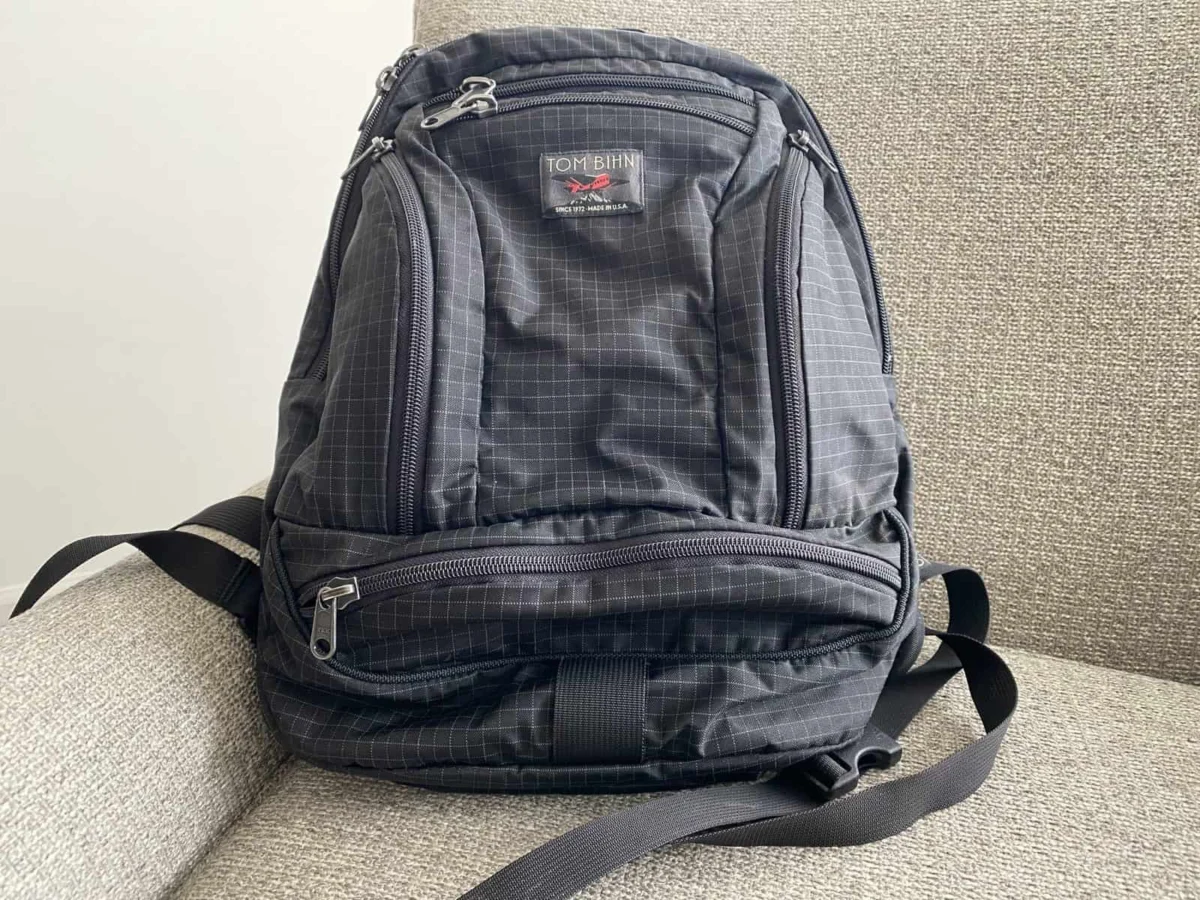
In a rare convergence of serendipity and digital persistence, a backpack stolen during a 2017 residential burglary in Park Slope, Brooklyn, was recently recovered and returned to its owner after more than three years. The discovery, made by a maintenance worker on a residential rooftop, has provided a definitive, if bittersweet, conclusion to a case that coincided with a life-altering medical emergency for the victim. The incident underscores the complexities of property crime in New York City and the role of social media in resolving long-dormant theft cases.
The 2017 Incident: A Convergence of Personal and Property Crisis
The timeline of the recovery traces back to August 2017, a period when the victim, a Canadian travel writer and former lawyer identified as Jodi Ettenberg, was undergoing a medical procedure at a New York City emergency room. While Ettenberg was receiving a lumbar puncture—a procedure intended to diagnose a medical issue but which ultimately resulted in a debilitating spinal fluid leak—the apartment where she was residing as a temporary caretaker was being burglarized.
Security footage from the residence’s internal monitoring system confirmed that the intruder entered the premises at the exact moment the medical procedure began. The perpetrator utilized Ettenberg’s Tom Bihn Synapse daybag to collect various high-value items, including a laptop, jewelry belonging to the permanent tenants, and cash. In a curious display of selective theft, the burglar discarded Ettenberg’s Canadian passport and a small denomination of Canadian currency on a sofa before fleeing the scene.
The immediate aftermath of the crime was overshadowed by the medical complications Ettenberg faced. The spinal tap led to a chronic condition that significantly impacted her mobility and career, leaving the theft of her physical belongings as a secondary, though haunting, concern. For over three years, the location of the stolen property remained unknown, and the case was effectively considered cold by local standards.
The Discovery and Recovery Process
The recovery process began in late 2020 when a homeowner in the Park Slope neighborhood, located just doors away from the original crime scene, contracted a professional chimney sweep for routine maintenance. During the inspection of the roof, the technician discovered a weathered backpack tucked into the side of a chimney vent.
The bag contained several items that had survived years of exposure to New York’s fluctuating seasonal temperatures. Among the contents were:

- Two pairs of prescription eyeglasses.
- Multiple expired credit cards.
- Personal business cards.
- Minor miscellaneous items, such as hand lotion and over-the-counter medication.
Conspicuously absent were the high-value electronics and jewelry, suggesting the perpetrator had utilized the rooftop as a staging area to sort through the haul, discarding the bag and its less-liquid assets in a location where they would remain undisturbed for years.
The homeowner attempted to locate the owner of the credit cards via Facebook. However, due to the platform’s "Message Request" filtering system—often referred to as "Facebook Purgatory"—the notification remained unseen by Ettenberg for several weeks. It was not until early 2021 that the connection was finally established, leading to the eventual retrieval of the bag by a representative of the owner.
Statistical Context: Property Crime and Recovery Rates in New York City
The recovery of Ettenberg’s bag is statistically anomalous. According to data from the New York City Police Department (NYPD), property recovery rates for burglaries and grand larcenies remain consistently low. In 2017, the year of the initial theft, the NYPD reported thousands of burglary incidents across the five boroughs. While the "clearance rate" (the rate at which police identify a suspect) for burglaries in New York typically hovers between 12% and 15%, the actual recovery of stolen physical goods is significantly lower, often falling below 5% for non-vehicular property.
Most stolen items, particularly electronics and jewelry, are quickly processed through secondary markets or "fences." Soft goods, such as backpacks and clothing, are frequently discarded shortly after a crime to reduce the risk of the perpetrator being found with identifiable evidence. The fact that this specific bag remained on a rooftop in a high-density urban environment for over 1,200 days without being lost to wind, animals, or decay is a notable outlier in urban criminal patterns.
The Psychological Impact of "Cold Case" Property Recovery
For victims of crime, the sudden reappearance of stolen items can serve as a powerful psychological trigger. Forensic psychologists note that property crime is rarely just about the loss of monetary value; it is an intrusion into one’s sense of safety and "sanctuary." In Ettenberg’s case, the bag was inextricably linked to the night her health fundamentally changed.
The return of the backpack forced a confrontation with the "liminal weight" of that period. Professional analysis of victim recovery suggests that the "re-homing" or "transmutation" of stolen goods—such as Ettenberg’s decision to have the bag cleaned and eventually gifted to a friend—can be a vital step in reclaiming agency. By shifting the item from a symbol of violation to a functional tool for someone else, the victim effectively closes the narrative loop of the crime.
Community Resilience and the "Llamafication" of the Recovery
The logistics of the bag’s return highlighted the importance of social support networks. Cheryl, a former law school colleague of Ettenberg, acted as the intermediary for the recovery. Recognizing the emotional toll the bag’s return might take, the friend performed a thorough restoration of the item.

In an effort to overwrite the negative associations of the bag, the friend filled it with "llama-themed" gifts—a nod to internal jokes and personal preferences known to the owner—before shipping it to Ettenberg’s current location. This act of "llamafication," while seemingly whimsical, represents a sophisticated form of community-led restorative justice, where the trauma of the theft is mitigated by the proactive kindness of a peer network.
Broader Implications and Technical Endurance
The physical state of the recovered items also provides a brief case study in material durability. The Tom Bihn Synapse bag, manufactured from high-denier ballistic nylon, maintained its structural integrity despite three years of exposure to rain, snow, and UV radiation on a Brooklyn roof. While the prescription eyeglass frames suffered warping due to thermal expansion and contraction, the lenses and the bag itself remained salvageable.
This incident has prompted discussions among urban residents regarding the "hidden spaces" of the city—rooftops, alleyways, and vents—that serve as unintended archives for the city’s criminal history. It also serves as a reminder for residents to periodically check social media "filtered" inboxes, which have become an unofficial lost-and-found for the digital age.
Conclusion: Closing the Chapter
The recovery of the Park Slope backpack serves as a rare postscript to a 2017 crime report. While the most valuable items remain lost and the perpetrator was never apprehended, the return of the bag provided a form of "administrative closure" for the victim.
As Ettenberg noted in her reflection on the event, the bag’s return was an "outlier of possibilities." It represented the transient space between her former life as a mobile traveler and her current reality navigating chronic illness. By donating the bag to a new owner, the cycle of the 2017 burglary has been officially terminated, moving the object from the realm of evidence and trauma into the realm of utility and friendship.
This case remains a testament to the fact that in a city of millions, the threads of past events are never entirely severed; sometimes, they are simply waiting on a rooftop for a chimney sweep to find them.
