

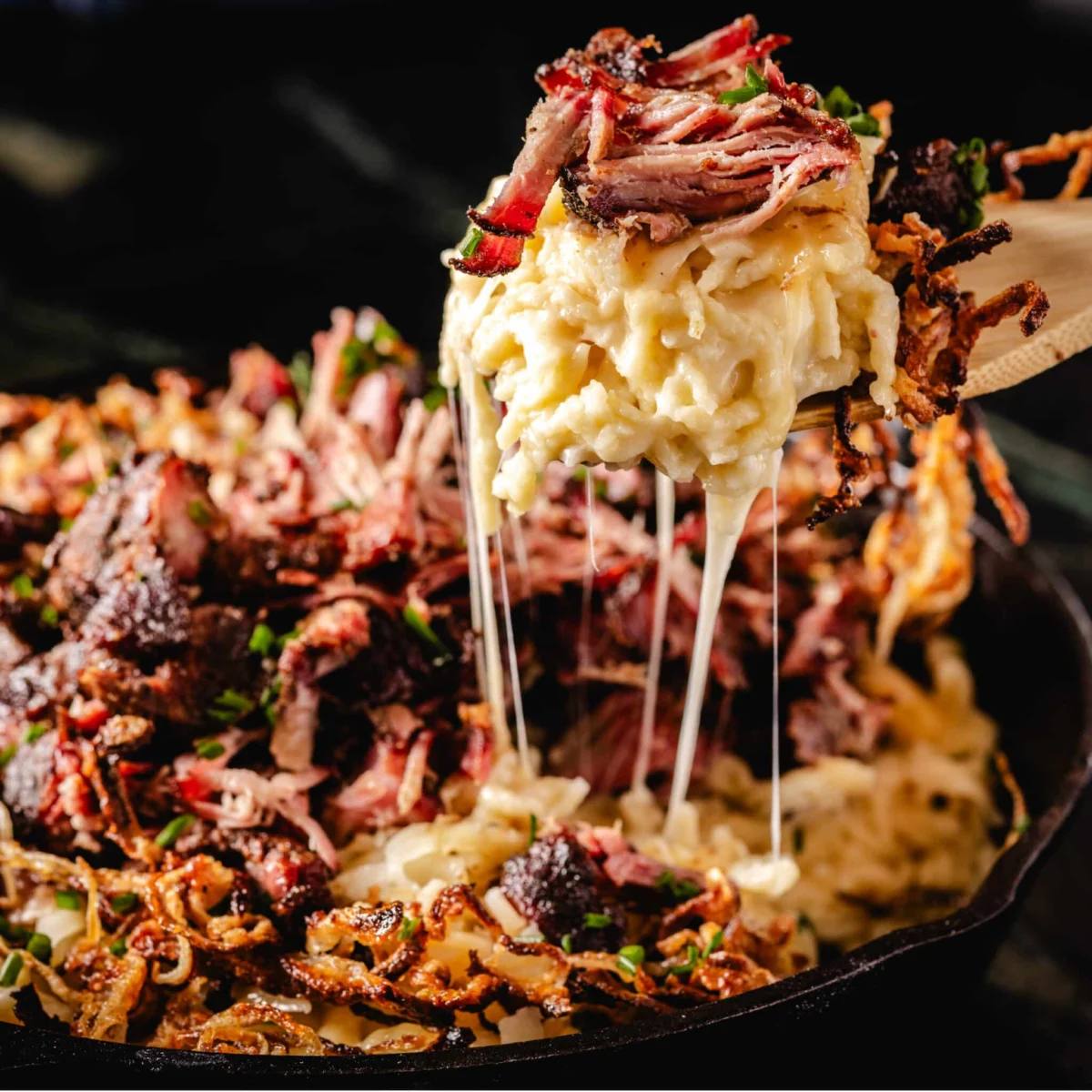
The culinary landscape of American barbecue is undergoing a significant transformation as traditional wood-fired techniques converge with international comfort foods, a trend exemplified by the recent emergence of Smoked Pulled Pork Käsespätzle. This dish, which gained national attention through its featured appearance on the Food Network series Pitmasters, represents a sophisticated hybrid of Swabian German heritage and American low-and-slow smoking traditions. Developed by Susie Bulloch of Hey Grill Hey in collaboration with Christie Vanover of Girls Can Grill, the recipe reimagines the classic German "cheese spätzle" by integrating slow-smoked pork, thereby elevating a rustic European staple into a centerpiece of contemporary barbecue fusion.
The Evolution of Käsespätzle: From Swabian Origins to American Grills
Käsespätzle, often colloquially but inaccurately referred to as "German macaroni and cheese," has its roots in the Swabia region of Southwest Germany, as well as parts of Austria and Switzerland. The term "Spätzle" translates roughly to "little sparrows," a reference to the irregular shapes formed when the dough is traditionally scraped into boiling water. Unlike its American counterpart, which relies on a flour-and-butter-based roux to create a creamy sauce, authentic Käsespätzle utilizes the residual heat of freshly boiled egg noodles to melt layers of shredded cheese. This creates a distinctively elastic, rustic texture that is structurally different from the emulsified sauces found in Western pasta dishes.

The integration of smoked meats into this traditional framework marks a significant departure from European norms, where the dish is typically served as a vegetarian main or a side for roasts. The introduction of pulled pork provides a fat-soluble smoke profile that complements the richness of the egg noodles and the sharpness of the cheese. According to culinary historians, the adaptation of European noodle dishes by American pitmasters follows a long-standing tradition of "immigrant fusion," where newly arrived groups adapted their ancestral recipes to the ingredients and cooking methods available in the American South and Midwest.
Chronology of Development and National Television Debut
The development of the Smoked Pulled Pork Käsespätzle recipe followed a specific timeline rooted in professional competition. The dish was conceptualized during the filming of Food Network’s Pitmasters, where Susie Bulloch and Christie Vanover competed as a team. During a high-stakes challenge involving a whole hog, the duo sought a side dish that would balance the intensity of the smoked meat while showcasing technical versatility.
The timeline of the dish’s public release began in late 2023, following a collaborative session between Bulloch and Sophie Sadler, a German culinary expert and founder of Dirndl Kitchen. Sadler provided the authentic foundation for the spätzle dough, which Bulloch later modified for the barbecue circuit. By July 2024, after the Pitmasters episode aired, the recipe was streamlined for backyard enthusiasts, transitioning from the labor-intensive use of smoked pork cheeks—a delicacy used in the competition—to the more accessible country-style pork ribs found in standard retail markets.

Technical Analysis of the Components
A successful Smoked Pulled Pork Käsespätzle is dependent on the precise execution of three distinct culinary components: the handmade egg noodles, the caramelized onion garnish, and the smoked protein.
The Spätzle Foundation
The dough for spätzle is unique in its simplicity, consisting of flour, eggs, and milk or water. Journalistic observation of the process reveals that the texture of the dough is the most critical variable; it must be thicker than pancake batter but more pliable than traditional pasta dough. When pressed through a spätzle maker or "hobel," the dough forms small, irregular dumplings that cook in less than three minutes. The use of high-quality eggs is essential for achieving the characteristic golden hue and rich mouthfeel required to stand up to the smoke of the barbecue.
The Smoking Process: From Pork Cheek to Country-Style Ribs
While the competition version of this dish utilized pork cheeks for their high collagen content and intense flavor, the consumer-facing version utilizes country-style ribs. Despite their name, these are not ribs but are instead cuts from the pork shoulder. This selection is strategically significant for home cooks as it reduces the smoking time from the typical 12-to-14-hour window required for a whole pork butt to approximately six hours.

The technical smoking process involves a two-stage method. Initially, the meat is subjected to indirect heat and wood smoke—often hickory or fruitwood—until it reaches an internal temperature of 165°F. It is then braised in a foil-covered vessel with liquids such as apple juice or cider vinegar until it reaches 204°F, the point at which connective tissues fully break down into succulent shreds.
The Role of Smoked Gouda and Alliums
The final assembly involves layering the hot noodles with a cheese blend that deviates from the traditional Emmental or Bergkäse. The modern adaptation utilizes a 50/50 split of Smoked Gouda and Monterey Jack. The Smoked Gouda reinforces the backyard flavor profile, while the Monterey Jack ensures a superior "melt factor." The dish is finished with onions that have been dredged in flour and fried in butter, providing a textural contrast to the soft noodles and tender meat.
Culinary Trends and Market Impact
The rise of Smoked Pulled Pork Käsespätzle reflects broader shifts in the $4.5 billion American barbecue industry. Market data indicates a growing consumer preference for "Barbecue Fusion," where traditional smoking techniques are applied to non-traditional formats such as tacos, pizza, and European pastas. This trend is driven largely by digital creators and television personalities who have successfully bridged the gap between professional competition circuits and home kitchens.

Susie Bulloch’s Hey Grill Hey platform, which attracts millions of monthly visitors, serves as a primary vector for this culinary dissemination. The popularity of the Käsespätzle recipe suggests a move away from the "meat-only" focus of traditional Texas or Kansas City barbecue toward a more holistic, meal-oriented approach. Industry analysts note that by providing "shortcut" methods—such as the use of country-style ribs—creators are making complex, multi-cultural dishes accessible to a demographic that may not have the equipment or time for traditional whole-hog barbecue.
Implications for the Future of Barbecue Fusion
The success of the German-American fusion presented in this dish has implications for future culinary innovation. It demonstrates that the heavy, salt-and-pepper-forward profiles of American BBQ can be successfully integrated with the delicate, egg-based textures of Central European cuisine. This opens the door for further exploration of other international comfort foods, such as smoked meat pierogies or barbecue-infused udon.
Furthermore, the collaboration between female leaders in the barbecue industry, such as Bulloch and Vanover, highlights a demographic shift in a historically male-dominated field. Their focus on technical precision, recipe accessibility, and cross-cultural storytelling is redefining the "Backyard Hero" archetype.

In conclusion, Smoked Pulled Pork Käsespätzle is more than a novelty recipe; it is a meticulously engineered dish that honors historical culinary traditions while embracing the technical advancements of modern barbecue. By balancing the rustic simplicity of Swabian noodles with the complex chemical reactions of low-and-slow smoking, this dish provides a blueprint for the future of globalized comfort food. As home cooks continue to seek restaurant-quality results in their own backyards, the intersection of tradition and innovation will remain the most fertile ground for culinary growth.
