

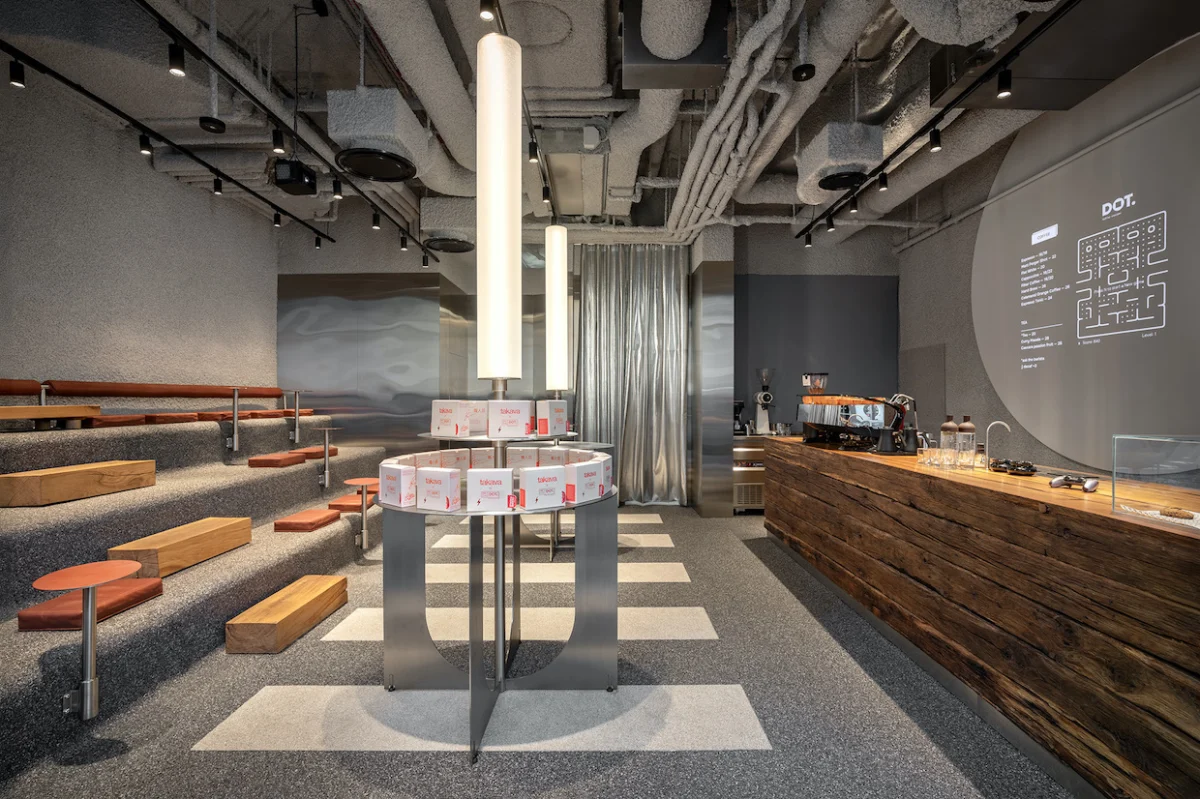
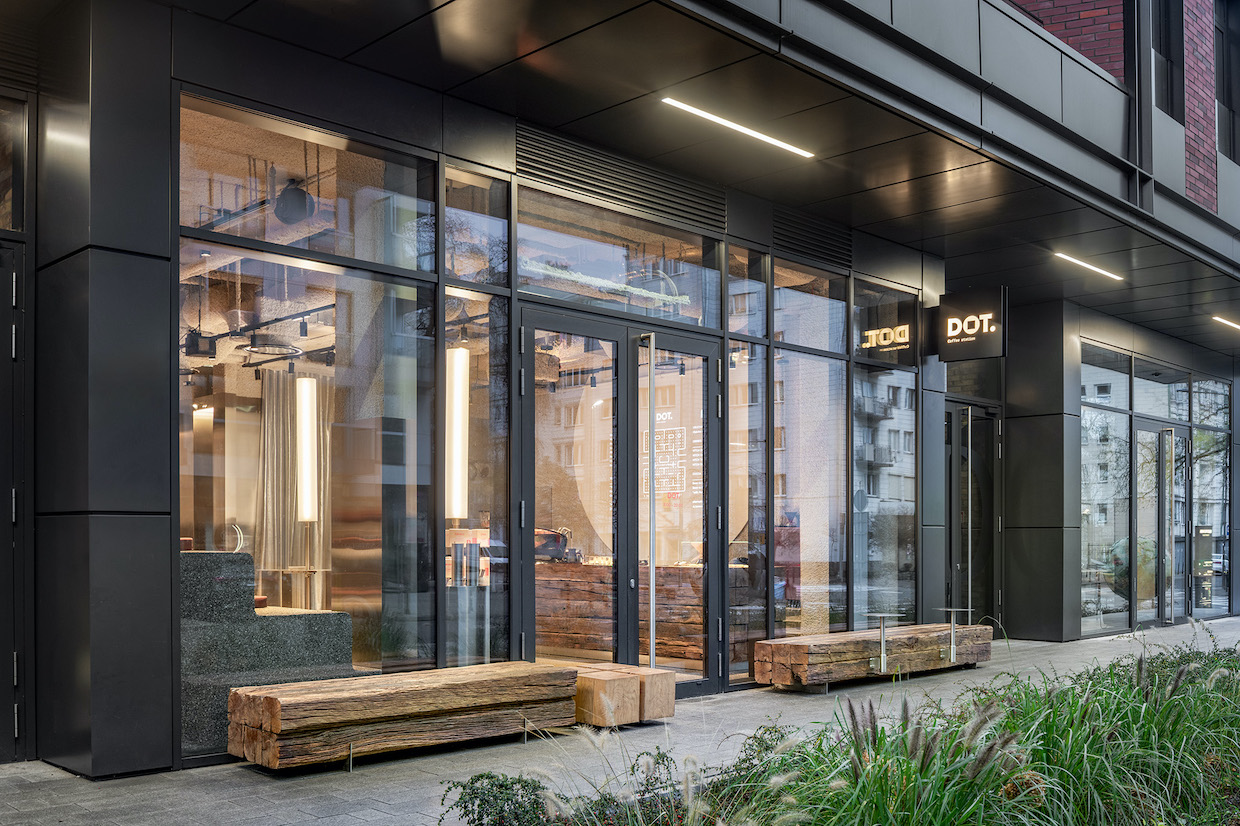
The industrial heritage of Warsaw has been elegantly recontextualized with the opening of DOT. Coffee & Matcha, a new 67-square-meter (721-square-foot) establishment that transforms a former power station building into a vibrant hub for social connection and elevated café experiences. Designed by the acclaimed YOD Group, this third location for the DOT. brand, which opened its doors in 2025, marks a significant departure from its Kyiv counterparts, prioritizing a sit-down, communal atmosphere over a purely takeaway model.
A Strategic Shift Towards In-Person Engagement
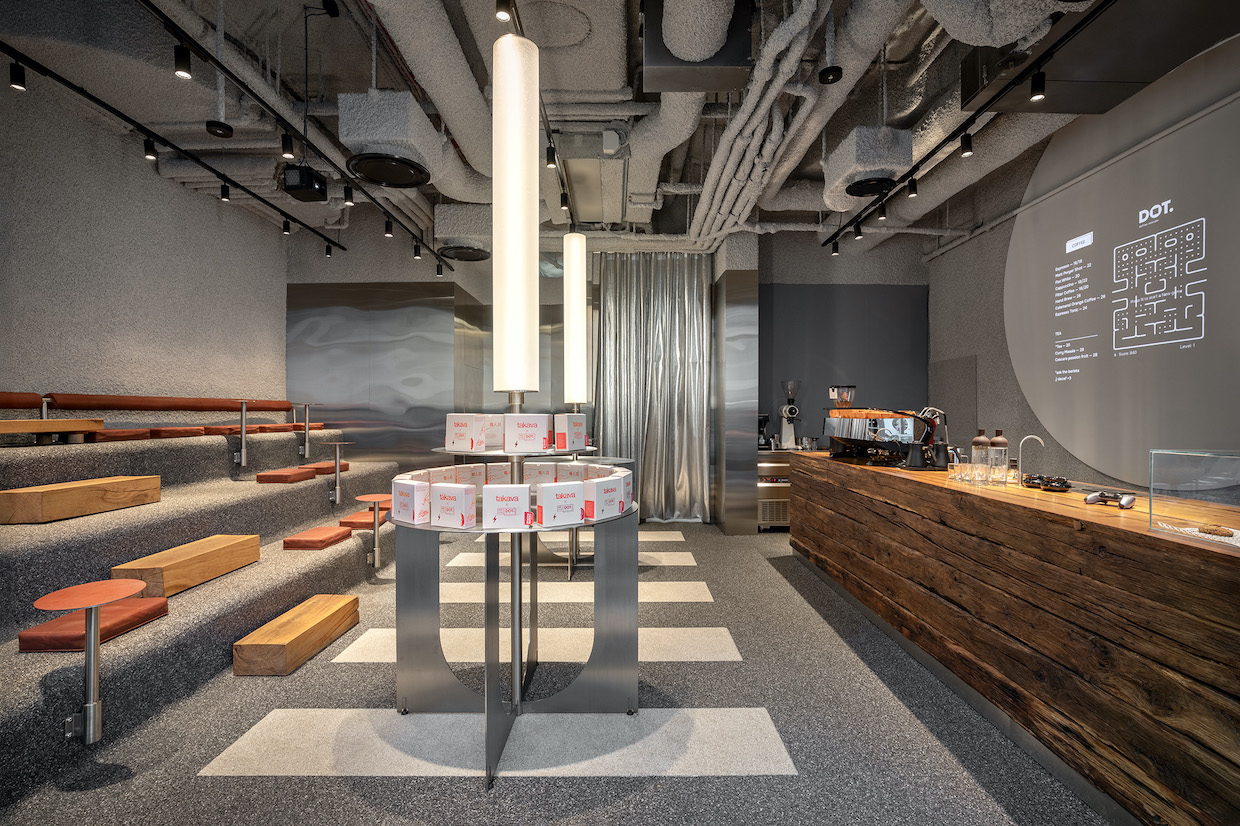
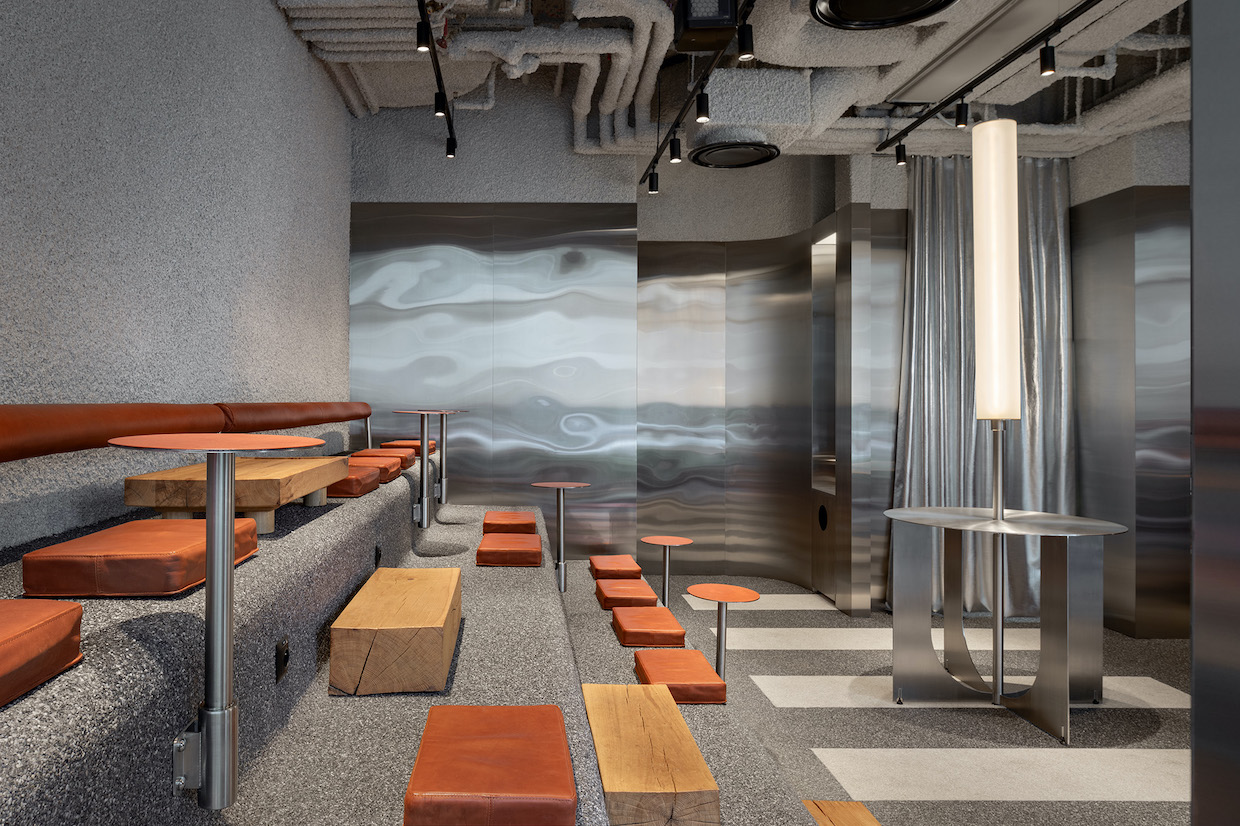
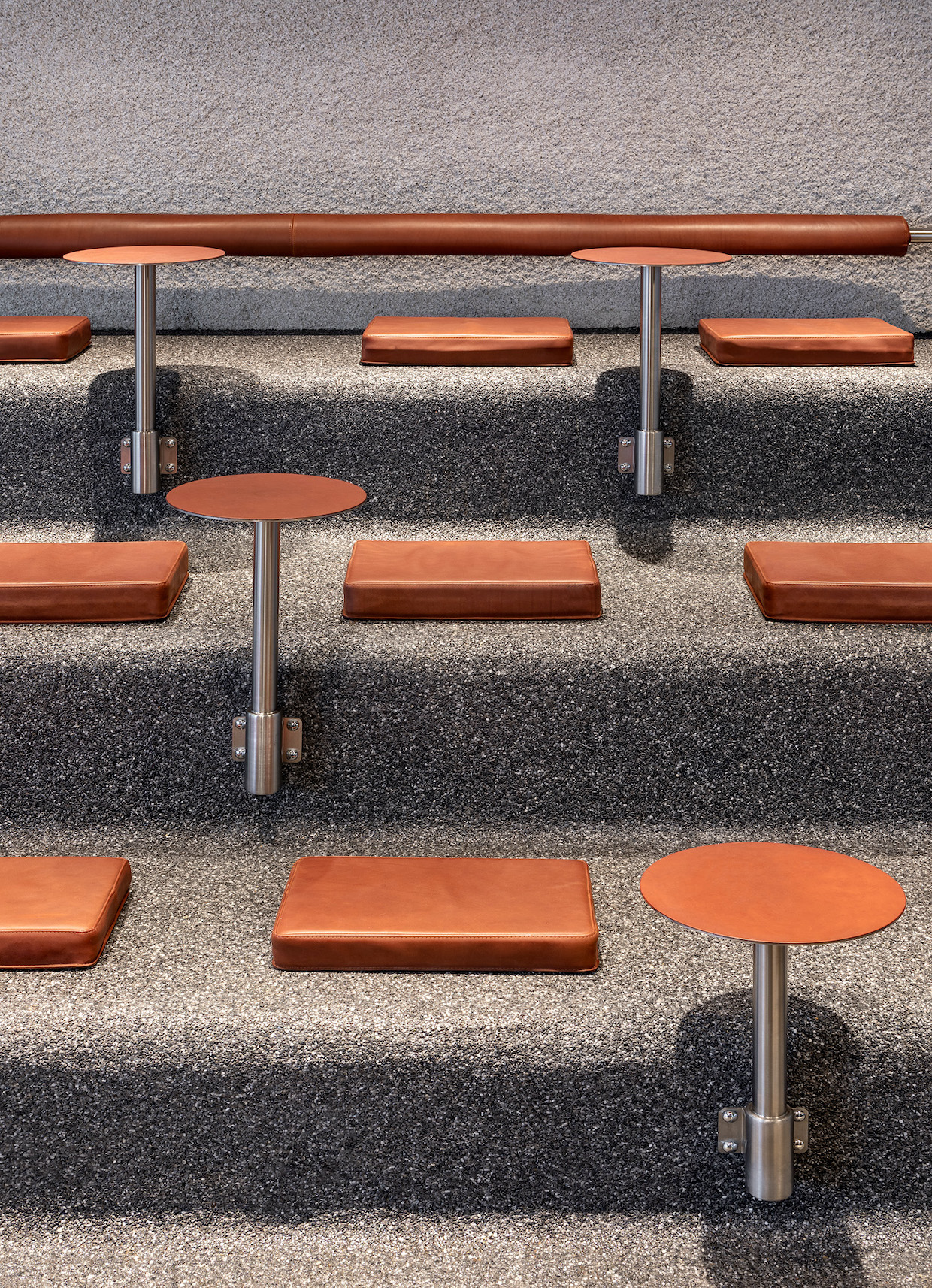
Unlike the more transient nature of DOT.’s existing locations in Kyiv, the Warsaw branch is deliberately crafted to encourage patrons to linger. This strategic design choice reflects a growing trend in the hospitality sector to foster community and provide spaces that serve as more than just a point of transaction. "Unlike DOT.’s Kyiv locations, which are primarily oriented towards a takeaway format, the Warsaw cafe is designed for staying – encouraging visitors to linger, spend time, and interact with one another," stated YOD Group in their project description. This philosophy is embodied in the café’s unique tiered seating arrangement, a design element that promotes informal communication and allows patrons to engage with the space and each other from varying vantage points. This "communal table" concept, without the physical presence of a traditional shared table, creates a dynamic and inclusive environment.
Urbanism as the Guiding Design Principle
The overarching theme that informs the interior of DOT. Coffee & Matcha is urbanism, drawing inspiration from the textures, patterns, and functional elements of city life. This concept is subtly yet effectively integrated throughout the 67-square-meter space. The flooring, a crucial element in establishing the café’s character, mimics asphalt, complete with painted markings that evoke pedestrian crossings in the main seating area and parking space indicators within the restroom facilities. This playful yet sophisticated nod to urban infrastructure grounds the design in a recognizable aesthetic, transforming the former industrial shell into a contemporary urban oasis.
Material Palette: Honesty and Expression
YOD Group’s design approach for DOT. Coffee & Matcha emphasizes a restrained yet highly expressive material palette. The firm noted, "The minimalist design relies on a restrained yet expressive palette of materials and textures: stone and carpet flooring, stainless steel and reclaimed wood. This honest material language creates a recognizable atmosphere and underscores the character of the space without overwhelming it with detail."
The juxtaposition of these materials creates a tactile and visually engaging experience. Stone and carpet flooring delineate different zones within the compact space, offering both durability and comfort. Stainless steel elements, often associated with industrial settings and modern functionality, are seamlessly integrated, while the warm, textured presence of reclaimed wood adds a layer of organic warmth and historical resonance. This deliberate selection of materials not only contributes to the café’s distinct aesthetic but also serves a functional purpose, enhancing the overall sensory experience for visitors.
Acoustic Considerations for a Lively Space
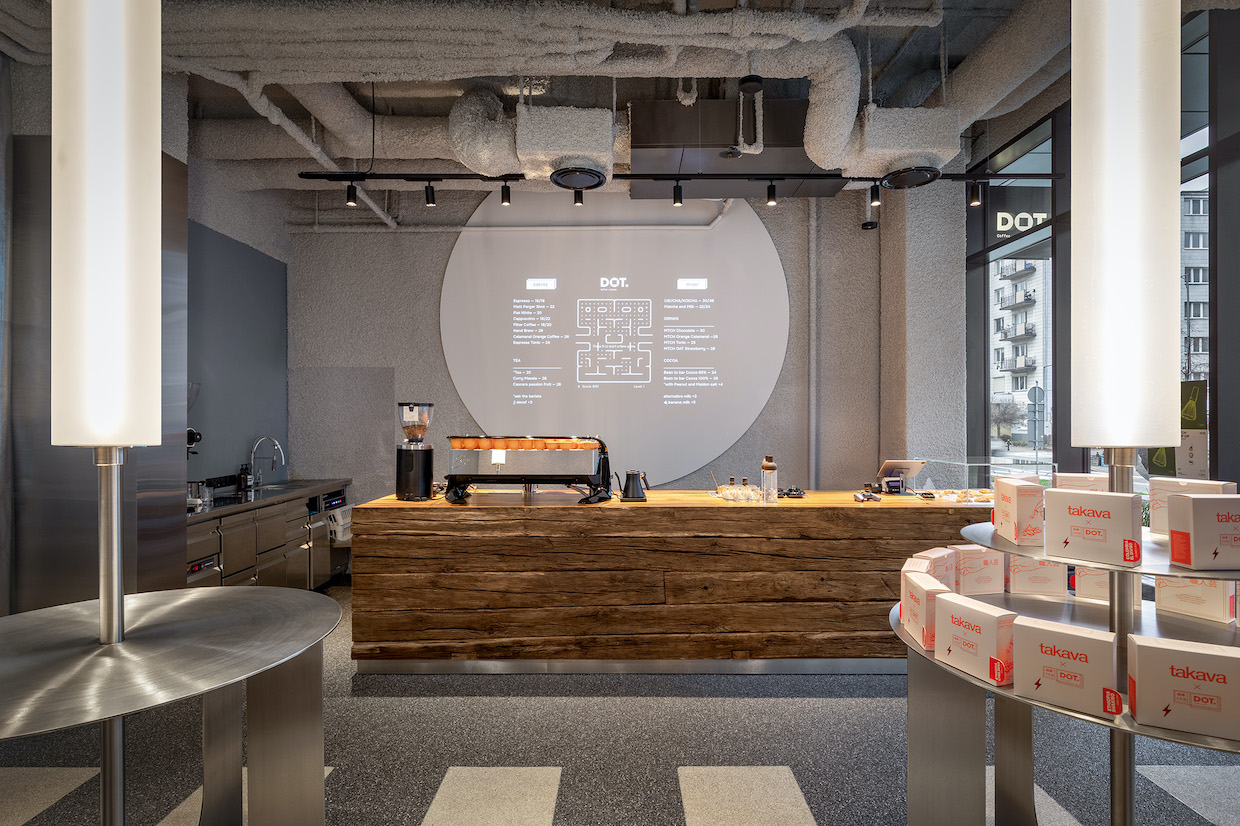
In any bustling café environment, managing acoustics is paramount to ensuring a comfortable and enjoyable experience for patrons. The design team at YOD Group addressed this challenge by incorporating acoustic foam into sections of the ceiling. This strategic application helps to mitigate reverberation, a common issue in spaces where the clatter of coffee equipment, ambient music, and lively conversations can create a cacophony. By absorbing sound, the acoustic foam contributes to a more pleasant auditory environment, allowing for easier conversation and a more relaxed atmosphere, even during peak hours.
The Reclaimed Timber Bar: A Sculptural Anchor
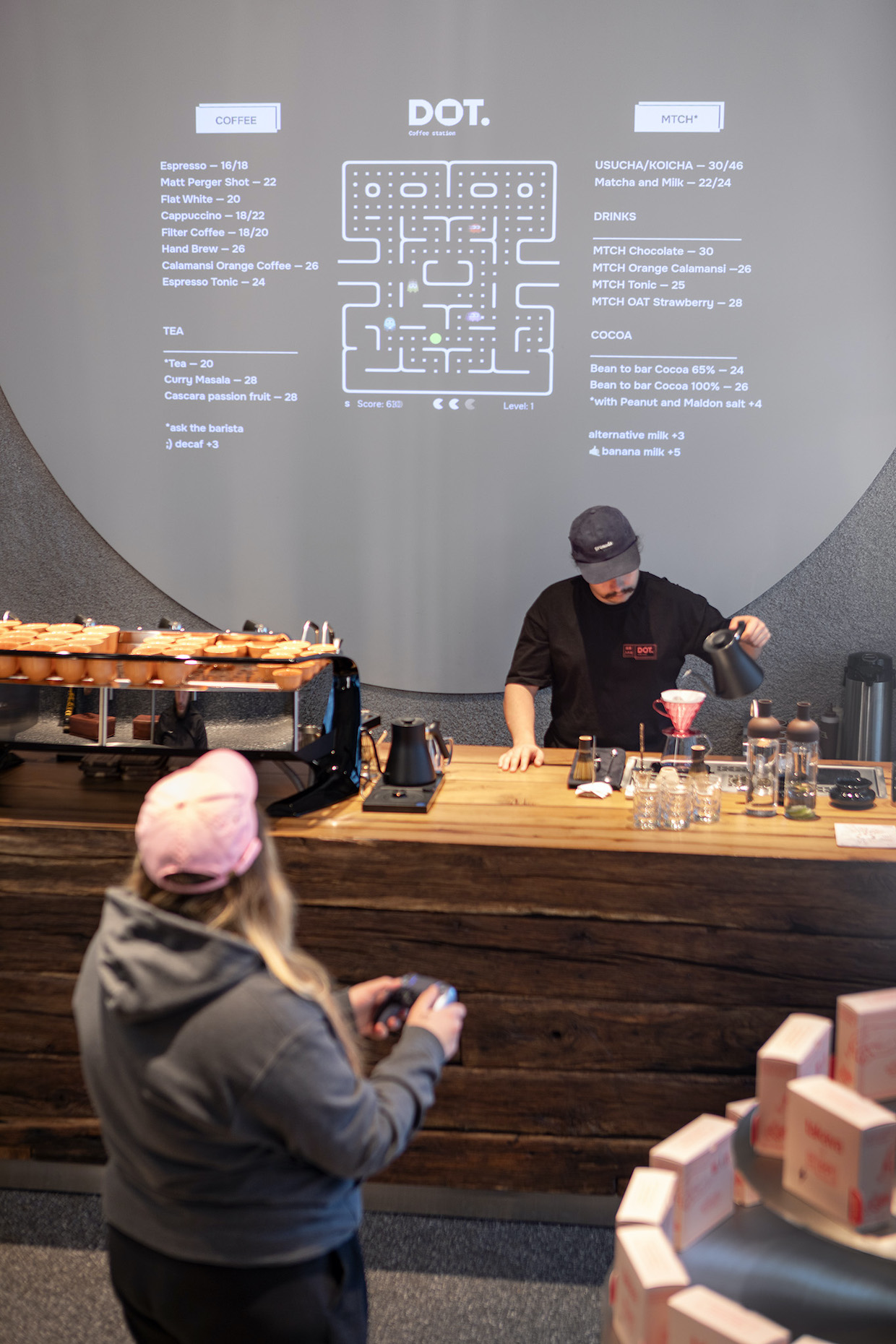
At the core of DOT. Coffee & Matcha’s interior design is a commanding bar counter, meticulously crafted from substantial reclaimed wooden beams. This is not merely a functional element for serving beverages; it is conceived as a sculptural centerpiece and a signature element that unifies all DOT. locations. "At the heart of the interior is a massive bar counter made from reclaimed wooden beams," YOD Group explained. "It integrates the coffee machine, matcha station and dessert display, and serves as the visual anchor of the space. This heavy, sculptural form is a signature element across all DOT locations."
The bar serves as the central hub of activity, housing the essential components of the café’s operation: the coffee machinery, a dedicated matcha preparation station, and a display for the café’s sweet offerings. Its imposing presence, derived from the robust reclaimed timber, lends a sense of gravitas and artisanal quality to the space, reinforcing the brand’s commitment to both aesthetic excellence and functional integrity.
Interactive Elements and the Menu as Art
Beyond its physical design, DOT. Coffee & Matcha incorporates elements that enhance customer engagement and the overall experience. The menu itself is presented in an innovative way: projected onto the wall behind the bar. This dynamic display offers a modern and visually engaging alternative to traditional printed menus, allowing for easy updates and a sleek integration into the café’s aesthetic.
Adding a touch of playful nostalgia, customers are invited to engage with a classic arcade game, Pac-Man, while awaiting their orders. This interactive feature injects an element of fun and entertainment, transforming waiting time into an opportunity for lighthearted diversion. It reflects a thoughtful approach to customer service, aiming to create memorable moments and foster a positive association with the brand.
The Essence of Urban Life, Redefined
Dmytro Bonesko, Art Director and Partner at YOD Group, articulated the overarching vision for DOT. Coffee & Matcha: "We wanted to create an interior that reflects the essence of urban life. Within a grey palette, rules and markings, people find a place to pause, enjoy warm communication, coffee, matcha and small everyday pleasures." This statement encapsulates the café’s ambition to be more than just a place to consume coffee; it is envisioned as a sanctuary within the urban landscape, a space where individuals can disconnect from the city’s demands and reconnect with themselves and others.
The "grey palette" referred to by Bonesko likely alludes to the urban-inspired color scheme and material choices, which, rather than being monotonous, are designed to be a backdrop for human interaction and enjoyment. The "rules and markings" are the subtle urban cues that add character and structure. Ultimately, the design aims to facilitate moments of pause, warmth, and simple pleasures, making DOT. Coffee & Matcha a distinctive destination in Warsaw’s burgeoning café scene.
Supporting Data and Context
The successful integration of design elements within a commercial space like DOT. Coffee & Matcha is often underpinned by research and understanding of consumer behavior and market trends. The shift towards experiential retail and the demand for "third places" – environments outside of home and work where people can socialize and relax – has been a significant trend over the past decade. Studies by organizations like the National Coffee Association have consistently shown that ambiance and the overall experience are key drivers for café selection, alongside the quality of the beverages themselves.
The choice of a former power station building as the location for this DOT. branch is also noteworthy. Repurposing industrial buildings for commercial use, particularly in the food and beverage sector, has become a popular strategy globally. This approach not only offers a unique architectural canvas but also aligns with sustainability initiatives by giving new life to existing structures. The raw, often cavernous spaces of former industrial sites provide a compelling contrast to the warmth and comfort expected in a café, allowing designers to play with juxtapositions of old and new, rough and refined.
Chronology and Brand Evolution
The opening of DOT. Coffee & Matcha in Warsaw in 2025 represents a significant point in the brand’s trajectory. The first DOT. locations, established in Kyiv, laid the groundwork for the brand’s identity, focusing on efficient service and a strong coffee offering. The expansion to Warsaw signifies a deliberate evolution, adapting the brand’s core principles to a new market and a different set of consumer expectations.
- Pre-2025: Establishment of DOT. Coffee & Matcha locations in Kyiv, primarily focused on a takeaway model. Development of the brand’s core offerings in coffee and matcha.
- 2025: Launch of the Warsaw branch, occupying a 67-square-meter space within a former power station. The design, spearheaded by YOD Group, marks a strategic pivot towards an in-person, community-focused experience.
- Ongoing: The Warsaw location serves as a case study for the brand’s potential future developments, demonstrating a successful adaptation to urban lifestyle trends and a commitment to innovative design in hospitality.
Broader Implications for Urban Hospitality
The success of DOT. Coffee & Matcha in Warsaw offers valuable insights for urban planners, architects, and restaurateurs. It underscores the potential of adaptive reuse in revitalizing urban areas and creating unique commercial destinations. The café’s design also highlights the importance of experiential design in attracting and retaining customers in an increasingly competitive market. By prioritizing social interaction and incorporating interactive elements, DOT. is not just selling coffee; it is cultivating a community and offering a curated experience.
The use of urbanism as a design theme provides a compelling narrative that resonates with city dwellers. It taps into a shared understanding of the urban environment, transforming familiar elements into aesthetic features that enhance the café’s identity. This approach can foster a sense of place and belonging, encouraging repeat visits and positive word-of-mouth.
Furthermore, the integration of YOD Group’s signature reclaimed timber bar across all DOT. locations demonstrates a commitment to brand consistency while allowing for unique adaptations to each space. This strategy builds brand recognition and loyalty, assuring customers of a familiar yet fresh experience across different cities.
In conclusion, DOT. Coffee & Matcha in Warsaw stands as a testament to thoughtful design and strategic brand evolution. By skillfully blending industrial aesthetics with urban inspirations and a focus on communal engagement, the café has successfully transformed an industrial relic into a vibrant social hub, setting a new standard for urban hospitality.
