

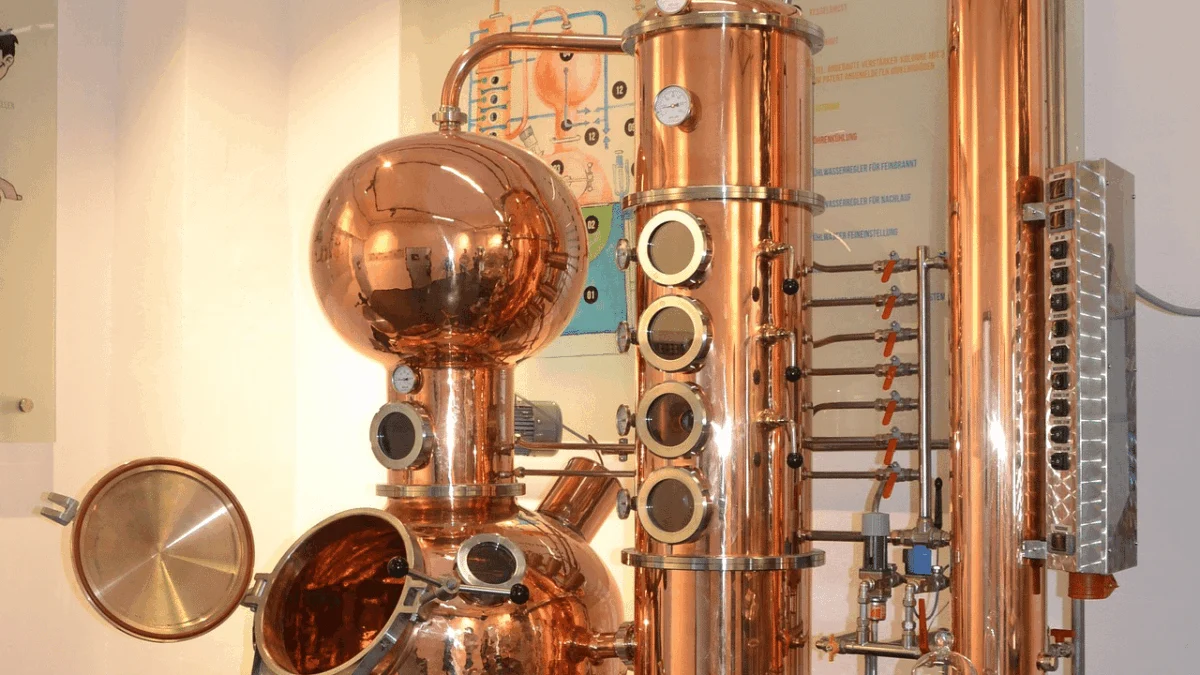
The production of gin is a sophisticated intersection of chemistry, culinary art, and engineering, where the final flavor profile is determined by a myriad of technical decisions made long after the selection of botanicals. While the ingredients—juniper, coriander, citrus peel, and various roots—provide the raw sensory palette, the distiller’s methodology acts as the brush that applies these colors to the canvas of a neutral spirit. Industry experts note that two distillers using the exact same botanical recipe can produce vastly different spirits based on their extraction techniques, distillation speeds, and thermal management.
The Foundation of Neutral Grain Spirit
For the vast majority of commercial and craft gins, the process begins with Neutral Grain Spirit (NGS). This is a highly rectified ethanol, typically distilled to 96% alcohol by volume (ABV), ensuring that the base liquid is devoid of any significant residual flavors from its source material, whether that be wheat, corn, barley, or sugar beets. The use of NGS provides a "blank slate," allowing the delicate volatile oils of the botanicals to remain the focus of the spirit.
While some traditionalists or "farm-to-bottle" distilleries may ferment and distill their base spirit from scratch—often leaving a hint of the base grain’s character—the industry standard relies on high-purity ethanol. This purity is essential for the consistency required in global brands and allows for precise control over the botanical integration process.
Strategic Botanical Ratios and Composition
The first critical decision in gin design is the botanical ratio. A widely accepted industry benchmark for botanical quantity is between 20 and 35 grams of dry ingredients per liter of spirit. However, this is not a rigid rule; craft distillers often push these boundaries to create "botanical-forward" expressions.
Because gin is legally defined in most jurisdictions, including the United States (under TTB regulations) and the European Union, as a spirit where juniper is the predominant flavor, the recipe usually begins with juniper berry volume at approximately 60% of the total botanical weight. The remaining 40% is where the distiller’s signature is found.
Industry data suggests a hierarchical approach to recipe construction:
- Primary Botanicals (Juniper): 60% of total weight.
- Secondary Botanicals (Coriander, Angelica): Often scaled at 50% of the juniper weight.
- Tertiary/Accent Botanicals (Citrus, Spice): Scaled at 1/10th or even 1/100th of the juniper weight.
Botanicals such as cassia bark, cinnamon, or cloves are so potent that even a gram too many in a 100-liter batch can overwhelm the delicate floral notes of orris root or lavender. This precision requires analytical weighing and, frequently, small-scale pilot distillations before a recipe is scaled to a full-sized copper pot still.
Methods of Extraction: Maceration versus Vapor Infusion
Once the ratio is established, the distiller must choose how to extract the essential oils and aromatic compounds from the organic material. There are two primary schools of thought: maceration and vapor infusion.
Maceration (The "Steep" Method)
Maceration involves soaking the botanicals directly in the spirit. This can occur at room temperature for an extended period—often 24 to 48 hours—or directly in the still as it is heated. Beefeater, one of the world’s most recognized London Dry gins, famously employs a 24-hour maceration period. This technique generally results in a "heavier" spirit with a richer mouthfeel, as the boiling alcohol extracts heavier molecular compounds and oils.
Vapor Infusion (The "Basket" Method)
Conversely, vapor infusion involves placing the botanicals in a basket suspended above the liquid spirit in the still. As the ethanol is heated and turns into vapor, it passes through the botanical basket, picking up volatile aromatic compounds without the botanicals ever touching the liquid. Bombay Sapphire is the most prominent example of this technique. The resulting gin is typically lighter, more floral, and more delicate, as the vapor lacks the density to extract the heavier, more bitter tannins found in some roots and barks.
Hybrid Approaches
Modern craft distillers frequently use a combination of both. They may macerate the "tougher" botanicals like juniper and roots to get a robust base, while using a vapor basket for delicate citrus peels and flower petals to preserve their bright, fresh characteristics.
The Chronology of the Distillation Run: Managing the "Cuts"
The most transformative phase of gin production occurs during the distillation run itself. Distillation is a time-dependent process where different compounds evaporate at different temperatures and times. The distiller’s job is to make "cuts"—deciding which parts of the distillate to keep and which to discard or recycle.
- The Foreshots and Heads: The first liquid to emerge from the condenser. These contain highly volatile alcohols like methanol and esters that can smell like nail polish remover or paint thinner. In gin production, the heads often carry an intense, almost aggressive citrus note. Most distillers discard the foreshots and a portion of the heads for safety and flavor balance.
- The Heart: This is the "sweet spot" of the run. It contains the cleanest ethanol and the most desirable botanical flavors. The heart starts with bright citrus and floral notes, moves into the core juniper and coriander flavors, and ends with earthy, spicy notes.
- The Tails: As the ABV in the still drops, heavier, less pleasant compounds begin to emerge. These can smell "feints," "waxy," or like wet cardboard. While some distillers keep a small portion of the early tails for "length" and complexity, most of the tails are cut to ensure the gin remains crisp and clean.
The timing of these cuts is an art form. A "tight" heart cut produces a very clean, premium gin but yields less volume. A "wide" cut increases volume but risks introducing off-flavors that can muddy the botanical profile.
Single-Shot versus Multi-Shot Distillation
The scale of production often dictates whether a distiller uses the single-shot or multi-shot method.
- Single-Shot: The distiller adds the exact amount of botanicals needed for a single batch. After distillation, the resulting high-proof spirit is diluted only with water to reach the bottling strength (usually 40% to 47% ABV). This is often viewed as the "purist" method.
- Multi-Shot: The distiller uses a much higher concentration of botanicals—sometimes two to four times the standard amount—to create a "gin concentrate." After distillation, this concentrate is diluted with more Neutral Grain Spirit and then water.
While some purists argue that single-shot gin has a superior "integration" of flavor, the multi-shot method is a highly efficient way to produce large volumes of gin using smaller stills. Research and blind tastings within the industry have shown that, when executed correctly, the quality difference between the two is negligible to the average consumer.
Regulatory Standards and Categorization
The technical decisions made in the distillery also determine the legal category of the final product. The "London Dry" designation is the most stringent. Despite its name, it can be made anywhere in the world, provided it meets specific criteria:
- All botanical flavors must be introduced through distillation.
- No artificial colors or flavors can be added after distillation.
- Only a minute amount of sweetener (0.1 grams per liter) is permitted.
- The distillate must come off the still at a minimum of 70% ABV.
"Distilled Gin," by contrast, allows for flavors or colors to be added after the distillation process, providing more flexibility for modern styles like "Pink Gin" or contemporary gins that feature post-distillation infusions of fresh cucumber or rose petals.
Broader Implications for the Spirits Industry
The evolution of gin distillation techniques has sparked a global "Gin Renaissance." According to market analysis data, the global gin market was valued at approximately $15.3 billion in 2023 and is projected to grow at a compound annual growth rate (CAGR) of 5% through 2030. This growth is driven largely by the "premiumization" of the category, where consumers are increasingly interested in the technical details of production.
Furthermore, the rise of vacuum distillation (distilling at lower pressures and temperatures) has allowed distillers to work with fresh botanicals that would otherwise be "cooked" or ruined by the heat of a traditional pot still. This technological leap is expanding the flavor vocabulary of gin to include fresh herbs, succulent fruits, and delicate tea leaves.
Conclusion
The flavor of a gin is far more than a list of ingredients on a label; it is the result of a complex series of variables managed by the distiller. From the ratio of juniper to the height of the vapor basket, and from the precision of the heart cut to the method of dilution, each step is a pivot point that defines the spirit’s character. As the industry continues to innovate, the role of the distiller remains a balance of honoring centuries-old traditions like the London Dry style while embracing new technologies to push the boundaries of what gin can be. Understanding these processes reveals that gin is not merely a flavored spirit, but a masterclass in the art of botanical extraction.
