

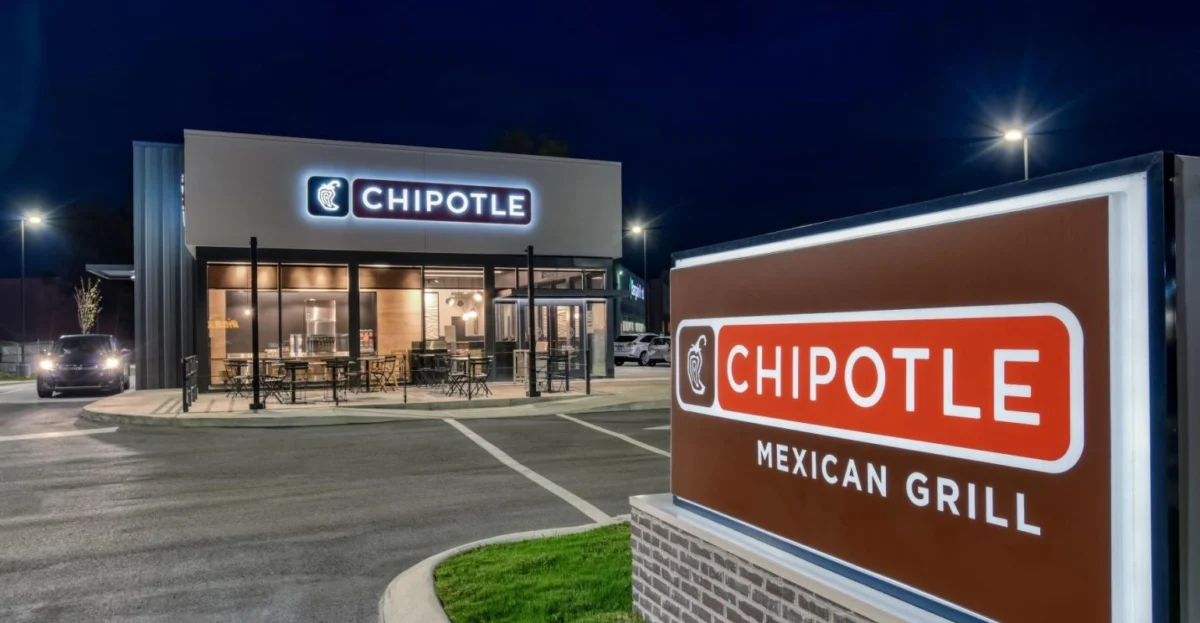
Chipotle Mexican Grill has announced a significant resurgence in its financial performance, reporting its strongest same-store sales growth since 2024. The fast-casual giant’s second-quarter results revealed a robust 2.2% increase in same-store sales, a figure that underscores a renewed momentum for the brand. This growth was propelled by a 1% uptick in customer transactions and a 1.2% rise in the average check size, indicating that not only are more customers dining at Chipotle, but they are also spending more per visit.
The company’s strategic initiatives and marketing campaigns appear to be resonating strongly with consumers. The introduction of its highly anticipated honey chicken in April served as a key catalyst, drawing in customers with a novel flavor profile. Complementing this product innovation, Chipotle’s marketing efforts, including a successful World Cup Buy-One-Get-One (BOGO) promotion and enhancements to its customer rewards program, have further solidified its connection with its demographic. These combined factors have enabled Chipotle to revise its full-year same-store sales guidance upwards to the low-single-digit range, a significant improvement from its previously projected flat performance in April. This upward revision signals a strong degree of confidence from the company’s leadership regarding its trajectory for the remainder of the fiscal year.
Yum Brands: Taco Bell Leads the Charge Amidst Mixed Performance
Within the broader Yum Brands portfolio, Taco Bell has once again emerged as the primary driver of growth, delivering an impressive 7% same-store sales increase in the second quarter. This sustained strength positions Taco Bell as a consistent performer within the quick-service sector. Overall, Yum Brands experienced a 3% global same-store sales increase for the quarter. While KFC contributed positively with a 2% rise, Pizza Hut saw a slight decline of 1%. System-wide sales for Yum Brands grew by 5% during the period.
A notable highlight for Yum Brands is the record 60% mix of digital sales, reflecting a significant shift in consumer purchasing behavior towards online and mobile channels. This digital penetration is a key indicator of the company’s adaptability to evolving consumer preferences. Furthermore, the company reported a 5% increase in its unit count, signaling continued expansion and investment in its global footprint. Looking ahead, Yum Brands anticipates the closing of its Pizza Hut sale to LongRange Capital and the divestiture of Yum China in August, which are expected to streamline its portfolio and focus its strategic efforts.
Jersey Mike’s Embarks on Public Market Journey with Ambitious Growth Vision
Jersey Mike’s, the popular sub sandwich chain, has officially entered the public market, with its stock opening at $23 per share on Thursday. This opening price fell within the projected range of $21 to $25, signaling a stable debut. The initial public offering (IPO) has valued the company at approximately $7.3 billion, raising over $1 billion in capital. CEO Charlie Morrison, who had the honor of ringing the opening bell at the New York Stock Exchange, articulated a bold vision for the company’s future.
Morrison expressed his ambition to expand Jersey Mike’s into a global chain with an impressive 15,000 locations. This ambitious target suggests a strategic focus on aggressive expansion, both domestically and internationally. The company aims to capture market share not only from direct competitors in the sandwich segment but also from other quick-service categories by appealing to a younger demographic. This strategy implies a commitment to modernizing its brand image, enhancing its product offerings, and leveraging digital channels to attract and retain a new generation of consumers. The success of this expansion will hinge on Jersey Mike’s ability to maintain its core brand identity while adapting to diverse market demands and competitive pressures.
Broader Industry Trends and Implications
The financial performances reported by Chipotle, Yum Brands, and the public debut of Jersey Mike’s offer a valuable snapshot of the current dynamics within the fast-casual and quick-service restaurant industries. The consistent strength of Taco Bell and the resurgence of Chipotle underscore the enduring appeal of accessible, quality food offerings. The increasing reliance on digital sales, as evidenced by Yum Brands’ record 60% digital mix, highlights the critical importance of robust online ordering platforms, delivery integration, and effective digital marketing strategies. Restaurants that can seamlessly integrate digital and physical experiences are likely to gain a competitive advantage.
The ambitious growth plans articulated by Jersey Mike’s CEO, Charlie Morrison, reflect a broader trend of consolidation and expansion within the industry. The quest for market share through unit growth and diversification of customer segments is a common strategy. However, achieving such ambitious expansion requires meticulous planning, efficient supply chain management, and a deep understanding of local market nuances. The focus on attracting a younger audience also points to the evolving consumer landscape, where brands must remain agile and responsive to generational preferences in taste, convenience, and brand values.
Supporting Data and Context
Chipotle’s Growth Drivers:
- Same-Store Sales: 2.2% increase (Q2)
- Transaction Growth: 1% increase
- Average Check Growth: 1.2% increase
- Full-Year Guidance Revision: Low-single-digit range (from flat)
- Key Initiatives: Honey chicken launch (April), World Cup BOGO, enhanced rewards program.
Yum Brands Performance:
- Global Same-Store Sales: 3% increase (Q2)
- Taco Bell Same-Store Sales: 7% increase
- KFC Same-Store Sales: 2% increase
- Pizza Hut Same-Store Sales: -1% decrease
- System Sales Growth: 5%
- Digital Sales Mix: Record 60%
- Unit Count Growth: 5%
Jersey Mike’s Public Debut:
- Opening Stock Price: $23 per share
- Projected Range: $21 – $25
- Market Valuation: $7.3 billion
- Capital Raised: Over $1 billion
- CEO’s Vision: 15,000 unit global chain
The data points to a bifurcated market in some respects, with certain brands experiencing significant tailwinds while others navigate more challenging segments. Chipotle’s ability to drive both traffic and ticket size suggests a healthy consumer demand for its core offerings, further boosted by strategic product introductions. Yum Brands’ performance, while diversified, shows the power of its quick-service brands, particularly Taco Bell, in a competitive landscape. The success of digital initiatives across the board is a testament to the industry’s ongoing digital transformation.
Chronology of Key Events
Q2 2024 (Approximate Period):

- April: Chipotle launches its honey chicken offering, a key driver for its subsequent sales performance.
- During the Quarter: Chipotle implements its World Cup BOGO promotion and enhances its rewards program.
- Throughout the Quarter: Taco Bell demonstrates sustained strong performance within the Yum Brands portfolio.
- Throughout the Quarter: Yum Brands achieves a record 60% digital sales mix.
- Later in the Quarter: Jersey Mike’s undergoes its Initial Public Offering (IPO) and begins trading on the stock market.
August 2024 (Projected):
- Yum Brands expects the closing of its Pizza Hut sale to LongRange Capital and the divestiture of Yum China.
This timeline highlights the concurrent strategic moves and market events that have shaped the recent performance of these key players in the restaurant industry. The rapid succession of these events underscores the dynamic nature of the sector, where innovation, marketing, and financial restructuring often occur simultaneously.
Analysis and Implications
The strong performance of Chipotle signals a successful execution of its strategic priorities, particularly its ability to leverage new menu items and marketing campaigns to drive customer traffic and spending. The upward revision of its full-year guidance is a positive indicator for investors and suggests that the company is well-positioned to capitalize on current market conditions. The focus on increasing both transactions and average check size indicates a balanced approach to growth, aiming for both broad appeal and increased per-customer value.
For Yum Brands, the continued dominance of Taco Bell is a significant strength, providing a stable foundation for the company. The company’s proactive approach to digital transformation, evidenced by its record digital sales mix, is crucial for future growth and customer engagement. The upcoming sales of Pizza Hut and Yum China will allow Yum Brands to refine its strategic focus, potentially concentrating on its most high-performing segments.
Jersey Mike’s entry into the public market represents a significant milestone for the brand. The ambitious growth targets set by CEO Charlie Morrison suggest a confidence in the brand’s ability to scale rapidly and gain market share. The challenge will lie in executing this expansion effectively while maintaining the quality and customer experience that have contributed to its success. Attracting a younger demographic will require a nuanced understanding of their preferences and the ability to adapt marketing and operational strategies accordingly. The success of this strategy could set a precedent for other emerging chains looking to expand aggressively.
The overall trends observed – the emphasis on digital integration, the pursuit of aggressive expansion, and the ongoing need for product innovation and targeted marketing – are likely to shape the restaurant industry for the foreseeable future. Companies that can effectively navigate these trends, adapt to changing consumer behaviors, and maintain operational efficiency will be best positioned for sustained success. The financial results and strategic maneuvers of these prominent companies provide valuable insights into the evolving landscape of the global food service market.
