

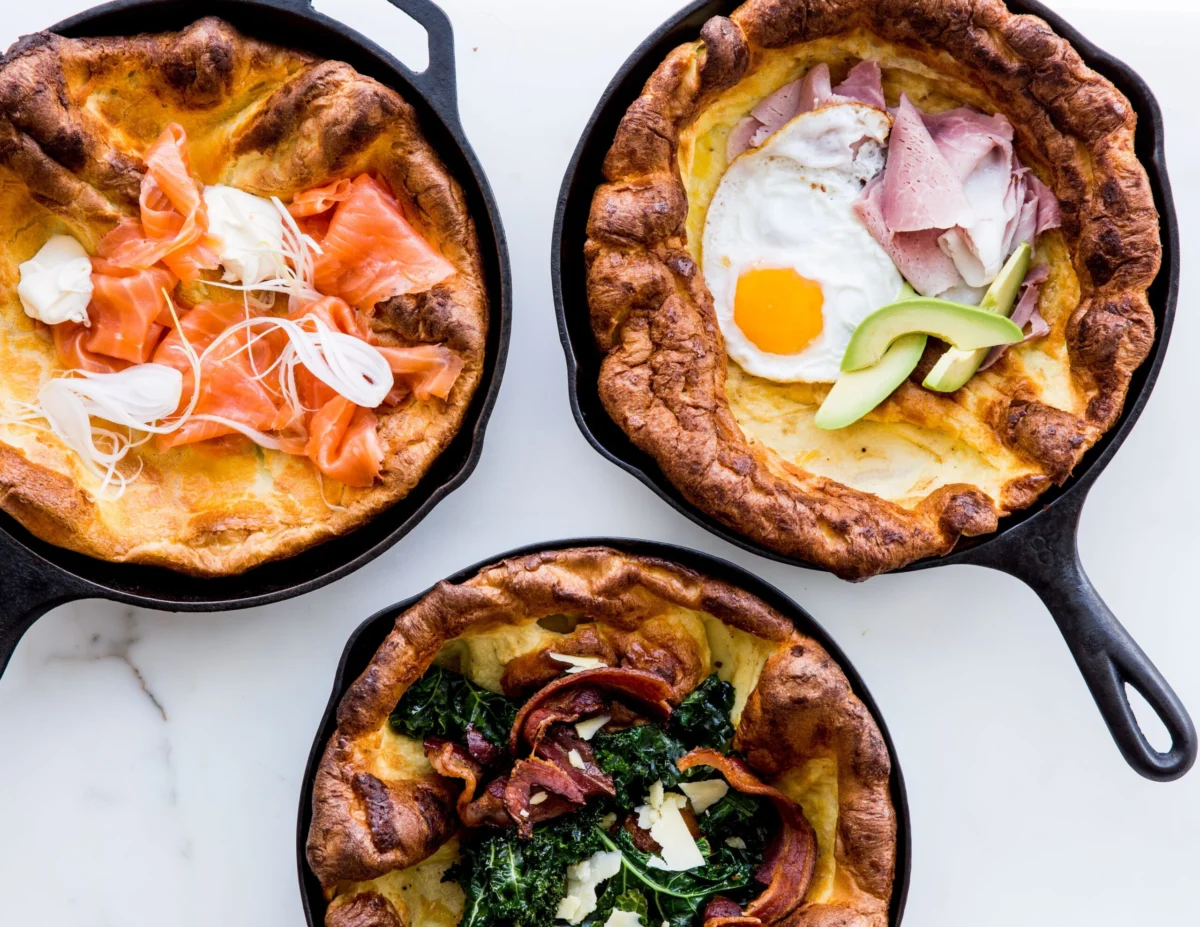
Essentially a giant popover, this savory Dutch baby emerges from the oven dramatically puffed, showcasing crisp edges and a tender, eggy center that captivates both the eye and the palate. The deceptively simple preparation, often aided by a blender for quick batter creation, belies the impressive culinary spectacle it presents. A touch of cornstarch in the batter is a subtle yet effective technique employed to enhance the textural contrast, ensuring the coveted delicate crispness alongside a custardy interior. Observers and first-time preparers are often initially alarmed by its inevitable deflation upon removal from the oven, a natural characteristic that is, in fact, an intrinsic part of its expected behavior and structural integrity.
This remarkable dish has transcended its traditional sweet iterations to become a versatile canvas for a myriad of savory accompaniments, firmly establishing its place in contemporary brunch culture and home kitchens alike. Culinary enthusiasts are increasingly exploring pairings that elevate its inherent richness. Popular savory toppings include a classic combination of perfectly fried eggs, creamy slices of avocado, and delicate shavings of cured ham, offering a balanced profile of protein, healthy fats, and umami. For those seeking a more sophisticated flavor profile, a topping of smoked salmon, a dollop of tangy crème fraîche, and a sprinkle of vibrant sliced scallions provides a luxurious, briny, and fresh counterpoint to the pancake’s richness. Alternatively, a rustic yet robust option features sautéed kale, crispy bacon bits, and generous shavings of aged cheddar, delivering a hearty and deeply satisfying experience. While its sweet counterpart, often adorned with maple whipped cream, remains a beloved classic, the savory Dutch baby has carved out a significant niche, demonstrating the dish’s remarkable adaptability.
The Culinary Science Behind the Dramatic Puff
The signature "puff" of a Dutch baby is not merely aesthetic; it is a fascinating demonstration of fundamental culinary science at play. The process is largely driven by steam. When the cold batter hits a scorching hot, preheated skillet—typically heated in a 450°F (232°C) oven for at least 25 minutes—the moisture within the batter rapidly converts to steam. This steam becomes trapped within the developing gluten structure of the pancake, causing it to inflate dramatically. The high heat of the oven and the pan also quickly sets the exterior, creating a crisp crust that holds the steam, preventing immediate collapse.
Crucially, a properly preheated skillet is paramount to achieving this effect. The instantaneous heat shock ensures that the batter begins to cook and rise immediately upon contact. Without this initial burst of heat, the batter would spread too thinly before setting, resulting in a flat, dense pancake rather than a voluminous, airy one. The recipe’s emphasis on room-temperature ingredients also plays a vital role. Eggs and milk at room temperature emulsify more effectively, creating a smoother, more uniform batter. Furthermore, warmer ingredients react more predictably and efficiently to heat, contributing to a more consistent rise.
The incorporation of air into the eggs is another critical factor. A blender excels at this, rapidly whipping air into the eggs, creating a frothy base that adds to the batter’s lightness and contributes to the overall volume. For those without a blender, vigorous whisking until the eggs are significantly aerated and frothy can achieve a similar, albeit more labor-intensive, result. This added air, along with the steam, creates the internal structure that allows the Dutch baby to expand so impressively. The cornstarch, often a minor but impactful addition, contributes to the crispness of the edges and helps achieve that desirable contrast with the tender, custardy interior by slightly inhibiting gluten development and promoting a more delicate structure. The subsequent deflation after leaving the oven is entirely natural, as the steam cools and condenses, causing the internal structure to relax. This is a characteristic feature of the dish, not a flaw, and is expected given the physical principles governing its creation.
Historical Context and Etymological Journey
The Dutch baby pancake, despite its name, is not Dutch in origin but rather American, with strong German roots. It is widely believed to be an Americanized version of the German Pfannkuchen, a large, oven-baked pancake similar to a crêpe but thicker, or a Bismarck pancake. The name "Dutch baby" is attributed to Manca’s Cafe, a family-run restaurant in Seattle, Washington, during the first half of the 20th century. Victor Manca, the proprietor, is credited with introducing the dish to his menu. Legend has it that one of his daughters, when attempting to pronounce "Deutsch" (German), mispronounced it as "Dutch," and the "baby" suffix was added to denote its smaller, individual serving size compared to a larger family-style Pfannkuchen. This charming anecdote, though difficult to verify with absolute certainty, has become an integral part of the dish’s lore, cementing its unique identity within American culinary history.
The Pfannkuchen itself has a long and varied history across Germany, often served with a variety of sweet or savory toppings depending on the region. It shares common ancestry with other oven-baked egg-and-flour preparations found across Europe, such as the British Yorkshire pudding, which also relies on high heat and steam to achieve its characteristic puff. The migration of German immigrants to the United States in the 19th and early 20th centuries brought many culinary traditions, including these substantial pancakes, which then evolved to suit local tastes and ingredients. The Dutch baby’s distinct preparation in a cast-iron skillet and its dramatic presentation quickly set it apart, contributing to its growing popularity in American diners and homes. By the mid-20th century, recipes for Dutch babies began appearing in cookbooks and newspaper food sections, solidifying its status as a recognized breakfast or brunch item. Its adoption into American culinary lexicon demonstrates the dynamic nature of food traditions as they traverse cultures and generations.
The Versatility of Savory Pairings: A Culinary Exploration
The inherent neutrality and slight sweetness of the Dutch baby’s eggy base make it an extraordinarily versatile vehicle for a wide array of savory toppings, moving it beyond the realm of traditional breakfast sweets into a more sophisticated and flexible culinary category. This adaptability has been a key driver in its resurgence in contemporary dining.
The first suggested pairing—fried eggs, avocado, and shaved ham—exemplifies a classic brunch plate, reimagined. The richness of a perfectly cooked fried egg, with its runny yolk, provides a natural sauce that melds beautifully with the tender pancake. Slices of creamy avocado introduce a contrasting texture and a dose of healthy fats, while the salty, savory notes of shaved ham (prosciutto, speck, or even a good quality deli ham) provide a robust counterpoint. This combination offers a balanced meal, hitting notes of protein, fat, and subtle umami, making it a satisfying choice for any time of day.
For those with a penchant for elevated flavors, the combination of smoked salmon, crème fraîche, and sliced scallions transforms the Dutch baby into an elegant dish suitable for a refined brunch or even a light dinner. The delicate, briny flavor of smoked salmon pairs exquisitely with the creamy, slightly tangy crème fraîche, which cuts through the richness of both the fish and the pancake. Fresh, pungent scallions add a vital aromatic lift and a hint of crispness, providing a refreshing contrast. This pairing draws inspiration from classic European breakfast fare, showcasing how the Dutch baby can effortlessly adapt to more gourmet applications, reminiscent of blini or other sophisticated pancake variations.
The third suggestion, sautéed kale, crispy bacon, and aged cheddar, leans into hearty, comforting flavors. The earthy bitterness of sautéed kale, softened and slightly caramelized, provides a grounding element. Crispy bacon introduces a textural crunch and intense smoky, salty notes that are universally appealing. Finally, the sharp, nutty profile of aged cheddar cheese, melting slightly from the residual heat of the pancake, brings a layer of complex savory depth. This combination is particularly well-suited for cooler weather, offering a substantial and deeply satisfying meal that evokes warmth and home.
Beyond these curated suggestions, the potential for savory Dutch baby variations is virtually limitless. One could envision roasted cherry tomatoes and fresh basil, a nod to Mediterranean flavors. Sautéed mushrooms and a drizzle of truffle oil would create an earthy, luxurious option. Leftover pulled pork or shredded chicken, perhaps with a smoky barbecue sauce, could transform it into a robust meal. Even a simple topping of herbs, a sprinkle of sea salt, and a crack of black pepper can highlight the pancake’s inherent qualities. The growing trend towards "breakfast for dinner" further solidifies the savory Dutch baby’s role as a versatile meal component, capable of anchoring a diverse range of flavor profiles and adapting to a wide spectrum of culinary traditions.
The Rise of Brunch Culture and the Dutch Baby’s Role
The popularity of the Dutch baby, particularly its savory renditions, is inextricably linked to the broader phenomenon of brunch culture. Brunch, once a leisurely weekend meal, has evolved into a significant culinary and social event, driving innovation in menus and home cooking alike. Consumers are increasingly seeking dishes that offer both comfort and sophistication, visual appeal, and ease of preparation—qualities that the Dutch baby embodies perfectly.
Data from various food industry reports indicate a steady growth in the brunch segment, often outpacing other dining categories. For instance, market research frequently highlights a strong consumer preference for unique, Instagrammable dishes that offer a twist on traditional fare. The Dutch baby, with its dramatic puff and impressive presentation, is inherently photogenic, making it a natural fit for social media platforms where food aesthetics play a crucial role in driving trends. Food blogs, culinary websites, and cooking shows frequently feature Dutch baby recipes, further amplifying its reach and inspiring home cooks to experiment. A 2022 survey by the National Restaurant Association, for example, noted that "experiential dining" and "unique breakfast/brunch items" were among the top trends, categories where the Dutch baby excels.
Culinary experts and chefs have noted the Dutch baby’s appeal for its relative simplicity in preparation compared to its impressive output. "It offers a tremendous ‘wow’ factor with minimal hands-on time, which is invaluable in both a busy restaurant kitchen and a home setting," stated Chef Eleanor Vance, a recognized figure in contemporary American cuisine, in a recent interview. "The base is straightforward, allowing chefs and home cooks to truly express creativity through the toppings, adapting it to local produce or global flavors." This ease of execution, coupled with its visually stunning result, makes it an ideal dish for entertaining, as it can be prepared largely in advance (batter) and then quickly baked to order, minimizing last-minute stress.
Furthermore, the emphasis on fresh, seasonal ingredients in modern cooking aligns well with the Dutch baby’s versatility. Toppings can be adapted to whatever is fresh at the market, from seasonal vegetables to locally sourced meats and cheeses. This adaptability resonates with consumers who prioritize fresh, high-quality ingredients and sustainable practices, positioning the Dutch baby as a relevant and adaptable dish in the evolving culinary landscape.
Expert Insights and Practical Implications for Home Cooks
For home cooks, mastering the Dutch baby offers a gateway to impressive culinary achievements with relatively low effort. The frequently asked questions regarding its preparation—particularly why it might not puff up—underscore the importance of specific techniques that, once understood, make success nearly guaranteed.
Culinary instructors often emphasize the thermal shock principle as fundamental. "Think of it like a soufflé, but simpler," explained Patrick Chen, a noted food science educator, during a recent online seminar. "The sudden introduction of a cold, wet batter to a superheated surface is what creates that explosive lift. Any deviation from that temperature gradient can compromise the puff, leading to a flatter result." This explains why preheating the skillet in a 450°F oven for at least 25 minutes is non-negotiable. The pan needs to be radiating intense heat to initiate the rapid vaporization of water in the batter, creating the necessary steam for inflation.
The consistency of ingredients is another point often highlighted by culinary professionals. Room-temperature eggs and milk are crucial because they create a smoother, more uniform batter that is better able to trap air and steam. Cold ingredients can cause the butter in the hot pan to seize or solidify unevenly, affecting the overall texture and rise, and can also lower the overall temperature of the batter, slowing down the initial steam generation.
Regarding the use of a blender, its efficacy lies in its ability to quickly and thoroughly aerate the eggs and combine the ingredients without overworking the gluten, which could lead to a tougher pancake. "A blender ensures a homogeneous batter with a good amount of trapped air, which contributes to a lighter final product and a more consistent puff," noted Sarah Jenkins, a recipe developer for a prominent food publication. While a whisk can be used, the vigor and duration required to achieve the same level of frothy aeration are significant. Readers of Bon Appétit who have successfully used a whisk confirm that the key is to beat the eggs "vigorously until very frothy" before incorporating other ingredients, demonstrating that careful manual technique can indeed replicate the blender’s effect, albeit with more physical exertion.
The implication for home cooks is that while the Dutch baby appears complex, its success hinges on adherence to a few key, scientifically sound principles rather than advanced culinary skill. This makes it an incredibly rewarding dish to prepare, offering a high return on investment in terms of visual appeal and taste, solidifying its place as a practical yet impressive option for home entertaining and daily meals.
Broader Impact and Future Culinary Trends
The sustained interest in dishes like the savory Dutch baby reflects several broader trends within the food industry and home cooking. Firstly, there is a clear demand for "elevated comfort food"—familiar dishes presented with a sophisticated twist or high-quality ingredients. The Dutch baby fits this perfectly, taking a humble pancake concept and transforming it into a showstopper that satisfies both nostalgic cravings and modern palates.
Secondly, the emphasis on versatility and customization is paramount. Modern diners and home cooks appreciate dishes that can be easily adapted to dietary preferences, seasonal availability, and personal tastes. The extensive range of savory toppings, from vegetarian options to various proteins and global flavor profiles, allows the Dutch baby to cater to a diverse audience, ensuring its continued relevance in an increasingly personalized culinary landscape.
Thirdly, the rise of food media, including social platforms, has placed a premium on visually appealing dishes. The Dutch baby’s dramatic rise and subsequent rustic collapse, along with the vibrant colors of its toppings, make it highly shareable content. A dish that photographs well often trends well, and this digital influence is a powerful force in shaping culinary trends and popularizing specific dishes, often leading to viral recipe phenomena.
Looking ahead, the Dutch baby’s adaptability suggests it will continue to evolve. We might see further experimentation with different flour bases (e.g., whole wheat, gluten-free blends), alternative fats, or even regional fusion toppings that incorporate global flavors like gochujang-glazed pork belly or za’atar spiced vegetables. Its fundamental structure—a puffed, eggy canvas—provides endless opportunities for culinary innovation, ensuring its place not just as a passing trend, but as a staple in the repertoire of discerning home cooks and professional chefs alike. Its enduring appeal lies in its unique combination of simplicity, theatricality, and boundless potential for creative expression.
In conclusion, the savory Dutch baby stands as a testament to the power of culinary science, historical evolution, and modern adaptability. From its origins as a German Pfannkuchen to its current status as a versatile, visually stunning brunch centerpiece, it continues to impress with its dramatic presentation, tender texture, and boundless potential for savory embellishment. Its ease of preparation, combined with its impressive outcome, solidifies its position as a beloved and enduring dish in the contemporary culinary landscape, promising continued innovation and enjoyment for generations of food enthusiasts.
