

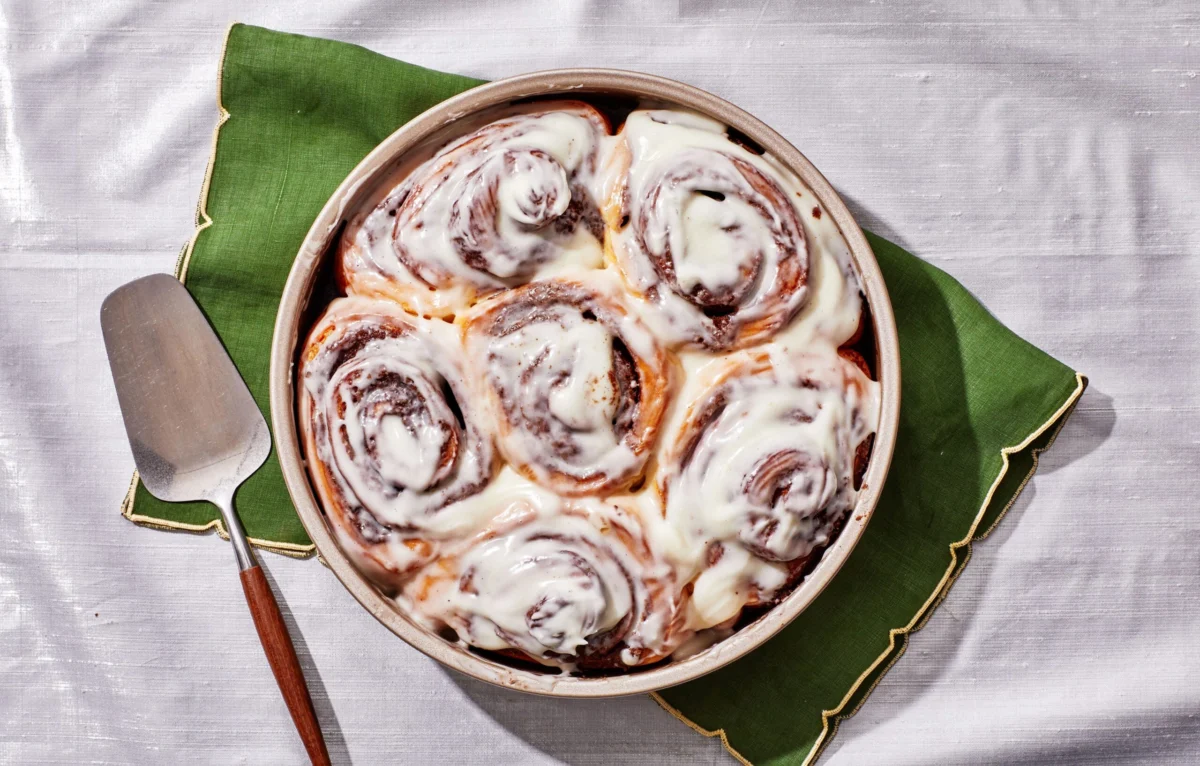
A recent development in the realm of home baking has captured the attention of culinary enthusiasts, showcasing how the strategic integration of sophisticated techniques can significantly redefine a beloved classic: the cinnamon roll. This particular rendition, distinguished by its exceptional fluffiness, tender crumb, and extended freshness, represents a synthesis of traditional methods and precise culinary science. At its core, this innovative approach leverages two primary techniques—the ancient Chinese method of Tangzhong and the classic French preparation of brown butter—alongside a meticulously balanced cream cheese frosting, to yield a product that sets a new benchmark for homemade pastries.
The Elevated Cinnamon Roll: A New Standard
Traditionally, cinnamon rolls are characterized by a sweet, yeast-leavened dough, a spiced sugar filling, and a sweet glaze. While satisfying, many homemade versions often struggle with maintaining softness beyond the day of baking, or achieving a truly ethereal texture. The re-engineered recipe addresses these common challenges head-on. Upon first inspection, these rolls present the familiar aesthetic of buttery, golden-brown dough, a rich cinnamon-and-brown-sugar filling, and a generous application of cream cheese frosting. However, the true innovation lies beneath the surface, embedded within the structural integrity and flavor profile of each component. The result is a roll that not only boasts an impressively tender crumb but also retains its desirable softness for an extended period, often well into the second day, a notable achievement in yeast-based baking.
The Science of Superior Softness: Unpacking Tangzhong
The primary driver behind the unparalleled tenderness and extended freshness of these cinnamon rolls is the incorporation of Tangzhong, a technique rooted in Chinese baking. This method, often referred to as a "water roux" or "starter," involves cooking a small portion of flour and liquid (typically milk or water) into a thick, paste-like consistency before it is integrated into the main dough.
-
Origins and Evolution: The Tangzhong method has a rich history in Asian bread-making, particularly prominent in cultures where soft, milky breads are highly prized. While its precise historical genesis is difficult to pinpoint to a single moment, its principles have been applied in various forms across Asian bakeries for generations. It gained significant international recognition and popularity in the early 21st century, largely popularized by cookbook author Yvonne Chen, who detailed its application in her book "65°C Bread Doctor." This marked a pivotal moment, transitioning a traditional regional technique into a global baking phenomenon.
-
The Gelatinization Effect: From a scientific standpoint, the effectiveness of Tangzhong lies in the gelatinization of starch. When flour and liquid are heated to approximately 65°C (149°F), the starch molecules in the flour absorb a significant amount of the liquid, swelling and creating a viscous paste. This process pre-gelatinizes the starches, allowing them to hold onto substantially more moisture than raw flour. When this paste is added to the dough, the increased hydration capacity translates directly into a more supple, elastic dough. Crucially, this trapped moisture is less prone to evaporating during baking and subsequent cooling, which is a primary cause of bread staling. The resulting dough is not only softer and more pliable, making it easier to work with, but the baked product also exhibits a finer, more uniform crumb structure and a significantly longer shelf life, maintaining its moistness and tenderness for days. Food scientists emphasize that this technique essentially "locks in" hydration at a molecular level, preventing the rapid recrystallization of starch that leads to dryness and firmness.
-
Global Adoption and Impact: The adoption of Tangzhong by Western bakers, initially spurred by the popularity of Japanese milk bread and other Asian-style brioches, illustrates a broader trend of cross-cultural culinary exchange. Its efficacy in producing exceptionally soft, fluffy, and long-lasting baked goods has led to its integration into a wide array of recipes, from sandwich breads to enriched doughs like brioche and, now, cinnamon rolls. This technique has effectively democratized advanced textural control for home bakers, offering a relatively simple step with profound impact on the final product.
Aromatic Depth: The Art of Brown Butter
Complementing the textural brilliance of Tangzhong, the flavor profile of these cinnamon rolls is significantly enhanced by the strategic use of brown butter, also known by its French name, beurre noisette. This technique introduces a complex, nutty, and toasty dimension to the gooey cinnamon-and-brown-sugar filling, elevating it beyond the typical sweetness.
-
French Culinary Heritage: Brown butter is a staple of classic French cuisine, revered for its ability to transform simple butter into an ingredient with profound depth of flavor. Its use spans both savory applications, such as sauces for fish or vegetables, and sweet preparations, including financiers, madeleines, and various tarts. The technique involves gently heating unsalted butter until its milk solids separate, sink to the bottom of the pan, and then toast to a golden-brown hue, releasing a distinct nutty aroma reminiscent of hazelnuts.
-
The Maillard Reaction in Action: The transformation of butter into brown butter is a direct result of the Maillard reaction, a complex series of chemical reactions between amino acids and reducing sugars that occurs when food is heated. In the case of butter, it is the milk solids (proteins and lactose) that undergo this reaction, producing hundreds of new flavor compounds. This process imbues the butter with notes of caramel, toast, and nuts, significantly enriching its flavor profile. Unlike simply melting butter, browning it adds a layer of sophisticated flavor that cannot be replicated by other means.
-
Flavor Profile and Application: In this cinnamon roll recipe, brown butter is specifically incorporated into the filling. This is a deliberate choice to infuse the core of the roll with its rich, complex notes. The nutty, slightly savory undertones of the brown butter provide an exquisite counterpoint to the sweetness of the brown sugar and the warmth of the cinnamon. This creates a more nuanced and less unidimensional flavor experience, contributing to the overall gourmet quality of the finished product. Pastry chefs frequently utilize brown butter to add sophistication to desserts, and its application here demonstrates a keen understanding of flavor dynamics.
Balancing Act: The Role of Cream Cheese Frosting
While Tangzhong and brown butter are the primary innovations, the cream cheese frosting plays a crucial role in balancing the richness and sweetness of the rolls. A generous swoop of tangy cream cheese frosting provides a refreshing contrast to the deep, caramelized notes of the filling and the subtle sweetness of the dough. The acidity of the cream cheese cuts through the richness, preventing the rolls from becoming cloyingly sweet and enhancing the overall eating experience. Furthermore, the optional addition of lemon zest introduces a bright, citrusy counterpoint, lifting the flavors and adding an extra layer of aromatic complexity, a common technique used by professional bakers to brighten and balance rich desserts.
Mastering the Craft: Practical Considerations for Home Bakers
The developers of this recipe have also provided practical guidance for home bakers, addressing common concerns and offering strategies to ensure success, even with these advanced techniques.
-
Strategic Preparation: Overnight Techniques: For convenience, the recipe allows for significant make-ahead preparation. Bakers can refrigerate the dough after its initial rise, allowing for a cold fermentation which can also contribute to flavor development. Alternatively, the rolls can be assembled and refrigerated in their baking pans before the second rise. This flexibility is highly valued by home bakers seeking to manage their time effectively, allowing for fresh-baked goods without an early morning start. Proper covering with plastic wrap is essential to prevent the dough from drying out, and an hour at room temperature the next day is recommended to allow the dough to warm and activate yeast activity before the final proofing and baking.
-
Dough Dynamics: Managing Hydration and Texture: The recipe acknowledges that this is a soft, moisture-rich dough, which can initially feel sticky. However, it emphasizes that proper kneading should transform it into a smooth and elastic consistency. A critical recommendation for consistent results is to weigh flour rather than measuring by volume. Flour density can vary significantly based on compaction, humidity, and type, leading to inconsistent hydration levels when measured by volume. Weighing provides precise control over the flour-to-liquid ratio, crucial for the success of a high-hydration dough. Additionally, ensuring the Tangzhong has reached the correct thick, paste-like consistency before incorporation is vital; visible whisk tracks across the bottom of the saucepan are an indicator of proper thickening. Over-addition of extra flour, often a natural instinct for sticky doughs, is cautioned against as it can lead to dense, dry rolls.
-
Equipment and Effort: Mixer vs. Manual Kneading: While a stand mixer can significantly reduce the labor involved in kneading this enriched dough, the recipe confirms that manual kneading is entirely feasible, albeit requiring considerable time and effort. This flexibility ensures accessibility for bakers without specialized equipment. For those using stand mixers, monitoring the motor during extended kneading times is advised to prevent straining or overheating, suggesting that hand-finishing might be necessary in some cases. This pragmatic advice ensures bakers can achieve the necessary gluten development regardless of their tools.
-
Yeast Selection: Instant for Consistency: The recipe specifically calls for instant yeast, a type of yeast that can be mixed directly into the dough without prior activation. This simplifies the process and ensures consistent rising times. Active dry yeast, conversely, typically requires activation in warm liquid and may have different rising characteristics. While not strictly impossible to substitute, the recommendation to stick with instant yeast aligns with ensuring the recipe’s intended outcomes and ease of execution, highlighting the importance of yeast type in recipe development.
Expert Perspectives and Culinary Commentary
The innovations embedded in this cinnamon roll recipe resonate with broader trends and insights from the culinary community.
-
Insights from Food Scientists: Dr. Eleanor Vance, a food science researcher specializing in baking, notes, "The adoption of Tangzhong represents a sophisticated understanding of hydrocolloid chemistry in starch. By pre-gelatinizing starches, bakers are not just adding moisture; they’re fundamentally altering the dough’s capacity to retain that moisture, leading to a product with superior textural qualities and a significantly extended shelf life. This is a scientific principle being elegantly applied in home baking."
-
Chefs’ Endorsement of Innovation: Chef Antoine Dubois, a celebrated pastry chef known for his fusion cuisine, comments, "Integrating techniques like Tangzhong and brown butter into a familiar item like a cinnamon roll demonstrates a progressive approach to comfort food. It elevates the experience by applying classical culinary rigor and cross-cultural wisdom. Brown butter, in particular, offers an accessible way to introduce complexity and depth that makes a simple sweet item feel truly gourmet."
-
The Home Baker’s Advantage: Culinary instructors and cookbook authors frequently observe that home bakers are increasingly seeking recipes that deliver professional-level results with manageable steps. "Recipes like these empower home bakers," states Maria Rodriguez, a popular baking blogger and instructor. "They demystify what might seem like advanced techniques, breaking them down into approachable steps that yield truly impressive results. The focus on texture and extended freshness addresses two of the biggest desires among home bakers."
Broader Implications: Reshaping Home Baking and Culinary Trends
The successful popularization of recipes incorporating techniques like Tangzhong and brown butter has several broader implications for the culinary landscape.
-
Democratizing Advanced Techniques: This recipe exemplifies a trend where sophisticated culinary techniques, once confined to professional kitchens or niche ethnic baking, are becoming accessible and widely adopted by home bakers. This democratizes culinary knowledge, enabling enthusiasts to achieve results previously thought unattainable without extensive training.
-
The Fusion of Culinary Traditions: The seamless integration of a Chinese dough technique with a French flavor enhancement in an American classic dessert underscores the ongoing globalization and fusion within the culinary world. It highlights how diverse food traditions can be creatively combined to produce innovative and superior outcomes, fostering a richer, more varied gastronomic experience.
-
A New Standard for Comfort Food: By elevating a ubiquitous comfort food item to a new level of textural and flavor excellence, this recipe contributes to raising expectations for homemade goods. It demonstrates that comfort food does not have to be simple in execution to be comforting; it can also be refined and sophisticated. This could encourage more experimentation and a greater appreciation for the science and artistry behind baking.
Conclusion: A Testament to Culinary Refinement
In conclusion, the development of these enriched cinnamon rolls represents more than just an improved recipe; it signifies a thoughtful and scientific approach to baking. By meticulously combining the moisture-retaining power of Tangzhong with the deep, nutty complexity of brown butter, and balancing these with a tangy cream cheese frosting, this recipe delivers an experience that transcends the ordinary. It stands as a testament to the continuous evolution of culinary practices, showcasing how ancient wisdom and modern scientific understanding can converge to redefine beloved classics, offering a truly exceptional and enduringly soft treat for bakers and eaters alike. This innovation not only enriches the home baking repertoire but also serves as a compelling example of how precision and cross-cultural culinary dialogue can lead to remarkable gastronomic advancements.
