

The Purl stands as one of the most enduring yet misunderstood fixtures in British beverage history, having undergone a radical transformation from a bitter 17th-century prophylactic to a simplified 20th-century combination of gin and ale. In contemporary bar culture, the drink is frequently characterized as a straightforward mixture: a pint of British bitter fortified with a measure of gin, typically served at cellar temperature. This modern iteration, while popular among enthusiasts of historic "Boilermaker" variants, represents only the final stage of a multi-century evolutionary process. Historical records indicate that the Purl was once a complex, multi-ingredient concoction involving medicinal herbs, eggs, spices, and various spirits, serving functions that ranged from life-saving medicine to a controversial morning stimulant for the working classes.
To understand the Purl’s trajectory, one must look back to the mid-17th century, where the drink’s identity was rooted in the apothecaries rather than the alehouses. During the Great Plague of London in 1665, the Purl was not a recreational choice but a suggested defense against contagion. The text Directions for the Prevention and Cure of the Plague Fitted for the Poorer Sort (1665) specifically recommended a "draught or two of Purle" in the morning. At this time, the drink consisted primarily of ale or wine infused with wormwood (Artemisia absinthium). The inclusion of wormwood was significant; the herb was long prized for its perceived ability to stimulate the appetite, aid digestion, and act as an antiseptic. For the "poorer sort" mentioned in the text, this bitter ale provided a low-cost method of self-medication during an era of extreme public health crisis.
The Botanical Origins and the Wormwood Era
The early definition of Purl was defined by the presence of wormwood rather than the presence of distilled spirits. Throughout the late 1600s, various agricultural and herbal texts solidified the Purl’s reputation as a healthful tonic. In 1684, the cider industry attempted to capitalize on this trend, with the publication Aphorisms upon the New Way of Improving Cyder suggesting that cider-based purls were just as efficacious as those made with ale. By 1690, An English Herbal continued to extol the virtues of wormwood-infused drinks, positioning them as essential morning "constitutionals."
During this period, the Purl was essentially a variety of "wormwood ale." Brewers would often add the dried herb directly to the cask, allowing the bitter oils to preserve the beer and provide the characteristic medicinal punch. The term "Purl" itself is thought by some etymologists to derive from the French perle (pearl), referring to the bubbling or "purling" motion of the liquid, though this remains a point of historical debate. Regardless of the name’s origin, the drink’s function was clear: it was a bitter, restorative draught intended to prepare the body for the day’s labor.
The 18th-Century Transition: From Medicine to Social Vice
As the 18th century progressed, the Purl moved from the domestic medicine cabinet to the public "Purl-shop." This transition coincided with the rise of the Gin Craze in London, a period marked by a massive increase in spirit consumption. It was during this era that the Purl began to lose its purely medicinal associations and acquired a reputation for overindulgence.

By 1733, the Grub Street Journal began documenting the social implications of Purl consumption. The drink was no longer just ale and wormwood; spirits were increasingly added to increase the potency of the morning draught. The journal noted that the consumption of Purl often went hand-in-hand with smoking and the heavy use of gin, forming a trifecta of vices that drew the ire of social reformers. The "morning purl" became a staple for laborers, particularly those working on the London docks or in the markets, who believed the drink provided the necessary warmth and energy to endure harsh physical conditions. However, the addition of spirits shifted the drink’s profile from a bitter tonic to a potent intoxicant, leading to its disparagement in the press as a sign of moral decay among the lower classes.
The 19th-Century Culinary Peak and the "Flip" Influence
The 1800s saw the Purl reach its most complex form, as it was integrated into the broader tradition of "flips" and heated ale drinks. This era moved away from the simple herbal infusion and toward a rich, custard-like beverage. The most definitive record of this transition is found in William Terrington’s 1869 volume, Cooling Cups and Dainty Drinks, which is widely regarded as the first British cocktail book.

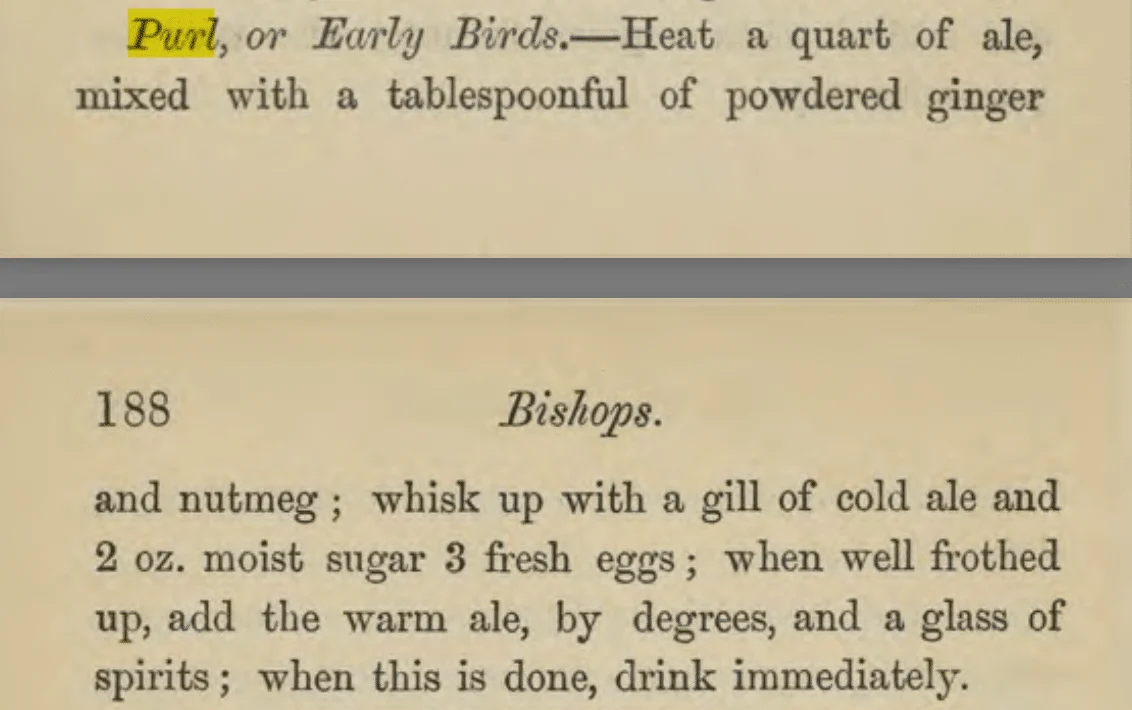
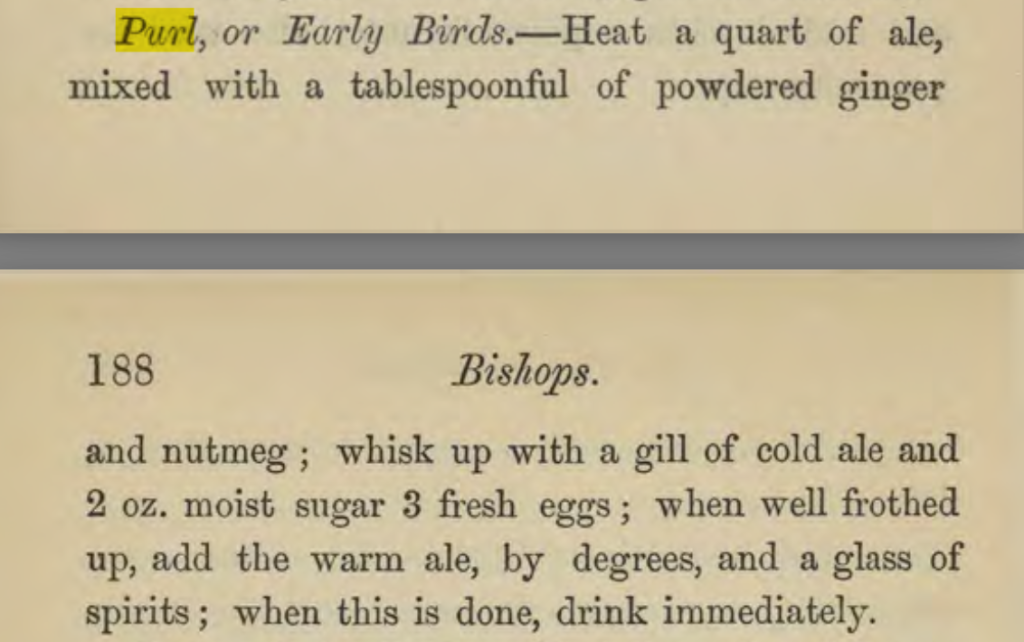
Terrington’s recipes reveal a drink that would be unrecognizable to modern drinkers. His version of the Purl involved warming the ale and whisking in multiple eggs, sugar, and spices such as nutmeg and ginger. The spirit component was not yet standardized to gin; depending on the patron’s preference or the bar’s stock, the spirit could be brandy, rum, or whisky. This version of the Purl was often prepared using a "loggerhead"—a long iron poker that was heated in the fire until glowing red and then plunged into the mixture. This technique not only heated the drink but also caramelized the sugars and created a frothy, velvety texture.
Interestingly, Terrington also included a recipe for an "Ale Cup," which more closely resembles the modern Purl. This specific variant called for a dedicated combination of gin and ale, suggesting that by the late Victorian era, the association between these two specific ingredients was beginning to solidify, even as the more complex "egg-purl" remained popular.

The 20th-Century Simplification and the Standardization of Gin
The 20th century marked the final evolution of the Purl into its current form. Several factors contributed to the simplification of the recipe. First, the medicinal use of wormwood in beverages declined sharply, partly due to the growing stigma surrounding absinthe and the regulation of thujone-containing substances. Second, the labor-intensive process of making "flips" with eggs and hot pokers became impractical for modern high-volume bars.
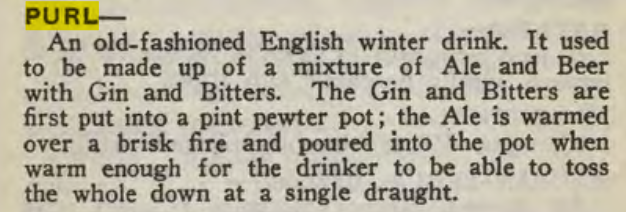
By the 1920s, as seen in texts like Summer Drinks and Winter Cordials (1925), the eggs had largely disappeared from the Purl recipe. While the tradition of warming the ale persisted for a time, the drink eventually settled into a cold or cellar-temperature serve. The spirit of choice also became fixed. While 19th-century drinkers might have used whatever was on hand, 20th-century manuals such as The Art of Mixing Drinks (1935) and The Barman’s Bible (1966) codified the Purl as a mixture of gin, ale, and occasionally a dash of bitters.

The choice of gin was historically significant. In the 18th and 19th centuries, the gin used would have been "Old Tom" style—a sweeter, more botanical-forward spirit that bridged the gap between the malty richness of the ale and the sharp herbal notes of the original wormwood infusions. As London Dry gin became the global standard, the Purl lost some of its sweetness, leading modern recipes to often include a dash of Angostura or orange bitters to replicate the missing complexity.
Technical Analysis: The Chemistry of a Modern Purl
From a technical standpoint, the modern Purl is a study in balancing the hop bitterness of beer with the botanical aromatics of gin. Standard British Bitters, which usually range from 3.5% to 5.0% ABV, provide a base of toasted malt and earthy hops (often Goldings or Fuggles). When a shot of gin (typically 40% to 47% ABV) is added, the alcohol content of the resulting beverage rises significantly, usually to between 8% and 10%.

The interaction between the juniper in the gin and the humulone in the hops creates a synergistic bitter profile. This is why many historians believe the Purl survived while other beer-cocktails faded away; the gin essentially "fortifies" the beer, highlighting its herbal qualities while adding a clean, crisp finish. In modern craft cocktail bars, bartenders often experiment with the Purl by using high-quality Old Tom gins and craft-brewed Pale Ales, occasionally adding a wormwood-based amaro to pay homage to the drink’s 17th-century plague-era roots.
Broader Implications and Historical Legacy
The history of the Purl offers a unique window into the changing social fabric of Britain. It tracks the movement of society from the desperate medicinal needs of the 1600s through the industrialization and labor-heavy culture of the 1700s and 1800s, and finally into the standardized, commercialized beverage industry of the 1900s.

The Purl also serves as a precursor to several other famous "mixed beer" drinks. It shares a lineage with the "Dog’s Nose" (gin and porter) and the American "Boilermaker" (whiskey and beer). However, unlike the Boilermaker, which is often served as a "shot and a beer" side-by-side, the Purl remains a true cocktail in the sense that the ingredients are integrated into a single vessel to create a new flavor profile.
Today, the Purl is undergoing a minor revival among cocktail historians and enthusiasts of "forgotten" drinks. While it may no longer be recommended as a cure for the plague or a mandatory morning constitutional for dockworkers, it remains a testament to the ingenuity of British bar culture. Its journey from a bitter herbal draught to a sophisticated gin-fortified ale reflects the broader evolution of the human palate—from seeking survival to seeking flavor. As modern drinkers rediscover the Purl, they are not just consuming a cocktail; they are participating in a 400-year-old tradition that has survived fire, plague, and social upheaval to remain a staple of the British pub experience.
