

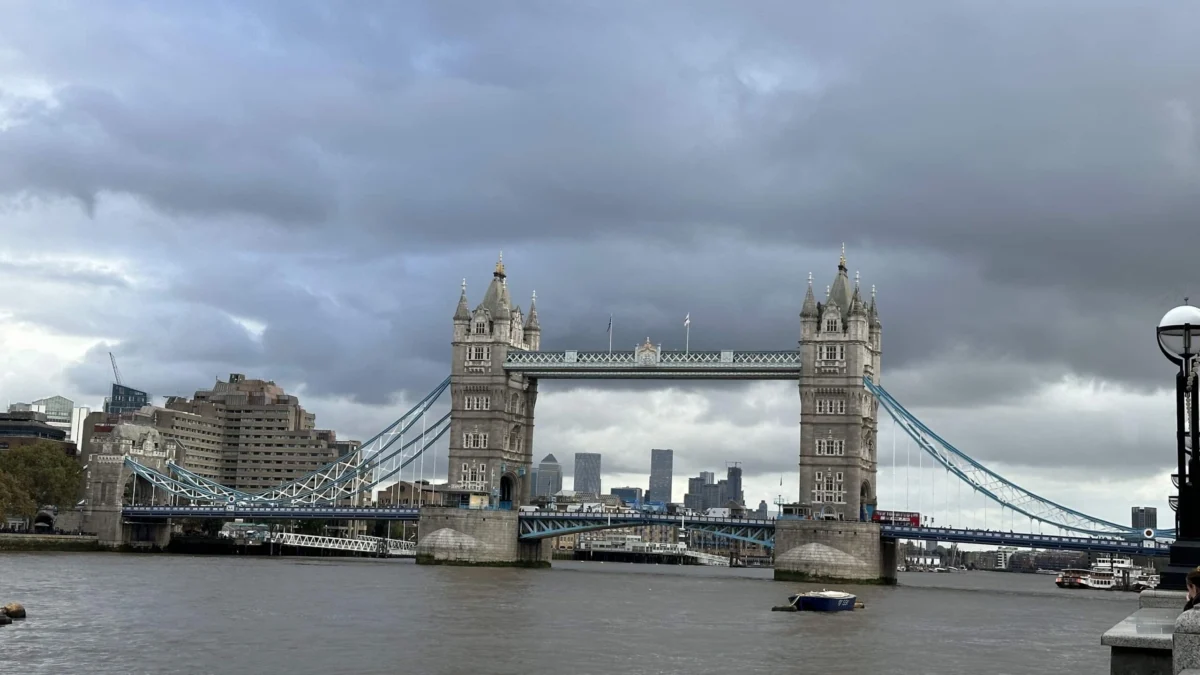
The Misunderstood Legacy of London Dry Gin: A Global Standard of Distillation Excellence serves as a testament to the evolution of spirits from a dangerous, unregulated liquid to a globally recognized hallmark of quality and precision. Despite its name, London Dry Gin is a designation that transcends the borders of the United Kingdom’s capital, functioning not as a Protected Geographical Indication (PGI) like Champagne or Cognac, but as a rigorous technical standard for production. In the modern spirits market, a bottle labeled as London Dry can originate from a distillery in the United States, Australia, or South Africa, provided the distiller adheres to a strict set of rules governing the distillation process and the purity of the final product. This distinction highlights a fascinating intersection of industrial history, legislative evolution, and the globalized nature of the modern beverage industry.
The Technical Definition and Legal Framework
To understand why the term "London" is utilized globally, one must first look at the legal definitions codified in international trade laws, most notably within the European Union and the United Kingdom. According to these regulations, London Dry Gin must be made from a high-quality neutral spirit of agricultural origin, usually distilled to an initial strength of at least 96% alcohol by volume (ABV). The flavor must be introduced exclusively through the redistillation of this neutral spirit in traditional stills in the presence of all the natural plant materials (botanicals) used.
Crucially, the "Dry" in the title refers to the restriction on post-distillation additives. No artificial flavors or colors can be added after the second distillation. Only a minute amount of sweetener—no more than 0.1 grams of sugar per liter—is permitted, and the final bottled product must have a minimum alcoholic strength of 37.5% ABV. This process ensures that the character of the gin is derived entirely from the botanicals themselves, rather than through chemical flavorings or masking agents. By contrast, "Distilled Gin" allows for flavors to be added after the distillation process, making London Dry the more technically demanding and prestigious category.
The Technological Revolution: The Coffey Still and the Birth of Purity
The origin of the London Dry style is inextricably linked to the Industrial Revolution and the invention of the continuous column still. Before the mid-19th century, gin was often a harsh, low-quality spirit produced in pot stills. Because these early spirits contained significant impurities, including methanol and fusel oils, they were frequently "corrected" with heavy doses of sugar or even hazardous substances to make them palatable.
A pivotal moment in this history occurred in 1830 when Aeneas Coffey, an Irish inventor and former Inspector General of Excise, patented the "Coffey Still." This invention allowed for the continuous distillation of spirits, resulting in a much higher level of purity and a more neutral flavor profile than previously possible. With the ability to produce a clean base spirit, distillers no longer needed to mask the taste of the alcohol with sugar. This gave rise to a "dry" style of gin, characterized by the crisp, clear notes of juniper and citrus. Because a significant concentration of high-quality distilleries utilizing this new technology was located in London, the style became synonymous with the city.
A Chronology of the London Dry Designation
The timeline of London Dry Gin’s ascent reflects the broader trends of British colonial expansion and the global trade of the 19th and 20th centuries.
1801–1803: The term "London Gin" begins to appear in print. Advertisements for manuals such as Every Man His Own Brewer and Distiller marketed recipes for "London Gin." During this era, however, the name did not imply quality. Many recipes from this period suggested adding turpentine or vitriol to mimic the sharp bite of juniper, a practice that was both toxic and common in the "Gin Craze" aftermath.

1830: Aeneas Coffey perfects the column still, providing the technological foundation for neutral spirit production.
Late 19th Century: As British brands like Beefeater, Tanqueray, and Gordon’s began to export their products across the British Empire and to the United States, the term "London Dry" was adopted to distinguish their premium, unsweetened products from "Old Tom" gin (which was sweetened) or the coarser "Dutch Genever."
1897–1903: Historical records from Australian and American newspapers show that "London Dry" had become a globally recognized marketing term. Distillers used the designation to signal a standard of excellence that consumers could trust, regardless of where the bottle was purchased.
2008: The European Union officially codified the standards for London Gin (Regulation EC No 110/2008), ensuring that the term was legally protected as a process-based designation rather than a geographic one.

The Global Reach of a London Standard
The contemporary gin market demonstrates the complete decoupling of the "London Dry" label from its namesake city. While iconic brands like Beefeater continue to distill within London’s city limits, many of the world’s most famous London Dry gins are produced elsewhere.
Tanqueray, one of the most recognizable names in the category, moved its production from London to Cameron Bridge in Scotland following the destruction of its London distillery during the Blitz in World War II. Despite being distilled in the Scottish Highlands, it remains a quintessential London Dry Gin. Similarly, No. 3 Gin, though owned by the historic London merchant Berry Bros. & Rudd, is distilled at the De Kuyper distillery in the Netherlands.
In the United States, the craft spirits movement has embraced the London Dry standard to compete with heritage European brands. Astraea Meadow Gin, produced in the U.S., utilizes the London Dry process to create a spirit that reflects American botanicals while adhering to traditional British quality standards. In the Southern Hemisphere, the Australian Distilling Co. and South Africa’s Belgravia Gin further illustrate that the "London" moniker is now a universal language for a specific type of craftsmanship.
Market Analysis and Industry Implications
The decision to maintain "London Dry" as a process-based designation rather than a geographic one has had significant economic implications for the global spirits industry. If the term had been restricted to gins made in London, it is likely that the category would have remained a niche regional specialty, similar to Plymouth Gin, which was a PGI until its owners allowed the status to lapse in 2014.

By remaining a process-based standard, London Dry Gin has become the benchmark against which all other gins are measured. Market data indicates that the "Premium" and "Super Premium" gin segments are dominated by London Dry products. According to industry analysts, the global gin market was valued at approximately $15.3 billion in 2023, with a projected compound annual growth rate (CAGR) of 5% over the next decade. Much of this growth is driven by the "premiumization" trend, where consumers opt for spirits with transparent production methods and high-quality ingredients—two pillars of the London Dry designation.
However, the rigidity of the London Dry standard has also led to the rise of "Contemporary" or "New Western" gins. These spirits often ignore the juniper-forward requirement or add flavors after distillation, allowing for more experimental profiles. While these new styles are gaining popularity, industry experts suggest that the London Dry label remains the most vital tool for consumer trust.
Conclusion: The Future of a Legacy
The evolution of London Dry Gin from a localized style to a global quality standard highlights the importance of technological innovation and legal clarity in the spirits world. The "London" in the name serves as a historical homage to the city where the style was perfected, but the "Dry" serves as a promise of purity to the consumer.
As the industry moves forward, the London Dry designation faces the challenge of remaining relevant to a new generation of drinkers who value local "terroir" over traditional methods. Yet, the enduring success of non-London-based producers suggests that the category’s strength lies in its consistency. Whether distilled in the heart of Kennington or the outskirts of Sydney, London Dry Gin remains a testament to the fact that quality is not defined by where a spirit is made, but by how it is made. The legacy of Aeneas Coffey and the 19th-century London distillers lives on in every bottle that bears the name, representing a 200-year-old commitment to transparency, purity, and the art of distillation.
