

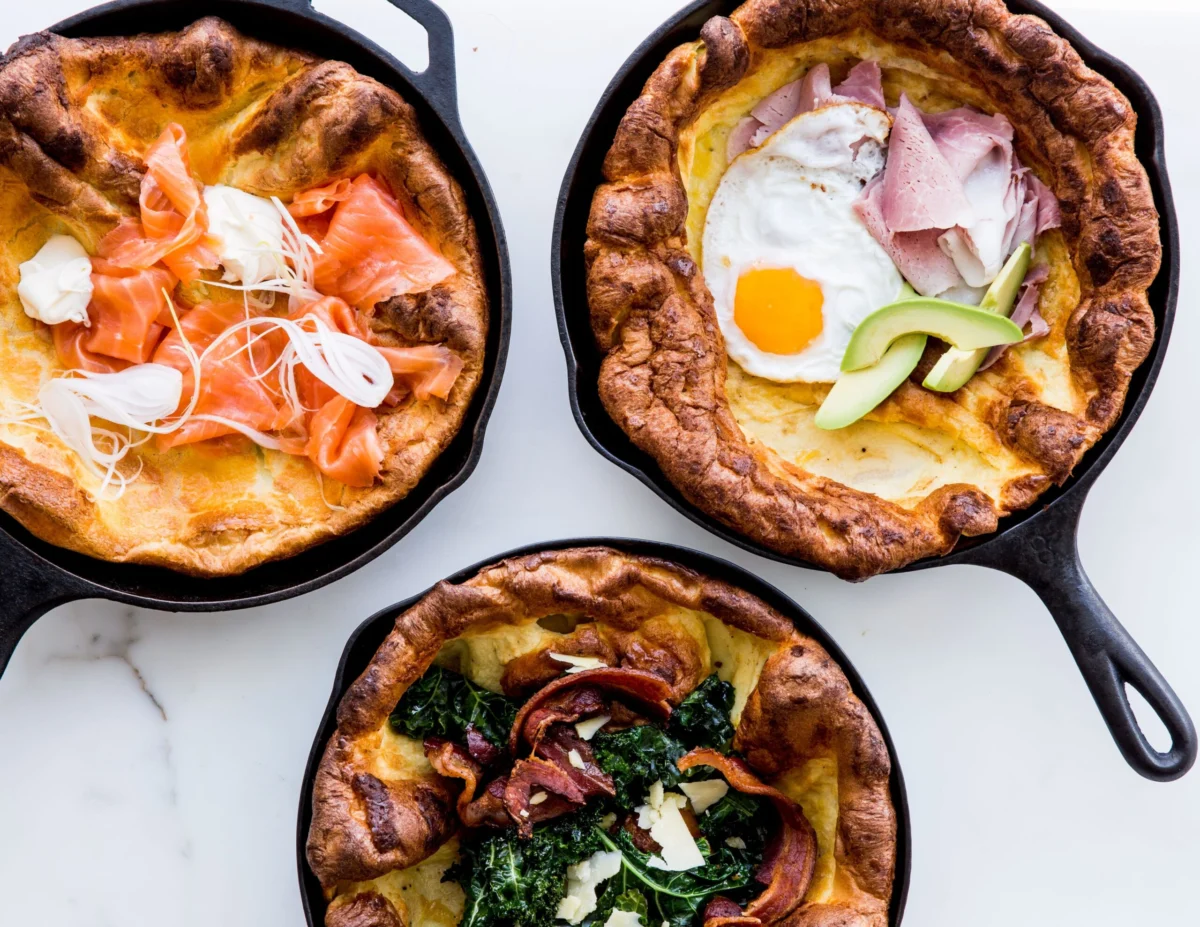
A culinary spectacle emerging dramatically from the oven, the savory Dutch baby pancake, often described as a grandiose popover, is captivating palates with its impressive puffed form, crisp golden edges, and a tender, eggy interior. This dish, a staple in many breakfast and brunch repertoires, is experiencing a notable resurgence, propelled by its photogenic qualities and remarkable adaptability. Despite its seemingly complex appearance, the preparation of a savory Dutch baby is remarkably straightforward, leveraging common kitchen tools like a blender to achieve its signature airy batter and structural integrity. Its inherent design, which includes a natural deflation upon removal from the heat, adds to its unique charm, differentiating it from more traditional pancake variants.
The Historical Tapestry of the Dutch Baby Pancake
While its name might suggest European origins, the Dutch baby pancake is, in fact, an American invention, first popularized in the early 20th century in Seattle, Washington. The term "Dutch baby" is believed to be an Americanization of "Deutsch," meaning German, a nod to its culinary lineage rooted in the German Pfannkuchen, a large, oven-baked pancake. Legend attributes its naming to one of the daughters of Victor Manca, the proprietor of Manca’s Cafe, who coined the term in the 1940s. Traditionally, these pancakes were served sweet, often dusted with powdered sugar and a squeeze of lemon juice, or accompanied by fresh fruit and syrup. The evolution to a savory format represents a contemporary adaptation, reflecting a broader culinary trend towards blurring the lines between meal categories and embracing innovative flavor profiles. This transition underscores the dish’s fundamental versatility, allowing it to transcend its traditional breakfast role and adapt seamlessly into lunch, brunch, or even dinner settings.
The Science Behind the Spectacular Puff
The dramatic puffing of a Dutch baby is not merely a visual flourish but a testament to fundamental culinary physics and chemistry. At its core, the phenomenon is driven by the rapid expansion of steam. When the cold batter, primarily composed of eggs, flour, and milk, is poured into a scorching hot skillet—typically preheated in a 450°F oven for at least 25 minutes—the moisture within the batter instantly turns into superheated steam. This steam, trapped beneath the quickly setting exterior of the pancake, forces the batter upwards and outwards, creating the characteristic high walls and impressive balloon-like structure.
The composition of the batter plays a crucial role. Eggs, rich in protein, provide structural integrity, coagulating under high heat to form a sturdy framework that can hold the expanding steam. The gluten in the flour contributes elasticity, allowing the batter to stretch and rise without tearing. The inclusion of a small amount of cornstarch, as highlighted in contemporary recipes, further enhances the texture contrast, contributing to a crisper exterior while maintaining a tender, custardy interior. This addition also helps to stabilize the batter, contributing to a more consistent puff. Furthermore, incorporating air into the eggs—either through vigorous whisking or, more efficiently, with a blender—creates a lighter batter, which facilitates a more pronounced rise. The rapid cooling after removal from the oven causes the steam to condense and the protein structure to relax, leading to the inevitable and entirely normal deflation, leaving behind a beautifully sculpted, edible bowl. This process mirrors the principles observed in other puffed pastries and baked goods, such as Yorkshire puddings and popovers, demonstrating a shared scientific foundation for achieving dramatic volume through steam power.
Mastering the Preparation: A Step-by-Step Chronology
Achieving a perfectly puffed savory Dutch baby relies on adherence to specific techniques, making the cooking process a chronology of precise steps.
- Ingredient Preparation: Begin by ensuring all ingredients—eggs, milk, and flour—are at room temperature. This is a critical, often overlooked detail. Room-temperature ingredients emulsify more smoothly, leading to a more uniform batter, and prevent a sudden drop in temperature when added to the hot skillet, which could hinder the puff.
- Skillet Preheating (The Cornerstone): This is perhaps the most crucial step. Place a cast-iron skillet, or another oven-safe, heavy-bottomed pan, into a 450°F oven for a minimum of 25 minutes. The goal is to get the pan exceptionally hot, creating the necessary thermal shock when the batter is introduced. A properly preheated skillet ensures the batter begins cooking immediately upon contact, setting the edges rapidly and initiating the steam-driven rise.
- Batter Assembly: While the skillet preheats, prepare the batter. Combine eggs, milk, flour, salt, and cornstarch (if using) in a blender. Blend until completely smooth and frothy, typically for about 30-60 seconds. The blender’s high-speed action not only mixes the ingredients thoroughly but also incorporates a significant amount of air into the eggs, contributing to a lighter batter and a more impressive puff. For those without a blender, a whisk can be used, but vigorous beating for several minutes is required to achieve sufficient aeration.
- The Pour and Bake: Once the skillet is smoking hot, carefully remove it from the oven. Swirl a tablespoon or two of butter around the pan to coat the bottom and sides evenly. Immediately pour the prepared batter into the hot, buttered skillet. Return the skillet to the 450°F oven and bake for 15-20 minutes, or until the Dutch baby is dramatically puffed, deeply golden brown, and crisp at the edges. Resist the urge to open the oven door during baking, as this can cause a premature drop in temperature and impede the rise.
- Post-Baking and Deflation: Upon removing the Dutch baby from the oven, observe its impressive height. Within moments, it will begin to deflate, a natural and expected part of the process. This deflation does not indicate failure; rather, it transforms the puffed pancake into a perfect, slightly sunken vessel ready for an array of savory toppings.
The Versatility of the Savory Dutch Baby: A Gastronomic Canvas
The neutral, slightly eggy flavor of the savory Dutch baby makes it an incredibly versatile base, akin to a blank canvas awaiting culinary artistry. Its unique structure, with a crisp exterior and a tender interior, provides a delightful textural contrast that complements a wide range of ingredients, transforming it from a simple pancake into a sophisticated meal.
- Elevated Brunch Experience: For a classic yet refined brunch, consider topping the warm, deflated Dutch baby with perfectly fried eggs, creamy slices of ripe avocado, and delicate shavings of cured ham. The richness of the egg yolk, the buttery notes of avocado, and the salty umami of the ham create a harmonious blend of flavors and textures, making for a hearty and satisfying start to the day. A sprinkle of fresh herbs, such as chives or cilantro, can add a vibrant finishing touch.
- Sophisticated Light Lunch or Appetizer: For a more elegant presentation, particularly suitable for a light lunch or a sophisticated appetizer, the combination of smoked salmon, crème fraîche, and thinly sliced scallions is unparalleled. The briny, rich flavor of the smoked salmon pairs exquisitely with the tangy, cooling crème fraîche, while the sharp, fresh bite of scallions cuts through the richness, creating a balanced and refreshing profile. A squeeze of lemon juice can brighten the overall composition.
- Hearty Dinner or Comfort Food: When seeking a more substantial and comforting meal, the savory Dutch baby can easily anchor a dinner. Sautéed kale, wilted until tender and slightly charred, provides an earthy bitterness that contrasts beautifully with crispy bacon bits, offering a salty, smoky crunch. Grated aged cheddar cheese, melted slightly by the residual heat of the pancake, adds a sharp, nutty creaminess, completing a deeply satisfying and flavorful dish. Other robust options might include roasted mushrooms and thyme, caramelized onions and goat cheese, or even a modest portion of leftover pulled pork with a tangy barbecue drizzle.
The inherent adaptability of the Dutch baby also extends to catering to various dietary preferences. It can be easily adapted to be vegetarian by omitting meat toppings, or made gluten-free with appropriate flour substitutions, though the texture may vary slightly. Its capacity to showcase seasonal ingredients further enhances its appeal, allowing cooks to experiment with fresh produce and regional specialties throughout the year.
Culinary Trends and Market Impact
The re-emergence of the savory Dutch baby aligns perfectly with several contemporary culinary trends. Firstly, the ongoing fascination with brunch culture has created a fertile ground for dishes that are both visually appealing and satisfying. The Dutch baby, with its dramatic puff and customizable toppings, is inherently "Instagrammable," making it a favorite among food bloggers and social media enthusiasts. Secondly, the demand for customizable meals continues to grow. Diners appreciate the ability to tailor their dishes to their preferences, and the Dutch baby, with its open-ended topping possibilities, offers exactly that. Thirdly, there’s a sustained interest in comfort food that feels both familiar and elevated. The Dutch baby, reminiscent of classic pancakes but with a sophisticated twist, fits this niche perfectly.
The promotion of such recipes by prominent culinary publications like Bon Appétit plays a significant role in popularizing dishes previously considered niche. By providing clear, accessible instructions and troubleshooting tips, these platforms empower home cooks to recreate impressive dishes in their own kitchens, fostering culinary confidence and expanding gastronomic horizons. This trend not only influences home cooking but also has implications for the restaurant industry, as chefs and restaurateurs look to innovate their menus with dishes that are both unique and broadly appealing. The distinction between sweet and savory applications also highlights a broader culinary movement towards challenging traditional mealtime conventions, encouraging consumers to explore new flavor combinations outside established norms.
Expert Perspectives and Home Cook Reactions
Culinary experts and food writers frequently laud the savory Dutch baby for its unique textural profile and remarkable versatility. "It’s a dish that delivers on both spectacle and substance," observes a prominent food critic, "offering a crisp, tender base that can carry everything from delicate smoked salmon to robust braised meats." Many professional chefs note its efficiency in a professional kitchen setting, highlighting that "despite its dramatic appearance, the preparation is relatively hands-off once the batter is mixed and the pan is hot, allowing for focus on innovative toppings."
On online culinary forums and social media platforms, home cooks consistently express their delight and occasional apprehension regarding the Dutch baby. Enthusiastic posts often showcase beautifully puffed creations, accompanied by captions praising its ease and impressive outcome. "I was intimidated at first, but following the hot skillet advice made all the difference," one home cook shared on a popular cooking community, encapsulating a common sentiment. Another frequently cited comment revolves around the surprise and acceptance of the post-oven deflation: "Don’t be alarmed when it deflates—that’s the magic trick! It just creates the perfect vessel for all your toppings." These reactions underscore the dish’s ability to inspire and reward culinary experimentation, making it a beloved addition to many home kitchens. The consistent messaging from both professional and amateur cooks emphasizes the importance of a properly preheated pan and the natural process of deflation as key to success and understanding this unique dish.
Addressing Common Challenges: A Troubleshooting Guide
Even with a seemingly straightforward recipe, challenges can arise. The most frequently asked question concerning the Dutch baby revolves around its inability to puff. As previously detailed, the primary culprits are usually an insufficiently preheated skillet, cold ingredients, or inadequate aeration of the batter. Ensuring the pan reaches its optimal temperature (450°F for at least 25 minutes) is non-negotiable, as it provides the immediate heat required for the steam-driven rise. Using room-temperature eggs and milk helps maintain this crucial initial heat. Furthermore, whipping plenty of air into the eggs, whether with a blender or a whisk, creates a lighter batter that is more receptive to puffing. For those without a blender, vigorous whisking until the eggs are very frothy is a viable alternative, though it requires more effort and patience. It is also important to reiterate that the post-oven deflation is a normal and expected part of the Dutch baby experience, not a sign of failure, but rather the characteristic transformation of the dish.
The Future of the Dutch Baby in Modern Gastronomy
The savory Dutch baby is more than just a recipe; it represents a convergence of culinary history, scientific principles, and modern dining trends. Its unique combination of dramatic visual appeal, ease of preparation, and boundless versatility ensures its continued relevance in contemporary gastronomy. As home cooks and professional chefs alike continue to explore innovative flavor combinations and embrace global culinary influences, the Dutch baby stands ready as an ideal platform for creative expression. From elegant brunch spreads to comforting weeknight dinners, its adaptability promises an enduring presence on tables, serving as a testament to the simple yet profound magic that can be achieved when fundamental cooking techniques meet a dash of culinary imagination. The exploration of its savory potential has firmly established it beyond its traditional sweet confines, cementing its status as a dynamic and cherished dish for years to come.
