

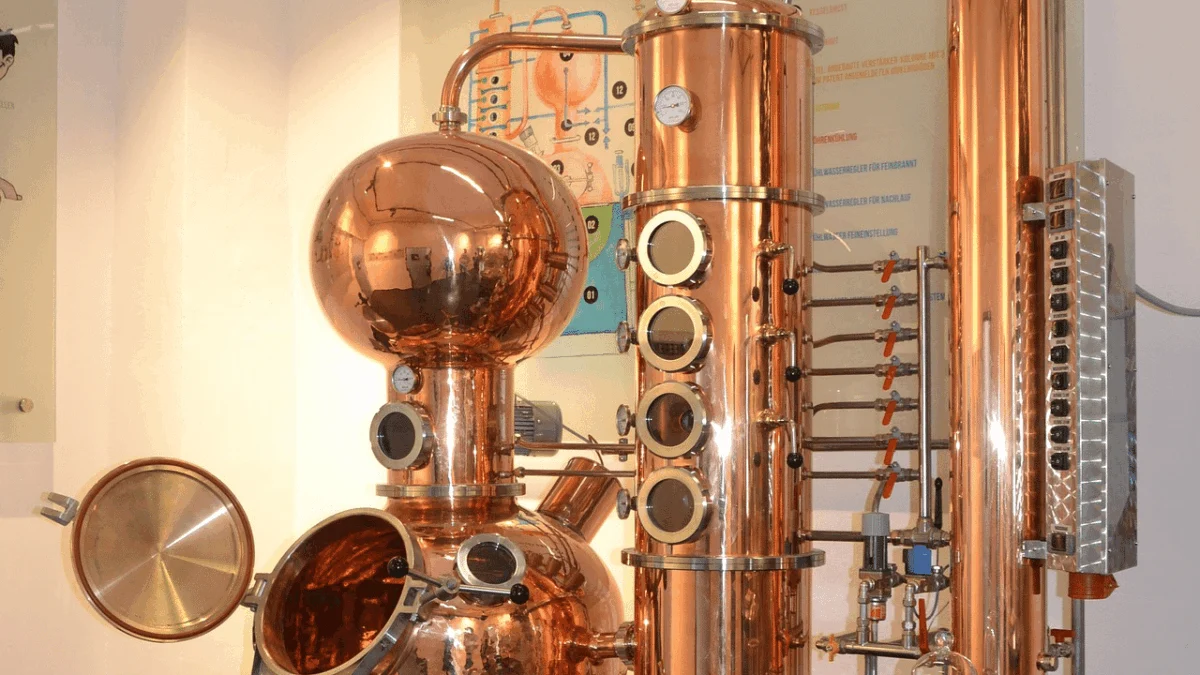
While the global spirits market continues to diversify, gin remains one of the most technically demanding products for a distiller to master due to the complex interplay of chemistry, heat, and botanical selection. While the choice of herbs, spices, and fruits—collectively known as botanicals—is the most visible aspect of gin branding, the final flavor profile is dictated by a series of precise technical decisions made during the distillation process. From the initial selection of a base spirit to the final dilution and bottling, the journey of a gin is a study in precision engineering and sensory artistry.
The production of gin begins with a Neutral Grain Spirit (NGS), which serves as a blank canvas. This high-proof ethanol, typically distilled to 96% alcohol by volume (ABV), is stripped of the characteristics of its source material, whether that be wheat, corn, barley, or rye. By starting with a clean, flavorless base, the distiller ensures that the volatile aromatic compounds of the botanicals remain the undisputed protagonists of the spirit. However, the transformation of this neutral liquid into a complex gin requires a deep understanding of extraction methods, thermal dynamics, and the chemical properties of essential oils.
The Mathematical Precision of Botanical Ratios
The architecture of a gin recipe is built upon a hierarchy of flavors, with juniper berries (Juniperus communis) acting as the structural foundation. Under both European Union and United States regulations, gin must possess a predominant flavor of juniper to be legally classified as such. Consequently, most professional recipes utilize juniper as at least 60% of the total botanical volume.
Industry benchmarks for botanical quantities typically range between 20 and 35 grams of total botanical material per liter of spirit. Within this framework, distillers apply a ratio-based approach to build complexity. If juniper represents the baseline (1.0), secondary botanicals like coriander seeds are often used at a ratio of 0.5. Tertiary botanicals, such as angelica root, cassia bark, or citrus peels, are frequently scaled down to 0.1 or even 0.01 relative to the juniper weight.
These micro-quantities are critical; certain botanicals, such as cloves or star anise, possess high concentrations of powerful aromatic oils like eugenol and anethole. In excess, these can overwhelm the spirit or cause "louching"—a cloudy appearance that occurs when essential oils precipitate out of the solution upon dilution. The distiller’s task is to balance these "loud" botanicals against the "quiet" fixatives, like orris root, which bind more volatile aromas to the spirit.
Extraction Methodologies: Maceration versus Vapor Infusion
Once the ratios are established, the distiller must choose how to extract the flavors. This decision fundamentally alters the mouthfeel and "weight" of the gin. There are two primary schools of thought: maceration and vapor infusion.
Maceration involves soaking the botanicals directly in the neutral spirit. This process, often referred to as "steeping," can last anywhere from a few hours to several days. Beefeater, one of the world’s most recognizable London Dry gins, famously employs a 24-hour maceration period. During this time, the ethanol acts as a solvent, breaking down the cellular structures of the botanicals and absorbing their oils. When the mixture is eventually heated in the still, the resulting spirit tends to be "heavy," "bold," and "rich," as the direct contact allows for a more aggressive extraction of heavier molecular compounds.
Conversely, vapor infusion offers a more delicate approach. In this method, the botanicals are placed in a "gin basket" suspended in the neck of the still. As the ethanol is heated and turns into vapor, it passes through the botanicals, gently stripping away the most volatile aromatic compounds without the "cooked" notes sometimes associated with boiling. Bombay Sapphire is the most prominent example of this technique. The height and temperature of the basket are variables that a distiller can manipulate; a basket placed higher in the still encounters cooler vapors, resulting in a lighter, more floral spirit, while a lower placement yields more intense results.
The Chronology of the Distillation Run: Managing the Cuts
Distillation is a temporal process where the character of the liquid changes by the minute. As the still heats up, different chemical compounds vaporize at different temperatures. A distiller must make "cuts" to decide which part of the run will end up in the bottle and which will be discarded or recycled. This process is often compared to the stages of cooking, where the initial aromas differ vastly from the middle and end stages.
The first part of the run is known as the "foreshots" and "heads." These contain highly volatile compounds, including methanol and various esters that can smell of nail polish remover or overly pungent fruit. While some heads can add brightness, most are diverted away.
The "heart" of the run is the prize. This is where the ethanol is at its cleanest and the botanical flavors are in perfect balance. The distiller monitors the ABV and the sensory profile constantly, looking for the sweet spot where the juniper is crisp and the citrus is vibrant.
As the run continues, the "tails" emerge. These contain heavier, oilier compounds and can introduce bitter, vegetal, or "cardboard" notes. While the tails contain a great deal of flavor, they can also ruin a gin’s clarity and finish. In a traditional London Dry process, these cuts are final; the distiller must get the balance right in a single pass through the still.
Single-Shot vs. Multi-Shot: The Economics of Flavor
In the modern distilling landscape, two primary production philosophies exist: the single-shot and the multi-shot method. The single-shot method is the traditional approach, where the amount of botanicals used is exactly calibrated to the volume of spirit in the still. Once the distillation is complete, only water is added to bring the spirit down to bottling strength (typically between 40% and 47% ABV).
The multi-shot method is a more concentrated approach used by many large-scale producers. In this scenario, the distiller increases the botanical load significantly—sometimes by a factor of ten—to create a "gin concentrate." This high-intensity distillate is then blended with additional neutral grain spirit and water before bottling.
While purists often argue that the single-shot method produces a more integrated and superior flavor, the multi-shot method is highly efficient, allowing a single still run to produce a much larger volume of final product. From a technical standpoint, both methods require immense skill to ensure consistency, and many award-winning gins are produced using the multi-shot technique.
Regulatory Standards and Global Implications
The production of gin is governed by strict international standards that ensure quality and transparency. In the European Union, for example, "London Gin" (or London Dry) is not a geographical indication but a process designation. It stipulates that all flavors must be introduced through distillation in the presence of natural botanicals, and no more than 0.1 grams of sugar per liter may be added after distillation. No colorants or artificial flavorings are permitted.
In the United States, the Alcohol and Tobacco Tax and Trade Bureau (TTB) defines gin as a product obtained by original distillation from mash, or by redistillation of distilled spirits, or by mixing neutral spirits with aromatic botanicals. These regulations provide a framework that protects the integrity of the category while allowing for the "New Western" or "Contemporary" gin movements, which de-emphasize juniper in favor of local or exotic botanicals like Japanese yuzu or Australian lemon myrtle.
The Broader Impact on the Craft Spirits Market
The evolution of gin distillation has had a profound impact on the broader spirits industry. The "Gin Renaissance" of the last decade has seen a surge in craft distilleries, particularly in the United Kingdom, where the number of distilleries has more than doubled since 2016. This growth is driven by the versatility of the spirit; unlike whiskey or brandy, gin does not require years of aging, allowing distillers to bring products to market quickly while experimenting with local "terroir."
Furthermore, the technical innovations in gin production—such as vacuum distillation (cold distillation), which allows for the extraction of flavors from delicate botanicals like fresh cucumber or tea leaves without heat damage—are pushing the boundaries of what a spirit can be.
As consumers become more educated about the nuances of production, the focus has shifted from the brand name to the process. Distillers are increasingly transparent about their "cuts," their maceration times, and their still types (such as the classic copper pot still or the complex Carter-Head still). This transparency fosters a deeper appreciation for the craft, elevating gin from a simple cocktail ingredient to a sophisticated spirit enjoyed for its technical merit and sensory complexity.
In conclusion, the flavor of a gin is far more than the sum of its botanicals. It is the result of a series of calculated risks and technical triumphs. By manipulating ratios, extraction methods, and distillation cuts, the distiller acts as both a chemist and a chef, transforming a neutral base into a spirit that captures a specific moment in time and a specific philosophy of flavor. As the industry continues to innovate, the fundamental principles of the craft remain the anchor for quality in every bottle.
