

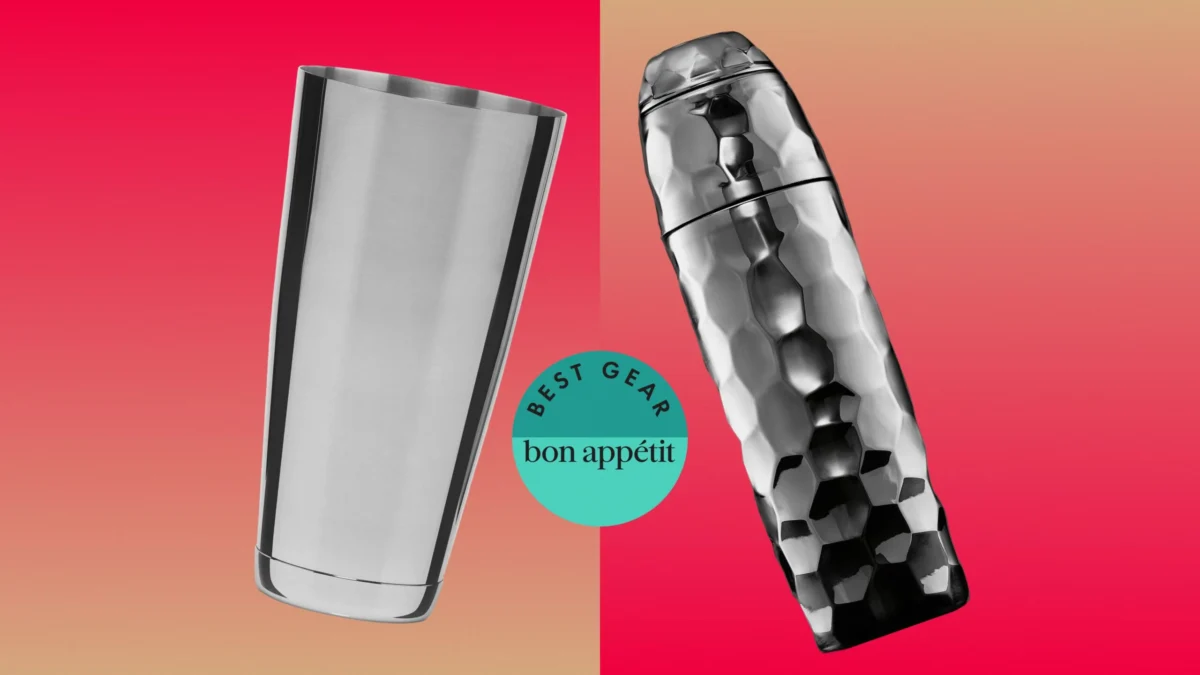
The intricate craft of cocktail creation, much like mastering a musical instrument or perfecting a culinary technique, demands both skill and the right tools. Central to this pursuit is the humble yet indispensable cocktail shaker, an item whose evolution mirrors the history of mixology itself. Far from being a mere container for ice and spirits, a well-chosen shaker significantly influences a drink’s temperature, dilution, and aeration—factors critical to achieving a balanced and delightful cocktail. The burgeoning interest in home bartending, fueled by a sophisticated cocktail culture, has led to an unprecedented diversification in shaker design, offering enthusiasts a spectrum of choices tailored to various skill levels and aesthetic preferences.
A Brief History of the Shaker’s Evolution

The concept of mixing beverages with ice is not new, with historical records indicating ancient civilizations employing similar methods. However, the modern cocktail shaker truly began to take shape in the mid-19th century, coinciding with the rise of the American cocktail. Early versions were often simple two-part vessels, typically metal, that allowed for efficient chilling and blending. As cocktail culture flourished, particularly during the late 19th and early 20th centuries, shakers became not only functional tools but also symbols of sophistication and style.
The Prohibition era in the United States (1920-1933) paradoxically ushered in a "Golden Age" for cocktail shakers. With illicit drinking moving behind closed doors, home bartending gained prominence, and shakers became elaborate, often art-deco inspired, statement pieces. Designs ranged from novelty shapes like zeppelins and penguins to elegant, streamlined forms crafted from silver-plated brass or stainless steel. Post-Prohibition, the focus shifted back towards utility and efficiency in professional settings, though decorative shakers continued to appeal to home enthusiasts. The rarely seen Konga shaker, a vintage design featuring knobs for "rolling" large batches, exemplifies this historical diversity, even seeing a limited revival by brands like Monkey Shoulder as a nod to cocktail history. Today, stainless steel dominates the market due to its durability, hygiene, and thermal properties.
Understanding the Core Styles: Boston vs. Cobbler

The contemporary market primarily features two dominant styles of cocktail shakers: the two-piece Boston shaker and the three-piece Cobbler shaker. Each offers distinct advantages and caters to different user experiences.
The Boston shaker, favored by a majority of professional bartenders globally, typically consists of two metal tins—one larger and one smaller—that nest together to form a tight seal. A less common variation includes a metal tin and a pint glass, though this combination is often less reliable in creating a consistent seal and is heavier to handle, making it less popular in high-volume environments. The fundamental principle of the Boston shaker involves building the drink in the smaller tin, adding ice, and then securely fitting the larger tin over it at an angle. The robust construction, often featuring "weighted" bottoms with reinforced metal for improved balance and a more effective shake, allows for vigorous mixing. Releasing the seal typically requires a precise tap to the side of the larger tin, a technique that becomes intuitive with practice. Crucially, Boston shakers require a separate Hawthorne strainer (distinguished by its spring coil) to filter ice and solids from the finished drink. Their larger capacity makes them ideal for preparing multiple cocktails simultaneously, a significant advantage in professional or entertaining settings.
In contrast, the Cobbler shaker is designed for ease of use and integrates a built-in strainer. Comprising three components—a main tin, a lid with an integrated strainer, and a small cap—it offers an all-in-one solution that appeals particularly to beginners. The process is straightforward: ingredients and ice are combined in the tin, the lid and cap are secured, and the mixture is shaken. The cap is then removed, and the cocktail is strained directly into a glass. While its intuitive design is a clear benefit, cobbler shakers are generally smaller than Boston shakers, limiting their utility for batching drinks. Furthermore, the integrated strainer can sometimes be less efficient at filtering fine pulp or ice shards compared to a dedicated Hawthorne strainer, and the components can occasionally "freeze" together due to temperature changes, making them difficult to disassemble.

A third, less common but aesthetically pleasing category is the Parisian shaker, often considered a hybrid. It features a two-piece design similar to a Boston shaker but boasts the elegant, curvaceous silhouette reminiscent of a cobbler. This style offers the increased internal volume for aeration and dilution found in Boston shakers, combined with a user-friendly sealing and unsealing mechanism that can be more forgiving than a traditional Boston tin. However, like Boston shakers, Parisian shakers typically require a separate strainer.
Key Performance Indicators for Cocktail Shakers
When evaluating a cocktail shaker, several critical factors determine its effectiveness and user satisfaction:

-
Seal Integrity: Paramount for any shaker is its ability to create and maintain a tight, leak-proof seal. A poor seal not only leads to messy spills but also compromises the cocktail’s final volume and consistency. Rigorous testing involves shaking with liquids under varying conditions, including dry shaking (without ice) and wet shaking (with ice), to assess seal reliability under pressure and temperature changes.
-
Ergonomics and Comfort: A shaker must feel balanced and comfortable in the hands, facilitating the rhythmic motion essential for proper chilling and aeration. Factors such as weight distribution, diameter, and external texture contribute to grip and overall ease of use, especially during prolonged shaking sessions or when preparing complex cocktails like a Ramos Gin Fizz, which demands extended agitation.
-
Insulation Properties: Shakers vary significantly in their thermal conductivity. Single-wall shakers allow users to immediately feel the internal temperature, providing direct feedback on when a drink is adequately chilled. Insulated shakers, conversely, maintain cold temperatures for longer and prevent hands from becoming uncomfortably cold, but they require a more precise understanding of shaking duration to avoid over- or under-dilution. The choice between these depends on personal preference and skill level.

-
Aeration and Dilution Efficiency: Beyond merely chilling, shaking serves to dilute the cocktail with melted ice water and aerate it, creating a desirable texture and mouthfeel. Effective shakers provide ample internal space for ice to move freely, maximizing contact with the liquid. This is particularly crucial for drinks requiring a frothy texture, such as whiskey sours or other egg white cocktails, where optimal aeration produces a rich, creamy head.
-
Durability and Maintenance: High-quality shakers are constructed from robust materials, predominantly stainless steel, designed to withstand frequent use and resist corrosion. Ease of cleaning, including dishwasher compatibility, is also a significant consideration for both home users and professionals. Luxury items, such as silver-plated shakers, may offer superior aesthetics but demand more meticulous hand-washing and polishing.
Illustrative Examples from the Market

Several products exemplify the diverse offerings within the cocktail shaker market:
-
Koriko Weighted Shaking Tins (Cocktail Kingdom): These represent a professional-grade Boston shaker. Their subtle design, including a slightly rounded bottom and weighted construction, offers superior balance and a consistently tight seal, yet allows for relatively easy separation. Their capacity is suitable for multiple drinks, and they excel at producing a smooth froth for egg white cocktails. They appeal to intermediate to advanced users comfortable with the Boston shaker technique.
-
HexClad Cocktail Shaker: This cobbler shaker stands out for its striking aesthetic, developed in collaboration with Still G.I.N. By Dre and Snoop, featuring an exaggerated beveled texture. Beyond looks, it incorporates practical features like a silicone base for stability, rubber gaskets for an excellent seal, and a built-in jigger in the cap. Its insulation, while keeping drinks cold, means users cannot feel the internal temperature, necessitating attention to shaking time. Its integrated strainer effectively filters, though care is needed when releasing the cap after shaking egg whites to prevent spray.

-
Oxo Steel Single Wall Shaker: A prime example of a budget-friendly cobbler shaker, this Oxo model prioritizes functionality. Its design includes a cap that doubles as a jigger (though measured in milliliters, which can be a minor inconvenience for ounce-centric recipes), a reliable rubber gasket seal, and a comfortable, rounded base for a two-handed shake. Its single-wall construction provides immediate temperature feedback, an advantage for beginners learning optimal shaking times. It is also conveniently dishwasher safe.
-
Coley Shaker (Cocktail Kingdom): A collaboration between cocktail historian David Wondrich and Cocktail Kingdom owner Greg Boehm, this silver-plated shaker is a luxury item inspired by a turn-of-the-century design and named after legendary bartender Ada "Coley" Coleman. It functions as a two-piece shaker where one tin sits directly atop the other, providing a tight fit and good aeration due to its generous internal volume. Its heft facilitates efficient ice breakage and superior chilling, resulting in exceptionally creamy, well-diluted drinks. However, its significant price tag and high-maintenance silver-plated finish (requiring hand-polishing) position it as a collector’s item or a splurge for dedicated enthusiasts.
-
Parisian Cocktail Shaker (Cocktail Kingdom): This stainless steel shaker combines beauty with user-friendliness. Its curvaceous, urn-like shape, inspired by late 19th-century "Continental Shakers," offers a comfortable grip. As a two-piece design, it provides ample space for effective aeration and quick chilling without extreme cold transfer to the hands. It forms a reliable seal and separates easily, even after high-pressure dry shaking, making it an excellent choice for beginners seeking a stylish yet functional tool. Like Boston shakers, it requires a separate strainer.

Other notable market entrants include the Yeti Rambler Cocktail Shaker, a robust, insulated, dishwasher-safe stainless steel option ideal for outdoor use, though its rugged aesthetic might not suit all home bars and its lid can be stiff. The Usagi Heavyweight Cobbler Shaker offers an upgraded classic cobbler design with a comfortable bullet shape and wide mouth, though its weight might be a factor for some users. The Crafthouse by Fortessa Boston Shaker provides a vintage aesthetic with a flared base and includes a Hawthorne strainer, but its design can compromise shaking comfort for one-handed users.
Conversely, some designs highlight common pitfalls. Shakers with integrated, multi-purpose components like built-in citrus juicers often suffer from poor execution, with issues like rubber gaskets detaching or the juicing function being impractical. Similarly, purely aesthetic choices like specific metallic finishes (e.g., matte brass) can sometimes lead to functional compromises, such as overly rapid chilling that results in over-dilution. Even well-intentioned designs, such as single-serve Boston sets, can fail if the tins prove excessively difficult to separate, leading to spills and frustration.
Implications for the Modern Cocktail Enthusiast

The wide array of cocktail shakers available today underscores a maturing market that caters to every level of interest and expertise. For the novice, easy-to-use cobbler shakers with built-in features offer a low barrier to entry, fostering confidence in basic mixology. As skills develop, many gravitate towards Boston shakers, appreciating their professional feel, larger capacity, and superior control over aeration and dilution. The availability of historically inspired and luxury shakers also speaks to the appreciation of craftsmanship and the desire for tools that are not only functional but also works of art.
Ultimately, the choice of a cocktail shaker is a personal one, influenced by skill level, frequency of use, aesthetic preference, and budget. However, informed selection based on an understanding of shaker types, their historical context, and key performance indicators ensures that every shake contributes to a perfectly balanced and enjoyable cocktail experience. As home bartending continues to thrive, the innovation and diversity in shaker design are likely to continue, offering endless possibilities for aspiring and seasoned mixologists alike.
