

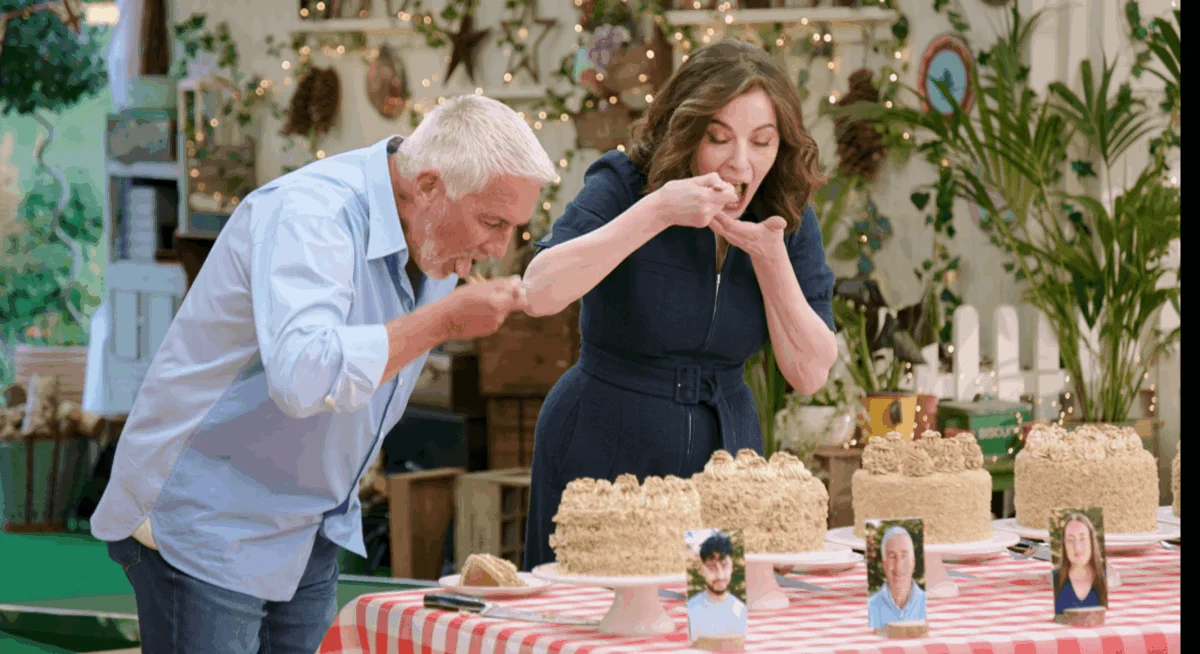
The inaugural episodes of the latest season of The Great British Baking Show have seen minimal culinary mishaps, with the iconic tent still bustling with ambitious bakers and only a single cake suffering an early demise. However, the true focal point for many viewers has emerged not from the contestants’ creations but from the distinctive approach of the show’s newest judge, the renowned culinary personality Nigella Lawson. Her method of sampling the bakes has quickly ignited a discourse among the viewing public, drawing significant attention away from the established dynamics of the judging panel, including Paul Hollywood’s long-standing presence.
The Genesis of the Discussion: "Huge and Awkward" Bites
Following the premiere, social media platforms and online forums buzzed with observations regarding Lawson’s tasting technique. Viewers, many unfamiliar with her extensive television career, characterized her bites as "huge and awkward." Speculation arose, ranging from suggestions of "poor table manners" to theories about recent dental work influencing her mannerisms. Reddit threads and online articles quickly aggregated these initial reactions, highlighting a perceived departure from conventional on-screen eating etiquette. This immediate public reaction underscores the heightened scrutiny placed on public figures, especially within the seemingly innocuous context of a popular baking competition.
Nigella Lawson’s Enduring Philosophy: A Guileless Appreciation for Food
For long-time admirers of Lawson, this recent flurry of commentary reveals a fundamental unfamiliarity with her consistent approach to food. As one of the most prominent public appreciators of gastronomy, Lawson has cultivated a signature style of consumption: joyful, unpretentious, and devoid of perceived shame. This manner of eating, observers note, is not a recent affectation but rather a direct reflection of her broader philosophy regarding food and its enjoyment—a philosophy that, despite its decades-long public display, has frequently been subject to misunderstanding. Her published works and television series consistently advocate for an uninhibited engagement with food, emphasizing pleasure and gratitude over restriction or self-consciousness.
A Legacy of Uninhibited Eating: From "Nigella Bites" to "GBBS"
Lawson’s distinctive on-camera eating style dates back to her television debut in the Y2K era with the aptly titled series, Nigella Bites. This program marked a pivotal transformation for Lawson, then a respected career journalist and food critic, into a celebrated doyenne of home cooking. It also positioned her as a recurring subject of tabloid fascination, often scrutinized for her perceived "erotic" presentation of food. Crucially, Nigella Bites showcased Lawson regularly eating in front of the camera with an apparent disregard for conventional decorum, an act that defined her public persona.
A memorable example from the Nigella Bites episode "TV Dinners" illustrates this point vividly. In a segment, Lawson improvises a mozzarella in carrozza, demonstrating her characteristic "do-what-works-for-you" candor. While holding the fried delight aloft, she takes repeated, substantial bites, eliciting impressive cheese pulls. With a full mouth, she quips, "Look at that, cheese-flavored chewing gum." This scene, while charming to her established fanbase, continues to elicit surprise among those unaccustomed to her style, challenging contemporary expectations of how a woman, particularly one of her public stature, "should" eat on camera. This persistent reaction highlights the enduring societal expectations surrounding female presentation, even in the context of food consumption.
The Media’s Gaze: A Decades-Long Scrutiny
Lawson’s public life has been marked by a sustained and often intense media dissection of her body and perceived sexuality. Critics have frequently portrayed her as a "seductive vamp" and the "queen of gastro-porn," accusing her of over-sexualizing cooking and speaking in constant innuendo, despite her repeated expressions of frustration with such interpretations. Descriptions of her public persona often lean into hyper-sensual language: she "purrs" rather than talks, "slinks" instead of walks, and has been likened to various biblical temptresses. When she eats, the act is frequently described in highly charged terms, oscillating between "pornographic and libidinal" to "carnal, beastly," with some commentators even hyperbolically suggesting she "unhinges her jaw like a snake."
This consistent framing by a segment of the media, particularly tabloids, reveals a broader cultural discomfort with female pleasure and appetite, especially when expressed without inhibition. It forces a narrative onto Lawson that she has consistently pushed back against, attempting to differentiate between the "sensuous" and the "sensual," a nuance often lost in critical discourse. Her sustained presence and popularity, despite this scrutiny, speak to a segment of the audience that resonates with her authenticity and rejects these reductive portrayals.
The Modern Paradox: Influencer Culture vs. Authentic Enjoyment
The current cultural landscape presents an interesting paradox regarding food consumption. On one hand, there’s a growing acceptance of "guiltless self-indulgence," exemplified by trends like "goblin mode"—a term describing a state of unkempt, self-indulgent relaxation—and the rise of performatively indulgent mukbang videos, where individuals consume large quantities of food on camera. The flourishing of maximalist, viral desserts also points to a cultural embrace of extravagance.
Yet, simultaneously, the act of eating, particularly when performed for an audience, has become increasingly codified and self-conscious. Influencer culture has established a set of recognizable "tics": exaggerated chews, a finger pressed coquettishly to the lips, a bobbing head suggesting universal "YUMMY-ness." These gestures are designed to be hyperlegible, unambiguous, and, crucially, "squeaky clean." While variations exist, the underlying goal remains to present eating as attractive, flat, and palatable for the camera, or, in the case of mukbangs, to push an extreme, almost theatrical, boundary of consumption.
Lawson’s approach stands in stark contrast to this carefully curated world. She appears entirely unburdened by these performative expectations. In her book, Cook, Eat, Repeat, she articulates this philosophy clearly: "No one should feel guilty about what they eat, or the pleasure they get from eating; the only thing to feel guilty about (and even then I don’t recommend it) is the failure to be grateful for that pleasure." This statement encapsulates her unwavering commitment to the pure, unadulterated joy of food.
Lawson’s Own Words: Sensuous, Not Sensual
Lawson has consistently drawn a distinction between the "sensuous" and the "sensual." For her, the act of eating is a deeply sensuous experience—engaging the senses in appreciation of taste, texture, and aroma. It is an act of consideration and enjoyment, not one of sexual performance. When she takes a substantial bite of cake under the Great British Baking Show tent, it is, in her view, an act free of vanity and self-presentation. It is simply her consistent method of "tasting things properly," a rationale she shared with The Telegraph regarding her large mouthfuls on the show. This simple, practical explanation stands in stark contrast to the complex, often sexualized interpretations imposed upon her by external observers.
Her early work, particularly Nigella Bites, further illustrates this. While some critics labeled it "erotic," a closer look at its content reveals a more domestic reality: Lawson often cooked for her children, ran everyday errands, and shared anecdotes about her grandmother. The "pornographic" element, if it existed, was often attributed to the non-diegetic jazz music or the viewers’ own projections, rather than explicit actions on her part. This highlights a persistent tendency to sexualize female figures in public roles, particularly when they express enjoyment or passion.
Reclaiming the Joy of Eating: Broader Cultural Implications
Ultimately, Nigella Lawson’s presence on The Great British Baking Show and the subsequent public reaction serve as a powerful cultural touchstone. Her unapologetic eating style, rooted in genuine appreciation and gratitude, challenges contemporary norms of self-conscious presentation and the often-restrictive expectations placed upon women in public life. It reminds audiences that the act of eating, at its core, is a deeply personal and joyous experience, one that many individuals engage in with similar lack of inhibition in private.
From picking a frizzled piece of broiled cheese directly from a sheet pan to stuffing a burger into one’s mouth over the sink, or even simply trying to bite a deviled egg gracefully, people universally experience "unbecoming" moments of eating. Lawson’s public display normalizes these moments, suggesting that the true measure of food enjoyment lies not in delicate presentation but in enthusiastic engagement. As she states in the preface to her first book, How to Eat, "Such love, of course, is not something which can be taught, but it can be conveyed." Through her consistent and authentic approach, Nigella Lawson continues to convey this profound love for eating, inviting viewers to embrace their own gustatory pleasures without reservation. Her enduring impact lies in her steadfast refusal to conform to a prescribed image, instead championing an authentic, joyful relationship with food that resonates deeply with audiences seeking liberation from performative perfection.
