

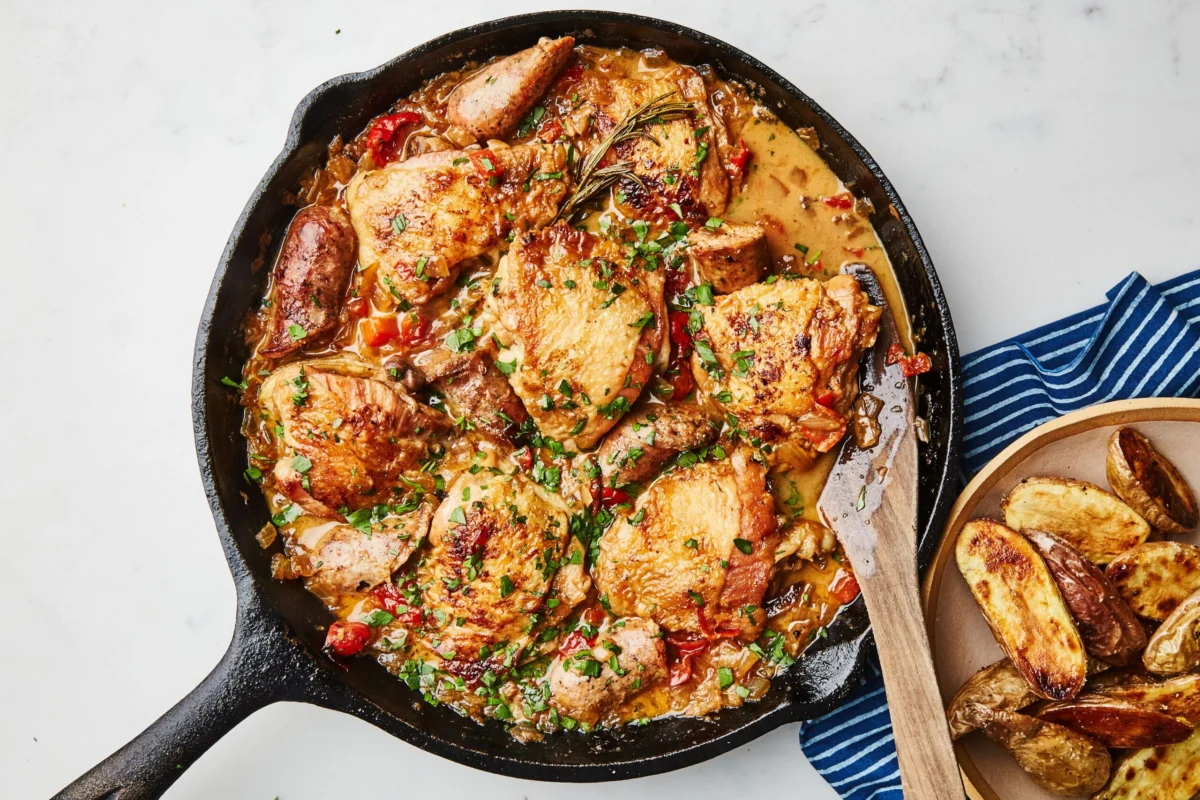
Chicken scarpariello, often translated as "shoemaker’s chicken," stands as a quintessential dish within the rich tapestry of Italian-American cuisine, a testament to the adaptive culinary spirit of immigrant communities. This robust entrée masterfully combines crispy-skinned chicken thighs and savory Italian sausage, all enveloped in a dynamically flavored sweet-and-sour pan sauce. The dish’s distinctive tang is typically derived from white wine vinegar and the unique piquancy of pickled Peppadew peppers, which are expertly balanced with a foundational aromatic medley of onions, fresh bell pepper, garlic, and fragrant rosemary. These ingredients coalesce with the savory drippings left behind by the seared meats, forming a complex and deeply satisfying flavor profile that has cemented its place as a beloved classic.
The Anatomy of a Classic: Key Ingredients and Their Roles
The success of chicken scarpariello hinges on a judicious selection and meticulous preparation of its core components, each contributing significantly to the dish’s ultimate character.
- Bone-in, Skin-on Chicken Thighs: The choice of bone-in, skin-on chicken thighs is not arbitrary but a foundational element that dictates both texture and flavor. The skin, when properly rendered and crisped, provides a textural counterpoint to the tender meat beneath. More importantly, the bone and skin contribute substantial flavor to the cooking liquid, enriching the pan sauce with collagen and rendered fat. As culinary scientists often point out, the Maillard reaction, which occurs during the browning of the chicken skin, creates hundreds of new flavor compounds, adding depth and complexity that skinless, boneless alternatives cannot replicate. Data from poultry markets consistently shows chicken thighs as a popular, economical, and flavorful cut, increasingly favored by home cooks and professional chefs for their versatility and resilience during cooking processes like braising.
- Italian Sausage: The inclusion of Italian sausage introduces another layer of savory richness and a distinctive spice profile. Depending on regional preferences and personal taste, the sausage can be sweet, mild, or hot, typically seasoned with fennel, paprika, and other Italian herbs. This ingredient not only adds protein and fat but also releases its own flavorful drippings and seasonings into the pan, forming an integral part of the sauce’s foundation. The integration of sausage into Italian-American dishes reflects a practical and flavorful adaptation, often leveraging readily available pork products in the United States, diverging slightly from more traditional Italian regional cooking where sausage might play a different role or have distinct preparations.
- The Sweet-and-Sour Symphony: White Wine Vinegar and Pickled Peppadew Peppers: The defining characteristic of scarpariello’s sauce is its vibrant sweet-and-sour balance. White wine vinegar provides a sharp, clean acidity that cuts through the richness of the meats and fats, preventing the dish from becoming cloying. Its volatile compounds contribute to the overall aroma and help to deglaze the pan, incorporating the flavorful fond.
The role of pickled Peppadew peppers is particularly noteworthy. Originating from South Africa, these small, bright red peppers offer a unique combination of sweetness, a mild tang, and a gentle heat, differing from the more aggressive heat of traditional chili peppers. Their introduction into Italian-American cuisine showcases the ongoing evolution and adaptation of dishes, incorporating new and interesting ingredients as they become available on the global market. The pickling process further enhances their tanginess, making them an ideal component for the scarpariello’s signature sauce. For those seeking a sharper or spicier kick, alternatives like hot cherry peppers or pepperoncini are viable, demonstrating the dish’s inherent flexibility. - Aromatic Ensemble: Onions, Bell Peppers, Garlic, Rosemary: The foundational aromatics are indispensable. Onions and garlic provide essential allium notes, building a savory base. Fresh bell pepper adds a subtle sweetness and vegetal freshness, contributing to both flavor and color. Rosemary, with its robust, piney aroma, is the herbaceous backbone, complementing the richness of the meats and tying the flavors together. These ingredients, sautéed to release their essential oils, form the aromatic heart of the pan sauce.
- The Unsung Hero: Separately Roasted Fingerling Potatoes: While some traditional scarpariello recipes advocate for cooking potatoes directly in the pan with the chicken, modern culinary approaches often recommend roasting fingerling potatoes separately. This methodological distinction is crucial for textural integrity. Roasting potatoes independently ensures they develop a crisp exterior, a stark contrast to the tender, sauce-laden chicken. When cooked directly in the pan, potatoes tend to absorb moisture and become softer, losing their desired crispness. The separately roasted potatoes are then perfect for absorbing the vinegary, savory pan sauce without becoming soggy, offering a delightful textural and flavor experience.
Culinary Science and Technique: Mastering the Scarpariello Method
The preparation of chicken scarpariello is a masterclass in foundational culinary techniques, each step meticulously designed to build layers of flavor and achieve optimal textures.
- Browning for Flavor: The Maillard Reaction in Poultry: The initial step of browning the bone-in, skin-on chicken thighs is critical. This process, known as the Maillard reaction, is a complex series of chemical reactions between amino acids and reducing sugars that occurs at high temperatures. It is responsible for the rich brown color and the savory, nutty, and roasted flavors developed on the chicken’s surface. Achieving a deep, even brown crust on the chicken skin not only enhances its aesthetic appeal but significantly contributes to the overall flavor depth of the dish, creating the "fond" – the flavorful browned bits stuck to the bottom of the pan – which is essential for the sauce.
- Building the Pan Sauce: Deglazing and Emulsification: After the chicken is browned and set aside, the pan is deglazed. This involves adding a liquid, typically the white wine vinegar and sometimes chicken stock, to the hot pan to dissolve the fond. This process captures all the concentrated flavors from the browned meats and vegetables, forming the base of the pan sauce. As the sauce simmers, the rendered fats, acids from the vinegar and peppers, and the dissolved solids emulsify, creating a cohesive, flavorful liquid that coats the chicken beautifully.
- The Art of Braising: Tenderness and Flavor Infusion: Once the initial browning and sauce building are complete, the chicken and sausage are often returned to the pan to braise. Braising is a combination cooking method that involves searing meat at high temperature, then finishing it in a covered pot with liquid at a lower temperature. This slow, moist cooking process breaks down tough connective tissues in the chicken and sausage, resulting in exceptionally tender, juicy meat. Simultaneously, the meats absorb the flavors of the simmering sauce, while contributing their own juices, further enriching the overall taste profile.
- Precision in Preparation: The Case for Separate Potato Roasting: As previously highlighted, the decision to roast fingerling potatoes separately underscores a commitment to textural excellence. While a single-pan approach might offer convenience, separating the roasting process ensures the potatoes achieve a desirable crispness that would be compromised by simmering in a liquid-rich environment. This technique, though requiring an additional step, is often lauded by culinary experts for elevating the dish from merely good to exceptional, providing a crucial contrast that enhances the overall dining experience.
A Taste of History: The Evolution of Italian-American Cuisine and Scarpariello
The narrative of chicken scarpariello is inextricably linked to the broader history of Italian immigration to the United States and the subsequent evolution of Italian-American cuisine.
- Immigration and Culinary Adaptation: From Italy to America: In the late 19th and early 20th centuries, millions of Italians, primarily from the impoverished Southern regions, immigrated to the United States. They brought with them their culinary traditions, deeply rooted in regional ingredients and cooking methods. Faced with new ingredients, different economic conditions, and a desire to adapt to their new home while preserving their heritage, Italian immigrants began to transform their traditional dishes. Ingredients that were scarce or expensive in Italy might be abundant and affordable in America, leading to substitutions and innovations. For instance, the generous use of tomatoes, often canned, became a hallmark, sometimes exceeding their use in many traditional Italian regional dishes.
- The "Red Sauce" Era: Emergence of a Distinct Cuisine: This period gave rise to what is now colloquially known as "red sauce" Italian-American cuisine. Dishes like spaghetti and meatballs, chicken parmesan, and lasagna, while having Italian roots, took on new forms and flavors. These dishes often featured more meat, larger portions, and richer sauces than their Italian progenitors, reflecting American abundance and a desire to create hearty, satisfying meals for working-class families. Scarpariello fits squarely within this tradition, offering a robust, flavorful, and filling meal.
- The Meaning of "Scarpariello": Tracing the "Shoemaker’s Style": The term "scarpariello" translates to "shoemaker’s style." The exact origin of this moniker for the dish is debated among food historians. One prevailing theory suggests it refers to a dish that is rustic, straightforward, and made with readily available, simple ingredients, much like a shoemaker’s practical and unpretentious craft. Another interpretation links it to the idea of a dish being "repaired" or "put together" quickly and efficiently, perhaps using leftover ingredients, much as a shoemaker would mend shoes. Regardless of the precise etymology, the name evokes a sense of humble origins, efficiency, and robust, unfussy flavor, distinguishing it from more elaborate, aristocratic preparations.
- Scarpariello’s Place in the Italian-American Repertoire: Chicken scarpariello, with its combination of poultry, sausage, and a vibrant sauce, emerged as a favorite, particularly in the Northeast, where large Italian-American communities flourished. It became a staple in family homes and neighborhood Italian restaurants, embodying the comfort and hearty sustenance valued by the community. Its adaptability, allowing for variations in spice levels and the inclusion of different peppers, also contributed to its widespread appeal and longevity.
Expert Perspectives and Culinary Commentary
The enduring popularity and culinary integrity of chicken scarpariello are frequently discussed by various experts in the food world.
- Chefs on Technique and Authenticity: Professional chefs consistently emphasize the importance of technique in executing scarpariello. Chef Mario Batali, for instance, in various culinary discussions, has often highlighted the critical step of browning the chicken properly to build flavor, and the careful balance of sweet and sour notes in the sauce. "The magic of scarpariello," one prominent Italian-American chef recently remarked at a culinary symposium, "lies not just in the ingredients, but in the art of building flavor layer by layer – from the crispy skin to the deglazed fond, culminating in a sauce that sings with tang and richness." They often stress that while improvisation is possible, respecting the core principles of searing, deglazing, and braising is paramount to achieving an authentic and satisfying result.
- Food Historians on Cultural Significance: Food historians view scarpariello as more than just a recipe; it’s a cultural artifact. Dr. Donna Gabaccia, a leading scholar on immigration and food, has explored how dishes like scarpariello became symbols of identity and community for Italian immigrants, bridging the gap between their old-world heritage and their new American reality. "These dishes were not just sustenance," she notes in her writings, "they were acts of memory, adaptation, and cultural assertion." The transformation of ingredients and techniques reflected the immigrant experience itself – a blend of tradition and innovation.
- Nutritionists on Balanced Indulgence: From a nutritional standpoint, scarpariello, when prepared thoughtfully, can be a well-rounded meal. While rich in protein and flavor, nutritionists often suggest balancing the meal with ample vegetables. The inclusion of chicken and sausage provides significant protein and healthy fats, while the bell peppers, onions, and garlic contribute vitamins and antioxidants. "Dishes like scarpariello demonstrate that comfort food doesn’t have to be nutritionally void," states a spokesperson for the American Dietetic Association in a recent food guide. "With lean cuts of meat, plenty of vegetables, and portion control, it can be part of a balanced diet, offering both satiety and nutrient density." The separately roasted potatoes provide complex carbohydrates, offering sustained energy.
Broader Impact and Contemporary Relevance
Chicken scarpariello continues to exert influence, not only in home kitchens but also within the broader culinary landscape.
- A Staple in Home Kitchens and Restaurants: For countless Italian-American families, scarpariello remains a cherished recipe passed down through generations, often evolving slightly with each cook’s personal touch. Its relatively straightforward preparation, combined with its hearty and flavorful outcome, makes it an ideal dish for both weeknight dinners and more elaborate Sunday suppers. In restaurants, especially those specializing in traditional Italian-American fare, scarpariello is often a menu highlight, drawing patrons seeking authentic, comforting flavors. The continued presence of such dishes underscores the enduring appeal of culinary heritage.
- Influence on Modern Culinary Trends: Revival of Comfort Food: In an era dominated by rapid culinary innovation and global fusion, there has been a noticeable resurgence of interest in comfort food. Chicken scarpariello perfectly aligns with this trend, offering familiarity, warmth, and deeply satisfying flavors. Its robust character and the sense of nostalgia it evokes resonate with a public increasingly seeking solace and authenticity in their food choices. This renewed appreciation has led to a re-evaluation of classic dishes, often with chefs putting their own refined spins on traditional preparations.
- Ingredient Sourcing and Market Dynamics: The Rise of Specialty Produce: The popularity of dishes like scarpariello, and particularly the specific mention of ingredients like Peppadew peppers, has an interesting effect on agricultural and culinary markets. As consumers become more discerning and adventurous, demand for specialty produce increases. The rise of Peppadew peppers, for example, from a relatively unknown South African product to a recognized ingredient in American kitchens, illustrates how a specific dish can drive market trends and expand the culinary lexicon of home cooks. This demand encourages growers and suppliers to diversify their offerings, benefiting both consumers and the broader food industry.
- Cultural Preservation through Cuisine: Ultimately, chicken scarpariello serves as a powerful vehicle for cultural preservation. Each time it is prepared and shared, it reinforces a connection to Italian-American heritage, telling a story of migration, adaptation, and the creation of a unique culinary identity. It’s a reminder that food is not merely sustenance but a profound expression of history, family, and community, capable of transcending generations and geographical boundaries. The act of cooking and sharing such a dish helps to keep traditions alive, ensuring that the flavors and stories of the past continue to enrich the present and inform the future.
In conclusion, chicken scarpariello is far more than a simple chicken dish; it is a complex culinary artifact that embodies the ingenuity, resilience, and rich cultural heritage of Italian-Americans. From its carefully selected ingredients and precise cooking techniques to its deep historical roots and contemporary relevance, scarpariello continues to captivate diners, offering a profound taste of tradition and comfort that resonates across diverse palates and generations.
