


The Culinary Institute of America’s recent Worlds of Flavor conference, themed "Asia on Our Menus: East by Southeast," provided a compelling look into the burgeoning interest of American consumers in exploring diverse Asian cuisines. The event, held on November 17, 2026, highlighted the growing influence of Japanese, South Korean, Thai, Vietnamese, and Singaporean culinary traditions on the American dining landscape. Senior Food Editor Bret Thorn of Nation’s Restaurant News moderated a key panel discussion that delved into how operator insights and consumer curiosity are actively reshaping menu development and dining experiences across the nation.
Consumer Affinity for Asian Flavors on the Rise
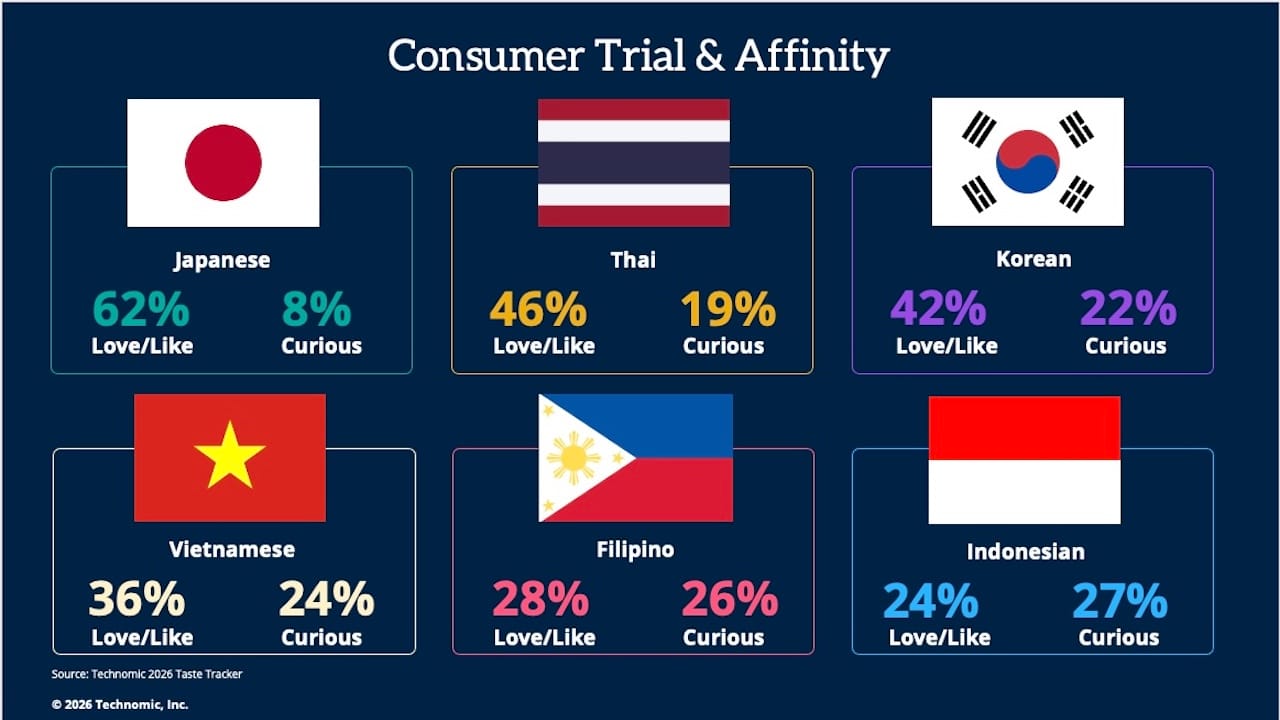
The conference kicked off with a deep dive into consumer preferences, as presented by Lizzie Bartlett, Senior Director of Menu Research & Insights at Technomic. Her data underscored a significant and growing affinity for specific Asian cuisines. Japanese cuisine emerged as the clear frontrunner, with a substantial 62% of surveyed consumers expressing love or liking for it. This was followed by Thai cuisine, favored by 46% of respondents, and Korean cuisine, appreciated by 42%. Vietnamese cuisine also demonstrated strong performance, with 36% of consumers indicating their enjoyment, surpassing Filipino (28%) and Indonesian (24%) cuisines.
These figures are indicative of a broader trend: Asian cuisines are the most frequently ordered category within "non-mainstream" or "global" dining options. Technomic’s research revealed that in 2025, over half of consumers who ordered global cuisines in full-service restaurants (55%) and limited-service establishments (51%) opted for Asian fare. Latin American cuisines followed, accounting for 40% in full-service and 38% in limited-service settings.
The overall consumption of global cuisines is also experiencing a steady increase. In 2022, 32% of foodservice consumers reported ordering global dishes. By 2025, this figure had climbed to 38%. This upward trajectory is particularly pronounced among younger demographics. Among diners aged 18-34, the adoption rate of global cuisines jumped significantly, with 53% reporting having ordered such dishes in 2025, a notable increase from previous years.
Operators Adapt to Evolving Palates
The panel discussion, featuring industry leaders, shed light on how these evolving consumer tastes are being translated into actionable strategies within restaurant operations. Ryan Yates, Senior Executive Chef at the University of California at Santa Cruz, shared his firsthand observations of this trend, particularly among the university’s diverse international student population. Yates emphasized the importance of adapting global flavors to locally available ingredients while maintaining respect for the culinary traditions.
"We really focus on the authenticity behind the craft and respecting the ingredients wherever we possibly can," Yates stated during the panel. He elaborated on the delicate balance of honoring authentic culinary techniques and flavor profiles while ensuring accessibility and appeal to a broad student body. This often involves carefully sourcing ingredients and thoughtfully integrating them into familiar formats, thereby educating palates without overwhelming them.

Denis Dello Stritto, Culinary Executive Director and Senior Executive Chef of Central Market, an upscale division of H-E-B supermarkets, highlighted the unique challenges and opportunities presented by a diverse customer base in Texas. His approach is guided by a constant search for the "new next," but crucially, it’s tempered by a commitment to "meet customers wherever they are on their food journey." Dello Stritto stressed that imposing unfamiliar authentic dishes can be counterproductive. Instead, the strategy involves responding to existing consumer awareness and interest, gradually introducing new flavors and experiences. This customer-centric approach ensures that innovation is embraced rather than resisted.
Trevor MacKenzie, Managing Director of Exquisite Global, which oversees more than 40 Mango Tree restaurants globally, echoed the sentiment of meeting consumers where they are. He described the process as an "evolution" rather than a revolution. MacKenzie provided a compelling example from Mango Tree’s expansion into Japan. Initially, certain core ingredients like cilantro, common in Thai cooking, were met with resistance from half the population. However, through consistent exposure and thoughtful menu adaptation, diners gradually developed an appreciation for cilantro and even for the traditional spiciness of Thai cuisine.
"Now in Japan some of our food is spicier than in Bangkok," MacKenzie noted, illustrating how persistent engagement and a willingness to adapt can indeed expand regional palates. He clarified that this doesn’t necessarily signify a universal increase in the Japanese spice palate but rather a cultivated preference within his specific customer base, a crucial distinction for culinary success.
The Future of Global Flavors on American Menus
The discussion also ventured into forecasting future culinary trends. Dello Stritto identified Korean cuisine as currently trending, with Filipino cuisine poised to gain significant traction in the near future. MacKenzie anticipates continued growth in regional Thai specialties and sees potential in the cuisines of Central Asia.
Yates offered a broader perspective, emphasizing the potential for cross-cultural culinary innovation. He suggested that exploring ingredients and techniques from diverse regions, such as North African spices, can introduce novel flavor dimensions, like smokiness, that can enrich existing dishes and create entirely new culinary experiences. "There’s all different ways of playing with this food," Yates remarked, underscoring the creative possibilities inherent in this global culinary exchange.
The Worlds of Flavor conference, with its focus on "Asia on Our Menus: East by Southeast," served as a vital platform for culinary professionals to understand and navigate the dynamic shifts in American consumer preferences. The insights shared by Technomic, alongside the practical experiences of operators like Yates, Dello Stritto, and MacKenzie, offer a clear roadmap for the future of global cuisine in the United States. The emphasis remains on a thoughtful, consumer-driven approach that respects culinary heritage while embracing innovation, ensuring that the exciting flavors of Asia and beyond continue to captivate and delight diners nationwide.
The insights presented at the conference align with broader industry observations regarding the increasing globalization of food. Data from the U.S. Department of Agriculture (USDA) has consistently shown a rise in the import and consumption of a wider array of international food products over the past decade, reflecting a more adventurous and informed consumer base. This trend is further supported by the growth of specialty ethnic grocery stores and a proliferation of online resources dedicated to international cooking, all contributing to a more receptive market for authentic and innovative global dishes.
Broader Impact and Implications for the Foodservice Industry
The evolving consumer palate for Asian and other global cuisines carries significant implications for the foodservice industry. Restaurants that proactively incorporate these flavors, whether through authentic offerings or innovative adaptations, are likely to attract a broader customer base and foster greater loyalty. This trend also presents opportunities for ingredient suppliers and distributors to expand their offerings and cater to the growing demand for specialized international ingredients.
For culinary education institutions like the Culinary Institute of America, events like Worlds of Flavor are crucial for staying at the forefront of gastronomic trends and equipping future chefs with the knowledge and skills necessary to navigate an increasingly diverse culinary landscape. The ability to understand, respect, and adapt international cuisines is no longer a niche skill but a fundamental requirement for culinary success in the 21st century.
The sustained interest in global flavors also necessitates ongoing research and data analysis. Understanding the nuances of regional cuisines, consumer acceptance levels, and the potential for fusion dishes will be critical for menu innovation and strategic planning. The continued dialogue between researchers, operators, and culinary experts, as exemplified at this conference, will be instrumental in shaping the future of dining in America.
The panel’s discussion on adapting to local preferences, rather than imposing authenticity, is a key takeaway. This approach acknowledges that culinary traditions evolve as they travel, influenced by local ingredients, tastes, and cultural contexts. Successful integration of global cuisines hinges on this adaptability, allowing for the creation of dishes that are both true to their origins and appealing to new audiences. This nuanced understanding is vital for fostering long-term growth and acceptance of diverse culinary traditions within the American mainstream.
The Culinary Institute of America’s commitment to exploring these evolving trends through its Worlds of Flavor series demonstrates its dedication to guiding the foodservice industry towards a more inclusive and dynamic culinary future. As consumers continue to seek out novel taste experiences, the "East by Southeast" movement, and the broader exploration of global cuisines, will undoubtedly remain a dominant force in shaping menus and dining destinations across the nation.
This article was originally published on November 17, 2026, and was written by Bret Thorn, Senior Food Editor at Nation’s Restaurant News.
