

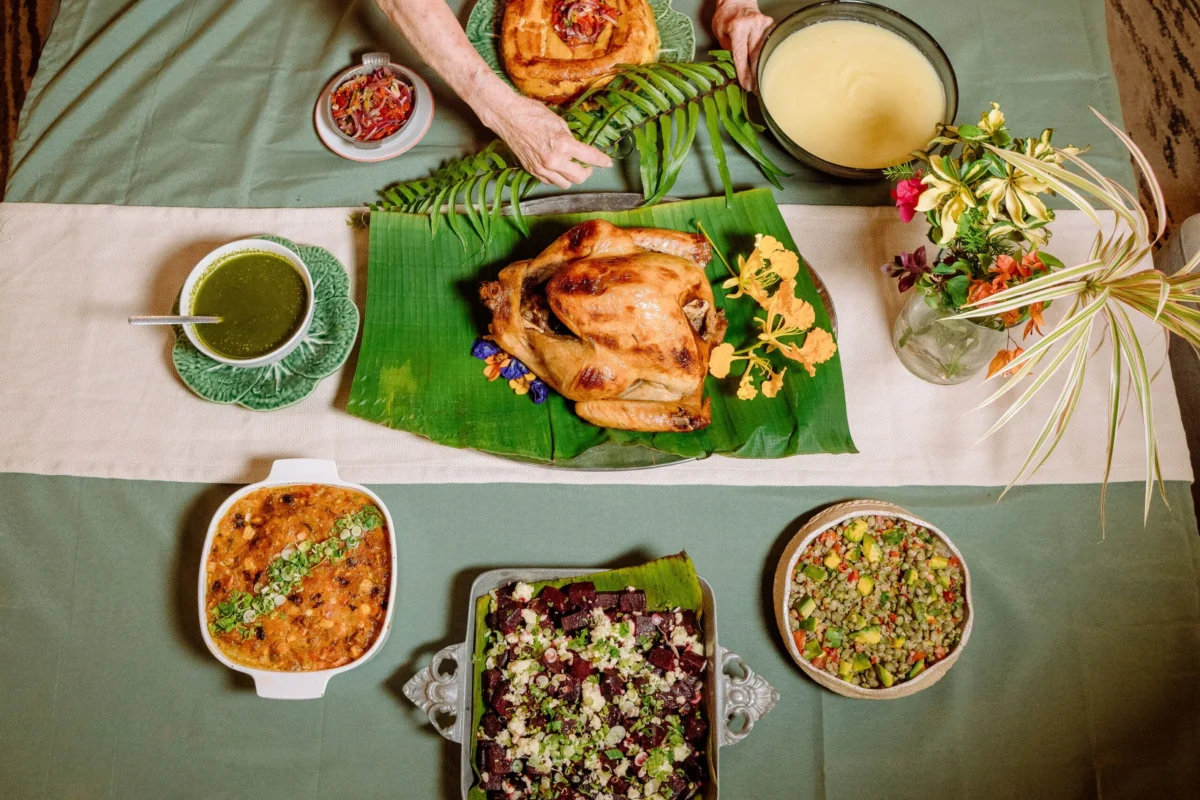
Puerto Rico’s embrace of Thanksgiving, known affectionately as "Sanguiving" or "El Día del Pavo," is far more than a mere adoption of an American holiday; it is a profound cultural remix, a vibrant testament to resilience, adaptation, and culinary innovation. This annual feast, celebrated with the same fervor as on the U.S. mainland, marks the spirited commencement of the island’s rambunctious holiday season, yet it is distinctively Puertorriqueñizado – made uniquely Puerto Rican. At its heart lies a culinary landscape reimagined, where traditional elements are infused with indigenous, Spanish, and African influences, transforming the familiar into an exhilarating explosion of tropical flavors and historical narratives.
The Genesis of Sanguiving: A Century of Cultural Blending
Thanksgiving’s roots in Puerto Rico trace back to the early 20th century, following the United States’ invasion of the island in 1898 during the Spanish-American War. After the Treaty of Paris ceded Puerto Rico from Spain to the U.S., a period of Americanization began, introducing various cultural and political elements, including federal holidays. While initially an imposed observance, Puerto Ricans gradually molded Thanksgiving into their own, reflecting the complex relationship between the island and the mainland. The formal designation, El Día de Acción de Gracias, often gives way to colloquial, endearing terms like "Sanguiving" – a clever play on words hinting at the island’s predominant Roman Catholicism – or simply "Turkey Day" (El Día del Pavo), showcasing a linguistic ingenuity that is characteristic of Boricua culture. This evolution highlights a dynamic process where external influences are not simply absorbed but actively reinterpreted and infused with local identity.
The early 1900s saw the holiday slowly integrate into the Puerto Rican calendar. For many, particularly those with familial ties to the U.S. military, Thanksgiving became a poignant occasion. Puerto Ricans officially became American citizens in 1917, just weeks before the U.S. entered World War I, and since then, thousands of Puerto Rican soldiers have served in every U.S. military conflict. These soldiers, exposed to American Thanksgiving traditions, often brought these customs home, intertwining them with local flavors and family gatherings. This military connection also inadvertently contributed to certain foodways, as government subsidies and the need for shelf-stable provisions on a storm-prone island led to the incorporation of imported and processed ingredients like tinned corned beef, Vienna sausages, and canned vegetables into the local diet, a reality that persists today with roughly 85 percent of all food in Puerto Rico being imported.

Giovanna Huyke: The Culinary Architect of Puerto Rican Thanksgiving
Central to the contemporary understanding and celebration of Puerto Rican Thanksgiving is Chef Giovanna Huyke, a culinary icon whose influence spans over four decades. Widely regarded as Puerto Rico’s answer to Julia Child, Huyke has become the undisputed culinary authority of the island’s most cherished dishes, having educated generations of home cooks through her television appearances, newspaper columns, and cookbooks since the late 1980s. Her seminal 2004 recipe booklet, Celebraciones, has been a guiding light for countless families, shaping the holiday menus of even those in the diaspora, like the author’s own grandmother, Tata.
A recent encounter with Huyke at SatoFino, a vibrant, woman-owned restaurant in San Juan, underscores her enduring energy and dedication. Despite a whirlwind schedule that saw her cooking for Hispanic families in Atlanta, catering for VIPs at the Miss Universe Puerto Rico pageant in Caguas, and teaching traditional cooking in San Germán, Huyke remains committed to sharing her expertise. Her signature red hair and convivial presence make her instantly recognizable, and her passion for Puerto Rican cuisine is palpable.
Huyke’s philosophy is deeply rooted in the island’s rich and resilient food history, which she describes as stemming from "necessity, lack, and a bounty from the land." She champions a complex cuisine that marries a deep agricultural heritage with the realities of modern reliance on imports. "Our food comes from Spain, Indigenous Taíno people, and [enslaved] West Africans," Huyke explains, "but it grew from our land and from our history, mixing every influence in our pilones and our cauldrons." This intricate tapestry of flavors, despite numerous challenges, consistently emerges as beautiful and profoundly flavorful, a testament to centuries of culinary evolution.
A Feast Reimagined: The Signature Dishes of Sanguiving

The Puerto Rican Thanksgiving table is a kaleidoscope of flavors, reimagining traditional American fare through a vibrant Boricua lens. The turkey, while still the centerpiece, undergoes a dramatic transformation. It is often marinated in a robust adobo of garlic, lime, and oregano, then famously stuffed with a savory mixture of fried green plantains and chicharrón mofongo. The adobo itself, a foundational element of Puerto Rican cooking, comes in both wet and dry forms, each a spectacular blend of Spanish, African, and Indigenous ingredients—garlic, onion, peppers, and herbs pounded in a pilón, a traditional wooden mortar and pestle with Taíno roots, symbolically binding the island’s ancestral and colonial cultures.
Gravy, a quintessential Thanksgiving accompaniment, takes an unexpected turn, crafted with sweet guava rather than giblets, offering a tangy-sweet counterpoint to the rich turkey. Desserts eschew apple pie in favor of creamy flan, while the ubiquitous "pumpkin spice" is nowhere to be found, replaced by the local winter squash, calabaza, which takes center stage in various preparations. Instead of warm apple cider, guests sip refreshing sweet coconut water, often served straight from a freshly cut coco beachside.
Side dishes further exemplify this culinary fusion:
- Yuca Stuffing (Estuffing): Huyke’s family recipe, Agüeybaná stuffing—named after the powerful Taíno chief—showcases fresh grated yuca ground to a paste, then sautéed with sofrito, ground and salt pork, annatto, herbs, and aromatics before being baked. This dish embodies Huyke’s commitment to using fresh, indigenous ingredients.
- Pastelón: A beloved lasagna-like casserole, pastelón features layers of fried sweet plantains and creamy queso fresco, believed to have originated in New York City where Puerto Rican and Italian communities converged in the 1950s, leading to a cross-pollination of culinary ideas.
- Gandules (Pigeon Peas): While arroz con gandules is Puerto Rico’s national dish and a frequent Sanguiving staple, Huyke offers an escabèche-style salad, marrying gandules with tomatoes, avocado, and herbs in a tangy vinaigrette, showcasing versatility.
- Roasted Beets: A reinterpretation of the island’s fondness for canned beets, Huyke roasts locally grown varieties, topping them with crumbled queso fresco for a fresh, vibrant side.
- Garlicky Mashed Potatoes: Inspired by her mother Alice’s efforts to elevate her father Hector’s disdain for bland military instant mashed potatoes, Huyke serves a rich version made with yellow potatoes slowly simmered in cream, enriched with chicken bouillon, whipped with butter, and infused with garlic.
Beyond the main courses, Huyke introduces ajilímolilí, a highly adaptable, herbaceous sauce of garlic, ají dulce peppers, culantro, cilantro, olive oil, vinegar, and a generous amount of capers. This versatile condiment is drizzled over nearly every dish, providing a fresh, bright counterpoint to the richer flavors. The turkey itself is brined in a mixture of salt, brown sugar, bay leaves, herbs, and peppercorns, then brushed with a blend of rum, melted butter, and guava jelly, yielding a moist, flavorful bird, its drippings preserved for the signature guava-infused gravy.
Reclaiming the Table: A Movement Towards Freshness

Huyke’s culinary mission extends beyond crafting delicious meals; it is a conscious effort to steer Puerto Rican cuisine away from its modern reliance on processed ingredients and back toward the vibrant, fresh foods that speak to the island’s natural bounty. She advocates for from-scratch dishes that celebrate indigenous staples like maize, peppers, yuca, and other root vegetables, alongside later introductions such as plantains and coconuts. This philosophy is not merely about health; it is about preserving flavor, authenticity, and the layered historical narrative embedded in every dish.
The economic transformation of Puerto Rico from an agrarian economy centered on sugar, coffee, and tobacco exports to an industrial manufacturing system has had significant implications for its food culture. The shift has led to a heavy dependence on imported goods, with a staggering 85% of all food consumed on the island coming from abroad. This reliance on external food sources, while providing variety, also poses challenges to food security, local agricultural development, and the distinctiveness of Puerto Rican cuisine.
Huyke’s work, therefore, serves as a powerful counter-narrative, urging a return to the land and its inherent richness. Her dedication to education is evident in her mentorship of young chefs, including Natalia Vallejo, the island’s first James Beard Award-winning chef. By enlisting up-and-coming talents and making herself available for guidance, Huyke ensures that the traditions, techniques, and philosophy of authentic Puerto Rican cooking are passed down, fostering a new generation of culinary torchbearers.
Implications and the Future of Puerto Rican Cuisine
The evolution of Thanksgiving in Puerto Rico, as demonstrated by Chef Huyke’s approach, is a microcosm of the island’s broader socio-cultural dynamics. It reflects the complex push-pull relationship with U.S. influence—a blend of adoption, adaptation, and an unwavering assertion of unique identity. The holiday, initially an American imposition, has been so thoroughly Puertorriqueñizado that it now stands as a testament to the island’s capacity for cultural synthesis and self-definition.

This culinary journey carries significant implications for cultural preservation and national identity. By emphasizing fresh, local ingredients and historical cooking methods, chefs like Huyke are not just creating delicious food; they are actively safeguarding an intangible heritage. They challenge the reliance on imported, shelf-stable foods that became prevalent due to historical and economic factors, advocating instead for a vibrant, sustainable culinary future rooted in the island’s rich agricultural past and present bounty.
As Puerto Rico continues to navigate its political status—with ongoing debates about statehood, independence, or enhanced commonwealth status—its culinary traditions remain a steadfast anchor of identity. The Thanksgiving table, in its vibrant and unique form, becomes a space where these complex narratives are celebrated, shared, and passed down. "I believe every cuisine evolves," Huyke affirms, "But traditions should be kept and taught. So we do not lose the roots that make us unique." Her words resonate as a guiding principle for Puerto Rican cuisine, ensuring that its rich history, diverse influences, and unparalleled flavors continue to thrive, enriching not just the holiday season, but the very essence of Boricua culture for generations to come. The Sanguiving feast, therefore, is not merely a meal; it is a living, breathing celebration of identity, resilience, and the enduring power of food to tell a story.
