

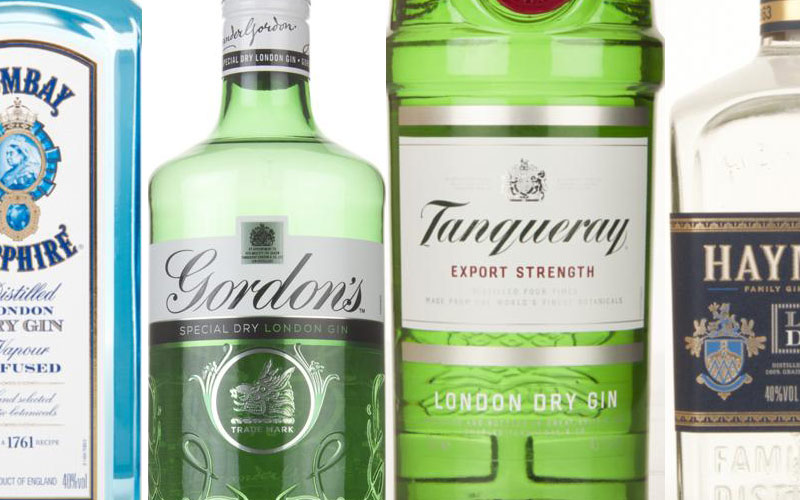
The classification of London Dry Gin represents one of the most rigorous and misunderstood technical standards in the global spirits industry. Contrary to popular consumer belief, the term "London Dry" does not refer to a geographic location of production, nor does it strictly define a specific flavor profile. Instead, it serves as a strict process designation, codified by international law to ensure a high standard of purity and production methodology. Following a period of extensive consultation with consumers and the distilling industry in 2019, the European Union updated its legislative framework through Regulation 2019/787, later amended by 2021/1465, to provide greater clarity on these definitions. While the United Kingdom has since exited the European Union, it continues to uphold the core tenets of these regulations as they stood at the time of the transition, maintaining a shared standard for one of the world’s most exported spirits.
The Historical Necessity of Quality Control
To understand the current legal requirements for London Dry Gin, one must look to the 18th and 19th centuries, an era when gin production was largely unregulated and often dangerous. During the infamous "Gin Craze" in London, spirits were frequently distilled from low-quality grains and even waste products. To mask the harsh, unpalatable flavors of poorly rectified alcohol, distillers often added heavy amounts of sugar, turpentine, or sulfuric acid.
The turning point for the industry arrived with the invention of the continuous column still, patented by Aeneas Coffey in 1830. Unlike the traditional pot still, which produced a lower-proof spirit containing various congeners and impurities, the column still allowed for the production of highly rectified spirit at 96% alcohol by volume (ABV). This "neutral" spirit provided a clean canvas for distillers, leading to a new style of unsweetened gin that relied on the quality of its botanicals rather than additives. This style became known as "dry" gin, and because the center of this technological revolution was London, the term "London Dry Gin" was born as a hallmark of quality and purity.
The Technical Requirements of Regulation 2019/787
Under current EU and UK law, for a spirit to bear the name "London Gin" or "London Dry Gin," it must meet a cascading series of technical requirements. The legislation begins by defining the base product: a London Gin must first qualify as a "Distilled Gin."
The Base Spirit and Initial Distillation
The foundation of any London Dry Gin must be ethyl alcohol of agricultural origin. This means the alcohol must be fermented from grain, grapes, sugar beets, or even dairy by-products like whey. Crucially, this base spirit must be distilled to an initial alcoholic strength of at least 96% ABV. At this concentration, the spirit is effectively neutral, having been stripped of the flavors and impurities of its source material. This ensures that the final character of the gin is derived solely from the botanicals introduced later in the process.
The Redistillation Process
Once the neutral base spirit is obtained, it must be redistilled in traditional stills in the presence of Juniperus communis L. (juniper berries) and other natural plant materials. The law specifies that all flavor must be imparted through this distillation process. While a distiller may use a "concentrate" method—distilling a highly potent botanical spirit and later diluting it with more neutral agricultural alcohol—the resulting distillate must leave the still at a minimum of 70% ABV.
The Prohibition of Post-Distillation Additives
The most defining characteristic of the London Dry designation is what happens after distillation. For a spirit to be labeled as "London Gin," no flavoring substances or preparations can be added after the final distillation. Only water (to reach bottling strength) and a minute amount of sweetening may be added. If a gin involves the addition of flavors after the still—such as the cucumber and rose essences used in Hendrick’s Gin or the separate distillation of botanicals blended later as seen in Martin Miller’s—it may be labeled as "Distilled Gin," but it is legally barred from using the "London" designation.
Defining Dryness: The Sugar and Methanol Standards
The "Dry" in London Dry Gin is a specific legal measurement. According to the 2019/787 legislation, a gin may be designated as "dry" if it contains no more than 0.1 grams of sweetening products per liter of the final product, expressed as invert sugar. Historically, "Old Tom" gins were heavily sweetened to hide impurities; "Dry" gins, by contrast, are required by law to be nearly sugar-free.
Interestingly, the small allowance of 0.1g/L is often not used for flavor at all. Large-scale producers frequently use "sugar dyes" or tracer molecules to protect their products against counterfeiting. These tracers, which are technically sugar-based, would be illegal under a "zero-sugar" policy. Thus, the law provides a narrow window to allow for these anti-fraud measures while maintaining the spirit’s unsweetened character.
Furthermore, the London Gin designation carries a strict safety standard regarding methanol. Methanol, or "wood alcohol," is a toxic byproduct of fermentation. While ethanol boils at 78.2°C, methanol boils at 64.7°C. Modern distillation techniques easily remove methanol during the "heads" cut of a run. However, to guarantee the highest level of purity, London Gin must contain less than 5 grams of methanol per hectoliter of 100% ABV alcohol. While most modern spirits meet this standard regardless of their label, the London Dry designation codifies this as a legal guarantee of consumer safety.
The Botanical Debate: Plants, Fungi, and Animals
A nuanced aspect of the 2019/787 regulation is the requirement that flavor must be derived exclusively from "natural plant materials." This phrasing creates a technical exclusion for several innovative modern gins.
- Fungi: Because mushrooms are biologically classified as fungi rather than plants, a gin flavored with mushrooms (such as Radoune Gin) cannot technically be classified as a London Dry Gin under a strict interpretation of the law.
- Animal Products: The "Pechuga" style of gin, inspired by Oaxacan mezcal traditions, involves suspending raw meat (such as chicken or turkey breast) inside the still during distillation. Since meat is an animal product, these spirits fail the "plant materials only" requirement for London Gin.
- Coloring: London Gin must be colorless. The recent trend of "Butterfly Pea Flower" gins, which change color from blue to purple when mixed with tonic, are ineligible for the London Dry label because their color is an additive introduced after distillation.
Despite these restrictions, the base spirit itself remains flexible. Spirits like Bertha’s Revenge, which uses a whey-base (milk), are permitted because the "agricultural origin" clause is broad enough to include animal-derived fermentables, provided the resulting spirit is distilled to a neutral 96% ABV.
Chronology of Legislation and the Failed GI Status
The legal journey of London Dry Gin has seen several attempts at even stricter protection. In 2015, there were significant movements within the British gin industry to grant "London Dry Gin" a Protected Geographical Indication (PGI) or Geographical Indication (GI) status, similar to Champagne or Scotch Whisky.
However, the bid for GI status was ultimately unsuccessful. To achieve GI status, a product must demonstrate that its quality or reputation is essentially attributable to its geographical origin. Because "London Dry" had already become a global term for a process—with high-quality versions being produced in Scotland, Spain, the United States, and Japan—it was deemed too late to restrict the name to the city of London. Additionally, GI status requires a "technical file" that specifies the process in exhaustive detail. Many distillers were unwilling to disclose their proprietary botanical ratios or maceration times to the extent required for such protection.
Consequently, the 2019 EU regulations represent a compromise. They encode the "London Dry" name as a protected process designation without the geographic restrictions that would have forced many established brands to change their labels.
The Subjectivity of Flavor and Modern Analysis
Perhaps the most contentious part of the law is the requirement that the taste of the gin must be "predominantly that of juniper." This remains a subjective and largely unenforceable standard. There is no legal definition of what "predominant" means in a sensory context, leading to the rise of "Contemporary" or "New Western" style gins that emphasize citrus, floral, or spice notes over the traditional piney flavor of juniper.
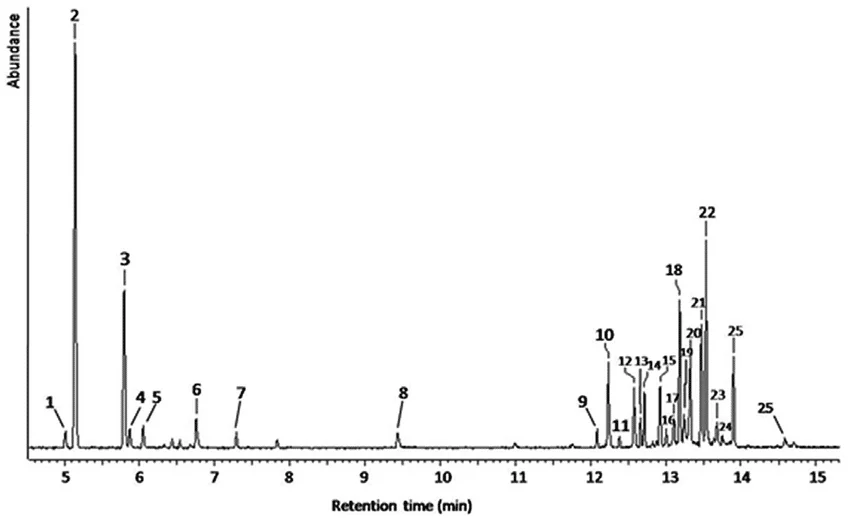
Some large-scale distillers, such as Bombay Sapphire at Laverstoke Mill, utilize Gas Chromatography-Mass Spectrometry (GC-MS) to ensure consistency. By analyzing the volatile compounds in a gin sample, they can create a "fingerprint" of the botanical oils. For example, they can measure levels of alpha-pinene (from juniper) and limonene (from citrus) to ensure each batch matches the flavor profile of the last. While this technology exists, it is too expensive for regulatory bodies to use for routine enforcement, meaning the "predominant juniper" rule remains a symbolic nod to tradition rather than a strictly enforced chemical threshold.
Global Market Implications and the U.S. Perspective
Outside of Europe, the definition of gin varies significantly. In the United States, the Alcohol and Tobacco Tax and Trade Bureau (TTB) defines gin more broadly. U.S. regulations do not use the term "London" as a legal category; instead, they focus on "Distilled Gin" as a spirit with a main characteristic flavor derived from juniper berries. This lack of a "London Dry" equivalent in U.S. federal law means that American consumers must rely on the labels of imported products or the voluntary adherence of domestic craft distillers to European standards.
As the global gin market continues to expand, the London Dry designation remains the "gold standard" for purists. It signifies a lack of shortcuts—no added sugars to hide flaws, no post-distillation flavors to "fix" a poor run, and a high-purity base spirit. For the consumer, the label "London Dry Gin" is a promise of a specific methodology: a transparent, high-quality process that has remained largely unchanged for nearly two centuries, ensuring that the spirit in the bottle is as clean and honest as the technology allows.
