

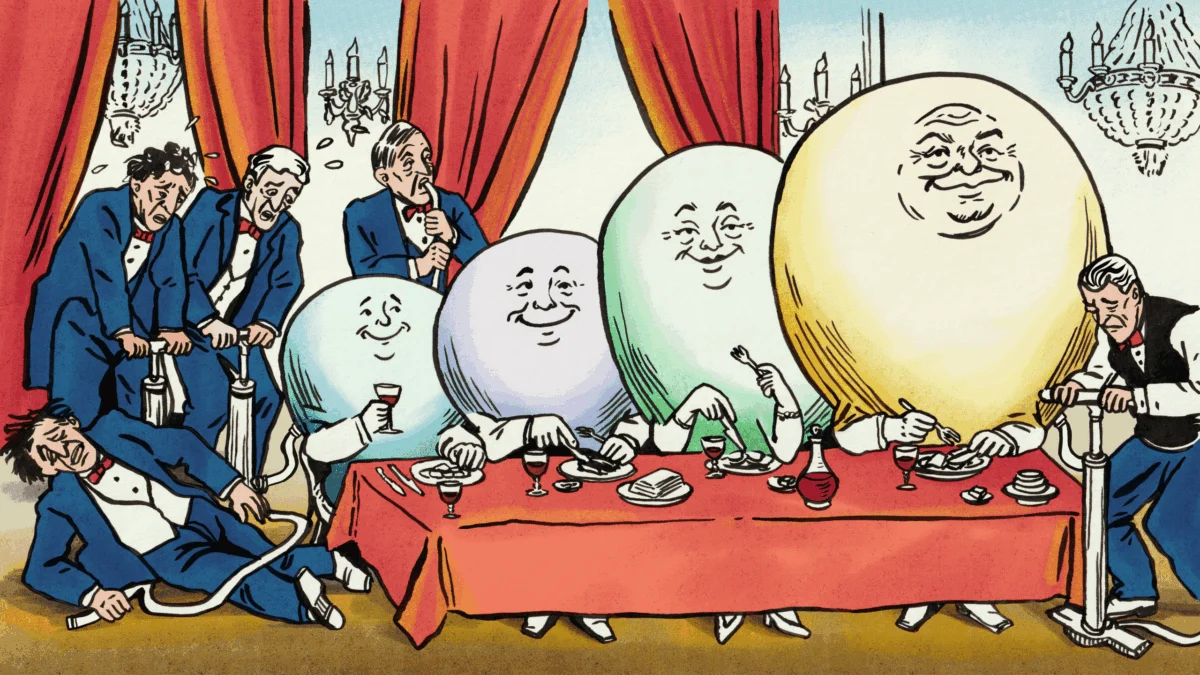
Will Guidara, co-owner of the acclaimed Eleven Madison Park, popularized a mantra that resonated deeply within the fine dining circuit: "Their perception is our reality." This philosophy, articulated vividly in his 2022 bestselling book Unreasonable Hospitality: The Power of Giving People More Than They Expect, champions an extreme form of guest service that aims to transcend expectations and create unforgettable, almost magical, dining experiences. While inspiring on the surface and achieving widespread acclaim, the pervasive influence of this ideology is now drawing scrutiny for its potentially detrimental impact on the broader restaurant industry, particularly for small businesses grappling with post-pandemic economic realities.
The Genesis of Unreasonable Hospitality
Guidara’s approach to hospitality stems from his illustrious career at Eleven Madison Park, a New York City restaurant that achieved three Michelin stars and topped the World’s 50 Best Restaurants list under his leadership. His book, a collection of anecdotes and principles from his decades in fine dining, posits that true hospitality lies in anticipating and exceeding guests’ unarticulated desires, transforming a meal into a transformative event. These "unreasonable" acts could range from remembering a guest’s obscure preference to orchestrating elaborate, personalized surprises. The book quickly captivated an audience far beyond the culinary world, selling over a million copies and spending 27 weeks on the New York Times bestsellers list.
The philosophy gained even broader cultural traction in 2023 when it was prominently featured in the second season of FX’s critically acclaimed series The Bear. In the "Forks" episode, character Richie Jerimovich is seen engrossed in Guidara’s book, subsequently reenacting a famous Guidara story (originally involving hot dogs, adapted to deep-dish pizza in the show) as he immerses himself in the tenets of exceptional service. This pop culture moment further cemented Unreasonable Hospitality as a benchmark for service excellence, amplifying its reach and influence on both industry professionals and the dining public.
Guidara’s work builds upon and extends the legacy of influential hospitality figures like Danny Meyer, whose 2006 book Setting the Table: The Transforming Power of Hospitality in Business introduced the concept of "enlightened hospitality." Meyer’s philosophy emphasizes prioritizing employees, then guests, then the community, suppliers, and investors. Both Guidara and Meyer frame hospitality as a "selfish pleasure," suggesting that the act of making others feel good inherently rewards the giver. Guidara explicitly states, "It feels great to make other people feel good," echoing Meyer’s sentiment that "the real secret of its success is to hire people to whom caring for others is, in fact, a selfish act." This perspective underpins the drive for extraordinary service, portraying it as a mutually beneficial exchange.
The Emerging Critique: Unrealistic Expectations and Industry Strain
Despite its inspiring premise, the widespread adoption of "unreasonable hospitality" has begun to reveal its hidden costs for the restaurant industry. Critics argue that the book’s success has inadvertently fostered a new adversary for hospitality professionals: unreasonable guest expectations. While Guidara’s ideology may have seemed aspirational upon its 2022 release, its continued prominence has coincided with a period of unprecedented challenges for the restaurant sector, making its principles increasingly difficult, if not impossible, to implement universally.
In an op-ed published in Food & Wine in late 2023, veteran restaurateur John Winterman voiced strong concerns about the book’s impact on diner behavior. Winterman observed a marked increase in guests arriving with "a heightened and nearly impossible ideal of what a restaurant can or is expected to deliver." He pointed out that most restaurants, unlike Guidara’s Eleven Madison Park, lack the resources to employ a dedicated "dreamweaver"—a position whose sole responsibility was to craft bespoke, magical moments for individual guests. For independent and mid-tier establishments, such extreme acts of service are financially unsustainable and operationally impractical, making the everyday warmth and competence of their staff seem "spartan" by comparison.
The economic landscape for restaurants remains precarious following the global pandemic. According to the National Restaurant Association, the industry lost over 2.5 million jobs in the initial months of the pandemic, and while many have returned, labor shortages persist. Inflationary pressures have driven up food costs, energy expenses, and wages, squeezing profit margins that were already notoriously thin. Industry data from sources like the Bureau of Labor Statistics indicate that restaurant operating costs have significantly increased, making it challenging for many small businesses to simply "keep the lights on" and meet payroll, let alone invest in "unreasonable" acts of hospitality. The expectation for restaurants to "pull hospitality rabbits out of the hat for every guest" in such an environment is widely seen as detached from the prevailing economic reality.
The Human Cost: From Selflessness to Self-Destruction
The glorification of self-effacing behavior in service, central to the "unreasonable hospitality" narrative, also raises critical questions about staff well-being and the potential for exploitation. While Guidara and Meyer emphasize the "selfish pleasure" of caring for others, they seldom delve into the instances where this selflessness can become self-destructive.
A stark illustration of this darker side emerged from a recent New York Times exposé detailing allegations of systemic abuse by Chef Renée Redzepi at Noma in Copenhagen. The report highlighted a culture where the pursuit of culinary perfection and an exceptional guest experience often came at the severe expense of staff welfare, involving long hours, intense pressure, and verbal abuse. This incident serves as a sobering reminder that a restaurant’s glowing public perception often starkly contrasts with the harsh realities faced by its employees. Prioritizing external perception over internal well-being can inadvertently create environments ripe for such abuses, where staff are expected to endure hardship in service of an idealized guest experience.
In Unreasonable Hospitality, while Guidara shares captivating stories of going above and beyond for guests, the narrative rarely includes the perspectives of the frontline staff tasked with executing these extraordinary feats. The untold effort required, for instance, to send an employee scrambling in the middle of a busy service to purchase sleds for wealthy tourists—an anecdote Guidara recounts—is often glossed over, stripped of its labor-intensive implications. Such anecdotes, while charming in print, underscore the significant and often unacknowledged burden placed on workers to create these "magical" moments, highlighting a disconnect between the idealized vision and the ground-level execution.
Guidara’s Expanding Influence and the Call for a New Paradigm
Despite the growing critique, Guidara continues to expand his "unreasonable hospitality" gospel. In April 2024, he released Unreasonable Hospitality: The Field Guide, a companion workbook designed to help enthusiasts apply his principles. The guide is replete with aphorisms like "Adversity is a terrible thing to waste," reflecting a philosophy that, to some, borders on aspirational self-help rather than practical business advice for the struggling restaurant sector. Furthermore, his annual Welcome Conference has evolved into a significant event for hospitality professionals, drawing attendees globally who gather to celebrate and share extravagant examples of service. For many, this has become a quasi-religious experience, underscoring the fervent devotion to Guidara’s ideals.
However, a burgeoning movement within the industry advocates for a more grounded and sustainable definition of hospitality. The author of The New Rules of Dining Out argues for a new paradigm of excellence that moves beyond the magnitude of a server’s obsequiousness or their derived joy from subservience. Instead, this perspective champions "reasonable hospitality"—the heartfelt, often unnoticed, blue-collar service that forms the backbone of countless local establishments.
This includes the waitress who remembers a regular’s breakfast order, the maître d’ who consistently seats patrons at their favorite booth, or the bartender who perfectly crafts a regular’s martini. These humble, consistent acts of personalized service, while not "unreasonable" in their scale, carry immense power and build lasting guest loyalty. They represent a sustainable, humane form of hospitality that does not demand self-sacrifice but rather celebrates genuine connection and professional competence.
Redefining Excellence: Inclusivity and Shared Responsibility
The conversation around hospitality excellence also needs to embrace a broader range of voices and perspectives. For too long, the "gold standard" in hospitality has been disproportionately shaped by Eurocentric, fine-dining narratives. New literary works, such as Molly Irani’s recent memoir, Service Ready, offer an opportunity to integrate more diverse viewpoints, including those of female and BIPOC thought leaders. These perspectives can enrich the understanding of service, moving beyond a singular, often elitist, definition.
For guests, embracing "reasonable hospitality" necessitates a shift in mindset. It means finding satisfaction in receiving precisely what was promised and expected, rather than feeling shortchanged for not experiencing an extravagant, unexpected gesture. Diners must acknowledge their integral role in fostering positive hospitality outcomes. This involves engaging mindfully with staff, understanding that hospitality is a reciprocal exchange, and recognizing that every dollar spent in a restaurant is an investment in the local economy and community, not merely a transaction for self-serving entertainment. The canonization of Unreasonable Hospitality risks reinforcing a consumerist mentality where guests primarily focus on what restaurants can do for them, rather than what they can do for restaurants to ensure their sustainability and success.
A Sustainable Future for Hospitality
Ultimately, the credo "their perception is our reality" has become an increasingly untenable burden for the majority of restaurants. For many small businesses, the daily reality involves navigating the anxieties of making payroll, managing rising operational costs, and even facing existential threats such as immigration enforcement impacting their workforce. Expecting these establishments and their staff to mask such profound struggles while simultaneously delivering "unreasonable hospitality" is not only unrealistic but profoundly unfair.
The future of hospitality must prioritize sustainability, both economic and human. This means fostering an environment where restaurants can thrive by delivering excellent, consistent service without sacrificing the well-being of their employees or jeopardizing their financial stability. It calls for a balanced approach where guest satisfaction is valued, but not at the expense of equitable labor practices and a realistic understanding of operational capabilities. By embracing "reasonable hospitality"—a model built on respect, genuine care, and mutual understanding—the industry can forge a path toward a more resilient, inclusive, and compassionate future for all involved.
