

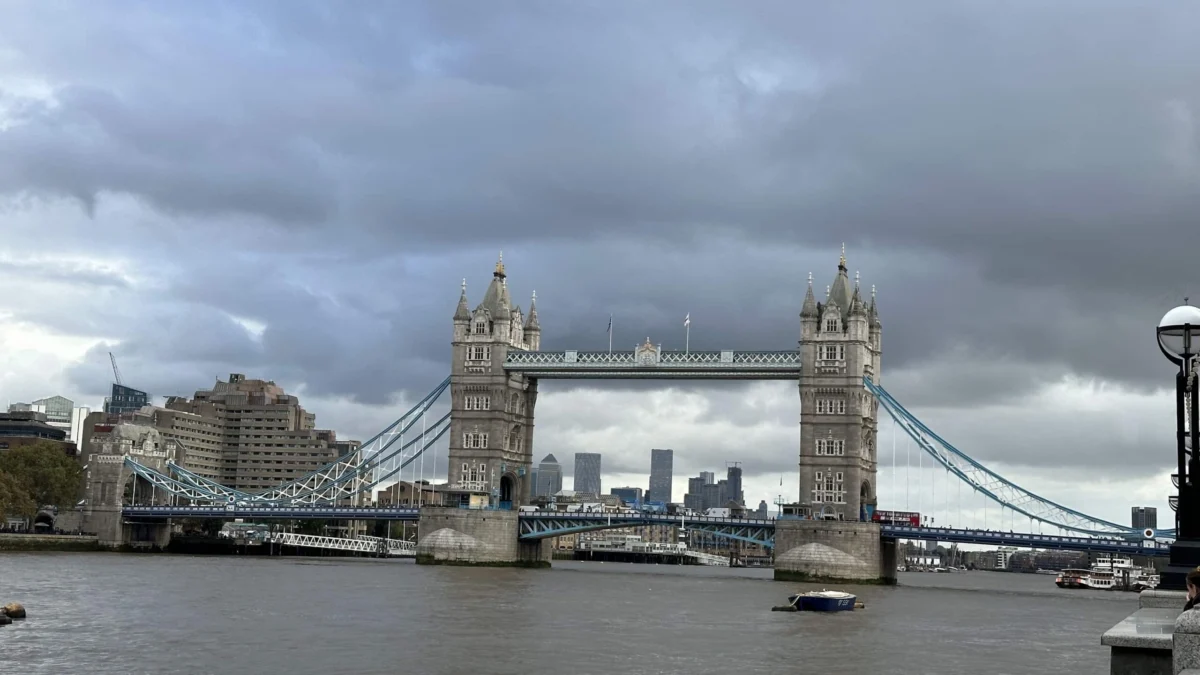
The designation of London Dry Gin remains one of the most misunderstood labels in the global spirits industry, often mistaken by consumers as a protected geographical indication similar to Champagne or Scotch Whisky. In reality, London Dry Gin is a technical specification regarding production methods rather than a reflection of its place of origin. While the name pays homage to the historical epicenter of gin production in the 19th century, the liquid inside the bottle can be legally produced anywhere in the world, from the rugged coastlines of Australia to the craft distilleries of the United States and the Highlands of Scotland. This designation serves as a hallmark of quality and a specific stylistic approach to distillation, rooted in a history that transitioned the spirit from a dangerous, adulterated tonic to a refined, high-purity beverage.
The Technical Definition of the London Dry Process
To understand why "London Dry" is a process rather than a location, one must look at the modern legal frameworks that govern its production. According to regulations established by the European Union and adopted by many international trade bodies, London Dry Gin must meet several rigorous criteria. The base spirit must be a high-quality neutral alcohol of agricultural origin, distilled to a minimum strength of 96% alcohol by volume (ABV). The flavoring must be introduced exclusively through the redistillation of this neutral spirit in traditional stills in the presence of all the natural plant materials (botanicals) used.
Crucially, no artificial flavorings or colorings can be added after the distillation process. Only a minute amount of sweetening—no more than 0.1 grams of sugar per liter—is permitted, and the only substance allowed to be added after distillation is water to reach the desired bottling strength. This "dry" requirement distinguishes the style from older, sweeter varieties like Old Tom gin. Because the process prohibits the addition of flavors after the final distillation, the distiller must be highly skilled, as there is no way to "fix" or mask a poorly executed batch with additives.
The 19th Century Revolution: From Turpentine to Purity
The evolution of the London Dry style is inextricably linked to the technological advancements of the Industrial Revolution. Before the mid-19th century, gin was often a crude and potentially hazardous product. Early records, such as the 1801 advertisement for the book Every Man His own Brewer and Distiller, suggest that "London Gin" was already a recognized term, but it lacked a standardized definition. During this era, many spirits were produced in primitive pot stills that could not efficiently remove impurities like methanol and fusel oils. To make these harsh spirits palatable, producers frequently added heavy amounts of sugar or, more alarmingly, toxic substances such as turpentine and sulfuric acid to mimic the "sting" of high-proof alcohol.
The turning point occurred in 1830 when Aeneas Coffey, an Irish inventor and former excise officer, patented the "Coffey Still" or column still. Unlike the traditional pot still, the Coffey Still allowed for continuous distillation, producing a much cleaner, higher-proof neutral spirit. This technological leap eliminated the need for heavy sweetening to hide off-flavors. For the first time, distillers could produce a "dry" spirit that showcased the delicate nuances of juniper and other botanicals.
By the late 19th century, this refined style began to be marketed as "London Dry Gin." The name capitalized on the prestige of London’s major distilleries, which were among the first to adopt the new technology and export their products globally. Historical records from 1897 in Australia and 1903 in the United States show that the term had already become a shorthand for premium quality in the international market, signaling to consumers that the product was free from the adulterants common in cheaper, local spirits.
A Chronology of the London Dry Designation
The journey of London Dry Gin from a local style to a global standard follows a clear historical trajectory:

- 1751: The Gin Act is passed in England to curb the "Gin Craze," leading to more regulated and larger-scale production in London.
- 1801-1803: The term "London Gin" appears in trade manuals and advertisements, though it often refers to recipes that include additives like turpentine.
- 1830: Aeneas Coffey patents the column still, enabling the production of high-purity neutral spirits.
- 1870s-1890s: Distilleries in London begin exporting "dry" gin styles, and the term "London Dry" gains traction in print media across the British Empire and the Americas.
- 1920s: During the Prohibition era in the United States, "London Dry" becomes the gold standard for cocktails like the Martini, cementing its status in the global cocktail canon.
- 2008: The European Union formalizes the definition of London Dry Gin in Regulation (EC) No 110/2008, establishing the technical requirements used today.
The Globalization of Production
Despite its name, many of the world’s most famous London Dry Gins are no longer produced within the city limits of London. A prominent example is Tanqueray, a brand synonymous with the London Dry style. While it was founded in Bloomsbury, London, in 1830, its production was eventually moved to the Cameronbridge Distillery in Scotland. This shift highlights the fact that the "London" in the name refers to a heritage of quality rather than a geographical restriction.
Today, the craft spirits movement has further decentralized the style. Distilleries across the globe utilize the London Dry process to create spirits that reflect their local environments while adhering to the strict traditional method. Notable examples include:
- Astraea Meadow Gin (United States): A craft gin produced in Washington state that adheres to the London Dry process while using local botanicals.
- No. 3 Gin (Netherlands): Though owned by the historic London merchant Berry Bros. & Rudd, this gin is distilled in the Netherlands, the ancestral birthplace of gin’s predecessor, Genever.
- Australian Distilling Co. Gin (Australia): A testament to the style’s popularity in the Southern Hemisphere, utilizing the London Dry method to highlight Australian aromatics.
- Belgravia Gin (South Africa): A major player in the African market that maintains the strict distillation standards required for the designation.
Industry Implications and Market Analysis
The decision not to protect "London Dry" as a Geographical Indication (GI)—unlike Plymouth Gin, which was a protected GI until 2014—has had significant implications for the global spirits market. By remaining a process-based designation, London Dry Gin has become a universal language for quality.
For distillers, the "London Dry" label serves as a rigorous certification that they can use to signal transparency and skill to the consumer. Because the process forbids post-distillation additives, it is often viewed by purists as the most "honest" form of gin. This has become increasingly important in a market saturated with "pink gins" and "flavored gins" that often rely on heavy sugar and artificial colors added after distillation.

From a trade perspective, the global nature of the term allows for a competitive marketplace. It prevents a monopoly by London-based producers while maintaining a high barrier to entry regarding technical skill. Data from the global spirits market indicates that while flavored gins have seen a surge in popularity over the last decade, the London Dry category remains the foundational pillar of the industry, accounting for a significant portion of "super-premium" gin sales.
Expert Analysis: The Future of the Designation
Industry analysts suggest that the London Dry designation is facing a period of both challenge and reinforcement. The rise of "Contemporary" or "New World" gins—which often use the London Dry process but emphasize botanicals other than juniper—has pushed the boundaries of what consumers expect from the category. However, the legal requirement for juniper to be the "predominant" flavor in any gin, including London Dry, ensures that the category remains anchored to its historical roots.
Furthermore, as consumer demand for transparency grows, the London Dry label provides a clear, regulated definition that distinguishes it from less-regulated spirit categories. In an era where "craft" and "artisanal" are often used as vague marketing terms, the technical rigidity of London Dry Gin offers a verifiable standard of production.
The story of London Dry Gin is ultimately a story of how a city’s industrial success became a global benchmark. What began as a way for London distillers to prove their product wouldn’t poison their customers has evolved into a sophisticated, world-wide standard of excellence. Whether distilled in the heart of London or in a remote corner of the Pacific Northwest, a bottle labeled London Dry Gin carries with it two centuries of technological innovation and a commitment to the purity of the distiller’s art.
