

The past week has seen a convergence of significant events, ranging from the legal periphery of tech scandals to escalating geopolitical tensions, profound economic disruptions, and the cutting edge of food technology. As global interconnectedness intensifies, seemingly disparate incidents reveal underlying currents impacting societies worldwide.
The Curious Case of Elizabeth Holmes and the Scrambled Egg
A newly released documentary, You Can See Everything, has inadvertently sparked a peculiar public discussion centered on a seemingly mundane domestic task: scrambling an egg. The film features Elizabeth Holmes, the disgraced founder of Theranos, in a moment where she appears to struggle with the basic culinary skill. Viewers witness Holmes listlessly attempting to beat an egg with a fork before her fiancé, Billy Evans, intervenes to complete the task. This brief scene has resonated widely, prompting questions about its authenticity and what it reveals about the carefully constructed public image of prominent figures.
Elizabeth Holmes, once hailed as a visionary entrepreneur, captivated the world with her claims of revolutionizing blood testing. Her rapid ascent and subsequent dramatic fall, culminating in her conviction for defrauding investors, have been extensively documented. Currently serving an 11-year prison sentence, Holmes remains a subject of intense public fascination. The documentary, released amidst her incarceration, offers a rare glimpse into her personal life, prompting scrutiny of her perceived "normalcy" or lack thereof. Observers are left to ponder whether her apparent culinary ineptitude is genuine, a deliberate performance to elicit sympathy, or perhaps a subtle attempt to portray her partner as overly controlling. This micro-event, set against the backdrop of her notorious legal saga, underscores the public’s enduring fascination with the private lives of individuals who have commanded global attention, even in the most trivial of actions. The juxtaposition of a woman who once claimed to be at the forefront of medical innovation struggling with a simple kitchen chore invites both ridicule and a deeper analysis of public perception and the curated narratives surrounding celebrity and infamy.
Nathan Fielder’s Distinctive Wine Grip Ignites Internet Discussion
In a lighter, yet similarly viral, moment of observation, comedian and performance artist Nathan Fielder captured internet attention for his unconventional manner of holding a wine glass. A photograph circulating online depicted Fielder gripping the bowl of the glass rather than its stem, a departure from typical etiquette. While seemingly trivial, the image quickly became a talking point across social media platforms, with fans and casual observers alike speculating on the rationale behind his distinctive hold. Fielder, known for his unique brand of humor that often involves awkwardness and social experiments, frequently generates buzz through his actions. This particular instance, though minor, is characteristic of how Fielder’s persona translates into public curiosity, turning an everyday gesture into an object of widespread discussion and humorous speculation, further cementing his reputation for subtly challenging conventional norms.
Congressional Candidate Brad Lander Detained During West Bank Olive Harvest
In a development highlighting the enduring tensions in the Israeli-Palestinian conflict, New York Congressional candidate Brad Lander was detained by the Israel Defense Forces (IDF) while participating in an olive harvest in the West Bank. The incident occurred on Wednesday as Lander joined Palestinian activists and farmers in a symbolic act of solidarity. Lander, a prominent progressive voice in New York politics, confirmed his release shortly after the detainment. However, according to a statement posted on his official X (formerly Twitter) account, several dozen other participants, including a number of rabbis, remained in IDF custody.
The olive harvest in the West Bank is a deeply symbolic act, representing Palestinian connection to their land and a frequent flashpoint for confrontations between Palestinian communities, Israeli settlers, and the IDF. International activists often join these harvests to offer protection and bear witness to potential human rights violations or land disputes. Lander’s participation underscores a growing international engagement with the humanitarian and political dimensions of the conflict.
Following his release, Lander demonstrated his commitment to the cause by returning to the fields on Thursday to continue harvesting olives. This defiant act, documented on his social media, reinforced his stance on supporting Palestinian rights and drew further attention to the challenging conditions faced by farmers in the region. The incident sparked immediate reactions, with human rights organizations and political commentators expressing concern over the detainment of peaceful activists and the broader context of freedom of movement and protest in the West Bank. While the IDF did not immediately issue a detailed statement on the specific reasons for Lander’s initial detention, such actions are often cited by Israeli authorities as necessary for maintaining security in contested areas. The event is expected to reverberate within Lander’s congressional campaign, potentially galvanizing supporters who align with his progressive foreign policy views while drawing criticism from those who disagree with his engagement in the West Bank.
A Looming Food Crisis in Italy Amidst Global Unrest
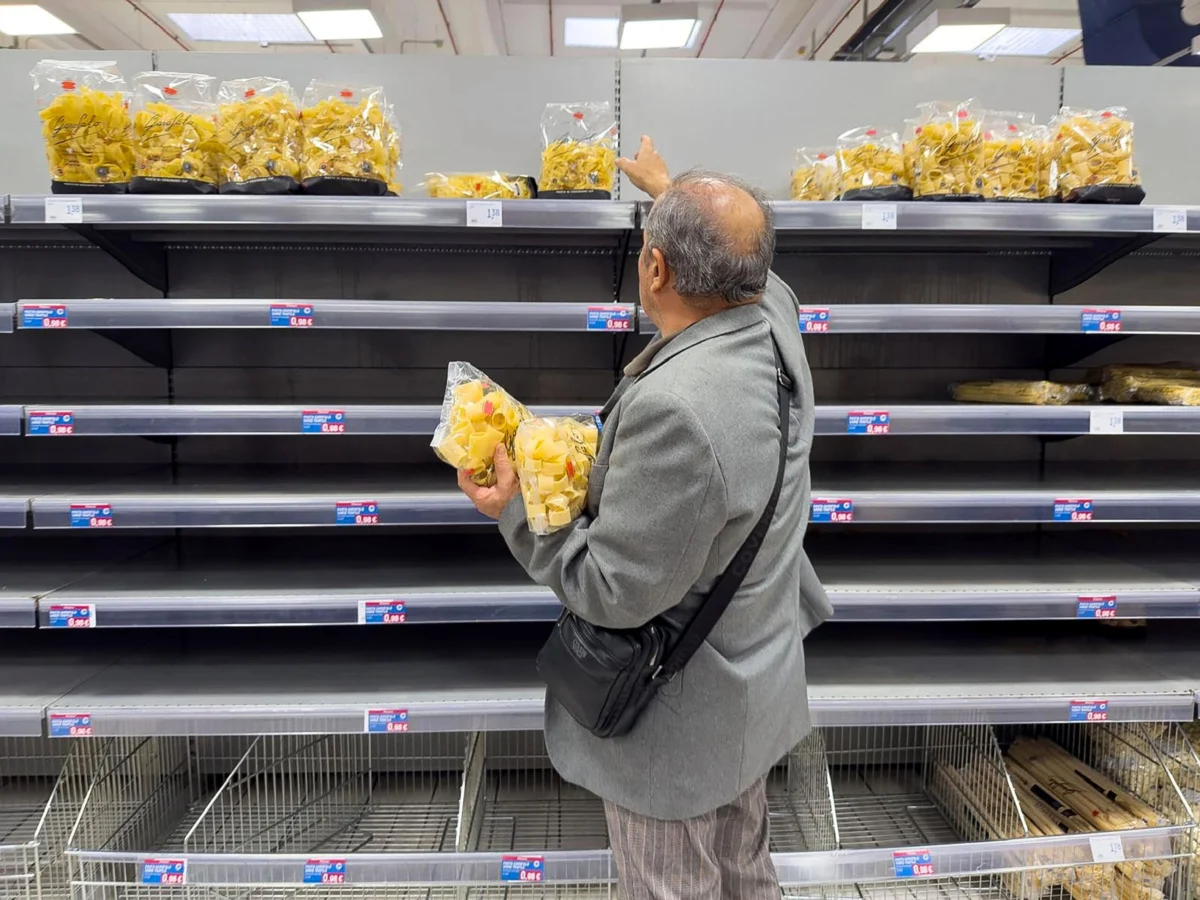
Italy is grappling with a burgeoning food crisis, ignited by widespread strikes and blockades that have paralyzed supply chains and left supermarket shelves bare, particularly in the southern regions. The unrest, which began earlier this week, has seen truckers and farmers blockade ports and highways, protesting the crippling burden of high fuel costs. Simultaneously, the northern parts of the country have witnessed their own wave of dissent, with student protests escalating into riots. These movements, though geographically distinct, are united by a common grievance: the soaring cost of living and the diminishing affordability of essential goods. Students in the north have taken to the streets to voice their anger over stagnant wages, punitive taxes, and the rapid escalation of grocery and fuel prices.
The root cause of these elevated costs, according to government statements and economic analysts, is intricately linked to global fuel shortages exacerbated by geopolitical instability, specifically citing the "war in Iran" – a phrase often used to encompass broader conflicts and tensions in the Middle East that impact global oil markets and supply chains. In response to the escalating crisis, Italian Prime Minister Giorgia Meloni’s government announced on Thursday a substantial allocation of funds, equivalent to $200 million, specifically designated to mitigate the impact of rising gas prices. This latest injection of aid follows a staggering $3 billion (equivalent) already spent by the Meloni administration this year in an attempt to lower or offset fuel costs for its citizens and industries.
However, Italy’s struggles are not isolated; they are symptomatic of a broader wave of global unrest driven by similar economic pressures. Across Europe and beyond, citizens are increasingly mobilizing against what they perceive as governmental failures to address a mounting cost-of-living crisis. In France, widespread protests have prompted significant government intervention, with President Macron’s administration taking measures to address public discontent over economic policies. Albania has seen its own students protest governmental corruption and the prohibitive cost of living, mirroring the frustrations felt in Italy. In South America, Bolivia has endured long-standing protests against rising fuel costs, a direct parallel to the grievances of Italian truckers and farmers. Reports from various international news outlets indicate that protest movements are intensifying worldwide, largely fueled by a potent combination of perceived governmental corruption, alongside the escalating prices of essential commodities like fuel and food, all exacerbated by ongoing global geopolitical conflicts and their ripple effects on the international economy. This confluence of factors paints a grim picture of widespread economic fragility and social discontent, suggesting that the protests in Italy are but one manifestation of a deeper, systemic global challenge.
The Fading Flavor: Why Modern Chocolate Tastes Different
A widely shared sentiment among consumers – that chocolate simply doesn’t taste as good as it used to – has been validated and extensively explored in recent investigative reports. The discussion gained significant traction earlier this year when Brad Reese, a descendant of the iconic Reese’s Peanut Butter Cup family, publicly disclosed that the formula for the beloved candy had undergone significant alterations. His revelation, dubbed "whistleblowing" by many, resonated deeply with a public that had intuitively sensed a decline in quality.
This week, New York magazine’s Rachel Handler published a deeply reported cover story that blew the lid off the broader phenomenon. Handler’s meticulous investigation revealed a systemic pattern within "Big Candy" corporations: a decades-long practice of tweaking ingredients and additives in their chocolate products. The primary driver behind these modifications, Handler asserts, is invariably cost. In an era often characterized as "late-stage capitalism," the relentless pursuit of profit margins in the face of rising commodity prices, particularly for cocoa and sugar, has led manufacturers to substitute traditional, more expensive ingredients with cheaper alternatives. This often includes increasing the proportion of vegetable oils and fats, and utilizing different types of sweeteners, which invariably impact the texture, melt, and ultimately, the flavor profile of the chocolate.
The implications of these changes extend beyond mere taste preference. They raise questions about consumer trust and brand integrity. Brad Reese himself noted, in a recent phone interview, that Hershey’s stock price has experienced a noticeable decline since his public disclosure regarding the Reese’s recipe change. This suggests a potential link between consumer dissatisfaction over product quality and market performance, indicating that cost-cutting measures, while initially boosting short-term profits, can have long-term consequences for brand loyalty and financial stability. The ongoing debate highlights the delicate balance food manufacturers must strike between maintaining product quality and managing production costs in an increasingly competitive and economically challenging global market. Consumers, increasingly aware of "shrinkflation" and "skimpflation," are becoming more discerning about the value they receive, holding corporations accountable for perceived declines in quality.
The Dawn of 3D-Printed Meats in Grocery Stores
The landscape of alternative proteins is experiencing a significant evolution with the introduction of 3D-printed plant-based meats to mainstream grocery shelves. Perfecta, a subsidiary of the Israel-based Steakholder Foods Ltd, is leading this charge, launching its innovative products across a substantial portion of the northeastern United States. Consumers in Delaware, New York, New Jersey, Maryland, Pennsylvania, Massachusetts, Maine, New Hampshire, Vermont, and Virginia will now have access to plant-based imitations designed to replicate the texture and experience of traditional poultry, steak, and seafood.
This development marks a new phase in the plant-based food movement, moving beyond ground meat alternatives to offer more complex, whole-cut mimetic products. The use of 3D printing technology allows for precise control over the layering of plant-based ingredients, creating fibrous textures that closely resemble animal muscle. This technological advancement addresses a key challenge for plant-based alternatives: replicating the mouthfeel and structural integrity of conventional meat.
Further enhancing the realism of these products is Steakholder Foods’ ownership of the Belgian company Peace of Meat. Peace of Meat has pioneered stem-cell-based technology for cultivating animal fats in a laboratory setting. These cultivated fats can then be incorporated into plant-based formulations, providing an authentic "meaty" flavor profile that has been difficult to achieve solely with plant-derived ingredients. This hybrid approach — combining 3D-printed plant proteins with lab-grown animal fats — represents a sophisticated strategy to create alternative meat products that appeal to a broader consumer base, including those who are not strictly vegan or vegetarian but are seeking more sustainable and ethical food choices.
The arrival of 3D-printed meats on grocery shelves carries significant implications for the future of food production. It signals a move towards highly engineered food solutions aimed at addressing environmental concerns related to traditional livestock farming, animal welfare issues, and the growing global demand for protein. As these products gain traction, they are poised to compete not only with conventional meat but also with established plant-based brands, pushing the boundaries of what is possible in sustainable food innovation. Challenges remain, including consumer acceptance of novel food technologies, regulatory frameworks, and scaling production to meet potential demand, but the market entry of Perfecta represents a tangible step towards a diversified and technologically advanced food system.
Abdul El-Sayed on Michigan’s Dynamic Food Culture and Affordability
As the November 3rd election draws nearer, Michigan Senatorial candidate Abdul El-Sayed has been actively engaging with a diverse range of issues, prominently including the vital intersection of food culture and affordability. In a recent interview with Bon Appétit contributor Serena Maria Daniels, El-Sayed delved into the vibrant and complex food landscape of his hometown, Detroit, and discussed the critical issues surrounding groceries and food accessibility that are increasingly central to political discourse.
Abdul El-Sayed, a physician, epidemiologist, and former director of the Detroit Health Department, brings a unique perspective to the political arena, often connecting public health and economic justice with policy. His focus on Detroit’s food culture is particularly poignant, as the city has a rich culinary heritage, marked by diverse immigrant communities and innovative local food movements, yet also grapples with significant challenges such as food deserts and food insecurity in certain neighborhoods. El-Sayed’s campaign platform frequently emphasizes the importance of equitable access to healthy, affordable food as a fundamental right and a cornerstone of community well-being.
During the interview, El-Sayed likely articulated how issues of food affordability are not merely economic but also deeply social and political. He would have discussed the impact of rising food costs on families, the need for robust local food systems, and potential policy solutions to ensure that all Michiganders have access to nutritious meals. This includes advocating for initiatives that support local farmers, reduce food waste, and strengthen food assistance programs. His engagement with a culinary publication like Bon Appétit underscores a strategic effort to broaden the conversation around food beyond traditional policy circles, bringing it to a wider audience interested in culture, lifestyle, and the deeper implications of what we eat. The interview highlights that in an increasingly polarized political climate, the universal concerns of food access and affordability can transcend partisan divides, making them crucial topics for any candidate seeking to connect with voters across the political spectrum. His insights into Detroit’s food scene also serve to elevate the city’s culinary narrative, showcasing its resilience and innovation in the face of economic challenges.
