

The classification of London Dry Gin remains one of the most misunderstood designations in the global spirits industry, often confused by consumers as a geographic indicator or a specific flavor profile. In reality, the term serves as a strict process designation, codified through decades of European Union legislation and historical precedent. While the industry has seen significant shifts in consumer preference toward contemporary and "New Western" styles, the legal requirements for London Dry Gin have remained remarkably consistent, focusing on the technicalities of distillation, the purity of base spirits, and the timing of botanical infusion.
The current regulatory landscape is primarily governed by EU Regulation 2019/787, which replaced the aging 2008 standards to provide better clarity for both distillers and consumers. Despite the United Kingdom’s departure from the European Union, the technical definitions remain largely mirrored in British law, as the UK retained the 2019 standards that were in effect at the point of transition. These regulations ensure that any bottle bearing the "London Dry" label adheres to a rigorous production methodology that prioritizes chemical purity and traditional distillation over post-production additives.
A Chronological Evolution of Gin Purity Standards
The necessity for a "London Dry" designation is rooted in the volatile history of spirit production in the 18th and 19th centuries. During the infamous "Gin Craze" in London, spirits were frequently produced from low-quality grains and even industrial waste. To mask the harsh, often toxic impurities of these early distillates, producers heavily sweetened the liquid or added adulterants like turpentine and sulfuric acid.
A pivotal turning point occurred in the 1830s with the invention of the continuous column still by Aeneas Coffey. Unlike the traditional pot still, which could only reach an alcoholic strength of approximately 50-60% in a single pass, the column still allowed distillers to produce a neutral spirit at 96% alcohol by volume (ABV). This level of rectification effectively stripped away the "heads" and "tails"—the volatile compounds like methanol and fusel oils that caused off-flavors and health risks.
By the mid-19th century, London’s major distillers were using these clean, neutral spirits to create a refined, unsweetened style of gin. This "dry" gin stood in stark contrast to the sweetened "Old Tom" style or the rougher compound gins of the previous century. The term "London Gin" eventually became synonymous with this high-quality, high-rectification process, regardless of whether the distillery was located within the city limits of London.
Technical Specifications Under Regulation 2019/787
To understand the modern "London Dry" label, one must first look at the broader category of "Distilled Gin," as all London Gins are, by definition, distilled gins, but not all distilled gins qualify as London Dry. According to Section 21.a of the 2019/787 legislation, the process must begin with a base spirit of agricultural origin. This spirit must be distilled to an initial strength of at least 96% ABV, ensuring a truly neutral canvas.
The core requirements for the London Gin designation include:
- Distillation Strength: The neutral spirit must be re-distilled in the presence of Juniperus communis L. (juniper berries) and other natural botanicals. The resulting distillate must come off the still at no less than 70% ABV.
- Chemical Purity: The final spirit must have a methanol content not exceeding 5 grams per hectoliter of 100% alcohol. This is a legacy quality control measure designed to ensure the total removal of toxic wood alcohols.
- Additive Restrictions: No flavoring substances or preparations can be added after the distillation process. All flavor must be derived exclusively through the interaction of the spirit vapor and the natural plant materials during distillation.
- Sweetening Limits: While a "Distilled Gin" can be sweetened, a "London Gin" is legally required to be dry. The law stipulates that it cannot contain more than 0.1 grams of sweetening products per liter of the final product, expressed as invert sugar.
- Coloration: London Dry Gin must be transparent and colorless. The addition of any coloring agents, including those derived from botanicals like butterfly pea flower or hibiscus after distillation, automatically disqualifies a spirit from using the designation.
The Botanical and Flavor Paradox
One of the most contentious aspects of the legislation is the requirement that the "predominant flavor" of the gin must be that of juniper. This clause, found in both the general definition of gin and the specific requirements for London Gin, remains highly subjective. Regulators have historically struggled to enforce this flavor standard, as there is no legal numerical value for "juniperiness."
Furthermore, the 2019 regulations specify that flavor must be imparted through "natural plant materials." This phrasing creates a unique exclusion for innovative distillers. For example, a gin distilled with mushrooms (fungi) or honey (an animal byproduct) technically fails the "plant material" requirement for the London designation. Similarly, the "Pechuga" style of gin, which involves suspending raw meat in the still to be cooked by the vapors, is excluded because meat is not a botanical or plant-based ingredient.
Distillers who wish to add flavors after the final distillation—such as the rose and cucumber essences used in Hendrick’s or the Icelandic spring water and cucumber used in Martin Miller’s—must label their products as "Distilled Gin" rather than "London Dry Gin." While these brands are often associated with the high-end gin market, their production process deliberately deviates from the London Dry standard to achieve a specific flavor profile.
The Role of Sugar and Counterfeit Prevention
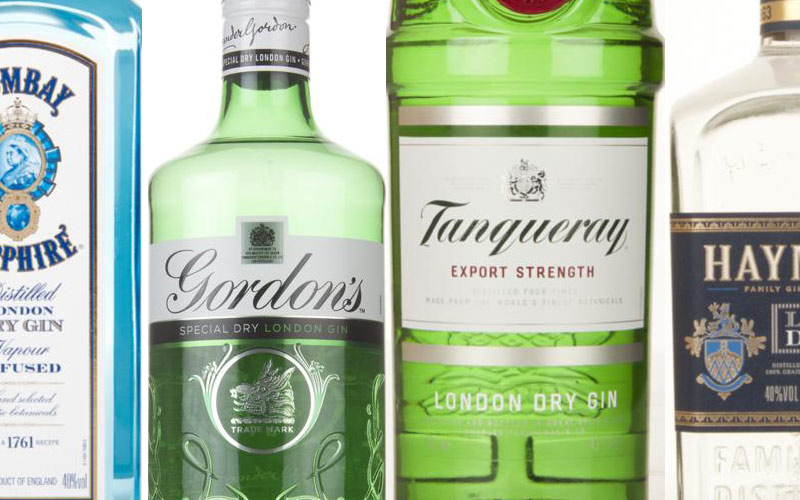
The allowance of 0.1 grams of sugar per liter in an "unsweetened" spirit often surprises observers. Industry analysts point out that this minute amount of sugar is rarely used for flavor. Instead, it often serves as a carrier for "tracer" molecules. Large-scale producers, such as Gordon’s (one of the world’s most recognizable London Dry brands), utilize specific sugar-based dyes or chemical tracers that are invisible to the naked eye but can be detected by laboratory equipment.
These tracers allow companies to identify counterfeit products or "grey market" stock that has been diverted across international borders. By allowing a fractional amount of sugar, the law enables these security measures without compromising the spirit’s "dry" sensory characteristics.
Global Regulatory Variations: EU vs. USA
While the European Union and the United Kingdom maintain strict process-based definitions for London Dry Gin, the United States takes a more inclusive approach. The Alcohol and Tobacco Tax and Trade Bureau (TTB) in the U.S. does not legally define the term "London Gin" as a specific category. Instead, it classifies "Gin" and "Distilled Gin" more broadly.
Under U.S. law, gin is defined as a spirit with a main characteristic flavor derived from juniper berries, produced by distillation or the mixing of spirits with juniper and other aromatics. The U.S. standards allow for "Compound Gin," which is made by simply mixing neutral spirits with botanical extracts without a second distillation. In the EU, such a product could only be labeled as a "juniper-flavored spirit drink," not as gin. This discrepancy means that some products sold as "gin" in the American market would fail to meet the legal criteria for the name in Europe.
Analysis of the Geographical Indication (GI) Debate
There have been periodic efforts within the distilling industry to seek Geographical Indication (GI) status for London Dry Gin, similar to the protections afforded to Champagne or Scotch Whisky. However, these efforts have largely stalled. A GI status would require a "technical file" that specifies an exact geographic location for production and a rigid, uniform recipe.
Given that "London Dry" is produced in almost every country with a distilling industry—from Japan to South Africa—imposing a geographic restriction would be economically catastrophic for the global market. Furthermore, the diversity of botanicals used by different brands makes a single technical file impossible to agree upon. The 2019/787 legislation effectively acts as a "de facto" quality standard, protecting the method of production without restricting the location, which has allowed the category to thrive as a global benchmark for quality.
Broader Impact and Industry Implications
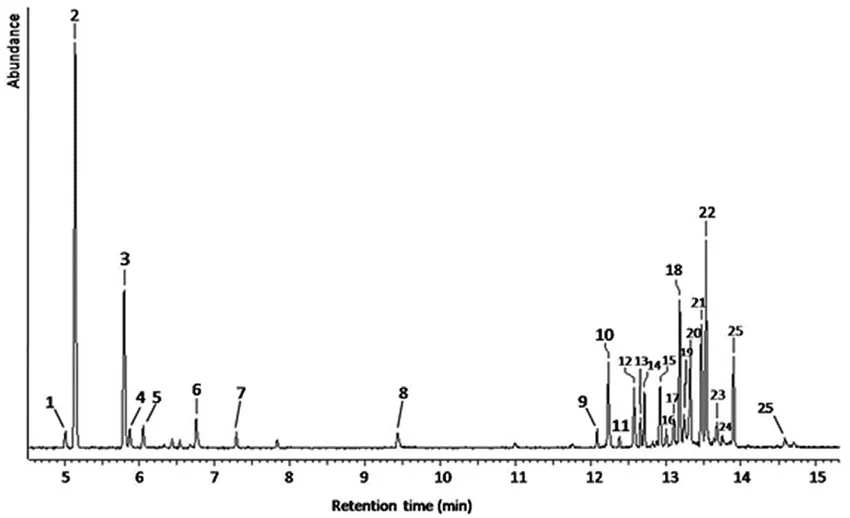
The persistence of the London Dry Gin designation as a process-based standard has significant implications for the future of the spirits industry. As technology like Gas Chromatography-Mass Spectrometry (GC-MS) becomes more accessible, some regulators have suggested using chemical "fingerprinting" to enforce the "predominant juniper" rule. By measuring the peaks of alpha-pinene and limonene—the primary volatile oils in juniper—authorities could theoretically disqualify gins that are overly floral or citrus-forward.
However, for most craft distillers, the cost of such testing remains prohibitive. For now, the London Dry label remains a symbolic guarantee of a specific type of craftsmanship: a gin that is distilled, not mixed; natural, not artificial; and strictly unsweetened. It represents the triumph of 19th-century industrial refinement over 18th-century adulteration, serving as a transparent promise to the consumer that the spirit in the bottle has been produced to the highest chemical and technical standards.
In a market increasingly crowded with "pink" gins, flavored liqueurs, and contemporary spirits, the London Dry designation provides a vital anchor to tradition. It ensures that while the flavors of gin may evolve, the fundamental integrity of the distillation process remains protected by law.
