

The Purl, once a staple of British tavern culture and a cornerstone of early medicinal practices, has undergone a radical transformation over the past four centuries, evolving from a bitter herbal tonic into the simplified combination of gin and ale known to modern enthusiasts. In contemporary bar settings, the drink is frequently defined as a straightforward mixture of ale fortified with a shot of gin, typically utilizing an Old Tom style gin and a traditional British Bitter served at cellar temperature. However, historical records, spanning from the 17th-century plague years to the mid-20th-century cocktail revival, reveal a narrative of significant complexity, where the drink’s composition shifted based on social standing, economic necessity, and evolving tastes in spirits.
The 17th Century: A Medicinal Foundation Amidst the Great Plague
The origins of the Purl are deeply rooted in the apothecaries of 17th-century London, where the drink functioned primarily as a prophylactic and remedy rather than a recreational beverage. During this era, the term "Purl" referred to ale or wine infused with wormwood (Artemisia absinthium), a bitter herb long prized for its perceived ability to ward off infection and aid digestion. The importance of this concoction reached its zenith during the Great Plague of London in 1665.
Historical documentation from that year, specifically the manual Directions for the Prevention and Cure of the Plague Fitted for the Poorer Sort, recommended that citizens consume "a draught or two of Purle… especially in the morning." The inclusion of this advice in a text specifically "fitted for the poorer sort" indicates that the Purl was an accessible and relatively inexpensive health measure. For the working classes of the 1600s, the drink was not a luxury but a functional part of a daily survival regimen. At this stage, spirits were rarely part of the recipe; the bitterness of the wormwood provided the necessary "medicinal" punch.
The cider industry also sought to capitalize on this trend. In 1684, the publication Aphorisms upon the New Way of Improving Cyder suggested that cider-based Purls were just as efficacious as those made with ale. This competition between brewers and cider makers highlights the commercial significance of the Purl even before it entered the recreational mainstream. By 1690, An English Herbal continued to extol the virtues of wormwood-infused Purls, cementing the drink’s reputation as a vital botanical tonic.
The 18th Century: The Rise of Recreational Consumption and Social Stigma
As the threat of the plague receded and the "Gin Craze" began to take hold of London in the early 18th century, the Purl transitioned from a pharmacy staple to a public house favorite. It was during this period that spirits began to be added to the traditional ale and wormwood mixture, significantly increasing its potency. The drink became a popular "morning constitutional," consumed by laborers and tradesmen to start their day.

However, this transition brought with it a wave of social criticism. The 1733 edition of The Grub Street Journal provides a vivid account of the disparagement faced by regular Purl drinkers. The publication linked the consumption of Purl with other perceived vices of the lower classes, such as excessive smoking and gin drinking. The "Purl-shops" of London were often depicted as dens of iniquity where the drink was consumed to excess. This era marked the first major shift in the drink’s identity: it was no longer a respected medicine but a controversial stimulant. The complexity of the drink also began to grow, as tavern keepers experimented with different spirits—including brandy and early forms of gin—to differentiate their offerings.
The 19th Century: The Victorian "Flip" and Culinary Complexity
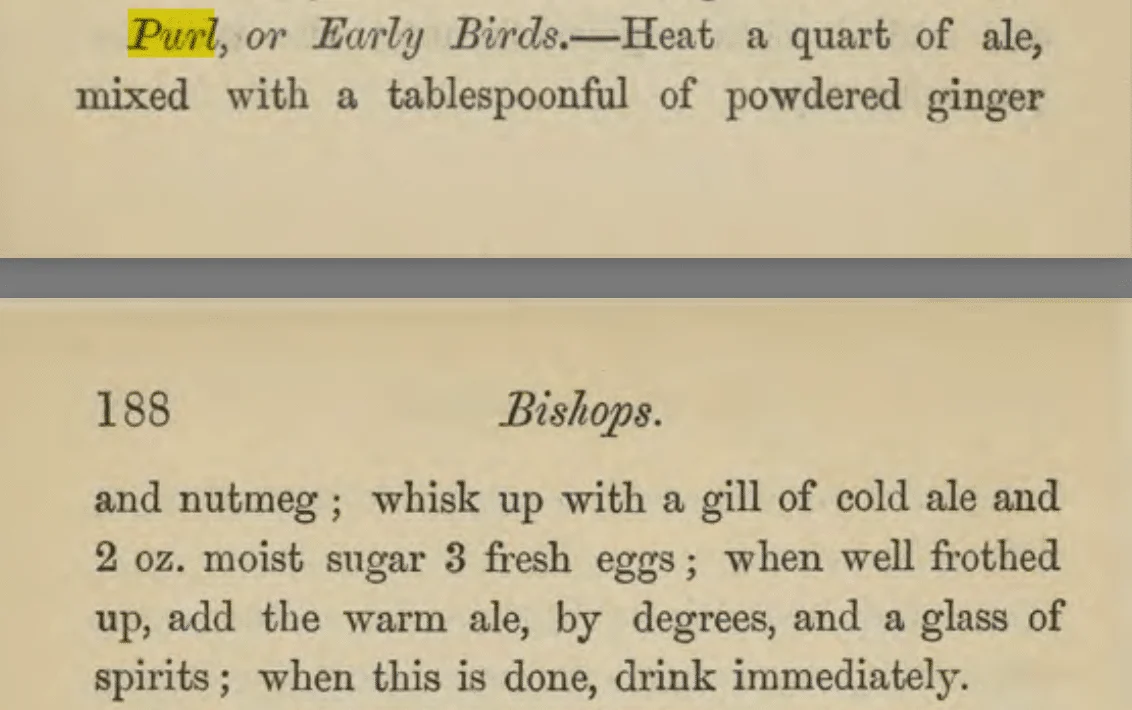
By the Victorian era, the Purl had reached its most complex form, often resembling what modern mixologists would categorize as a "Flip." The simplicity of the 17th-century herbal ale was replaced by a rich, warmed concoction involving multiple ingredients. William Terrington’s 1869 volume, Cooling Cups and Dainty Drinks, which is widely regarded as the first British cocktail book, offers a glimpse into this sophisticated version of the drink.

Terrington’s recipes often featured warmed beer as a base, thickened with the addition of multiple eggs and seasoned with various spices. Crucially, the spirit component was not yet standardized as gin. While gin was a common addition, a Victorian Purl might just as easily contain brandy or whisky, depending on the customer’s preference or the tavern’s inventory. The drink was served hot, making it a popular winter cordial.
Another entry in Terrington’s manual, the "Ale Cup," specifically called for a mixture of gin and ale, signaling the beginning of the convergence toward the modern definition. However, the Ale Cup remained distinct from the standard Purl of the time due to its lack of the traditional "Flip" elements like eggs. This period represents the height of the Purl’s culinary evolution, where it was treated with the same level of preparation and care as a gourmet dish.

The 20th Century: Simplification and the Standardization of Gin
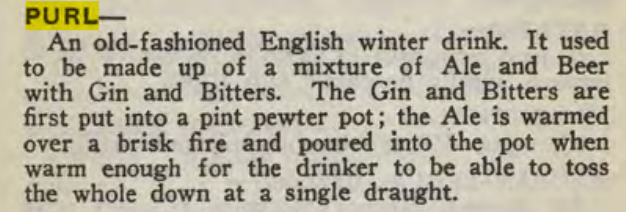
The 20th century saw a steady decline in the complexity of the Purl, driven by a shift toward faster service and changing consumer palates. The labor-intensive process of heating ale and whipping eggs began to disappear from mainstream bar practice. By the mid-1920s, as evidenced in Mrs. Celeyel’s Summer Drinks and Winter Cordials (1925), the Purl had begun to shed its "Flip" roots. While the warming of the ale remained a common practice for winter versions, the eggs were largely omitted.
It was during this mid-century period that gin became the "canonical" spirit for the Purl. The 1935 publication The Art of Mixing Drinks and the 1966 Barman’s Bible (from the Cocktail and Wine Digest) codified the recipe that most closely resembles today’s version: a mix of gin and ale, often enhanced with a dash of bitters. The wormwood, which had been the defining characteristic of the drink in the 1600s, was now entirely absent, replaced by the botanical complexity of the gin itself and the addition of commercial bitters.

Technical Analysis: Old Tom Gin and British Bitters
The modern reconstruction of the historical Purl relies heavily on understanding the specific ingredients used during its 19th-century peak. The "Old Tom" gin traditionally associated with the Purl is a bridge between the harsh, unrefined spirits of the 18th century and the crisp London Dry gins of the late 19th century. Old Tom is characterized by a slight sweetness and a more robust botanical profile, which was necessary to stand up against the heavy, malt-forward profile of 19th-century British Bitters.
British Bitters of that era were typically served at cellar temperatures (approximately 12–14°C) and possessed a lower carbonation level than modern lagers. When combined with gin, the ale provides a rich, bready foundation that complements the juniper and citrus notes of the spirit. The addition of bitters in 20th-century recipes serves as a "ghost" of the original wormwood, providing the necessary astringency that defined the drink’s medicinal origins.

Broader Implications and the Modern Craft Revival
The evolution of the Purl serves as a microcosm for the broader history of British drinking habits. It illustrates a move from functional, medicinal consumption toward recreational indulgence and, finally, toward the streamlined efficiency of modern cocktail culture. For historians and mixologists, the Purl represents a lost category of "hybrid" drinks that blurred the lines between beer, wine, and spirits.
In the current craft cocktail revival, there has been a renewed interest in "authentic" Purls. Some high-end bars have begun experimenting with wormwood-infused syrups or even using modern wormwood-based spirits like absinthe or vermouth to pay homage to the 17th-century original. Others have returned to the Victorian method, serving warmed, egg-thickened Purls as seasonal specialties.

The transition of the Purl from a "poorer sort’s" plague remedy to a sophisticated Victorian flip, and finally to a simple pub staple, reflects the changing socio-economic landscape of London. What was once a bitter necessity for survival became a vehicle for culinary expression and, eventually, a convenient way to fortify a pint of ale. While the modern version is prized for its simplicity, the true history of the Purl remains a complex blend of botany, medicine, and social evolution.
