

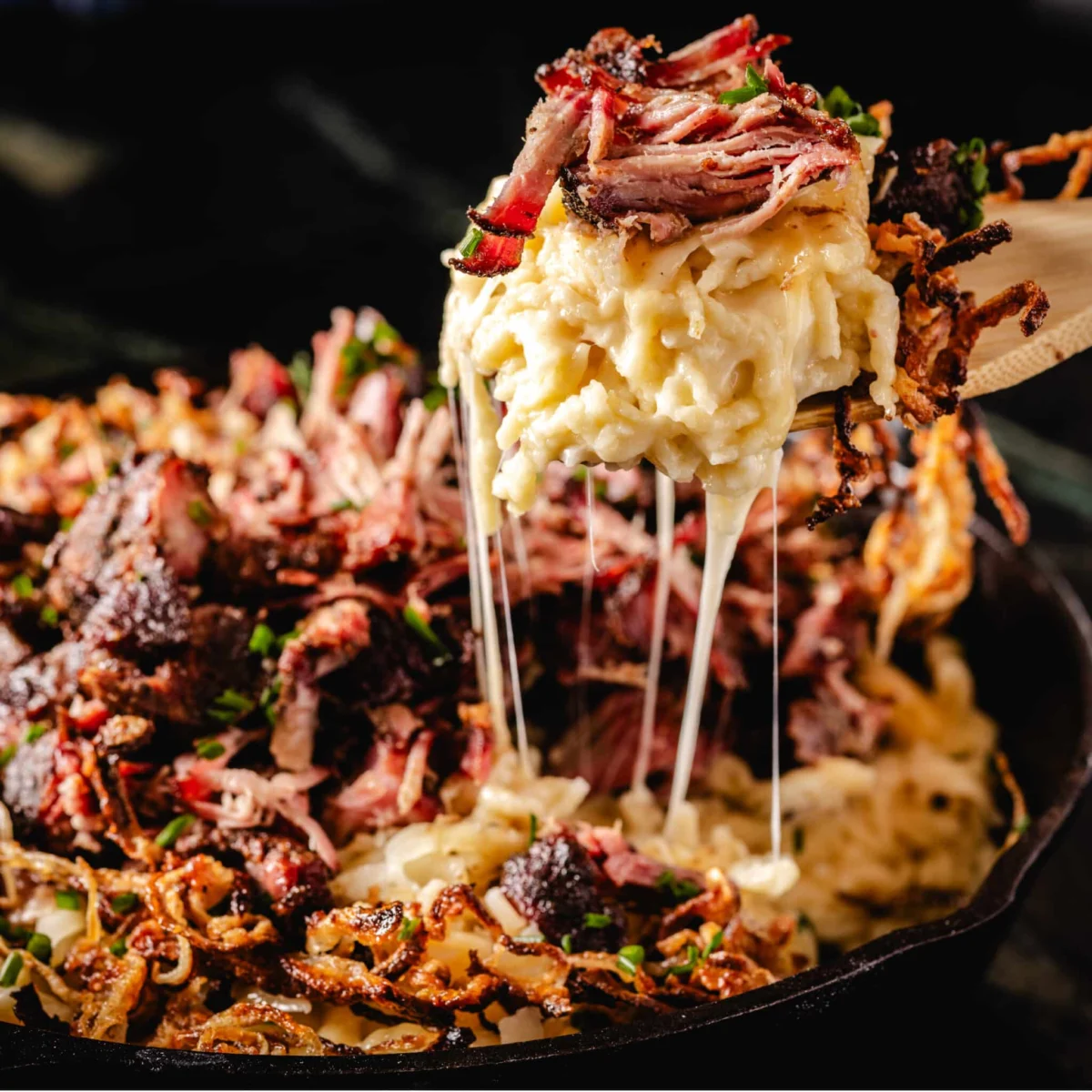
The culinary intersection of traditional German comfort food and American barbecue has reached a new milestone with the formal release of the Smoked Pulled Pork Käsespätzle recipe, a dish recently showcased on Food Network’s competitive series, Pitmasters. Developed by Susie Bulloch, the founder of the barbecue authority Hey Grill Hey, the recipe represents a strategic fusion of Swabian egg noodles and slow-smoked meats, reflecting a broader trend in the gastronomic world toward "fusion barbecue." This specific iteration of Käsespätzle—often colloquially referred to as "German macaroni and cheese"—diverges from the traditional dairy-heavy American counterpart by utilizing the residual heat of fresh noodles to melt a blend of cheeses, creating a rustic, stretchy texture rather than a roux-based sauce.
The Pitmasters Context and Competitive Development
The emergence of the Smoked Pulled Pork Käsespätzle into the public consciousness is directly linked to the competitive barbecue circuit. During a high-stakes episode of Pitmasters, Susie Bulloch collaborated with Christie Vanover of Girls Can Grill to execute a comprehensive German-themed feast centered around a whole hog. The necessity of creating side dishes that could withstand the scrutiny of professional judges while complementing the rich, fatty profile of smoked pork led to the refinement of this Käsespätzle variant.

The dish’s successful reception on national television prompted a surge in consumer interest, highlighting a market demand for recipes that bridge the gap between technical pitmaster skills and accessible home cooking. According to Bulloch, the recipe was designed to honor family traditions while incorporating professional-grade techniques learned from culinary peers, such as Sophie Sadler of Dirndl Kitchen.
Historical and Cultural Foundations of Käsespätzle
To understand the innovation of adding smoked pork to this dish, one must examine its origins. Spätzle, the foundational noodle of the dish, originated in the Swabian region of southwest Germany. Historically, these noodles were made by scraping dough off a wooden board into boiling water, a labor-intensive process that has since been modernized with the use of spätzle makers or "hobels."
In 2012, Swabian Spätzle and Swabian Knöpfle were granted "Protected Geographical Indication" (PGI) status by the European Union, recognizing the noodles as a regional specialty. Traditional Käsespätzle (cheese spätzle) typically features Emmentaler or Bergkäse. Bulloch’s version introduces a significant modification by incorporating smoked Gouda, a choice that serves as a bridge between the German origins and the American smokehouse flavor profile.

Technical Execution and Ingredient Analysis
The Smoked Pulled Pork Käsespätzle is structured into three primary components: the egg noodles, the fried onion garnish, and the protein element. Each segment requires specific technical handling to ensure a cohesive final product.
The Spätzle Noodle Component
The spätzle dough is a high-protein mixture consisting of all-purpose flour, large eggs, and whole milk, seasoned with kosher salt and ground nutmeg. The inclusion of nutmeg is a traditional Swabian touch that provides a subtle aromatic depth. Unlike Italian pasta, which is often dried, spätzle is a "wet" noodle that is cooked immediately after the dough is formed. The boiling process is rapid, typically taking less than three minutes until the noodles float to the surface, indicating gelatinization of the starches.
The Protein Shortcut: Country-Style Ribs
A significant technical highlight of this recipe is the use of country-style pork ribs rather than a traditional whole pork shoulder (butt). In a professional kitchen or a time-sensitive backyard environment, this choice is pragmatic. Country-style ribs are not actually ribs but are cut from the blade end of the loin or the shoulder. They possess the same high intramuscular fat and connective tissue as the shoulder, allowing them to be shredded (pulled) once the collagen breaks down. However, because they are smaller cuts, they reach the necessary internal temperature of 202°F (94°C) in approximately six hours, significantly less than the 12 to 14 hours required for a full shoulder.

The Maillard Reaction in Onion Preparation
The garnish consists of yellow onions fried in a combination of butter and olive oil. This process utilizes the Maillard reaction—a chemical reaction between amino acids and reducing sugars that gives browned food its distinctive flavor. By frying the onions until they reach a deep golden brown, the cook introduces a textural contrast (crunch) and a bittersweet flavor profile that cuts through the richness of the cheese and pork.
Chronology of Preparation and Smoking Timeline
For the backyard pitmaster, the execution of this dish follows a strict chronological order to ensure all components are fresh and at the optimal temperature for assembly.
- 0:00 – Preheating: The smoker is stabilized at 225°F (107°C). Bulloch recommends using fruitwoods like apple or cherry to complement the pork without overpowering the delicate noodles.
- 0:15 – Seasoning: The country-style ribs are seasoned with a standard sweet and savory BBQ rub.
- 0:30 – Smoking Phase I: The pork is placed on the smoker. It remains here for approximately 3 to 4 hours until an internal temperature of 165°F (74°C) is achieved and a "bark" (dehydrated surface crust) has formed.
- 4:00 – The Wrap: The pork is moved to a foil pan with liquid (often apple juice or cider vinegar) and tightly sealed. This creates a braising environment that accelerates the breakdown of connective tissues.
- 5:30 – Final Temperature Check: The pork is monitored until it hits the 202°F mark. Once reached, it is removed from the heat to rest.
- 5:45 – Noodle and Onion Preparation: While the meat rests, the onions are fried and the spätzle dough is mixed and boiled.
- 6:00 – Assembly: The noodles are layered with shredded cheese and the warm, shredded pork. The residual heat from the components facilitates the melting of the cheese without requiring further baking, which can dry out the noodles.
Nutritional Profile and Dietary Data
The Smoked Pulled Pork Käsespätzle is a calorie-dense comfort food. According to standardized nutritional calculations for an eight-serving yield, each portion contains approximately:

- Calories: 439 kcal
- Protein: 26g
- Total Fat: 28g (Saturated Fat: 13g)
- Carbohydrates: 21g
- Sodium: 2053mg
- Cholesterol: 133mg
The high sodium content is primarily attributed to the BBQ rub and the cheese blend, while the protein content is bolstered by both the pork and the egg-based noodles. This data suggests the dish is best served as a primary entree or a substantial side dish within a balanced meal.
Broader Implications for Modern Barbecue
The release of this recipe underscores a shift in the American barbecue landscape. Historically, BBQ was defined by regional boundaries—Texas brisket, Carolina pork, or Kansas City ribs. However, the influence of digital media and culinary competitions like Pitmasters has encouraged "Global BBQ," where international techniques are applied to low-and-slow smoking methods.
By integrating Käsespätzle—a dish that represents the pinnacle of German home cooking—with American pulled pork, the recipe serves as a cultural bridge. It also reflects the professionalization of the "backyard hero" subculture, where home cooks seek to replicate complex, multi-component dishes seen on television.

Susie Bulloch’s role in this transition is noteworthy. As the founder of a platform that reaches millions of unique visitors monthly, her endorsement of German-inspired BBQ techniques signals a diversification of the domestic grilling repertoire. The collaboration with Christie Vanover and the mentorship of Sophie Sadler further illustrate the communal nature of modern recipe development, where expertise is shared across platforms to refine a single dish.
Conclusion and Serving Suggestions
In a professional journalistic assessment, the Smoked Pulled Pork Käsespätzle is more than a recipe; it is a case study in successful culinary fusion. To maximize the dining experience, it is recommended to pair the dish with acidic or fermented sides, such as Rotkohl (red cabbage) or a vinegar-based slaw, to balance the heavy fats of the pork and cheese.
As the BBQ season progresses, industry analysts expect to see an increase in similar "cross-over" dishes that utilize traditional smokers for non-traditional results. The Smoked Pulled Pork Käsespätzle stands as a premier example of this movement, offering a sophisticated yet accessible option for those looking to expand their culinary horizons beyond the standard fare of the American grill.
