

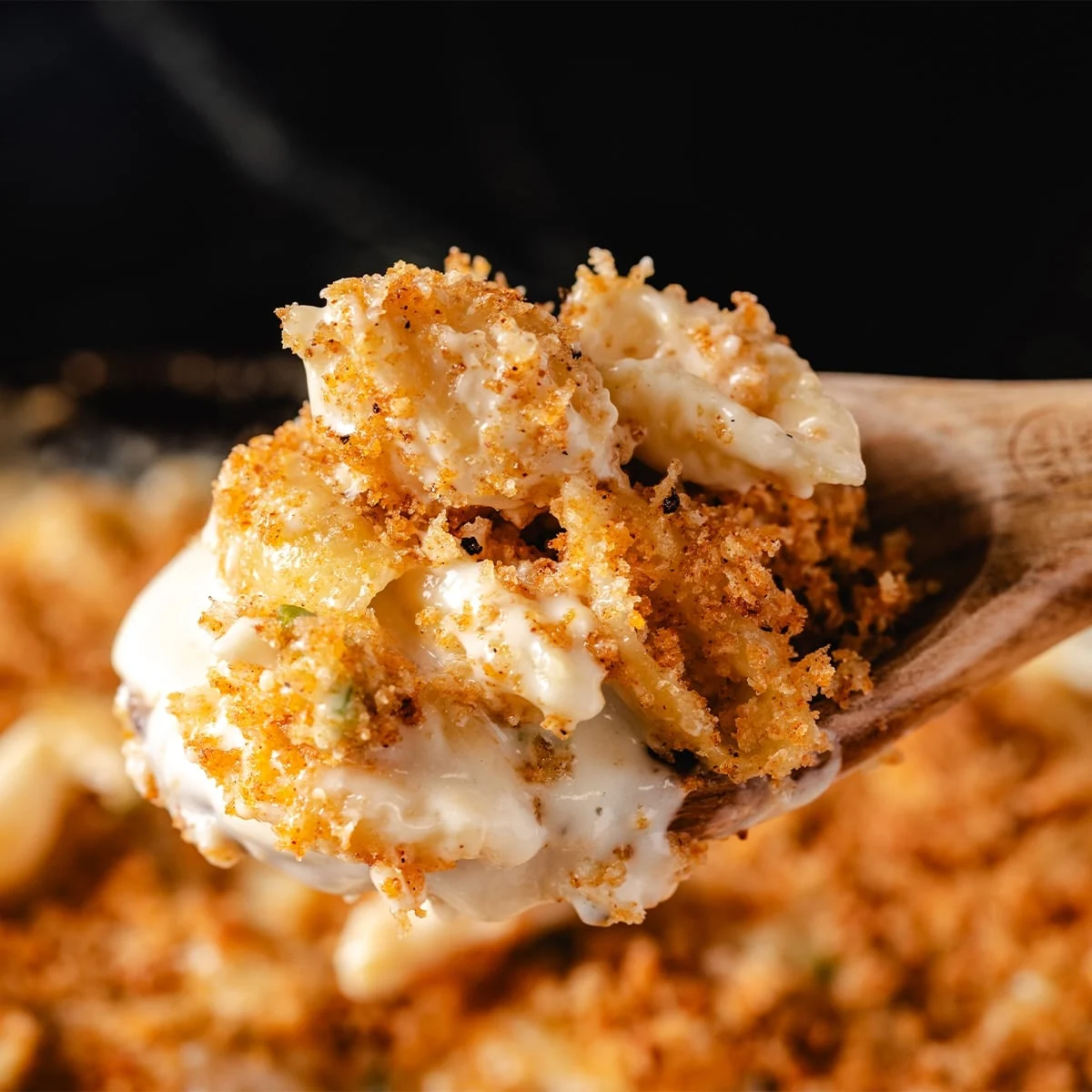
The landscape of American outdoor culinary arts is undergoing a significant transformation as home cooks increasingly move away from processed, pre-packaged convenience foods in favor of artisan-quality, smoke-infused dishes. Central to this movement is the elevation of side dishes, specifically the classic macaroni and cheese, which has been reimagined in the Smoked Poblano Shells and White Cheddar recipe. This dish represents a fusion of traditional comfort food and sophisticated barbecue techniques, utilizing the low-and-slow heat of a smoker to introduce complex flavor profiles that are unattainable through conventional stovetop methods. By incorporating fresh poblano peppers and a hand-shredded blend of white cheddar and mozzarella, this recipe addresses a growing consumer demand for high-quality ingredients and "from-scratch" cooking in the backyard barbecue circuit.
The Evolution of Barbecue Side Dishes
Historically, barbecue culture in the United States prioritized the "main" meat—brisket, ribs, or pulled pork—often leaving side dishes as an afterthought. Common accompaniments typically included canned beans, coleslaw, or boxed macaroni and cheese. However, data from the Hearth, Patio & Barbecue Association (HPBA) suggests a shift in consumer behavior, with over 70% of grill owners now experimenting with entire meals on their outdoor equipment, including appetizers, desserts, and complex sides.
The Smoked Poblano Shells and White Cheddar recipe serves as a benchmark for this trend. It transitions the dish from a simple starch-and-powdered-dairy combination to a multi-layered culinary experience. The inclusion of the poblano pepper (Capsicum annuum), which typically registers between 1,000 and 2,000 units on the Scoville Scale, provides a mild, earthy heat that complements the sharp acidity of white cheddar. This deliberate pairing reflects a broader movement toward Southwestern and Tex-Mex influences in modern American grilling.

Technical Specifications and the Chemistry of Smoking Dairy
The execution of smoked macaroni and cheese requires a precise understanding of temperature control and smoke absorption. Unlike meat, which can withstand high temperatures to reach internal doneness, dairy-based sauces are susceptible to "breaking"—a process where the emulsion of fat and protein collapses, resulting in a grainy or oily texture.
The recipe mandates a consistent smoking temperature of 225 degrees Fahrenheit (107 degrees Celsius). This specific thermal threshold is critical for several reasons:
- Smoke Infusion: At 225 degrees, the cheese sauce remains viscous enough to trap smoke particles (phenols and carbonyls) without forming a hard "skin" too quickly.
- Noodle Integrity: Because the pasta is pre-boiled to an al dente state, the low temperature prevents the shells from becoming mushy or overextended, a common failure in high-heat baking.
- Moisture Retention: The gentle heat allows the breadcrumb topping to crisp through the Maillard reaction while the interior remains velvety.
Culinary experts note that using hand-shredded cheese is a non-negotiable factor in the success of this dish. Pre-shredded cheeses found in retail outlets are often coated in anti-caking agents, such as cellulose or potato starch. These additives interfere with the melting process and can prevent the sauce from achieving the "velvety-smooth" consistency described by the recipe’s developers.
Chronology of Preparation and Assembly
The production of Smoked Poblano Shells and White Cheddar follows a logical progression designed to maximize efficiency and flavor development.

Phase I: The Foundation (0-15 Minutes)
The process begins with the preparation of the pasta. Shell-shaped pasta is selected specifically for its geometry; the concave structure acts as a vessel, capturing the cheese sauce and diced poblanos in every bite. Simultaneously, the poblano peppers are de-seeded and finely diced. In professional applications, these peppers may be lightly sautéed beforehand to soften the cell walls, ensuring a tender texture that matches the cooked pasta.
Phase II: Sauce Emulsification (15-30 Minutes)
The core of the dish is the white cheddar sauce. This typically involves the creation of a roux (a mixture of flour and fat) followed by the gradual addition of milk or cream. Once thickened, the heat is reduced, and the hand-shredded white cheddar and mozzarella are folded in. The mozzarella provides the "stretch" and elasticity, while the white cheddar provides the primary flavor profile.
Phase III: The Fiesta Topping (30-35 Minutes)
A distinctive feature of this recipe is the "Fiesta Breadcrumb Topping." This component consists of panko breadcrumbs, melted butter, and a specialized seasoning blend (such as the Hey Grill Hey Fiesta Rub). The rub typically contains a mix of chili powder, cumin, garlic, and onion, which reinforces the Southwestern theme established by the poblano peppers.
Phase IV: The Smoke Session (35-65 Minutes)
The assembled dish is placed in a cast-iron skillet or heat-safe dish and transferred to the smoker. Over the course of 30 to 45 minutes, the wood smoke—preferably a mild fruitwood like apple or cherry, or a classic hickory—permeates the sauce. The result is a dish that carries a subtle "kiss of smoke" rather than an overpowering charred flavor.

Supporting Data and Nutritional Analysis
In an era of increased health consciousness, the nutritional profile of comfort foods remains a point of interest for many consumers. According to the data provided, a single serving (based on a 16-serving yield) of the Smoked Poblano Shells and White Cheddar contains approximately 403 calories.
The breakdown of macronutrients is as follows:
- Total Fat: 26g (with 15g of saturated fat, primarily from the cheese and butter).
- Carbohydrates: 29g (derived from the pasta and breadcrumb topping).
- Protein: 14g (contributed by the dairy and wheat).
- Micronutrients: The dish is a significant source of Vitamin A (851 IU) and Calcium (262 mg), reflecting the high dairy content.
While the dish is calorie-dense, it is designed as a premium side dish for social gatherings rather than a daily staple. The sodium content is relatively moderate for a cheese-based dish at 364 mg, though this may vary depending on the specific seasoning rub used.
Expert Insights and Industry Reactions
Susie Bulloch, the founder of Hey Grill Hey and the primary developer of the recipe, has built a career on making professional-grade barbecue accessible to home cooks. Her philosophy emphasizes the transition from "boxed staples" to "cookout-worthy" creations. "This version takes the simple staple and dials up the flavor," Bulloch stated during the recipe’s unveiling. "It tastes like something you’d actually serve at a cookout instead of eating while you stand over the stove."

Industry analysts observe that recipes like these are driving the sales of pellet grills and electric smokers, which offer the precision temperature control necessary for dairy-heavy dishes. Unlike traditional offset smokers, which may have hot spots and temperature fluctuations, modern pellet grills allow the user to maintain the 225-degree "sweet spot" with minimal intervention.
Broader Impact on the Outdoor Cooking Market
The success of the Smoked Poblano Shells and White Cheddar recipe is indicative of a larger shift in American food culture. As the "home pitmaster" movement continues to grow, there is a burgeoning market for specialized seasonings and rubs. The "Fiesta Rub" mentioned in the recipe is part of a growing category of artisanal spice blends that allow consumers to replicate complex flavors without maintaining an extensive spice pantry.
Furthermore, the storage and reheating properties of the dish—remaining viable for 3 to 4 days in refrigeration—make it an attractive option for the "meal prep" demographic. The ability of the cheese sauce to maintain its integrity upon reheating is a testament to the roux-based construction, which is more stable than the chemical emulsifiers found in boxed alternatives.
Conclusion: The Future of the Backyard Cookout
As the Smoked Poblano Shells and White Cheddar recipe gains popularity, it sets a new standard for what is expected at an American barbecue. The dish successfully bridges the gap between nostalgia and gourmet innovation. By replacing "powdered packets" with real ingredients and utilizing the unique environment of the smoker, it offers a sensory experience that encompasses texture, heat, and aroma.

For the modern host, providing a dish that elicits requests for the recipe is the ultimate goal. This smoked mac and cheese variant, with its velvety white cheddar, smoky poblanos, and crunchy panko topping, ensures that the side dish is no longer in the shadow of the main course. As outdoor cooking technology continues to evolve, the boundaries of what can be achieved in a backyard setting will continue to expand, with the humble macaroni and cheese leading the charge toward a more flavorful future.
