


The restaurant technology landscape experienced a significant period of advancement and consolidation in November, marked by substantial acquisitions, the integration of cutting-edge artificial intelligence, and the introduction of innovative customer loyalty programs. This dynamic month saw major players like OpenTable, Square, and DoorDash unveil new strategies and tools aimed at enhancing operational efficiency, expanding market reach, and improving the diner experience. The overarching trend points towards a continued digital transformation within the food service industry, driven by technological solutions designed to address the evolving demands of both consumers and businesses.
OpenTable Strengthens Market Position with $450 Million Acquisition of Me&u
In a move poised to significantly reshape the digital reservation and ordering ecosystem, OpenTable, a subsidiary of Booking Holdings, announced its definitive agreement to acquire Australian technology supplier Me&u for $450 million. This strategic acquisition, finalized in November, integrates Me&u’s comprehensive suite of restaurant technology solutions into OpenTable’s existing offerings, aiming to provide a unified platform for restaurant operators.
Me&u, founded in 2018, has established itself as a provider of QR code-based ordering and payment systems, alongside robust marketing tools and AI-driven reservation capabilities, particularly for larger, sit-down establishments. The company’s 2023 merger with Australian rival Mr Yum further solidified its market presence and technological portfolio. A key innovation from Me&u is its recent launch of a reservation system that leverages voice AI to handle incoming calls, a feature that addresses the persistent challenge of phone-based reservation management and customer inquiries.
The integration of Me&u’s technology is expected to empower OpenTable to offer restaurants a "one connected set of tools" for managing their operations. This includes not only reservations and marketing but also direct ordering, sophisticated customer relationship management (CRM) capabilities, and advanced voice AI functionalities. Industry analysts suggest that this consolidated approach could streamline workflows for restaurateurs, reducing the need to manage multiple disparate software systems and thereby improving operational agility and customer engagement.
OpenTable stated that Me&u will continue to operate as a distinct division, with potential brand alignment outside of Australia to be evaluated at a later stage. This phased integration strategy allows for a smooth transition and the strategic deployment of Me&u’s proven technologies. Currently, over 6,000 restaurants, including a growing number in the U.S. market, utilize Me&u’s platform, indicating a strong existing customer base that will now benefit from OpenTable’s broader reach and resources. The acquisition underscores OpenTable’s commitment to expanding its technological capabilities beyond traditional reservations and into more integrated operational solutions, a trend increasingly prevalent in the competitive restaurant tech sector.
Resy Enhances Loyalty Program for American Express Cardholders
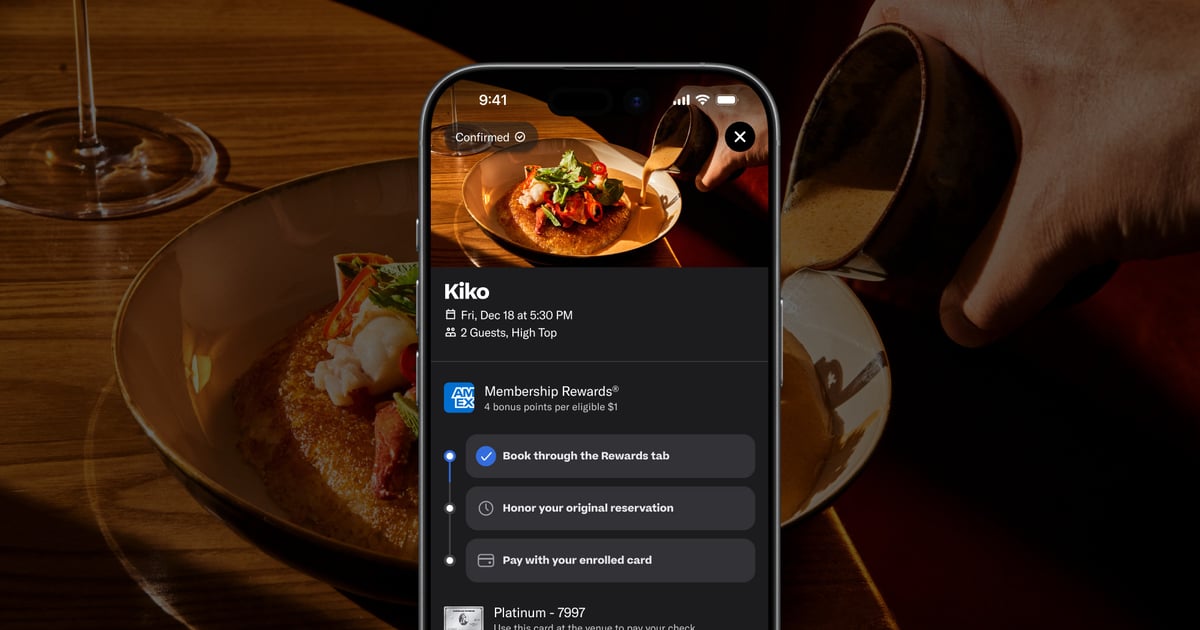
Resy, the premier restaurant reservation platform owned by American Express since 2019, has launched "Resy Rewards," a new loyalty initiative designed to offer enhanced benefits to American Express cardholders. This program, which began its rollout in November in New York City with plans for expansion to additional cities in the coming year, aims to deepen the integration between American Express’s financial services and the dining experiences facilitated by Resy.
Under the Resy Rewards program, eligible American Express cardholders can enroll their cards and book reservations through a dedicated "Rewards" tab within the Resy app. Upon payment for their dining experience with an enrolled card at participating restaurants, cardholders will earn an additional four points per dollar spent, on top of their standard American Express Membership Rewards points. This multiplier effect significantly boosts the value proposition for loyal AmEx users who frequently dine out.
The value of American Express Membership Rewards points can vary depending on how they are redeemed, but the additional points offered through Resy Rewards provide a tangible incentive for increased engagement with the platform and its partner restaurants. This initiative builds upon existing dining perks available to American Express members, such as the Resy Credit, which offers cash back at select restaurants, and Global Dining Access, providing priority reservations and exclusive benefits at sought-after dining establishments.
The strategic introduction of Resy Rewards is a clear indication of American Express’s strategy to leverage its ownership of Resy to create a more integrated and rewarding ecosystem for its cardholders. By offering direct incentives for dining through Resy, American Express aims to capture a larger share of consumer spending in the hospitality sector, while simultaneously providing restaurants with a valuable tool to attract and retain affluent customers. This move is particularly significant as loyalty programs become an increasingly critical differentiator in the competitive financial services and hospitality industries.
Square Expands AI-Powered Tools with the Introduction of Squaremates
Square, the financial services and commerce platform, has significantly advanced its artificial intelligence capabilities with the launch of "Squaremates." This new suite of AI agents is designed to serve as the primary interface for restaurant operators interacting with Square’s comprehensive dashboard, offering intelligent assistance for a wide array of operational tasks.
Squaremates builds upon the foundation laid by Square’s earlier AI initiative, "Managerbot," which provided initial AI-driven support. However, Squaremates represents a substantial leap forward, leveraging advanced cloud computing to handle more complex and multifaceted tasks. Unlike Managerbot, which might generate text snippets for copy-pasting, Squaremates can autonomously create complete marketing campaigns, such as sophisticated email newsletters, and manage critical business functions like price updates.
The core objective of Squaremates is to empower restaurant owners and managers by automating routine but time-consuming tasks, freeing them to focus on core business operations and strategic growth. The AI agents are designed to answer a broad spectrum of inquiries, monitor business performance, and proactively assist in operational management. This includes tasks such as analyzing sales data, optimizing inventory, and personalizing customer outreach.
The implications of Squaremates are far-reaching. By democratizing access to advanced AI tools, Square is enabling small and medium-sized businesses, which often lack dedicated IT departments or marketing teams, to compete more effectively. The ability to generate targeted marketing campaigns and dynamically adjust pricing based on data insights can lead to increased revenue and improved customer acquisition. Furthermore, the seamless integration with Square’s existing POS and payment systems ensures that these AI-powered insights are directly actionable, creating a truly integrated operational solution.
SpotOn Unveils SpotOn Assistant Manager (SAM) to Enhance Restaurant Operations
SpotOn, a prominent provider of cloud-based software for restaurants and retail businesses, has entered the AI arena with the launch of its first AI agent, the SpotOn Assistant Manager, affectionately known as SAM. This intelligent assistant is engineered to provide restaurant operators with actionable insights and recommendations by analyzing critical business data.
SAM is designed to answer operator questions across various business metrics, including sales performance, labor costs, and customer data. More importantly, it offers data-driven recommendations aimed at boosting revenue and reducing operational expenses. In its current iteration, SAM allows for interactive chat-based queries through the SpotOn dashboard and mobile app, as well as via text message. The company has indicated plans to evolve SAM to proactively surface relevant business intelligence, anticipating the needs of operators before they even ask.
The introduction of SAM is a significant development for SpotOn, marking its strategic entry into the AI-powered analytics space. This move aligns with the broader industry trend of leveraging AI to derive deeper insights from operational data. By providing operators with an intuitive and accessible AI assistant, SpotOn aims to empower them with the information necessary to make more informed business decisions, optimize resource allocation, and enhance overall profitability.
The ability for SAM to provide recommendations on revenue enhancement and cost reduction is particularly valuable in the current economic climate, where operational efficiency is paramount. For example, SAM could identify slow-moving menu items and suggest promotional strategies or highlight peak demand periods to optimize staffing levels. The integration of SAM into SpotOn’s existing suite of tools signifies a commitment to continuous innovation and a focus on delivering advanced technological solutions that directly address the pain points of restaurant businesses.
DoorDash Innovates with Meal Bundles and Nationwide Catering Expansion
DoorDash, the leading food delivery platform, has introduced a new "Meal Boxes" initiative designed to offer value-conscious consumers and restaurants fixed-price, entree-centric meal options. This program, launched in November across more than 20 cities, aims to provide an affordable dining solution while supporting local restaurants in reaching a wider customer base, especially amidst increasing competition from fast-food chains offering value meals.
Meal Boxes feature a full-sized entree priced at $12, coupled with $0 delivery fees and reduced service fees. DoorDash reports that these boxes are, on average, 30% less expensive than standard entrees, with optional sides and add-ons available at an additional cost. The program’s focus on affordability and convenience is intended to attract a broader demographic of diners and provide restaurants with a new avenue to drive sales, particularly during off-peak hours or for customers seeking budget-friendly options.
In parallel with the Meal Boxes launch, DoorDash has expanded its catering service nationwide. This expanded offering allows customers to order meal packages designed for groups ranging from 10 to over 150 people from select restaurants. A key feature of this service is the $0 delivery fee, with DoorDash drivers assisting with light setup upon arrival. This nationwide rollout follows the initial introduction of office catering in April and comes at a time when rival Uber is reportedly planning to acquire ezCater, a move that would significantly bolster its own catering business.
DoorDash’s strategic expansion into meal bundles and its nationwide catering service highlight its ambition to diversify its offerings beyond individual meal delivery. By catering to both individual value-seeking consumers and larger group orders, DoorDash is solidifying its position as a comprehensive food commerce platform. The company’s efforts to integrate these new services are crucial for maintaining its competitive edge and adapting to the evolving demands of the food delivery and catering markets.
Gett Emerges from Stealth with "First Party Everywhere" Network
Gett, a two-year-old startup, has officially emerged from stealth mode, introducing its "First Party Everywhere" network. The company aims to provide an alternative to dominant third-party delivery platforms like DoorDash and Uber Eats by transforming AI assistants, smart TVs, and social media applications into direct, first-party ordering channels for restaurants.
The core of Gett’s strategy lies in its bet on the growing influence of AI. The company posits that conversational AI platforms, such as ChatGPT and Muse, are poised to become the primary starting point for consumers seeking restaurant orders, effectively displacing dedicated delivery apps. Gett’s technology is designed to seamlessly connect these AI-driven interactions directly to restaurants’ own ordering systems, bypassing the traditional third-party marketplace model.
This approach offers several potential benefits for restaurants. By establishing direct customer relationships, they can reduce commission fees often associated with third-party platforms, thereby improving profit margins. Furthermore, direct ordering allows for greater control over the customer experience, branding, and data collection. Gett’s network aims to ensure that when a customer orders through an AI assistant, the restaurant receives the order directly, facilitating a more streamlined and potentially more profitable transaction.
Gett has already secured commitments from over 40,000 restaurants to join its network. Once integrated, these establishments will be accessible through various touchpoints within the Gett ecosystem. The company was founded in 2024 by Paul Stoltz, founder of the restaurant delivery app JoyRun (which was later acquired by Walmart), and Arpen Desai, former CTO and general manager of restaurant tech company Ordermark. Their combined experience in delivery logistics and restaurant technology positions Gett to address a significant gap in the market for direct-to-consumer ordering solutions.
Toast Announces Key Leadership Transition with New CFO Appointment
Toast, a leading provider of restaurant management software, has announced a significant change in its executive leadership. Elena Gomez, President and CFO, has informed the company of her decision to depart after more than five and a half years of service. Gomez played a pivotal role in guiding Toast through its initial public offering (IPO) in 2021 and oversaw a period of substantial growth and expansion for the company. She is expected to remain with Toast through the end of the year, taking a break before embarking on her next professional endeavor.
Taking over the Chief Financial Officer role will be Michael Senno, who currently serves as Toast’s Senior Vice President of Finance. Senno has been an integral part of the Toast team for nearly five years, contributing significantly to the company’s financial operations and strategic planning. His promotion reflects a deep understanding of Toast’s business model and its financial trajectory.
This leadership transition occurs at a crucial time for Toast, as the company continues to scale its operations and innovate its product offerings. The appointment of an internal successor like Senno suggests a commitment to continuity and stability within the finance department. Toast’s financial performance and strategic decisions under Senno’s leadership will be closely watched by investors and industry observers alike, particularly as the company navigates the evolving landscape of restaurant technology and economic conditions.
Serve Opens Up Delivery Robot Programming to Developers
Serve, a company developing autonomous delivery robots, has launched the AV Delivery Developer Portal, granting third-party developers the ability to program its fleet of robots. This initiative marks a significant step towards democratizing access to autonomous delivery technology and fostering innovation within the field.
The Developer Portal provides developers with a public API (Application Programming Interface) and a sandbox environment. This sandbox allows developers to test and refine their robot programming creations before deploying them in live scenarios. Serve’s stated goal is to enable virtually anyone to dispatch a delivery robot for various tasks with just a few lines of code. However, all developed projects will require Serve’s approval to transition from the sandbox environment to real-world deployment, ensuring safety and operational integrity.
This move by Serve has the potential to unlock a wide range of applications for its delivery robots beyond traditional food delivery. Developers could program robots for tasks such as last-mile logistics for e-commerce, delivery of medical supplies, or even specialized services within campuses or business parks. The accessibility of the API and the testing environment lowers the barrier to entry for innovation, potentially leading to a surge of creative uses for autonomous delivery technology.
The implications of such an open platform are substantial. It could accelerate the adoption of delivery robots by enabling a diverse ecosystem of software developers to build tailored solutions. This decentralization of innovation could lead to more efficient and specialized uses of autonomous delivery, ultimately driving down costs and improving the speed and reliability of delivery services across various sectors.
Bilt Launches Neighborhood OS to Empower Local Businesses
Bilt, initially known for its rewards program focused on rent and mortgage payments, is expanding its platform with the introduction of "Neighborhood OS." This new offering is described as an AI-powered operating system and commerce network designed to foster the growth of local businesses, including restaurants, by connecting them directly with Bilt’s extensive membership base.
Neighborhood OS aims to provide local businesses with sophisticated tools to identify, engage, and retain customers. For restaurants, this could translate into the ability to pinpoint potential patrons within their geographic vicinity, deliver targeted promotional offers, recognize customers upon their arrival, and automatically apply discounts or rewards through the point-of-sale (POS) system. This level of personalized engagement and automated loyalty management is a significant advancement for small businesses that often lack the resources for such tailored marketing strategies.
The platform is designed for seamless integration with existing restaurant technology infrastructure. Bilt has already established integrations with prominent payment processors and POS systems such as Adyen, Verifone, Clover, and Shift4, as well as with popular reservation and delivery platforms like OpenTable and Grubhub. This interoperability ensures that businesses can leverage Neighborhood OS without needing to overhaul their current technological setup.
Founded in 2021, Bilt has achieved significant penetration, currently being utilized in one in four apartment buildings across the United States. This widespread adoption of its core rewards program provides a substantial foundation for the launch of Neighborhood OS, offering local businesses direct access to a large and engaged consumer network. The expansion into an AI-driven commerce network signifies Bilt’s strategic pivot towards becoming a comprehensive platform for local commerce, bridging the gap between consumers and small businesses through technology.
TipHaus Secures Growth Investment to Expand Tip Management Software
TipHaus, a software company specializing in tip management solutions for the hospitality industry, has announced the successful closure of a growth investment round from Vista Equity Partners. While specific financial terms were not disclosed, the investment is intended to fuel TipHaus’s "next chapter of growth," indicating a strategic focus on expanding its market reach and enhancing its product offerings.
Founded in 2018, TipHaus addresses a critical operational challenge for restaurants and other tipped businesses: the complex and often time-consuming process of managing employee tips. The company’s software aims to automate many of the behind-the-scenes tasks associated with tip distribution, including calculating tip-outs, processing payments, and generating detailed reports for both employees and employers. This automation not only improves accuracy and compliance but also enhances employee satisfaction by ensuring timely and correct compensation.
Current high-profile clients of TipHaus include Delaware North, Topgolf, and Puttshack, which operate large-scale entertainment and hospitality venues. The backing from Vista Equity Partners, a firm with a strong track record in investing in enterprise software companies, suggests a belief in TipHaus’s technology and its potential for significant market expansion. The investment is expected to accelerate TipHaus’s development of new features and its outreach to a broader range of hospitality businesses seeking to streamline their tip management processes.
The tip management software market is a niche but vital segment of the restaurant technology landscape. By automating these processes, TipHaus helps businesses avoid costly errors, comply with labor regulations, and foster a more transparent and equitable environment for their staff. The investment from Vista Equity Partners signals a growing recognition of the importance of specialized software solutions that address specific operational pain points within the industry.
Provi and Instacart Forge Partnership for Bar Goods Delivery
Provi, an online marketplace for beverage alcohol procurement, has announced a strategic partnership with Instacart, a leading grocery delivery platform. This collaboration aims to expand Provi’s offerings to include the delivery of essential bar supplies, such as garnishes, mixers, and other non-alcoholic beverage components, through Instacart’s extensive network.
The partnership will allow restaurants and bars to order a wider array of necessary items beyond just alcoholic beverages directly through the Provi marketplace. By integrating with Instacart’s network of grocery stores and its vast pool of delivery shoppers, Provi can now offer a more comprehensive procurement solution for its clientele. This expansion is specifically focused on non-alcoholic products, complementing Provi’s existing strength in alcohol sourcing.
This initiative addresses a practical need for many establishments that often struggle to efficiently source these smaller, yet crucial, bar supplies. The ability to order these items alongside other beverage needs through a single platform, with the convenience of Instacart’s delivery infrastructure, is expected to streamline operations for bartenders and bar managers. It represents a strategic move by Provi to broaden its value proposition and cater to a more holistic set of needs within the bar and restaurant supply chain.
The collaboration highlights the increasing trend of partnerships between specialized B2B platforms and consumer-facing delivery services to create more integrated and efficient supply chain solutions. For Provi, leveraging Instacart’s established logistics network provides a scalable and rapid way to expand its product category and reach, reinforcing its position as a key player in the beverage alcohol and now broader bar supply market.
Ziosk Appoints Former Dave & Buster’s CIO as New Chief Information Officer
Ziosk, a provider of tabletop ordering and payment solutions for sit-down restaurants, has appointed Steven Klohn as its new Chief Information Officer (CIO). Klohn brings a wealth of experience from his previous role as CIO of Dave & Buster’s, a prominent entertainment and dining company, where he spent nearly a decade. His tenure at Dave & Buster’s also included leadership roles following its acquisition of Main Event Entertainment in 2022. Prior to that, Klohn served as CTO of Brinker International, the parent company of Chili’s, where his initial relationship with Ziosk was established.
Ziosk believes that Klohn’s extensive background as an operator will provide invaluable insight as the company continues to develop new products and enhance its existing offerings for the sit-down restaurant sector. His firsthand understanding of the operational challenges and technological needs of large restaurant chains is expected to drive innovation and refine Ziosk’s product development strategy.
The appointment of a CIO with such a strong operational background is significant for Ziosk. It suggests a strategic focus on ensuring that its technological solutions are not only innovative but also practical, user-friendly, and directly address the real-world needs of restaurant businesses. Klohn’s leadership is anticipated to guide Ziosk in developing solutions that further enhance the dining experience, improve operational efficiency, and contribute to the profitability of its restaurant partners. His familiarity with the industry and his established relationships within the restaurant technology space are expected to be key assets in his new role.
