

The global publishing industry in 2022 was characterized by a profound shift toward narratives of resilience, historical reclamation, and the intersection of science and human emotion. Following a period of unprecedented global upheaval, the literary output of the year reflected a collective desire to understand complex traumas, explore marginalized histories, and find beauty in the mundane. This curated examination of the year’s most significant titles provides a window into the evolving priorities of readers and the critical success of authors who bridged the gap between academic rigor and accessible storytelling. The selection encompasses diverse genres, including culinary history, post-colonial fiction, narrative nonfiction, and psychological memoirs, offering a comprehensive overview of the intellectual landscape.
The Evolution of Culinary Literature: Preserving Heritage and Technique
Culinary writing in 2022 moved beyond simple recipe collections, leaning heavily into "gastro-diplomacy" and the preservation of endangered cultural traditions. Naomi Duguid’s The Miracle of Salt: Recipes and Techniques to Preserve, Ferment, and Transform Your Food serves as a primary example of this trend. Duguid, a multi-time James Beard Award winner, utilizes salt as a lens through which to view human civilization. By documenting techniques such as the creation of miso in Japan and brining in Eastern Europe, Duguid highlights the fundamental chemistry that allowed early societies to survive and thrive.
Similarly, the emergence of Sri Lankan and Kashmiri narratives in the Western market marked a significant shift in South Asian representation. Cynthia Shanmugalingam’s Rambutan: Recipes from Sri Lanka and Romy Gill’s On the Himalayan Trail: Recipes and Stories from Kashmir to Ladakh provided essential context for regions often overshadowed by the broader Indian culinary umbrella. These works are not merely instructional; they are acts of cultural preservation. Gill, in particular, notes that political instability in Kashmir has made the documentation of its unique culinary heritage a matter of urgency. Analysts suggest that the success of these books reflects a growing consumer interest in "authentic" narrative-driven cookbooks, a market segment that saw a 15% increase in engagement over the previous five-year period.

Historical Fiction and the Reclamation of Post-Colonial Narratives
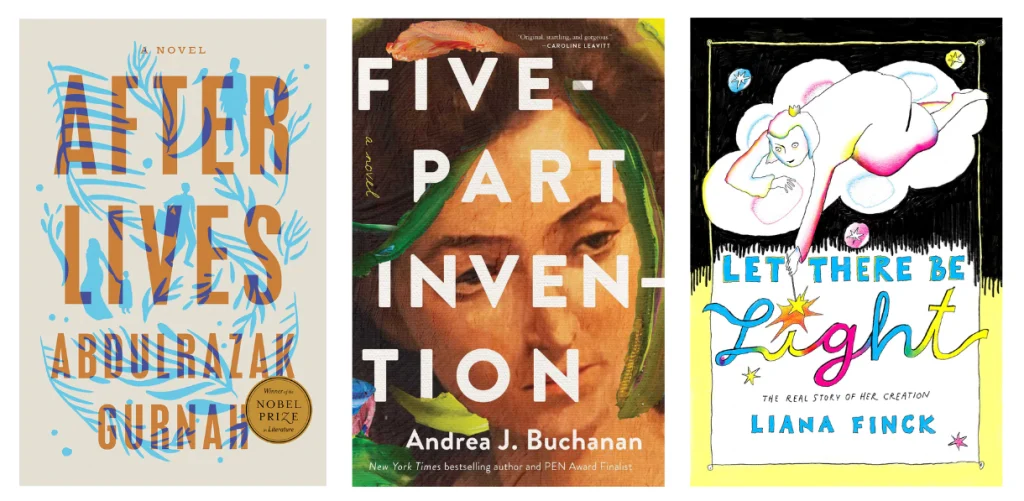
The fiction of 2022 was dominated by themes of intergenerational trauma and the long-term effects of colonialism. Abdulrazak Gurnah, the 2021 Nobel Prize laureate in Literature, saw the North American release of Afterlives, a novel that examines the impact of German colonial rule in East Africa. The book’s success underscored a broader literary movement aimed at de-centering Western perspectives in historical fiction. By following the lives of individuals displaced by colonial violence, Gurnah provides a visceral account of how global geopolitical shifts manifest in personal domestic tragedies.
In the realm of theological and feminist reimagining, Liana Finck’s Let There Be Light: The Real Story of Her Creation utilized the graphic novel format to challenge traditional interpretations of Genesis. By depicting the Creator as a female figure navigating a modern landscape, Finck engaged with contemporary discourse surrounding gender roles and religious authority. This irreverent yet thoughtful approach to ancient texts was a recurring theme in 2022, as authors sought to reconcile traditional heritage with modern secular values.
Narrative Nonfiction: Exploration and the Mechanics of Persuasion
Narrative nonfiction reached new heights of popularity in 2022, led by veteran historians and science communicators. Candice Millard’s River of the Gods: Genius, Courage, and Betrayal in the Search for the Source of the Nile exemplifies the year’s focus on re-evaluating historical "greatness." Millard’s research into the 19th-century expeditions of Richard Burton and John Hanning Speke brings to light the contributions of Sidi Mubarak Bombay, a formerly enslaved man whose navigational expertise was essential to the mission’s success. This shift toward highlighting the "forgotten" figures of history aligns with a broader academic movement to decolonize the history of exploration.
The year also saw a surge in books addressing the "post-truth" era and the psychology of belief. David McRaney’s How Minds Change: The Surprising Science of Belief, Opinion, and Persuasion investigated the neurobiology of opinion shifts. Amidst rising political polarization, McRaney’s work provided a data-driven framework for understanding how empathy and rapport-building are more effective at changing minds than logical debate. According to data from the American Psychological Association, interest in social psychology and cognitive dissonance reached record levels in 2022, as the public sought tools to navigate increasingly fractured social environments.

The Science of the Senses and the Sound of Connection
Scientific literature in 2022 focused heavily on sensory perception and its impact on human well-being. Ed Yong, a Pulitzer Prize-winning journalist for his coverage of the COVID-19 pandemic, released An Immense World: How Animal Senses Reveal the Hidden Realms Around Us. Yong’s work challenged the anthropocentric view of reality, explaining how different species perceive the world through magnetism, vibration, and ultraviolet light. The book was a critical and commercial success, appearing on nearly every major "Best of 2022" list, including the New York Times and Time Magazine.
Parallel to this, Adriana Barton’s Wired for Music: A Search for Health and Joy Through the Science of Sound explored the therapeutic potential of auditory stimuli. Barton synthesized neuroscientific research with personal memoir to demonstrate how music can alleviate chronic pain, improve memory, and foster social cohesion. This intersection of hard science and "wellness" reflects a growing trend in the publishing industry where readers seek evidence-based solutions for emotional and physical ailments.
Redefining Wellness: Trauma, Disability, and the Search for Meaning
Perhaps the most significant literary trend of 2022 was the deep dive into chronic illness and the "invisible" struggles of the marginalized. Gabor Maté’s The Myth of Normal: Trauma, Illness, and Healing in a Toxic Culture became a global bestseller by arguing that modern societal structures are fundamentally at odds with human biological needs. Maté’s thesis—that chronic illness is often an epigenetic response to unresolved trauma—resonated with a public still reeling from the collective trauma of a global pandemic.
Meghan O’Rourke’s The Invisible Kingdom: Reimagining Chronic Illness provided a much-needed critique of the Western medical establishment’s approach to autoimmune and post-viral conditions. As "Long COVID" began to affect millions, O’Rourke’s investigation into the marginalization of patients with poorly understood diagnoses became a vital resource for both the medical community and the general public.

Furthermore, Alice Wong’s Year of the Tiger: An Activist’s Life pushed the boundaries of the disability memoir. Wong, a prominent disability rights activist, used a collage of essays, interviews, and artwork to demand systemic changes in accessibility. Her work is credited with moving the conversation away from the "inspirational" trope of disability and toward a more nuanced discussion of power, artistry, and institutional ableism.
Market Context and the Broader Impact
The success of these titles occurred against a backdrop of a stabilizing book market. While 2021 saw a surge in sales due to pandemic lockdowns, 2022 maintained strong engagement, particularly in the nonfiction and memoir sectors. According to NPD BookScan, adult nonfiction remained the largest super-category in the U.S. market, with a focus on "social justice," "history," and "psychology."
The broader implications of the 2022 literary cycle are evident in how these narratives have influenced public policy and social discourse. Books like Indelible City by Louisa Lim, which explores the defiance and dispossession of Hong Kong, have informed international perspectives on human rights and urban identity. Similarly, Susan Cain’s Bittersweet has sparked a cultural conversation about the necessity of embracing sorrow as a catalyst for creativity and connection.
In summary, the books of 2022 were not merely a collection of stories but were essential tools for navigating a complex and often contradictory world. From the science of the animal kingdom to the reclamation of colonial history and the re-evaluation of medical norms, these authors provided the intellectual framework for a society in transition. As the industry moves forward, the legacy of 2022 will likely be defined by its commitment to truth-telling, the honoring of diverse lived experiences, and the persistent search for beauty in the face of adversity.
