

The penultimate episode of the Food Network’s competitive barbecue series, Pitmasters, concluded with a rigorous whole hog challenge that determined the finalists for the season’s championship. In a display of technical skill and endurance, the final three teams—Susie Bulloch and Christie Vanover, John and Connie, and Esaul and Grecia—faced a nine-hour "Big Burn" centered on the traditional art of whole hog roasting. The episode, which served as the seventh installment of the season, integrated high-pressure "Flash Burn" tasks and environmental obstacles, ultimately resulting in the elimination of Bulloch and Vanover just prior to the season finale.
The challenge was framed by the judges as a definitive test of pitmaster proficiency. Andrew Zimmern, a primary judge on the panel, characterized the whole hog cook as one of the most demanding trials in the barbecue discipline. Unlike standard competition cuts, such as brisket or ribs, a whole hog requires the simultaneous management of disparate muscle groups, including the belly, ham, loin, ribs, and shoulder. Each section possesses different fat contents and connective tissue structures, requiring precise heat distribution to ensure every component reaches its optimal internal temperature without drying out the leaner sections.

Technical Execution of the Big Burn Challenge
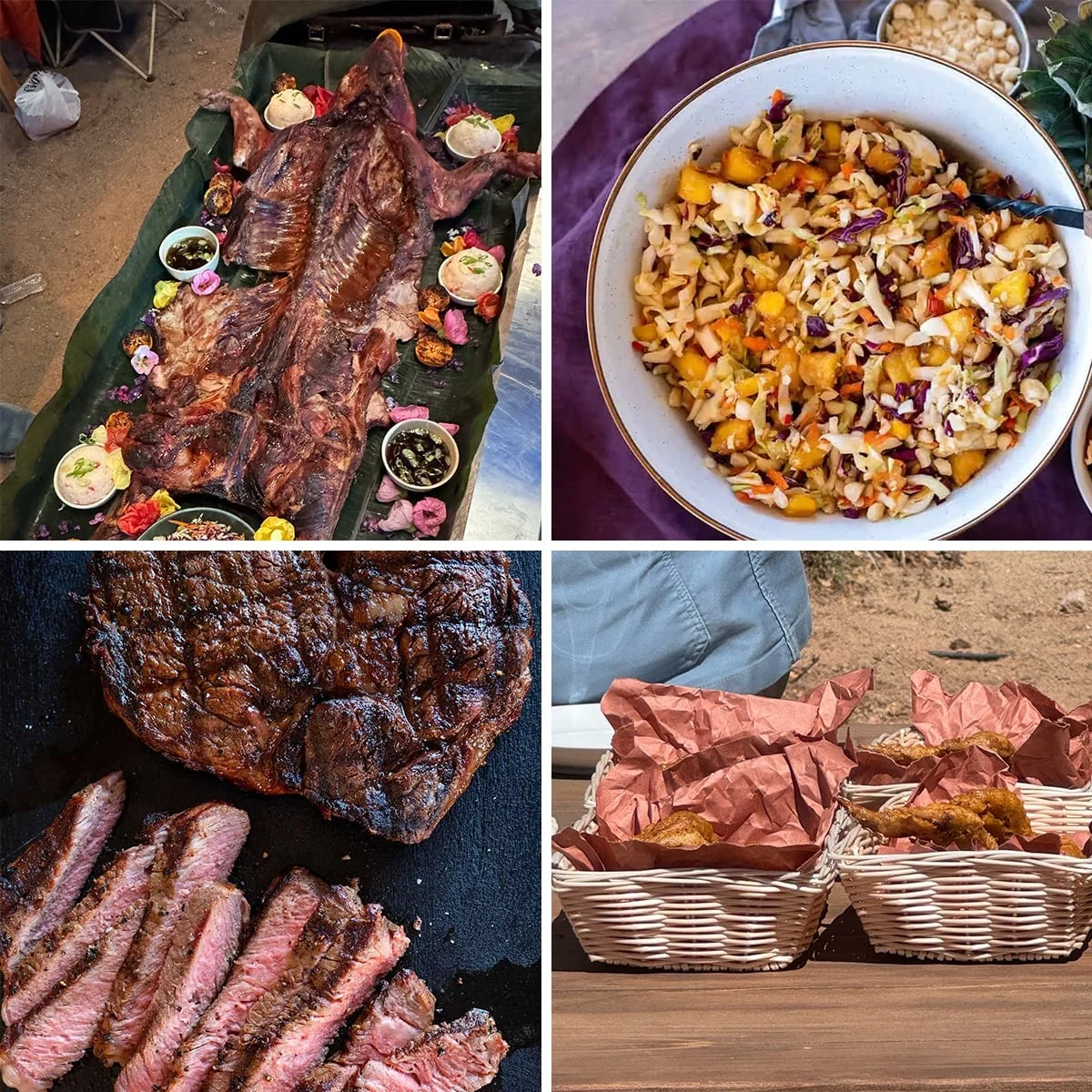
The central task required the teams to prepare a whole hog accompanied by sides within a nine-hour window. The winner of this segment was awarded an $8,000 prize and an automatic berth in the finale. Bulloch and Vanover, representing the brands "Hey Grill Hey" and "Girls Can Grill," opted for a Filipino-inspired adobo flavor profile. This departure from traditional American barbecue palettes—typically characterized by heavy tomato-based sauces or mustard-and-vinegar mopped finishes—utilized a savory-tangy base of soy sauce, vinegar, garlic, and aromatics.
A critical technical decision made by the Bulloch-Vanover team was the use of an asado cross for the cook. This traditional Argentinian method involves butterflying the animal and securing it to a vertical iron frame over an open fire. While this method allows for exceptional smoke penetration and a distinct crust, it lacks the temperature-controlled environment of a traditional offset smoker or a cinderblock pit. Without a lid or walls to trap heat, the pitmasters are entirely dependent on the radiant heat of the embers and are highly susceptible to ambient weather conditions.
As the cook progressed, the judges noted the inherent risks of the asado cross. The absence of insulation meant that any shift in wind or temperature could stall the internal temperature of the pork. This proved prophetic later in the day as cooling temperatures forced the team to transition the hog from the vertical cross to a horizontal position over cinderblocks to push the denser hams and shoulders toward completion.

The Flash Burn Interruptions and Lunch Demands
Approximately two hours into the nine-hour whole hog cook, the competition was interrupted by a "Flash Burn" challenge, a recurring segment designed to test the versatility and speed of the contestants. The judges placed specific lunch orders that had to be fulfilled within 90 minutes for a $2,000 prize.
The orders were highly specific: Ernest Servantes requested grilled chicken wings; Andrew Zimmern ordered a meatball sub; and Big Moe Cason requested a barbecue pork burger incorporating onion and garlic. Through a selection process initiated by John and Connie, Bulloch and Vanover were assigned the chicken wings. They utilized a dual-stage cooking process, seasoning the wings with a chipotle rub for an initial smoke over live fire before finishing them in a beef tallow fry to achieve a "shattering" exterior crust.
The pressure intensified when judge Jess Pryles introduced a "Double Flash Burn" with only 30 minutes remaining. Pryles, a recognized meat scientist and author, requested a perfectly seared ribeye steak to be served alongside the other lunch orders. This secondary task carried an additional $2,000 prize. Vanover managed the steak, employing the "Just Keep Flipping" (JKF) method—a technique popularized by Pryles to develop a consistent crust while maintaining an even internal temperature. The steak was pulled at 125 degrees Fahrenheit and allowed to rest with butter, a decision that later became a point of contention during judging.

Judging Analysis and Official Responses
The judging panel, consisting of Zimmern, Pryles, Cason, and Servantes, provided a granular critique of the "Flash Burn" outputs. Regarding the steak, Pryles noted that while the internal temperature was accurate, the exterior crust was lighter than desired. She further remarked that the addition of resting butter obscured the natural flavor of the beef tallow, reflecting a preference for purist searing techniques.
The chicken wings faced a more structural critique. While Servantes praised the seasoning and moisture levels, he noted a failure to adhere to the specific "grilled" requirement of the prompt, as the wings were ultimately fried. This technicality highlighted the importance of prompt adherence in professional culinary competitions. Consequently, Esaul and Grecia secured the $2,000 for the lunch challenge, while John and Connie claimed the prize for the ribeye steak.
The final evaluation of the "Big Burn" hogs focused on texture and moisture retention. Bulloch and Vanover received high marks for their presentation and the quality of their crackling (pork skin), which Servantes identified as a highlight of the day. However, the technical difficulties posed by the open-fire asado cross and the dropping ambient temperatures resulted in a shoulder that was slightly tough and hams that were "tight," indicating they had not fully reached the point of collagen breakdown required for optimal tenderness.

In contrast, the team of John and Connie successfully navigated the complexities of the hog, delivering a product that the judges deemed superior in overall consistency across all five required cuts.
Broader Implications and Industry Context
The elimination of Bulloch and Vanover marked the conclusion of a significant run for the duo, who had maintained a presence through seven episodes of the competition. Their departure left John and Connie and Esaul and Grecia to compete in the series finale.
Beyond the immediate results of the episode, the performance of the remaining teams reflects broader trends in the professional barbecue industry. The presence of multiple women in the final three—Bulloch, Vanover, and Grecia—underscores a shifting demographic in a field historically dominated by male competitors. This transition is indicative of the growing influence of digital culinary educators and professional pitmasters who have utilized social media and television platforms to diversify the sport.

Furthermore, the integration of international techniques, such as the Argentinian asado and Filipino adobo, into a mainstream American barbecue competition signals an evolution of the genre. Barbecue is increasingly being viewed through a global lens, where traditional Southern American methods are supplemented by open-fire techniques from South America and flavor profiles from Southeast Asia.
The technical requirements of the whole hog challenge also serve as a reminder of the "low and slow" philosophy’s roots. In an era where pellet grills and digital controllers have automated much of the barbecue process, the Pitmasters semifinal emphasized the necessity of manual fire management and an intuitive understanding of meat thermodynamics.
Conclusion of the Semifinal Round
The results of Episode 7 established the final lineup for the Food Network Pitmasters championship. John and Connie’s victory in the whole hog challenge, paired with their success in the ribeye Flash Burn, positioned them as strong contenders for the title. Esaul and Grecia’s consistent performance throughout the season, including their victory in the lunch challenge, secured their place in the final round.

For Susie Bulloch and Christie Vanover, the elimination represents a high-water mark in their competitive careers. In a post-competition reflection, Bulloch emphasized the pride in reaching the final three while adhering to an "approachable, backyard style" of cooking. The duo’s reliance on family-inspired recipes and traditional methods provided a counterpoint to more clinical competition styles.
The season finale is scheduled to air on the Food Network, with streaming available on HBO Max and Discovery+. The remaining teams will compete for the ultimate title of Pitmaster and a significant cash prize, concluding a season that has tested the limits of endurance, creativity, and technical precision in the world of professional barbecue.
