

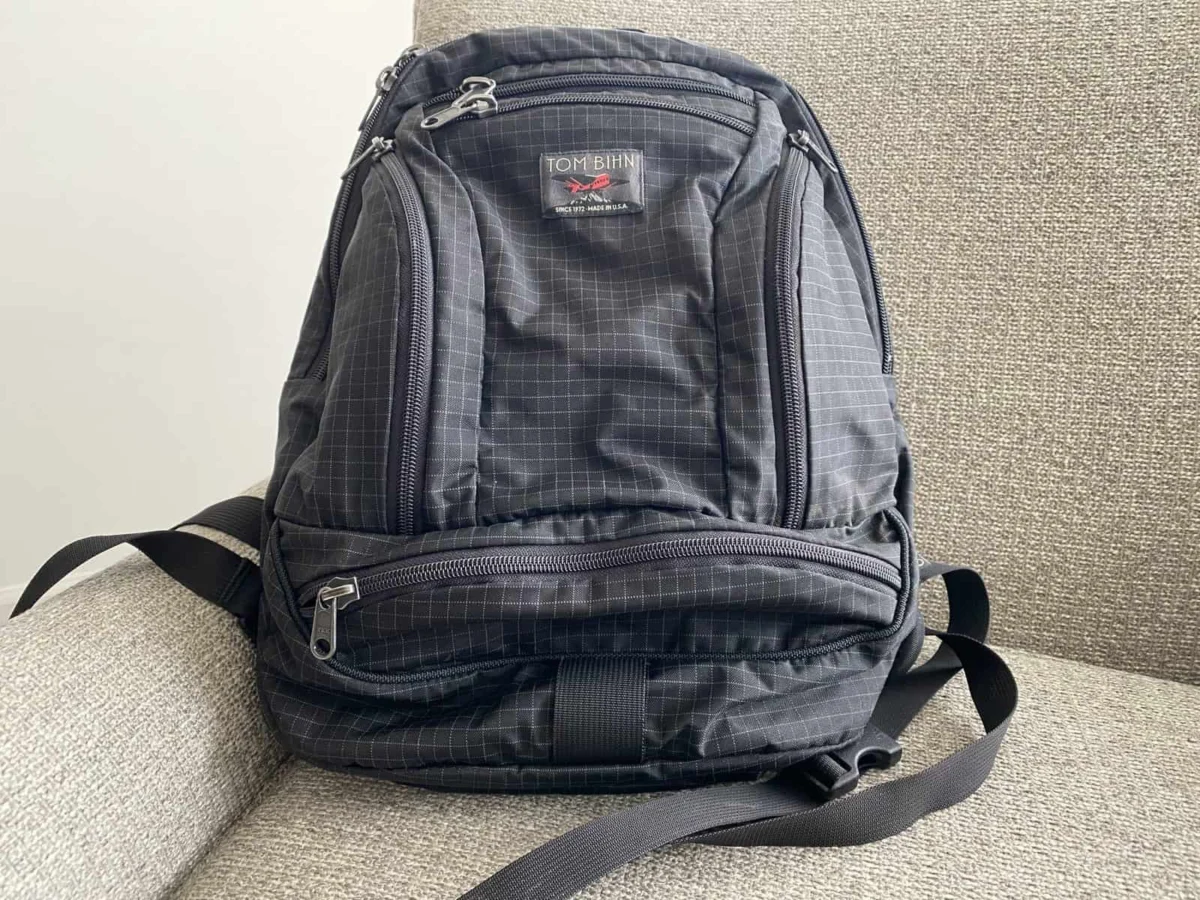
The recovery of a stolen item often occurs within days of a crime, or not at all. However, a recent incident in Brooklyn has highlighted a rare exception to this rule, as a backpack stolen during a 2017 burglary was discovered on a residential rooftop in Park Slope more than three years after the initial incident. The return of the property has not only provided a sense of closure to the victim, Jodi Ettenberg, but has also shed light on the patterns of urban crime and the role of digital communication in resolving cold cases of property theft.
The saga began in August 2017, a period during which the victim—a former attorney and noted travel writer—was undergoing a significant medical crisis. While Ettenberg was at a New York City hospital receiving a lumbar puncture (spinal tap), an procedure that would eventually lead to a debilitating cerebrospinal fluid (CSF) leak, the apartment she was occupying as a house-sitter was being burglarized. According to security footage from the residence, the perpetrator entered the home at the exact moment the medical procedure was commencing, creating a grim synchronicity between a physical health crisis and a violation of personal security.
The 2017 Burglary and Initial Loss
In August 2017, the 78th Precinct of the New York City Police Department (NYPD), which oversees the Park Slope neighborhood, was managing a variety of property crimes typical of the high-density residential area. During this specific burglary, the assailant utilized a Tom Bihn Synapse daybag—a high-end piece of travel gear belonging to Ettenberg—to collect and transport stolen goods from the apartment. The haul included a laptop, jewelry belonging to the permanent tenants, and various personal effects.
In a curious display of selective theft, the burglar left behind Ettenberg’s Canadian passport and a five-dollar Canadian bill on the sofa before exiting the premises. The backpack itself, along with the high-value electronics and jewelry, vanished. For the following three and a half years, the whereabouts of the bag remained unknown, and the case, like many urban burglaries involving non-violent property theft, remained cold.
The Discovery: A Rooftop Investigation
The resolution of this three-year-old mystery occurred not through traditional police work, but via routine home maintenance. In late 2020, a homeowner in Park Slope, residing only a few doors down from the original crime scene, hired a professional chimney sweep to clear a vent that had not been serviced in several years. During the cleaning process, the technician discovered the Tom Bihn backpack tucked into the side of a chimney vent on the roof.

Criminal justice experts note that "rooftop dumping" is a common tactic among urban burglars. After fleeing a crime scene, perpetrators often seek a secluded area to sort through stolen goods, retaining high-value, untraceable items like cash and electronics while discarding identifying documents, bags, and lower-value personal effects. By placing the bag on a roof or behind a chimney vent, the thief ensured it would remain out of sight from street-level patrols and pedestrians, effectively hiding the evidence for years.
The Role of Social Media in Property Recovery
The homeowner who came into possession of the bag discovered several items inside that identified the owner, including expired credit cards and business cards from a travel industry event. Following the discovery, the individual attempted to contact Ettenberg through Facebook. However, due to the platform’s privacy settings, the message was filtered into the "Message Requests" folder—a digital repository often referred to as "Facebook purgatory"—where it sat unnoticed for approximately one month.
In January 2021, Ettenberg discovered the message, which inquired if she had lost a backpack in the Brooklyn area several years prior. This interaction highlights a growing trend in lost property recovery: the reliance on social media and digital footprints over official law enforcement channels. While the NYPD maintains a database of recovered property, the friction of official reporting often leads private citizens to take investigative matters into their own hands via platforms like Facebook, Nextdoor, or LinkedIn.
Inventory of Recovered Items
Upon the bag’s return, an inventory revealed a mixture of original contents and items presumably left by the perpetrator. The recovered items included:
- Two pairs of prescription eyeglasses (found to be warped due to years of exposure to New York’s extreme temperature fluctuations).
- Expired credit cards.
- Travel-related business cards.
- Personal toiletries, such as hand lotion and over-the-counter medication.
- A blue die, which Ettenberg confirmed did not belong to her, suggesting it may have been dropped by the burglar or taken from another location.
Notably absent were the high-value items: the laptop, the currency, and the jewelry stolen from the apartment owners. The condition of the bag, despite three years of exposure to rain, snow, and sun on a Brooklyn rooftop, was reported to be remarkably resilient, a testament to the durability of the materials used in its construction.
Chronology of Events
- August 2017: Burglary occurs in Park Slope, Brooklyn, while the victim is hospitalized. A Tom Bihn backpack and various electronics are stolen.
- 2017–2020: The backpack remains hidden on a nearby rooftop, wedged into a chimney vent.
- December 2020: A chimney sweep discovers the bag during routine maintenance. The homeowner attempts to contact the victim via Facebook.
- January 2021: The victim discovers the message in her filtered inbox and confirms her identity.
- February 2021: A close associate of the victim, a former legal colleague, retrieves the bag from the Park Slope resident.
- Spring 2021: The bag is cleaned, refurbished, and ultimately gifted to a new owner to "transmute" the negative history of the object into something useful.
Statistical Context and Urban Crime Trends
The 2017 burglary took place during a period of fluctuating crime rates in New York City. According to NYPD CompStat data, while overall major crimes in the 78th Precinct have seen long-term declines since the 1990s, "Burglary" and "Grand Larceny" remain persistent challenges in affluent neighborhoods like Park Slope. In 2017, the city saw thousands of reported burglaries, many of which involved the theft of portable electronics—items that are easily fenced in urban environments.

The recovery of the bag also touches upon the "clearance rate" of property crimes. Nationally, the FBI reports that the clearance rate for burglary is typically low, often hovering between 13% and 15%. The fact that any portion of the stolen property was recovered years later is statistically improbable, placing this incident in the category of a "black swan" event in criminal recovery.
Psychological Impact and "Secondary Victimization"
The return of the backpack served as a significant emotional trigger for the victim, highlighting the psychological phenomenon known as secondary victimization. For Ettenberg, the bag was inextricably linked to the night her life changed due to a medical injury. The sudden reappearance of the item "dredged up" the trauma of the theft and the concurrent health crisis.
Psychologists suggest that property crime is rarely just about the loss of physical goods; it is a violation of personal space and safety. When an item returns years later, it can force a victim to re-process the event. In this instance, the victim utilized a support network to mitigate the impact. Her friend, Cheryl—a former law school classmate—not only retrieved and sanitized the bag but filled it with "llama-themed" gifts to replace the traumatic associations with positive ones. This act of "llamafication" served as a social intervention to help the victim navigate the emotional weight of the recovery.
Broader Implications and Conclusion
The story of the Park Slope backpack concludes with a final act of "transmutation." Having already replaced the bag years prior, Ettenberg chose to donate the original backpack to a friend. This decision reflects a desire to strip the object of its "liminal weight" and return it to a state of utility.
From a journalistic and sociological perspective, this case provides several key takeaways:
- The Persistence of Physical Evidence: In dense urban environments, stolen goods can remain hidden in plain sight for years, protected by the vertical geography of the city.
- The Power of Community Integrity: The recovery was made possible by the honesty of a service worker and the diligence of a neighbor who sought out the rightful owner despite the passage of time.
- Digital Archiving: The permanence of digital identities allows for the resolution of "cold" property cases that would have been impossible in the pre-internet era.
Ultimately, while the legal system rarely provides such tidy endings to property theft, the case of the Park Slope backpack demonstrates that the "spiral of life" occasionally brings lost items back to the start, offering a rare opportunity for closure in a city of millions.
