

In an era of increasing awareness regarding health and environmental sustainability, the quality of drinking water has emerged as a paramount concern for households worldwide. While municipal water treatment systems work diligently to provide potable water, many consumers seek an additional layer of purification to address concerns ranging from taste and odor to emerging contaminants like PFAS and microplastics. This comprehensive review delves into the efficacy and user experience of various home water filtration systems, revealing how the right filter can not only deliver pristine water but also significantly transform daily hydration habits, turning even the most water-averse individuals into consistent drinkers.
The Growing Imperative for Home Water Filtration
For many, the simple act of drinking enough water daily remains a challenge, often exacerbated by the perceived taste or quality of tap water. A recent survey indicated that over 60% of consumers express some level of concern about their tap water quality, citing issues such as chlorine taste, sediment, or the presence of unseen contaminants. This apprehension drives a significant portion of the population towards bottled water, a habit that carries substantial environmental and economic costs. The global bottled water market, valued at hundreds of billions of dollars, generates immense plastic waste, with less than 30% of plastic bottles being recycled annually in some regions.
The demand for home water filtration systems is a direct response to these concerns. Aging infrastructure in many urban areas can lead to lead leaching from pipes, while agricultural runoff and industrial discharges introduce a complex array of chemicals into water sources. Furthermore, the discovery of "forever chemicals" (PFAS) in water supplies across numerous communities has intensified the focus on robust filtration solutions. Beyond health concerns, many simply desire water that tastes better, free from the distinctive "swimming pool" aroma of chlorine or the earthy notes of natural minerals. A home water filter, therefore, serves as a practical, sustainable, and often more economical alternative to relying on bottled water for daily hydration.

Understanding Water Contaminants and Health Implications
To appreciate the value of a water filter, it’s crucial to understand the common contaminants found in tap water and their potential impact.
- Chlorine and Chloramine: Used as disinfectants in municipal water treatment, these chemicals effectively kill bacteria and viruses. However, they are often responsible for the unpleasant taste and odor associated with tap water. While generally safe at regulated levels, long-term exposure to chlorinated byproducts can be a minor concern for some individuals.
- Lead: A highly toxic metal, lead can leach into drinking water from old pipes and plumbing fixtures. There is no safe level of lead exposure, and even low levels can cause developmental problems in children, and neurological and kidney issues in adults. Filters certified to NSF/ANSI Standard 53 are critical for lead reduction.
- PFAS (Per- and Polyfluoroalkyl Substances): These "forever chemicals" are found in countless industrial and consumer products and are highly persistent in the environment and human body. Linked to various health issues including cancer, immune system dysfunction, and developmental problems, PFAS contamination is a rapidly growing public health crisis. Filters certified to NSF/ANSI Standard 53 or 401 specifically target PFAS.
- Microplastics: Tiny plastic particles, often invisible to the naked eye, have infiltrated water sources globally. Their long-term health effects are still being studied, but concerns exist regarding their potential to carry harmful chemicals and accumulate in the body. Mechanical filtration is key to removing microplastics.
- Heavy Metals (e.g., Mercury, Cadmium, Arsenic): These naturally occurring elements can enter water supplies through industrial discharge or geological processes. They are toxic even at low concentrations and can lead to severe health problems.
- Cysts and Bacteria: While rare in well-maintained municipal systems, these biological contaminants can cause gastrointestinal illness. Filters with sub-micron pore sizes or UV purification can effectively remove or inactivate them.
- Hardness-Causing Minerals (Calcium, Magnesium): While not health hazards, these minerals contribute to "hard" water, which can leave mineral deposits on fixtures and alter the taste of water and beverages.
Addressing these contaminants is not just about taste; it’s about providing peace of mind and promoting overall well-being.
The Rigorous Testing Methodology: Ensuring Reliability
In evaluating water filtration systems, a rigorous, objective approach is paramount. The testing methodology for this review prioritized factors directly relevant to the consumer experience, while also upholding the highest standards of safety and efficacy. Crucially, every water filter featured in this guide carries the NSF International certification.

NSF International is a leading global independent organization that tests and certifies products to ensure they meet strict public health and safety standards. This certification is a critical benchmark, signifying that a product has been independently tested to verify it reduces the contaminants it claims to target. As Kyle Postmus, Senior Manager of Water Systems at NSF, emphasizes, "The most important question is not ‘Is this safe,’ it’s ‘What was verified, by whom, and against which standard?’ Independent certification means the product was tested against established criteria and is subject to ongoing oversight, including periodic retesting and facility audits."
Without access to a full laboratory, direct measurement of contaminant reduction was beyond the scope of this review. Instead, the evaluation focused on the factors that profoundly impact daily use and consumer satisfaction:
- Ease of Setup: How straightforward is the initial installation process?
- Overall Design and Functionality: Is it aesthetically pleasing, space-efficient, and easy to operate?
- Filter Type and Scope: What contaminants does the filter claim to remove, and what certifications back these claims?
- Maintenance Requirements: How often do filters need replacing, and how easy/cost-effective are replacements?
- Taste: The ultimate subjective, yet crucial, indicator of performance.
Postmus further cautions against vague marketing: "Consumers should be cautious of broad claims like ‘removes all contaminants’ — confidence comes from clarity around what was actually tested, verified, and certified." Consumers are advised to look for specific NSF/ANSI standards:
- NSF/ANSI 42: Addresses aesthetic issues like chlorine taste and odor, and particulate matter.
- NSF/ANSI 53: Addresses health-related contaminants, including lead, cysts, and volatile organic compounds (VOCs).
- NSF/ANSI 401: Addresses emerging contaminants, such as certain pharmaceuticals, pesticides, and chemical compounds (including some PFAS).
When in doubt, verifying products through NSF’s certified products listing (info.nsf.org/Certified/dwtu/) is the most reliable approach.
Categories of Home Water Filters: A Comparative Overview
The market offers a diverse range of home water filtration systems, each catering to different needs, budgets, and space constraints. This review categorized them into pitchers, fridge dispensers, and countertop systems, highlighting their unique advantages and the top performers in each class.

1. Water Filter Pitchers: Convenience for Everyday Hydration
Water filter pitchers represent the entry point into home water filtration, ideal for individuals or small households prioritizing convenience and affordability. They are portable, require no installation, and fit easily into most refrigerators. Their primary function often revolves around improving taste and odor, making tap water more palatable.
-
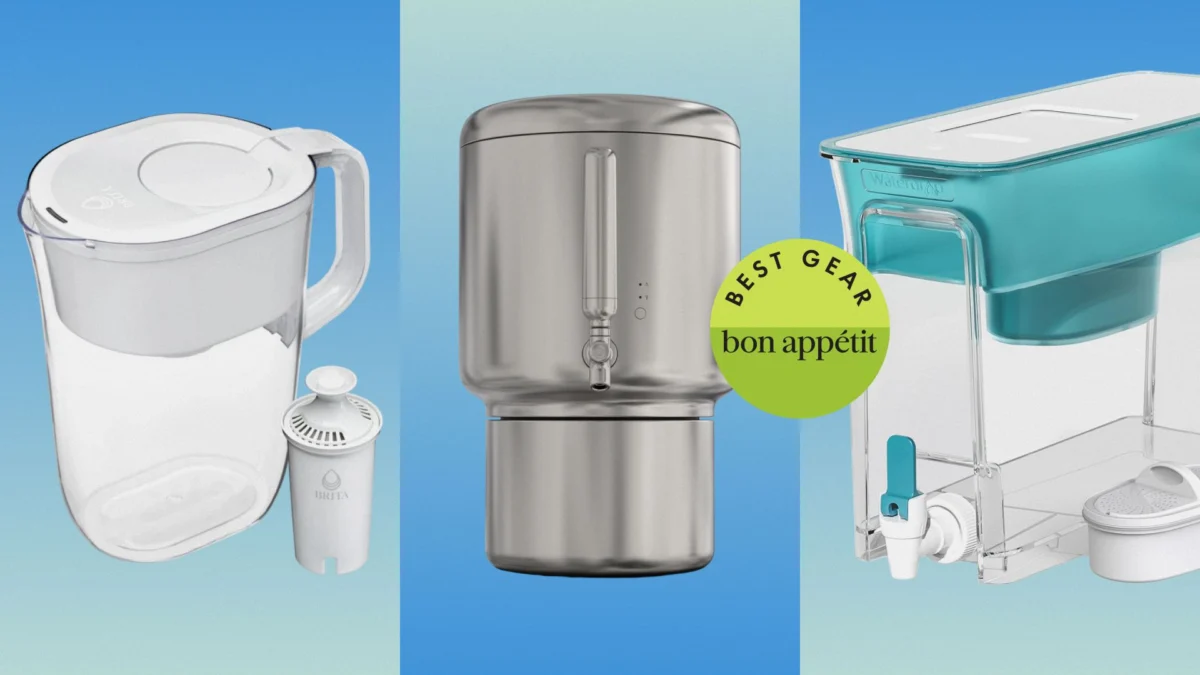
Brita 6-Cup Denali Water Pitcher: This classic pitcher remains a perennial favorite for its user-friendliness and effectiveness in improving taste. Priced at approximately $27, it’s widely available and compact enough for even crowded refrigerators. Setup is a breeze: flush the activated carbon filter for 15 seconds, insert it, and fill the pitcher three times before use. The activated carbon effectively reduces chlorine and other trace contaminants, eliminating the "swimming pool" taste. A valuable automatic filter indicator removes the guesswork from maintenance, prompting replacements every two months. Its main limitation is its filtration scope; the standard filter doesn’t target PFAS, lead, bacteria, or viruses, though an upgrade to the more expensive Elite Filter ($20) offers broader contaminant reduction. Its six-cup capacity means more frequent refills for heavy users.
-
Larq PureVis 3-in-1 Water Pitcher: Positioned as a premium, tech-forward option, the Larq pitcher (around $168) combines physical filtration with PureVis UV technology for an additional layer of purification. Its sleek, minimalist design is visually appealing, and the hands-free fill lid, with a built-in indicator to prevent overflows, enhances user experience. The water quality is excellent, and the system connects to a companion app for filter life tracking. However, its high price point and reliance on a proprietary app ecosystem might be overkill for some. The proprietary filters also contribute to a higher long-term cost of ownership and limit purchasing flexibility.
-
Lifestraw Home 7-Cup Water Pitcher: At approximately $65, the Lifestraw Home offers an elevated aesthetic with a minimalist design and a practical silicone base. It features a convenient fill-through lid and delivers great-tasting water, boasting a filtration system that tackles a broader range of contaminants than many basic pitchers. However, its significant footprint—tall and wide—can monopolize fridge space, making it less ideal for smaller kitchens. The specialized filter setup also demands more attention during installation and maintenance compared to simpler models.

2. Fridge Dispensers: The Mid-Ground Solution for Families
Fridge dispensers offer a compromise between the small capacity of pitchers and the larger footprint of countertop systems. Designed to fit neatly within refrigerator shelves, they typically hold more water than pitchers and feature convenient spouts for easy access.
- Waterdrop WFD-40L Water Filter Dispenser: This dispenser strikes an excellent balance at around $36. Its slim, rectangular design maximizes fridge space, and the built-in spout simplifies pouring, especially for refilling water bottles. Setup involves a 10-minute soak for the flat filter, followed by insertion into the top reservoir. Clever design touches, such as a removable pour spout that fits narrow bottle openings and a sliding lid window for easy refilling, significantly enhance daily usability. The Waterdrop filter provides crisp, clean water with noticeable chlorine reduction, and importantly, it is certified to reduce lead, offering a step up from basic Brita filters. Its larger capacity means fewer refills, and filters last approximately three months, extending maintenance intervals. The primary drawbacks are that replacement filters are not as readily available in brick-and-mortar stores as Brita, and its filtration scope, while including lead, does not cover PFAS, bacteria, viruses, or hardness-causing minerals.
3. Countertop Systems: High-Volume, Comprehensive Filtration
For households with higher water consumption or greater concerns about contaminant removal, countertop systems provide the most robust filtration solutions. They offer significantly larger capacities and often employ multi-stage filtration technologies to tackle a wider array of impurities.
-
Rorra Countertop System: The Rorra system, priced at approximately $549, distinguishes itself with a sleek, sculptural design that resembles a piece of modern decor rather than a utilitarian appliance. This aesthetic appeal is crucial for a unit that occupies significant counter space. Its installation is remarkably straightforward, a refreshing change from the often-complex priming requirements of other gravity-fed systems. Numbered steps guide the user through inserting the filter into its stainless steel housing, activating the automatic filter-change indicator, and running the initial filtration cycle. Its 2.8-gallon capacity minimizes refills, and the convenient pour spout makes dispensing effortless. More importantly, the Rorra delivers exceptionally clean, crisp water and boasts comprehensive filtration certified to remove PFAS, heavy metals, microplastics, chlorine, and other trace contaminants. This makes it a luxury upgrade for those seeking a highly effective, non-installed filtration system. The main downsides are its premium price and the cost ($75) and proprietary nature of replacement filters, which are only available directly from the brand, making long-term maintenance less convenient than mass-market options.

-
Culligan MaxClear Gravity Water Filter System: At a more accessible price point of around $196 (often on sale for $229), the Culligan MaxClear offers many benefits comparable to premium stainless steel systems. It provides NSF-certified filtration targeting PFAS, heavy metals, microplastics, and chlorine. Aesthetically, it’s polished and blends well with modern kitchens. It also boasts compatibility with other popular filter brands, offering future flexibility. However, its filter prep process demands patience, requiring several days of priming and cycling before reaching optimal flow rates. The initial slow filtration can be frustrating, though performance improves significantly after a few days. Its heavy weight when full and the lack of an opening in the top chamber for easy refills mean users must lift and balance the upper reservoir or use a separate pitcher for replenishment, adding a layer of inconvenience.
-
Boroux Legacy Compact Water Filter System: Positioned between the Culligan and Rorra at about $355, the Boroux Legacy Compact is a gravity-fed stainless steel system that targets PFAS, heavy metals, microplastics, and chlorine. It stands out for its intentional design and polished stainless steel finish, offering more color and finish options than many competitors. The Boroux produces deliciously crisp water with a noticeably softer quality, a characteristic many find pleasant. Its filters are rated to last up to 12 months, which helps mitigate the higher replacement costs. However, like the Culligan, it requires a more involved filter priming and setup process than the Rorra. Its weight and the absence of an easy-fill opening in the upper chamber also mean less convenience during daily refills, requiring a commitment to its specific operational nuances.
Key Considerations for Consumers: Making an Informed Choice
Navigating the vast market of water filters can be daunting. Making an informed decision requires understanding several key factors:
- Contaminant Specificity and Certifications: As Kyle Postmus of NSF emphasizes, "Not all water filters remove the same contaminants, and that’s one of the biggest misconceptions consumers have." Prioritize filters with clear NSF/ANSI certifications (42 for aesthetics, 53 for health contaminants like lead, 401 for emerging contaminants like PFAS) relevant to your specific water quality concerns. Test your tap water if you have specific concerns about contaminants not covered by general certifications.
- Maintenance Schedule and Cost of Ownership: Filters have a finite treatment capacity. "Delayed replacement can reduce effectiveness over time," Postmus warns. Factor in the frequency and cost of replacement filters, as these can significantly impact the long-term expense. Some filters need replacement every two months, others every six months to a year. Consider the availability of replacement filters—are they widely stocked or proprietary?
- Capacity and Lifestyle: The "best" filter is the one you’ll actually use. Pitcher filters are ideal for renters, small households, or those prioritizing portability. Countertop systems offer larger capacities and more robust filtration, suitable for families or heavy water drinkers. Consider your daily water consumption and how much space you’re willing to dedicate.
- Installation and Aesthetics: While pitchers require no installation, some countertop systems might involve more complex initial setup, including filter priming. For systems that sit on your counter, aesthetics can be an important factor in maintaining kitchen harmony.
Environmental and Economic Impact of Filtered Water

Beyond personal hydration and health benefits, adopting a home water filtration system offers significant environmental and economic advantages. By providing an endless supply of clean, great-tasting water, these systems drastically reduce reliance on single-use plastic water bottles. This not only lessens the burden on landfills and oceans but also conserves the energy and resources required for bottle production and transportation. From an economic standpoint, while the upfront cost of a good filter system might seem higher, the long-term savings compared to consistently purchasing bottled water are substantial. Over a year, the cost of replacement filters is typically a fraction of what an average household spends on bottled water.
Filters That Didn’t Quite Make the Cut
While many filters perform admirably, some fall short when weighing their features against practical usability and value. The Aarke water pitcher, despite its undeniably cool and modern aesthetic, was ultimately not recommended. Its thoughtful design includes a clever built-in filter calendar, but its practical drawbacks outweighed these advantages. The pitcher is surprisingly heavy when empty and becomes cumbersome when filled, often requiring two hands to pour. More critically, its internal filtration cartridge consumes a significant portion of the pitcher’s volume, meaning it holds considerably less water than its physical footprint suggests. Combined with a premium price tag, the Aarke didn’t offer enough value or convenience compared to lighter, more affordable alternatives that performed equally well in taste and basic filtration.
Conclusion
The journey to consistent hydration and confidence in one’s drinking water quality can be transformative. This comprehensive review highlights that the market offers excellent solutions across various price points and functionalities. From the accessible convenience of a Brita pitcher to the robust, elegant performance of a Rorra countertop system, the right water filter can turn a daily chore into an effortless habit. By understanding certifications, evaluating maintenance requirements, and aligning a system’s capacity with personal needs, consumers can empower themselves to choose a filtration solution that not only enhances their well-being but also contributes to a more sustainable lifestyle. The ultimate goal remains clear: to make hydrating with pure, great-tasting water an easy and enjoyable part of every day.
