

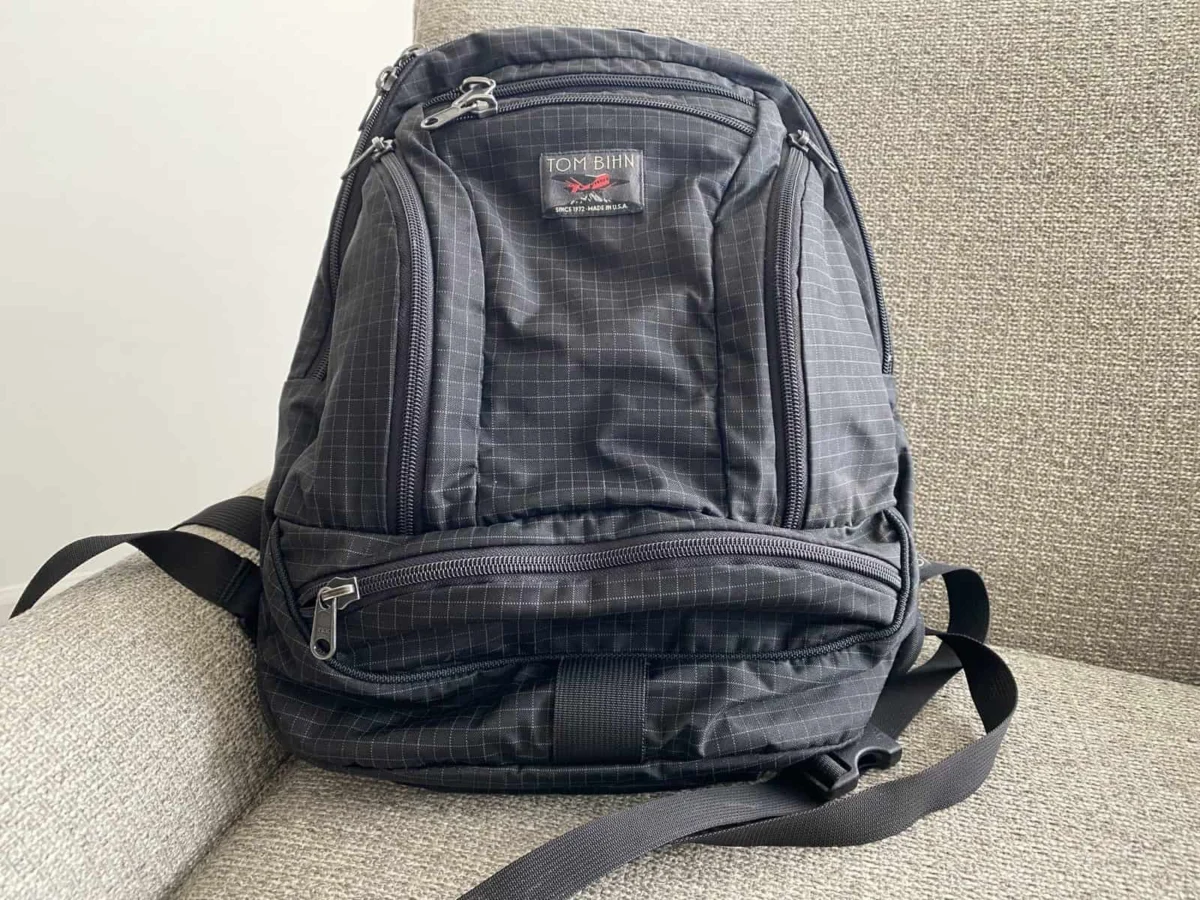
In a rare instance of cold-case property recovery, a backpack stolen during a 2017 burglary in Park Slope, Brooklyn, has been returned to its owner more than three years after the incident. The recovery of the item, a Tom Bihn Synapse daybag belonging to former attorney and travel writer Jodi Ettenberg, highlights the intersection of chance, community vigilance, and the long-term psychological impact of criminal victimization. The bag was discovered by a maintenance worker on a rooftop, leading to a chain of events that provided a measure of closure to a theft that occurred during one of the most difficult periods of the owner’s life.
The 2017 Burglary: A Confluence of Crisis
The theft occurred in August 2017 under circumstances that the victim described as an "extraordinary ride" of misfortune. At the exact time the burglary was taking place, Ettenberg was in a hospital emergency room undergoing a lumbar puncture (spinal tap). The medical procedure resulted in a debilitating cerebrospinal fluid (CSF) leak, a condition that would eventually leave her with long-term disabilities.
While Ettenberg was incapacitated at the hospital, a burglar entered the Park Slope apartment where she was house-sitting. According to time-stamped footage from a security camera installed in the residence, the intruder entered the premises at the precise moment the medical procedure began. The thief utilized Ettenberg’s own backpack to consolidate stolen items from the apartment, including a laptop, jewelry, and cash. In a curious display of selective theft, the burglar left behind Ettenberg’s Canadian passport and a five-dollar bill on a sofa before fleeing the scene.
The 2017 incident took place in New York City’s 78th Precinct, which covers the Park Slope neighborhood. According to NYPD CompStat data from that period, while overall crime in the city was trending downward, residential burglaries remained a persistent concern for residents in affluent Brooklyn neighborhoods. For Ettenberg, the loss of the bag was secondary to the life-altering medical complications that followed, yet the missing property remained a symbolic tether to the night her health and safety were simultaneously compromised.
Chronology of Discovery and Recovery
The path to recovering the stolen property began in December 2020, though the connection was not immediately established due to the digital filtering systems of modern social media.

- The Discovery (Late 2020): A homeowner in Park Slope, residing only a few doors down from the site of the 2017 burglary, hired a professional chimney cleaner. During the maintenance of the roof, the cleaner discovered a backpack wedged into the side of a chimney vent.
- The Outreach (December 2020): After examining the contents and finding expired credit cards with Ettenberg’s name, the homeowner attempted to contact her via Facebook.
- The Delay (December 2020 – January 2021): Because the two individuals were not "friends" on the social media platform, the message was diverted to the "Message Requests" folder, often referred to as "Facebook purgatory."
- The Connection (January 2021): Ettenberg discovered the message a month later. The message inquired if she had lost a bag in the area several years prior, noting that it still contained personal items.
- The Retrieval (February 2021): A close associate of Ettenberg, a former law school colleague named Cheryl, coordinated with the homeowner to retrieve the bag.
The discovery on the rooftop suggests that the burglar likely discarded the backpack shortly after the crime, perhaps after transferring the high-value electronics and jewelry to a less conspicuous container or realizing the bag itself might be identifiable. The chimney vent provided a sheltered location that protected the contents from the full force of New York’s seasonal weather for over three years.
Analysis of Recovered Contents and Condition
Upon retrieval, the backpack’s contents provided a snapshot of Ettenberg’s life prior to the 2017 incident. While the high-value items—the laptop and jewelry—were predictably absent, several personal items remained:
- Prescription Eyewear: Two pairs of prescription glasses were found inside. Despite being subjected to three years of temperature fluctuations on a Brooklyn rooftop, the frames remained intact, though warped.
- Financial Indicators: Several credit cards were recovered, all of which had since expired.
- Miscellaneous Personal Items: The bag contained hand lotion, Tylenol, and business cards from travel industry events.
- Unidentified Evidence: A blue die was found in the bag that did not belong to Ettenberg, suggesting it may have been dropped by the thief or belonged to another victim.
The physical condition of the bag, a Tom Bihn Synapse, was remarkably resilient. The manufacturer, based in Seattle, is known for using high-grade ballistic nylon and YKK zippers, materials designed for extreme durability. This structural integrity likely prevented the contents from being destroyed by moisture or pests during the 40-month exposure period.
The Role of Social Media and Community in Property Return
The return of the property underscores the evolving role of social platforms in civil society. While Facebook’s filtering algorithms initially delayed the reunion, the platform’s search functionality allowed a stranger to bridge a three-year gap. This case reflects a broader trend in "digital lost and found" dynamics, where community-focused groups and direct-to-consumer search tools have replaced traditional police evidence rooms as the primary vehicle for returning low-value stolen goods.
From a journalistic perspective, the homeowner’s decision to pursue the owner of the bag represents a high degree of civic duty. Rather than discarding the weathered item, the resident took the initiative to cross-reference the names on the expired cards with public profiles, demonstrating the impact of individual agency in resolving long-standing criminal footnotes.
Psychological Impact and the "Outlier of Possibilities"
For victims of crime, the sudden reappearance of stolen property can be a double-edged sword. Psychologists often note that physical objects can act as "trauma triggers," bringing back vivid memories of the original incident. Ettenberg described the receipt of the message as a moment that "stopped her heart," forcing a confrontation with the "sediment" of a traumatic past.

The timing of the burglary—aligned with a medical procedure that caused permanent disability—created a complex layer of trauma. In such cases, the stolen object becomes a "liminal" symbol, representing the threshold between the victim’s life before and after the event. The recovery of the bag allowed for a "transmutation" of that energy. By having a friend "llamafy" the bag—filling it with llama-themed gifts to replace the trauma with humor and support—Ettenberg was able to transition the object from a relic of a crime to a vessel of friendship.
Broader Implications and Final Disposition
The case concludes with an act of "paying it forward." Ettenberg, who had already replaced the bag years prior through the generosity of the manufacturer, decided to gift the recovered "miracle bag" to another friend. This final transition serves as a practical application of closure, moving the object from a state of "holding one’s breath" to one of utility.
This story serves as a data point in the study of "outlier" events. The probability of a stolen bag being found on a roof three years later, and the owner being successfully contacted despite a change in life circumstances and geographic location, is statistically low.
Summary Data of the Recovery:
- Duration of Loss: Approximately 40 months.
- Distance from Crime Scene: Less than 0.1 miles.
- Primary Recovery Agent: Private citizen/Chimney sweep.
- Condition of Technical Gear: 100% loss (laptop).
- Condition of Personal Utility Items: 80% recovery (glasses, cards).
Ultimately, the recovery of the Tom Bihn backpack provides a rare conclusion to a standard burglary report. It highlights that while the legal system may rarely close such cases with an arrest, the community and the passage of time can occasionally provide a different, more personal form of justice and resolution. For Jodi Ettenberg, the bag’s return was not about the value of the nylon or the expired cards, but about the closing of a chapter that had remained open since a transformative night in 2017.
