

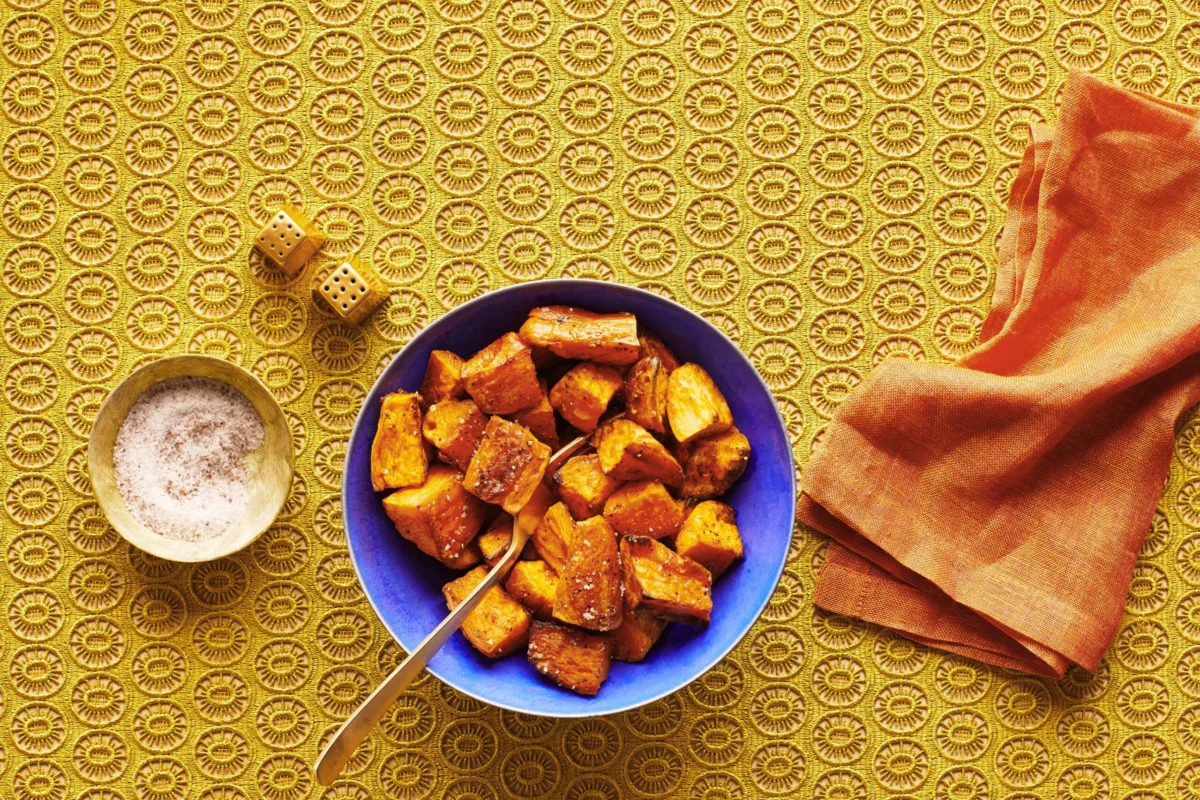
Achieving perfectly roasted sweet potatoes, characterized by deeply browned, caramelized edges and luxuriously creamy centers, often defies conventional wisdom regarding pan space. Culinary experts and food scientists confirm that a slight degree of intentional crowding on the sheet pan during the initial phase of roasting is not merely acceptable but, in fact, advantageous for optimal texture development. When 1½-inch chunks of sweet potato are nestled closely together, a micro-environment of trapped steam is created. This internal steam facilitates the softening of the potato’s interior, ensuring a tender, yielding texture before the pieces gradually shrink, creating sufficient space for individual surfaces to brown effectively. This nuanced approach leverages fundamental principles of heat transfer and moisture management, transforming a simple root vegetable into a culinary delight.
The efficacy of this method is further amplified by the precise temperature control of a 450°F oven. This high heat is crucial for initiating the Maillard reaction and caramelization processes, which are responsible for the coveted browned exterior and complex, sweet flavors. Consistent interaction with the hot sheet pan is paramount; therefore, the omission of parchment paper is a deliberate choice, as it ensures direct thermal contact, which is superior for conductive heat transfer and subsequent browning. Regular tossing of the sweet potato pieces throughout the roasting period is also recommended to promote even coloration and texture development across multiple surfaces. While a simple seasoning of salt and pepper suffices to highlight the sweet potato’s natural flavors, the roasted product serves as an exceptionally versatile culinary foundation, inviting a multitude of flavor enhancements and applications, from spiced and cinnamon-sugar preparations to savory herby Parmesan or glazed variations, integrating seamlessly into side dishes, grain bowls, salads, or even tacos alongside staples like refried black beans.
The Science of the Sear: Mastering the Roasting Process
The process of roasting sweet potatoes to perfection is a delicate interplay of scientific principles. The high temperature of 450°F is specifically chosen to facilitate two primary chemical reactions crucial for flavor and texture: the Maillard reaction and caramelization. The Maillard reaction, a complex series of non-enzymatic browning reactions between amino acids and reducing sugars, is responsible for the savory, umami notes and browned crust on many roasted foods. Sweet potatoes, being rich in natural sugars, also undergo significant caramelization, a pyrolysis of sugars that produces a range of volatile compounds, contributing to their characteristic sweet, nutty, and slightly bitter flavors.
Initial crowding on the sheet pan, while seemingly counterintuitive to achieving crispness, plays a vital role in the first phase of cooking. As the sweet potato chunks heat up, their internal moisture begins to turn into steam. When the pieces are closely packed, this steam is partially trapped around them, effectively par-steaming the interiors. This ensures the starches gelatinize and the cellular structure softens evenly, leading to a uniformly creamy texture throughout the center of each piece. Without this initial steaming phase, the exterior might brown and firm up too quickly, leaving the interior raw or inconsistently cooked. As the cooking progresses, moisture evaporates, the sweet potato pieces shrink slightly, and the trapped steam dissipates, allowing the dry heat to finally crisp and brown the exposed surfaces.
The direct contact with a preheated, hot sheet pan is another critical factor. Metals are excellent conductors of heat. By placing the sweet potatoes directly onto the pan, maximum conductive heat transfer occurs, leading to more efficient and pronounced browning on the underside of each piece. Parchment paper, while convenient for cleanup, acts as an insulating barrier, reducing the direct transfer of heat and often resulting in less intense browning. For those prioritizing a crisp exterior, bypassing parchment is a recommended technique. The occasional tossing of the sweet potatoes ensures that different surfaces come into direct contact with the hot pan, promoting even browning and preventing any single side from burning. This systematic rotation allows for a balanced development of texture and color across all pieces.
Beyond the Basics: Preparing and Seasoning for Success
The preparation of sweet potatoes for roasting offers a degree of flexibility, notably concerning their skin. Sweet potato skins are entirely edible and, when roasted at high temperatures, can crisp up delightfully, adding an extra layer of texture and a slightly earthy flavor. Furthermore, the skin is a significant source of fiber and nutrients. For those who prefer a more uniformly creamy interior and a softer texture throughout, peeling the sweet potatoes is an option. This choice largely depends on personal preference and the desired culinary outcome.
Selecting the right oil is also crucial. High smoke point oils such as avocado oil, grapeseed oil, or even refined coconut oil are excellent choices for roasting at 450°F, as they can withstand the high temperatures without breaking down and imparting off-flavors. Olive oil, particularly extra virgin, has a lower smoke point but can still be used, especially if its robust flavor is desired, though care must be taken to monitor for scorching. The oil not only aids in heat transfer and prevents sticking but also contributes to the desired browning and flavor development.
While salt and freshly ground black pepper form the essential baseline seasoning, roasted sweet potatoes truly shine as a blank canvas for a vast array of flavor profiles. For a simple enhancement, a sprinkle of smoked paprika or chili powder can introduce a subtle smoky warmth. Moving into sweeter realms, a dusting of cinnamon sugar post-roasting transforms them into a dessert-like side. Culinary traditions from around the globe offer further inspiration: a blend of cumin, coriander, and turmeric for a Moroccan-inspired dish; a hint of ginger and soy sauce for an Asian twist; or rosemary and thyme for a classic Mediterranean approach. For a savory, umami-rich option, a sprinkle of grated Parmesan cheese mixed with dried herbs like oregano and basil creates a "herby Parmesan" crust that is both flavorful and texturally appealing. Glazes, often applied in the last 10-15 minutes of roasting, can range from maple syrup or brown sugar glazes for sweetness to balsamic vinegar reductions for a tangy finish, adding another dimension of flavor and shine. This inherent versatility makes roasted sweet potatoes adaptable to virtually any meal or cuisine.
A Rich History: The Sweet Potato’s Journey from Andes to Global Staple
The sweet potato (Ipomoea batatas) boasts a history as rich and complex as its flavor profile. Originating in Central and South America, archaeological evidence suggests its cultivation dates back over 5,000 years, with some findings in Peru indicating usage as early as 8000 BCE. Its initial domestication is believed to have occurred in the Andean region or the Yucatán Peninsula. From its indigenous roots, the sweet potato embarked on an extraordinary global journey, predating European contact with the Americas.
One of the most fascinating aspects of its chronology is its early spread across the Pacific. Genetic and linguistic evidence strongly indicates that Polynesian voyagers transported sweet potatoes from South America to islands like Easter Island and New Zealand (where it is known as "kumara") as early as 1000-1100 AD. This transatlantic journey represents an incredible feat of ancient navigation and agricultural transfer.
Following Columbus’s arrival in the Americas, the sweet potato was among the "new world" crops introduced to Europe. Spanish explorers brought it to Spain in the late 15th century, from where it slowly spread to other parts of Europe, Africa, and Asia via colonial trade routes. By the 17th century, it was being cultivated in China, eventually becoming a staple food crop, particularly in regions prone to famine due to its resilience and high caloric yield. Today, China remains the world’s largest producer of sweet potatoes, accounting for over 70% of global production. The crop also became deeply ingrained in the culinary traditions of various African nations, the Caribbean, and the Southern United States, where it is often mistakenly referred to as a "yam" due to historical mislabeling by African slaves who recognized similarities to true African yams. This historical trajectory underscores the sweet potato’s remarkable adaptability and its critical role in global food security and cultural exchange.
Nutritional Powerhouse: The Health Benefits of Sweet Potatoes
Beyond their delicious taste and culinary adaptability, sweet potatoes are celebrated for their impressive nutritional profile, earning them the moniker of a "superfood" by many nutritionists and health organizations. They are an exceptional source of beta-carotene, the precursor to Vitamin A, which is vital for vision, immune function, and skin health. A single medium sweet potato can provide well over 100% of the daily recommended intake of Vitamin A.
Furthermore, sweet potatoes are rich in Vitamin C, an important antioxidant that supports the immune system and collagen production, and Vitamin B6, which plays a role in brain development and function. They also supply essential minerals such as potassium, crucial for blood pressure regulation and nerve function, and manganese, involved in bone health and metabolism. Dietary fiber is another significant component, aiding in digestive health, promoting satiety, and helping to regulate blood sugar levels. A medium sweet potato can contribute approximately 4 grams of fiber, both soluble and insoluble.
The vibrant orange and purple varieties of sweet potatoes are particularly rich in antioxidants, including anthocyanins in purple varieties and carotenoids in orange ones. These compounds help combat oxidative stress in the body, which is linked to chronic diseases such and certain cancers. Studies published in journals like the Journal of Agricultural and Food Chemistry have highlighted the anti-inflammatory and anti-diabetic properties of sweet potato extracts. Compared to white potatoes, sweet potatoes generally have a lower glycemic index, meaning they cause a slower and more gradual rise in blood sugar, making them a more favorable option for individuals managing blood glucose levels, though preparation methods can influence this. The combination of complex carbohydrates, fiber, vitamins, and minerals positions sweet potatoes as a highly beneficial component of a balanced diet, supporting overall health and well-being.
Cultivation and Economic Significance
The global production of sweet potatoes is substantial, with approximately 92 million metric tons harvested annually, making it one of the world’s most important food crops. As previously noted, China leads global production, followed by Nigeria and other African nations, underscoring its role in food security in developing countries due to its hardiness and high yield.
In the United States, sweet potatoes are a significant agricultural commodity, particularly in the Southern states. North Carolina stands as the leading producer, accounting for over 50% of the U.S. supply, followed by California and Louisiana. The sweet potato industry contributes significantly to the economies of these states, providing jobs in farming, processing, and distribution. The annual farm gate value of sweet potatoes in the U.S. often exceeds $300 million.
Cultivation practices for sweet potatoes are relatively straightforward, making them accessible to small-scale farmers and large agricultural operations alike. They thrive in warm climates with well-drained, sandy loam soils and require a long, frost-free growing season, typically 90 to 120 days. Propagation is usually done from "slips," which are sprouts grown from mature sweet potatoes. Harvesting typically occurs in late summer to early fall. After harvest, sweet potatoes undergo a "curing" process—a period of storage at high temperature and humidity—which heals any cuts, thickens the skin, enhances sweetness, and improves storage longevity, often for several months under proper conditions.
However, sweet potato farming faces challenges, including susceptibility to pests like the sweet potato weevil and various viral diseases. Climate change also presents an ongoing concern, with shifting weather patterns potentially impacting growing seasons and water availability. Agricultural research institutions, such as those at North Carolina State University, are actively involved in developing new, disease-resistant, and climate-resilient sweet potato varieties, as well as optimizing cultivation techniques to ensure the sustained production and economic viability of this vital crop. These efforts are crucial for maintaining its availability and affordability for consumers worldwide.
Expert Perspectives and Culinary Innovation
Food scientists consistently emphasize the importance of understanding the chemical reactions that occur during cooking to achieve optimal results. Dr. Anya Sharma, a food science researcher specializing in root vegetables, commented on the roasting process, stating, "The controlled application of high heat, coupled with an initial moisture-rich environment, is fundamental to breaking down starches and sugars in sweet potatoes, leading to that desirable creamy interior and flavorful, caramelized exterior. It’s a balance of hydration and dehydration that creates textural perfection." This corroborates the empirical observation that initial crowding aids in the internal softening phase.
Nutritionists frequently advocate for the inclusion of sweet potatoes in diverse diets. Dr. Elena Petrova, a registered dietitian, highlighted their value, noting, "Sweet potatoes offer a nutrient density that few other common vegetables can match. Their high fiber content, combined with complex carbohydrates, makes them excellent for sustained energy and digestive health, while their abundance of Vitamin A and antioxidants supports systemic wellness." She further added, "Their natural sweetness also makes them an accessible and appealing option for children and adults alike, facilitating healthier eating habits."
In the culinary world, chefs are continually exploring innovative ways to integrate sweet potatoes beyond their traditional roles. Chef Marcus Thorne, known for his plant-forward cuisine, observed, "The sweet potato’s inherent versatility is its greatest asset. We’re moving past just a Thanksgiving side dish. It can anchor a savory main course with its earthy sweetness, provide textural contrast in a vibrant salad, or even be transformed into a surprisingly elegant dessert component. Its ability to absorb and complement a wide range of spices and flavors makes it a chef’s dream." This reflects a broader trend in fine dining and casual eateries to elevate humble ingredients.
Emerging culinary trends also showcase the sweet potato’s adaptability. Its use in plant-based milks, gluten-free flours, and even as a base for healthy snack bars demonstrates its increasing functional application in food manufacturing. The global movement towards healthier, sustainable, and plant-centric diets has significantly boosted the sweet potato’s profile, leading to increased demand and further innovation in its preparation and consumption.
Versatility on the Plate: Beyond the Side Dish
The adaptability of roasted sweet potatoes truly shines when considering their myriad applications beyond a simple side dish. While they perfectly complement roasted meats or poultry, their robust flavor and texture allow them to take center stage in a variety of culinary contexts.
In the realm of grain bowls and salads, roasted sweet potato chunks provide a hearty, satisfying element that adds both nutritional value and textural contrast. Paired with quinoa, leafy greens, avocado, and a tangy dressing, they transform a light meal into a substantial and flavorful experience. For those seeking innovative ways to incorporate vegetables into tacos, roasted sweet potatoes offer a delightful alternative to traditional fillings. Their sweetness balances the savory notes of black beans or seasoned meats, while their creamy texture provides a pleasing counterpoint to crunchy slaw or fresh salsa.
Beyond these common uses, roasted sweet potatoes can be puréed into creamy soups, adding depth and natural sweetness, or blended into savory dips and spreads. They can be diced and added to frittatas or omelets for a nutritious breakfast option, or even mashed and incorporated into baked goods like muffins or breads, lending moisture and a subtle sweetness. Their natural sweetness also makes them a prime candidate for dessert applications; consider a roasted sweet potato pie or even caramelized chunks served with a dollop of yogurt and a sprinkle of nuts for a healthier treat. This broad spectrum of applications underscores the sweet potato’s status not just as a versatile vegetable, but as a foundational ingredient capable of elevating dishes across all courses and cuisines.
In conclusion, the journey of the sweet potato from a humble root in the Americas to a global culinary staple is a testament to its nutritional value, agricultural resilience, and remarkable versatility. The art and science of roasting sweet potatoes, particularly the counter-intuitive yet effective method of initial crowding, exemplifies how understanding fundamental food science principles can elevate simple ingredients to extraordinary culinary heights. As consumer preferences continue to shift towards healthier, more sustainable, and diverse food options, the sweet potato, with its rich history, robust nutritional profile, and boundless culinary potential, is poised to remain a cornerstone of global diets and a constant source of innovation in kitchens worldwide.
