

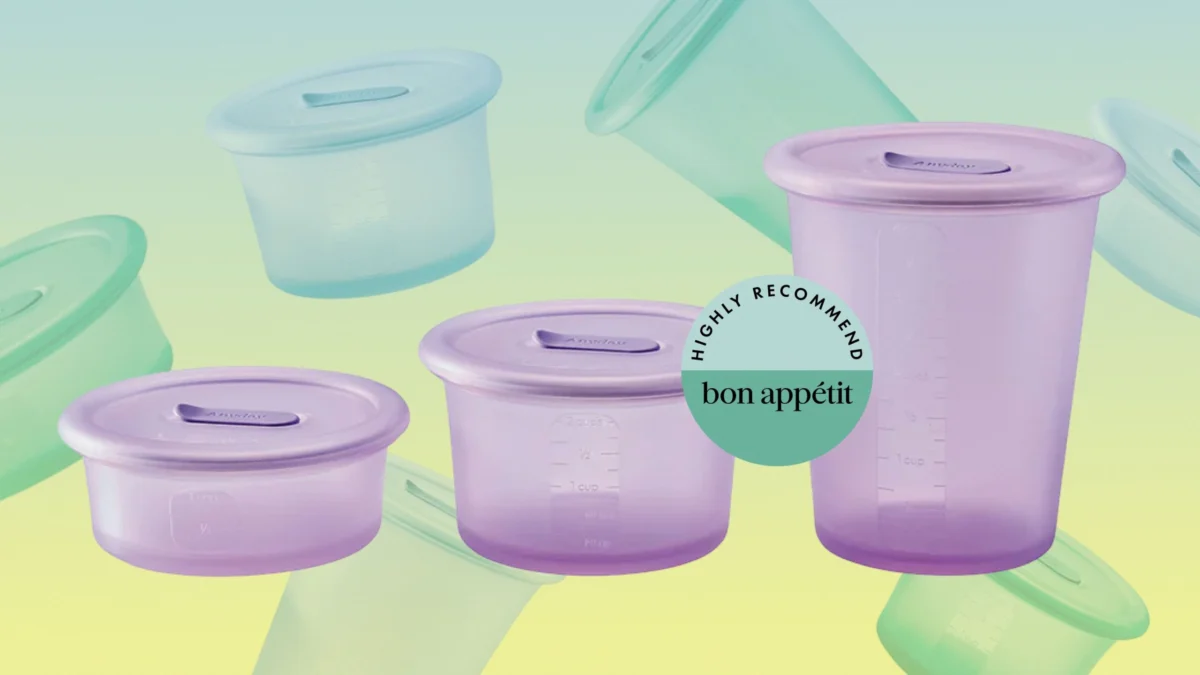
The clear plastic deli container, a ubiquitous staple across professional kitchens and home pantries, has long enjoyed a vaunted status within the culinary world. From housing freshly made bagel schmears and vibrant pasta salads to providing a discreet vessel for a public beach cocktail, its cheap convenience, stackability, and universal lid design have cemented its place in food service and beyond. However, this reign of plastic is increasingly being challenged by a new wave of sustainable innovation, most notably by Anyday’s Anydeli containers. These silicone counterparts meticulously mimic the classic deli container design while fundamentally addressing the inherent limitations and environmental drawbacks of their disposable plastic predecessors, prompting a significant shift in the food storage paradigm.
The Enduring Legacy and Environmental Imperative of Plastic Deli Containers
For decades, the standard plastic deli container has been an indispensable workhorse. Its widespread adoption stems from a confluence of factors: low manufacturing cost, lightweight nature, and the ease with which it facilitates portion control, transport, and temporary storage in high-volume environments. Typically made from polypropylene (PP) or polyethylene terephthalate (PET), these containers offered a practical, albeit short-lived, solution for food establishments. Their cylindrical shape, often designed with a universal lid size across various capacities (half-pint, pint, quart), simplified inventory management and expedited service in bustling delis, restaurants, and catering operations. This design efficiency made them an instant favorite among culinary professionals and home cooks alike, leading to their accumulation in countless cabinets as a secondary, often accidental, collection of reusable storage.
However, the very properties that made these plastic containers so pervasive also contribute to their significant environmental footprint and functional shortcomings. Plastic deli containers are generally not designed for indefinite reuse. Their material composition, while robust enough for initial use, degrades relatively quickly, especially when subjected to the rigors of modern kitchen appliances like dishwashers and microwaves. Repeated exposure to high temperatures can cause the plastic to leach chemicals, warp, crack, and become brittle, particularly in extreme cold environments such as freezers. This fragility often leads to premature disposal, perpetuating a cycle of single-use consumption that has become increasingly unsustainable.
Globally, the scale of plastic waste generated by food packaging is staggering. According to various environmental reports, food packaging accounts for a substantial portion of plastic waste, with billions of plastic containers entering landfills or polluting ecosystems annually. The recycling infrastructure for these specific types of plastics can be inconsistent, and contamination often renders them unrecyclable. The long decomposition period of plastics, spanning hundreds of years, coupled with the growing concern over microplastic contamination in food chains and water sources, has intensified the search for more durable and environmentally responsible alternatives. Consumers, increasingly aware of these environmental challenges, are actively seeking reusable products that minimize waste without compromising on convenience or functionality. This societal shift provides a fertile ground for innovations that blend familiar utility with enhanced sustainability.
Anyday’s Anydeli: A Fusion of Familiarity and Modern Material Science
In response to this growing demand for sustainable and high-performance food storage, Anyday, a company known for its innovative kitchen solutions, has introduced its Anydeli line of silicone containers. The concept is elegantly simple: to replicate the beloved form factor and functional advantages of classic deli containers using food-grade silicone, a material celebrated for its superior durability, flexibility, and inertness. The immediate positive reception from food industry professionals, including editorial teams at prominent culinary publications, underscores the market’s readiness for such a product. Anecdotal reports of immediate enthusiasm and even "fighting over them" in office settings highlight the intuitive appeal and perceived value of the Anydeli containers.
Silicone, a synthetic polymer derived from silicon, oxygen, carbon, and hydrogen, possesses a unique set of properties that make it an ideal candidate for advanced food storage. Unlike plastics, silicone is highly resistant to extreme temperatures, remaining stable across a broad range from freezing to high heat, making Anydeli containers safe for use in freezers, microwaves, and dishwashers without degradation or the risk of chemical leaching. Its inherent flexibility prevents cracking when frozen, a common issue with plastic, and its non-porous surface resists odors and stains more effectively than many plastics. These characteristics align perfectly with the need for a truly reusable food storage solution that can withstand the demands of daily kitchen use.
The Anydeli containers are thoughtfully designed to mirror the practicality of their plastic inspirations. They are available in the three most common deli container sizes: half-pint, pint, and quart, ensuring seamless integration into existing storage habits. Crucially, they maintain the cylindrical shape and the one-size-fits-all lid compatibility that made plastic deli containers so efficient for stacking and organization. This design choice minimizes clutter and simplifies lid matching, a persistent frustration with many other multi-sized food storage sets. A notable enhancement in the Anydeli design is the inclusion of an embedded steel rim. This ingenious feature provides the necessary structural integrity, preventing the silicone from collapsing or deforming when handled, especially when full. Furthermore, the containers incorporate volumetric measurements on their sides, a practical addition that aids in precise portioning and recipe preparation, a feature often absent in conventional deli containers.
Rigorous Testing and Performance Validation
The efficacy of any new food storage solution hinges on its performance under real-world conditions. The Anydeli containers have undergone practical testing to validate their claims, particularly concerning seal integrity and extreme temperature resistance, areas where silicone containers have historically faced scrutiny.

One common concern with silicone food storage is the reliability of its seal, especially when storing liquids. Unlike rigid plastic containers that often rely on tight-fitting, sometimes difficult-to-snap-on lids, silicone’s flexibility can sometimes lead to less secure closures. However, Anydeli containers defy this stereotype. Through vigorous testing, including inverting, squeezing, and shaking containers filled with water, the Anydeli lids demonstrated an impressively tight seal. Not a single drop was reported to escape from either the main seal or the integrated steam vent, indicating a high level of engineering and material precision in their design. This robust seal is critical for preventing leaks, preserving food freshness, and ensuring safe transport of liquids, from homemade soups to sauces and dressings.
Their performance in the freezer further distinguishes Anydeli containers from traditional plastic options. Conventional deli containers, when filled to the brim with liquids or semi-solids like marinara sauce, become brittle in freezing temperatures. The expansion of contents as they freeze often leads to cracking and breakage, rendering the container useless and potentially spoiling food. Anydeli containers, owing to silicone’s inherent flexibility, accommodate this expansion with ease. They flex gently, maintaining their integrity and preventing damage to both the container and its contents. This feature makes them an ideal choice for meal prepping, batch cooking, and long-term storage of frozen goods, significantly extending the lifespan of both the food and the container.
While silicone offers numerous advantages, it shares a minor aesthetic drawback with some plastics: susceptibility to staining from highly pigmented foods. Ingredients like turmeric, tomato paste, and certain spices can impart a sallow hue to clear silicone over time. For instance, testing revealed that clear pint containers used for spicy tofu scrambles developed a slight discoloration after multiple uses. However, this is largely an aesthetic concern rather than a functional one. The stains are often less noticeable when the containers are filled with food, and repeated cycles through the dishwasher can help to abate discoloration. Moreover, Anyday offers Anydeli containers in various colors, which effectively obscure any errant tinges, providing an alternative for users who prioritize pristine appearance. This practical approach acknowledges a minor material characteristic while offering a viable solution.
Practical Considerations and Market Implications
Beyond core performance, the everyday usability of food storage containers often dictates their long-term adoption. Anydeli containers introduce a few trade-offs that warrant consideration. Unlike their plastic counterparts, which often nest perfectly inside one another when empty, the Anydelis do not offer the same neat nesting capability due to the embedded steel rim and the nature of silicone. This means they may occupy slightly more cabinet space when stored, a factor for kitchens with limited storage.
Another practical challenge identified was the difficulty of applying adhesive labels, as tape does not adhere well to the silicone surface. However, a clever workaround was discovered: permanent markers can be used directly on the silicone, and the marks can be easily scrubbed off with soap and a sponge. This provides a reusable and effective labeling solution for organization.
The market positioning of Anydeli containers is strategically nuanced. For large-scale commercial kitchens or caterers who utilize dozens, if not hundreds, of deli containers daily, the initial investment and slightly bulkier storage profile of Anydeli might make a complete replacement of existing plastic systems economically challenging at present. The cost-effectiveness of disposable plastic remains a dominant factor in high-volume, low-margin operations. However, for "casual deli container appreciators" – individuals, small businesses, or home cooks seeking a more robust, truly reusable, and environmentally conscious solution – the Anydelis present a compelling proposition. The upfront cost, while higher than a pack of plastic containers, is offset by their longevity and durability, offering significant long-term savings and a reduced environmental impact.
The introduction of Anydeli containers reflects a broader trend in the kitchenware market towards sustainable innovation. It joins a growing array of reusable food storage options, including glass, stainless steel, and other silicone brands. However, Anydeli distinguishes itself by specifically targeting the familiar and highly functional design of the classic deli container, a form factor deeply ingrained in culinary practices. This strategic design choice minimizes the learning curve for users and leverages an established preference for cylindrical, stackable storage with a universal lid.
Broader Impact and Future Outlook
The implications of products like Anyday’s Anydeli extend beyond mere kitchen convenience. They represent a tangible step towards reducing reliance on single-use plastics in the food sector. If widely adopted by consumers and, eventually, by a segment of the commercial food industry, the cumulative effect on waste reduction could be substantial. Environmental advocates and sustainability experts commend such innovations for offering practical, user-friendly alternatives that facilitate a shift in consumer behavior towards more sustainable practices.
Industry analysts suggest that as manufacturing processes for silicone become more efficient and economies of scale are achieved, the cost differential between high-quality reusable silicone and disposable plastic may narrow, further enhancing the appeal of products like Anydeli. Moreover, as consumer awareness regarding the health implications of certain plastics (e.g., BPA, phthalates) continues to grow, the inert and non-reactive nature of food-grade silicone will likely become an even more significant selling point.
Anyday’s Anydeli containers are more than just another food storage option; they are a thoughtfully engineered response to a pervasive environmental challenge, wrapped in a familiar and highly functional design. By offering a robust, reusable, and eco-conscious alternative to the ubiquitous plastic deli container, they are poised to redefine expectations for kitchen storage, pushing the industry towards a more sustainable and durable future, one pint, half-pint, and quart at a time. This innovation contributes significantly to the ongoing global dialogue about waste reduction and the circular economy, demonstrating that sustainability and practicality can indeed coexist harmoniously in the modern kitchen.
