

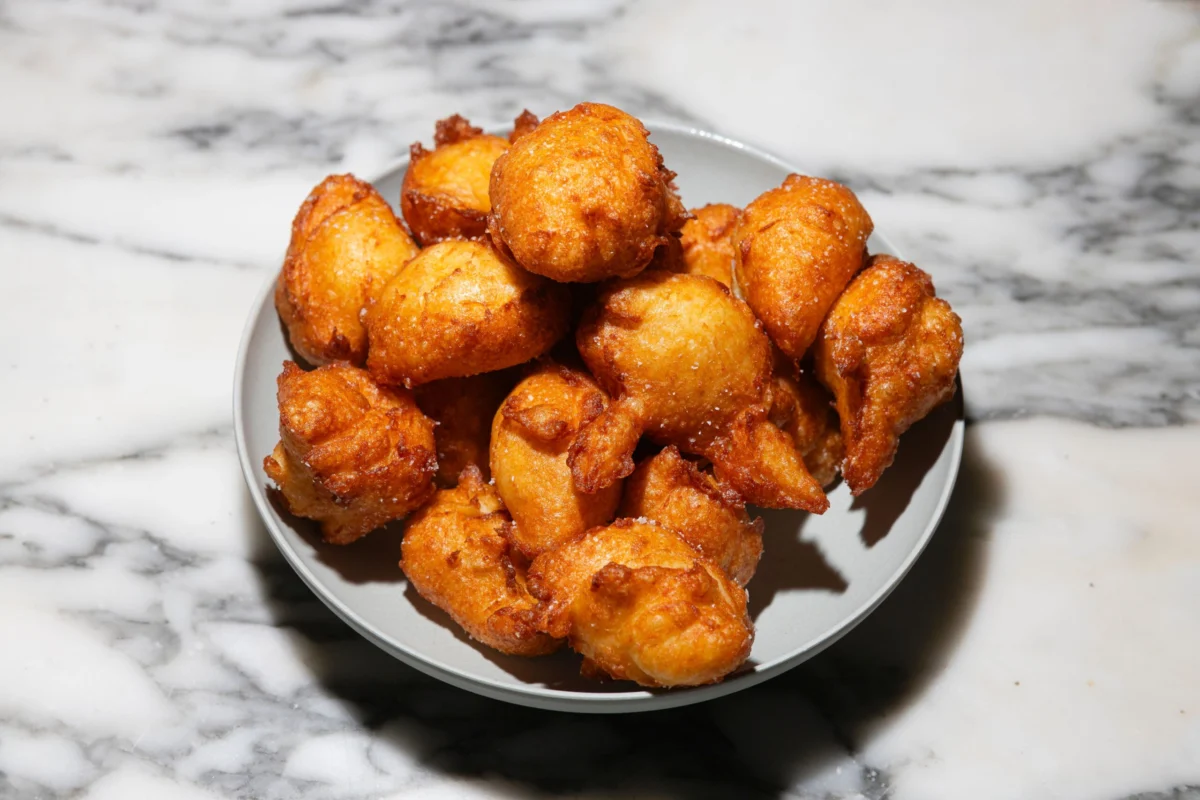
The gastronomic landscape, perpetually evolving, periodically witnesses a resurgence of foundational dishes that reaffirm the enduring power of culinary heritage. Among these, Pommes Dauphine, those exquisite bite-sized clouds of fried potato, stand as a testament to French culinary ingenuity, offering a delicate balance of crispness and ethereal lightness. Once primarily confined to the vast lexicon of traditional French potato preparations, these elegant puffs are increasingly making their presence felt in contemporary dining scenes globally, exemplified by their meticulous preparation under Chef Alexia Duchêne at Le Chêne in New York City. This re-emergence underscores a broader trend within fine dining: a respectful yet innovative re-evaluation of classic techniques and flavors.
The Anatomy of a Classic: Deconstructing Pommes Dauphine
At its core, a Pomme Dauphine is a marvel of textural contrast and flavor harmony. It is, in essence, a sophisticated interplay between two distinct culinary preparations: a rich, roasted potato purée and a delicate pâte à choux. The traditional method, steadfastly adhered to by Chef Duchêne, dictates a precise ratio, typically equal parts of each component, to achieve the desired consistency and, crucially, the characteristic light, airy interior that belies its fried exterior. This fusion is then delicately spooned into hot oil, where it undergoes a transformative process, emerging golden brown, irresistibly crisp, and profoundly satisfying. The result is a dish that elevates the humble potato to an art form, defying the often-dense expectations associated with fried mashed potatoes, presenting instead a "lighter and more magical" experience, as described by culinary aficionados.
A Legacy of Lightness: The Pâte à Choux Foundation
The story of Pommes Dauphine is inextricably linked to the history of pâte à choux, or choux pastry. Originating in France during the 16th century, its invention is often attributed to Panterelli, the Italian chef of Catherine de’ Medici, who brought it to the French court. Initially known as pâte à chaud (hot paste) due to the method of cooking the flour and water mixture on the stovetop, it evolved over centuries. By the 18th century, Avice, a pastry chef, refined the recipe, and Antonin Carême, the legendary chef of the 19th century, further popularized its use, transforming it into the versatile dough we recognize today.
Pâte à choux is unique in the world of pastries because it relies on steam, rather than a leavening agent like yeast or baking powder, to puff up. The process involves cooking butter, water (or milk), and flour together to form a thick paste, then incorporating eggs one by one. This creates a stable emulsion that, when subjected to high heat, causes the moisture within to turn to steam, inflating the pastry and creating characteristic hollow interiors. This scientific marvel is what lends Pommes Dauphine its signature lightness. Its application extends far beyond savory preparations, forming the basis for iconic French desserts such as éclairs, profiteroles, and cream puffs, as well as savory gougères. The inclusion of pâte à choux in Pommes Dauphine is not merely an additive; it is the structural and textural architect, transforming a simple potato mixture into an ethereal cloud.
The Humble Potato Elevated: The Role of Purée
The second, equally vital component of Pommes Dauphine is the potato purée. While seemingly straightforward, the quality of this element is paramount. The choice of potato, the cooking method, and the mashing technique all contribute significantly to the final texture. Chef Duchêne’s insistence on a purée of roasted potatoes is a crucial detail. Roasting potatoes concentrates their flavor, reducing moisture content more effectively than boiling or steaming, leading to a drier, more intensely flavored purée. This drier base is essential for achieving the perfect consistency when combined with the pâte à choux, preventing the mixture from becoming too wet and heavy, which would compromise the delicate puff.
Yukon Gold potatoes, specified in the recipe, are an ideal choice for their medium starch content, creamy texture, and naturally buttery flavor. Unlike high-starch Russets, which can become mealy, or low-starch new potatoes, which can be waxy, Yukon Golds strike a balance that yields a smooth, flavorful purée without excessive moisture. The importance of a food mill, listed under special equipment, cannot be overstated. While a potato masher might suffice for everyday mashed potatoes, a food mill processes the cooked potatoes by forcing them through a perforated disc, resulting in an exceptionally smooth, lump-free purée without overworking the starch. Overworking potatoes, common with electric mixers, can release excessive starch, leading to a gummy, unpleasant texture—a fatal flaw in the delicate structure of a Pomme Dauphine.
The potato itself has a storied history in France. Initially met with suspicion and even fear, it was championed by Antoine-Augustin Parmentier in the late 18th century. After experiencing its nutritional benefits as a prisoner of war, Parmentier tirelessly promoted the potato as a solution to famine, famously serving it at royal dinners and guarding fields with soldiers during the day to encourage theft by night, thereby making it desirable to the populace. His efforts cemented the potato’s place in French agriculture and cuisine, paving the way for countless dishes, including the refined Pommes Dauphine.
Chef Alexia Duchêne and Le Chêne: A Modern Homage
The re-introduction of Pommes Dauphine at Le Chêne in New York City, under the guidance of Chef Alexia Duchêne, signals a deliberate return to the roots of French gastronomy while placing it firmly within a contemporary context. Le Chêne, French for "The Oak," suggests a philosophy rooted in strength, tradition, and enduring quality—principles that Chef Duchêne embodies in her culinary approach. Her adherence to the traditional method for Pommes Dauphine is not merely an act of replication but an homage to precision and the pursuit of perfection that defines classic French cooking.
In a city known for its vibrant and often trend-driven culinary scene, a restaurant like Le Chêne, offering meticulously prepared classics, stands out. Chef Duchêne, herself a rising star in the global culinary firmament, demonstrates that true innovation often lies in perfecting the fundamentals. Her decision to feature Pommes Dauphine reflects a broader appreciation among discerning diners for authentic flavors and time-honored techniques, moving beyond fleeting fads to embrace dishes that offer comfort, sophistication, and a connection to culinary history. This approach requires not only skill but also a deep understanding of the cultural significance of each dish, transforming it from a mere recipe into a culinary narrative.
From Bistro Side to Culinary Star: Serving Pommes Dauphine
The versatility of Pommes Dauphine is one of its most compelling attributes. Traditionally, these potato puffs are served as an impressive side dish, often accompanying hearty French main courses. The classic pairings include a robust strip steak au poivre, where the peppery sauce finds a perfect counterpoint in the airy potato, or alongside a succulent roast chicken with lemon and garlic. In these contexts, the Dauphine acts as a sophisticated starch, providing textural contrast and a rich yet light accompaniment that enhances the main protein without overwhelming it.
However, in modern settings, Pommes Dauphine are increasingly being presented as a chic appetizer or an elegant party snack. Their bite-sized nature and satisfying crispness make them ideal for social gatherings. Paired with a classic aioli, a potent garlic mayonnaise that offers a creamy, pungent dip, they transform into an irresistible starter. The recipe explicitly mentions "whatever dipping sauce your heart desires," highlighting their adaptability to various flavor profiles, from spicy sriracha mayo to a delicate herb-infused crème fraîche. This flexibility allows chefs and home cooks alike to integrate this classic into diverse menus, showcasing its ability to transcend its traditional role and adapt to contemporary dining preferences.
The Broader Canvas: Revival of French Culinary Classics
The inclusion of Pommes Dauphine on a modern menu is indicative of a wider culinary movement: the thoughtful revival of French classics. For years, French cuisine, while revered, was sometimes perceived as overly formal or heavy. However, a new generation of chefs, including Duchêne, is reinterpreting these timeless dishes, stripping away unnecessary embellishments while retaining their essential character and flavor. This movement celebrates the precision, technique, and fundamental deliciousness that are the hallmarks of French cooking.
The provided list of "more French classics" — Bistro-Style Croque Monsieur, Poulet Rôti, Ratatouille, and Dover Sole Meunière — further illustrates this trend. Each of these dishes, from the ultimate comforting grilled cheese sandwich to the rustic vegetable stew and the refined pan-fried sole, represents a pillar of French gastronomy. Their re-emergence on menus worldwide signifies a renewed appreciation for authenticity, comfort, and the enduring quality of recipes that have stood the test of time. This culinary re-evaluation contributes to the preservation of cultural heritage, ensuring that these iconic dishes continue to be understood, appreciated, and passed down through generations of chefs and diners. It also addresses a demand from consumers who, increasingly informed and adventurous, seek out genuine culinary experiences that connect them to the origins of global cuisines.
Technique and Precision: The Art of Frying
The successful execution of Pommes Dauphine relies heavily on the art of deep-frying. This technique, often viewed with apprehension, is critical for achieving the desired golden, crisp exterior and fully cooked, airy interior. The recipe specifies "Peanut oil (for frying and spoons; about 8 cups)," highlighting the need for a sufficient quantity of oil to ensure even cooking and prevent overcrowding, which can lower oil temperature and lead to greasy puffs. Peanut oil is favored for its high smoke point and neutral flavor, which will not impart unwanted tastes to the delicate potatoes.
Crucially, the recipe calls for a deep-fry thermometer. This piece of special equipment is not merely a suggestion; it is indispensable. Maintaining a consistent oil temperature is the key to perfectly fried food. If the oil is too cool, the puffs will absorb too much oil, becoming heavy and greasy. If it is too hot, they will brown too quickly on the outside, leaving the interior undercooked. The precise temperature ensures that the exterior crisps rapidly, forming a protective shell, while the interior cooks through and the pâte à choux component expands with steam, creating the signature airy texture. The act of spooning the mixture into the hot oil also requires a degree of deftness, often aided by lightly oiling the spoon to prevent sticking, allowing the chef to create uniform, aesthetically pleasing puffs. This meticulous attention to detail is a hallmark of professional French culinary training and is what distinguishes a truly exceptional Pomme Dauphine.
Economic and Cultural Implications
The continued popularity and thoughtful re-introduction of dishes like Pommes Dauphine have several far-reaching implications. Economically, it supports a culinary ecosystem that values quality ingredients and skilled labor. Restaurants that commit to these traditional preparations often source high-quality, local produce where possible, supporting farmers and artisans. The demand for specific potato varieties like Yukon Golds, and for artisanal butter, contributes to the agricultural sector.
Culturally, the revival of such classics plays a vital role in gastronomic education and tourism. For aspiring chefs, mastering these fundamental dishes provides a solid foundation in classic techniques, precision, and flavor profiles. Culinary schools continue to emphasize these core skills, understanding that innovation springs from a deep appreciation of tradition. For culinary tourists, the opportunity to experience authentic French dishes, prepared with respect for their heritage, enhances the cultural richness of their travel experiences. It reinforces France’s reputation as a global leader in gastronomy, a soft power that continues to attract millions of visitors and influence culinary trends worldwide. The meticulous preparation of a Pomme Dauphine becomes more than just cooking; it becomes an act of cultural preservation, a delicious link to centuries of culinary evolution.
In conclusion, Pommes Dauphine, those golden, crisp, and impossibly light potato puffs, represent more than just a side dish. They embody the enduring legacy of French culinary artistry, a testament to the power of combining simple ingredients with precise technique to create something truly extraordinary. Chef Alexia Duchêne’s commitment at Le Chêne to this classic dish reflects a broader appreciation for gastronomic heritage, proving that in an ever-changing culinary world, the timeless appeal of a perfectly executed tradition will always find its place at the table. Whether served as a sophisticated appetizer or a refined accompaniment to a hearty meal, Pommes Dauphine continues to captivate, offering a taste of French magic that transcends generations and trends.
