

The third episode of Food Network’s high-stakes culinary competition, Pitmasters, featured a rigorous display of live-fire skill as contestants Susie Bulloch of Hey Grill Hey and Christie Vanover of Girls Can Grill navigated a series of unconventional challenges. Moving beyond traditional smoked meats, the episode required participants to demonstrate technical mastery through a meatless "Flash Burn" challenge and an intricate "Big Burn" focused on the classic pairing of "Surf and Turf." This installment of the series emphasized the physical and mental endurance required in outdoor cooking, pitting award-winning pitmasters against harsh elements and the scrutiny of a distinguished judging panel.
The Structural Framework of Pitmasters Episode 3
The competition format of Pitmasters is designed to test the versatility of outdoor cooks through two distinct phases: the Flash Burn and the Big Burn. The Flash Burn serves as a high-pressure, short-duration sprint where contestants must impress judges at their cooking stations within a limited window. In contrast, the Big Burn provides a multi-hour timeframe for the execution of a complex, themed menu. In this specific episode, the stakes of the Flash Burn were significantly elevated, as the winning team was granted immunity for the subsequent Big Burn, ensuring their progression to the next round regardless of their performance in the main event.
This episode’s Flash Burn introduced a significant pivot from the barbecue norm. Judge Ernest Servantes challenged the contestants to produce a dish that captured the deep, smoky essence of traditional barbecue without the use of any animal protein. The 60-minute window forced chefs to rely on technique, wood-smoke management, and seasoning to elevate vegetables to the status of a primary entree. This challenge reflects a broader trend in the culinary industry where "live-fire vegetables" are increasingly recognized as a sophisticated component of the barbecue repertoire.

Technical Execution: The Meatless Flash Burn
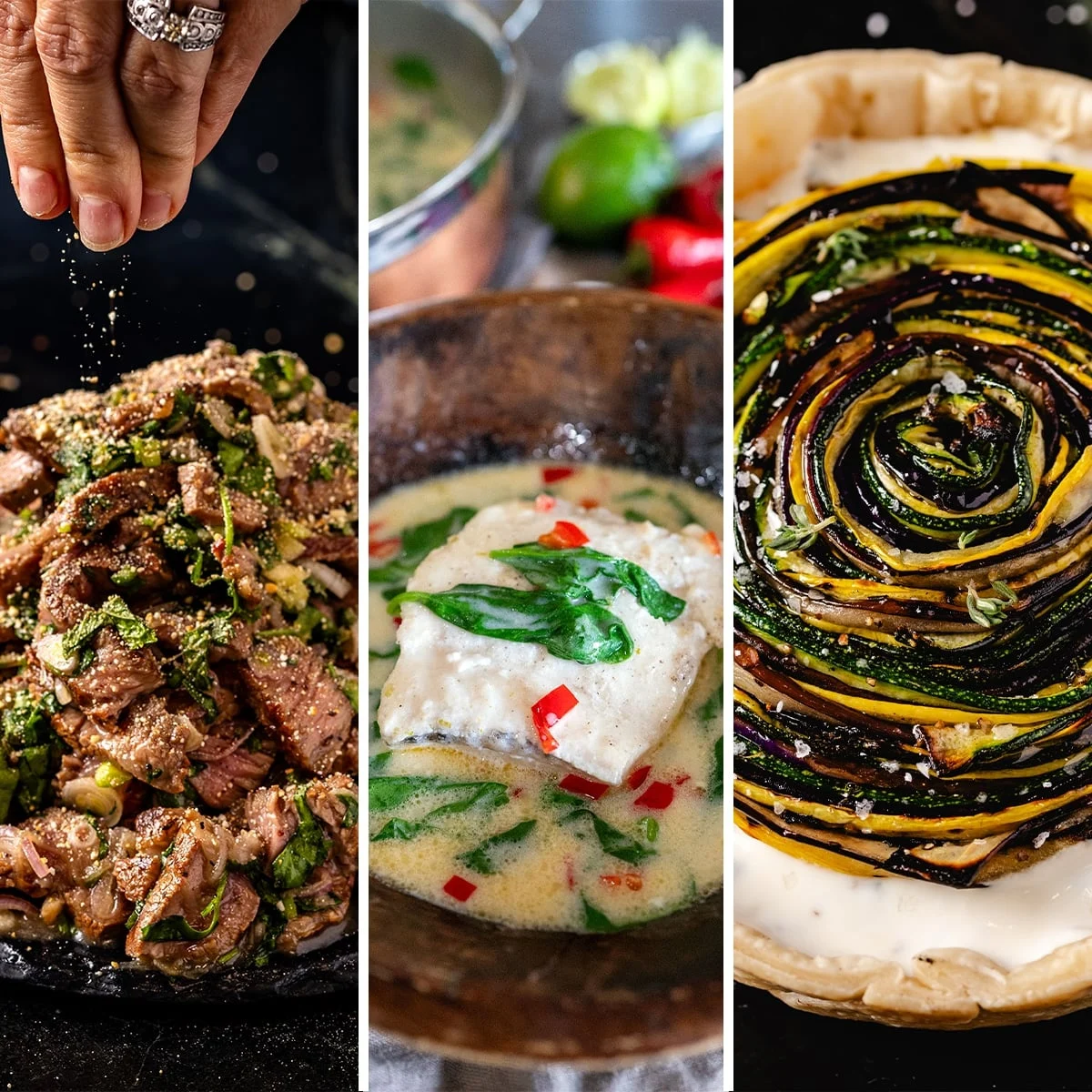
To meet the requirements of the meatless challenge, Bulloch and Vanover collaborated on a Grilled Summer Vegetable Tart. This dish required a multi-stage cooking process that utilized both indirect and direct heat. The team prepared a butter crust from scratch, which was baked in small cast-iron skillets within a smoker to infuse the pastry with a subtle wood-fired aroma. To ensure structural integrity and a crisp texture, the crusts were finished directly over hot coals.
The filling consisted of a ricotta and mascarpone blend, providing a creamy, neutral base to highlight the smoked vegetables. The aesthetic and flavor centerpiece of the dish was a "rosette" of thinly sliced eggplant, zucchini, and squash. These vegetables were cooked over an open flame to achieve char and tenderness before being drizzled with honey. The technical difficulty of baking delicate pastry over live fire was a focal point of the judicial review. Judge Jess Pryles specifically noted the achievement, offering a "hats off" commendation for the successful execution of a pastry-based dish under outdoor competition conditions.
The Big Burn: A Strategic Surf and Turf Integration
Following the meatless sprint, the competition transitioned to the "Big Burn," a three-hour challenge centered on "Surf and Turf." This theme required the simultaneous preparation of a premium meat cut and a delicate seafood protein. For Bulloch and Vanover, the objective was to create a cohesive flavor profile that bridged the gap between land and sea while maintaining the distinct characteristics of each protein.
For the seafood component, Christie Vanover executed a plank-roasted halibut. Halibut, a lean and delicate white fish, presents a significant challenge in live-fire environments due to its tendency to dry out quickly. Vanover utilized butcher’s twine to secure the fillets over fresh parsley and mint, placing the cedar planks adjacent to the coals. This method allowed the fish to absorb smoke and herbaceous notes through gentle convection rather than aggressive direct heat. The dish was finished in a coconut milk broth infused with Fresno chilis and lime, a technique adapted from Vanover’s established culinary repertoire.

Complementing the fish, Susie Bulloch prepared a "Thai Beef Waterfall Salad" (Nam Tok Neua). This dish functioned as a high-protein "salad" featuring heavily marbled steak. The preparation involved marinating the beef in a mixture of soy sauce and black pepper, followed by a two-stage cooking process. The steak was first placed in indirect heat to absorb smoke and then moved directly onto the coals for a high-temperature sear. The result was a medium-rare finish with a charred exterior. The dish was assembled with fresh herbs, an umami-rich fish sauce dressing, and a traditional topping of toasted rice powder.
Judicial Reception and Critical Analysis
The judging process for Episode 3 took place in a one-on-one format, where contestants transported their finished dishes to a hilltop station for evaluation. This isolation meant that teams were unaware of their competitors’ performance, heightening the tension of the final reveal. The judging panel—comprising Andrew Zimmern, Jess Pryles, and Ernest Servantes—focused on the harmony between the two proteins and the technical precision of the cooks.
The reception for the Bulloch-Vanover menu was overwhelmingly positive. Andrew Zimmern, a chef and television personality known for his global culinary expertise, described the Thai Beef Waterfall Salad as one of the premier beef dishes he had encountered during the competition. The judges highlighted the synergy between the coconut-poached halibut and the vibrant, herb-heavy beef salad, noting that the two dishes felt intentionally paired rather than independently conceived.
In a moment of significant emotional impact for the contestants, the judges provided an early indication of their safety, informing them prior to the official results ceremony that they would not be facing elimination. This feedback was met with visible relief from the participants, who cited the physical exhaustion of managing live fires for several hours as a major factor in their experience.

Broader Context: The Growth of Female Influence in Competitive Barbecue
The participation of Susie Bulloch and Christie Vanover in Pitmasters highlights a shifting demographic within the professional barbecue circuit. Traditionally a male-dominated field, the barbecue industry has seen a surge in female leadership and participation over the last decade. Bulloch, through her platform Hey Grill Hey, and Vanover, through Girls Can Grill, have become influential figures in the "backyard barbecue" movement, providing education and recipes to millions of home cooks.
Their success on a national stage like Food Network serves as a validation of the "content creator to professional chef" pipeline. By successfully competing against established award-winning pitmasters, they demonstrate that the skills honed through digital recipe development and rigorous home testing are transferable to the high-pressure environment of television competition.
Furthermore, the emphasis on vegetable-centric barbecue in this episode aligns with current market data. According to industry reports, the demand for plant-based and vegetable-forward grilling options has grown as consumers seek to balance traditional barbecue indulgence with diverse nutritional profiles. The inclusion of a meatless challenge in a show titled Pitmasters signals a formal recognition by the culinary establishment that barbecue is defined by technique and flavor profile rather than just the type of protein being cooked.
Physical and Environmental Challenges of Live-Fire Competition
The production of Pitmasters exposes contestants to environmental variables that are absent in traditional kitchen-based cooking shows. Managing "live fire" involves constant monitoring of fuel sources—such as hardwood, charcoal, and pellets—to maintain consistent temperatures. Factors such as wind speed, ambient humidity, and outdoor temperature can drastically alter cook times and smoke penetration.

In Episode 3, the contestants utilized a variety of equipment, including Camp Chef smokers and Lodge cast-iron cookware, to manage these variables. The physical requirement of hauling heavy equipment and finished dishes across uneven terrain adds a layer of "endurance sports" to the culinary task. The "Big Burn" in particular, with its three-hour limit, requires pitmasters to reverse-engineer their cook times perfectly; a steak that rests too long or a fish that is pulled too early can result in immediate elimination.
Implications for the Competition and Industry
As the series progresses, the success of teams that prioritize global flavors and innovative techniques—such as the Thai-inspired beef and the French-style vegetable tart—suggests that the definition of "American Barbecue" is expanding. The judges on Pitmasters have consistently rewarded dishes that show a high level of culinary "intelligence," where smoke is used as a seasoning rather than a mask.
The episode concludes with the field of competitors narrowing, as the remaining pitmasters prepare for the next round of challenges. For Bulloch and Vanover, the positive feedback from Zimmern and the successful navigation of the meatless challenge provide a strong momentum heading into future episodes. The show continues to air on Food Network, with streaming availability on HBO Max and Discovery+, maintaining its position as a central pillar of contemporary food media.
By blending technical instruction with high-stakes drama, Pitmasters Episode 3 has reinforced the idea that modern barbecue is a sophisticated culinary discipline that requires as much finesse as it does fire. The evolution of the competition reflects the broader evolution of the grill, moving from a simple tool for searing meat to a versatile outdoor kitchen capable of producing world-class pastry, seafood, and international delicacies.
