

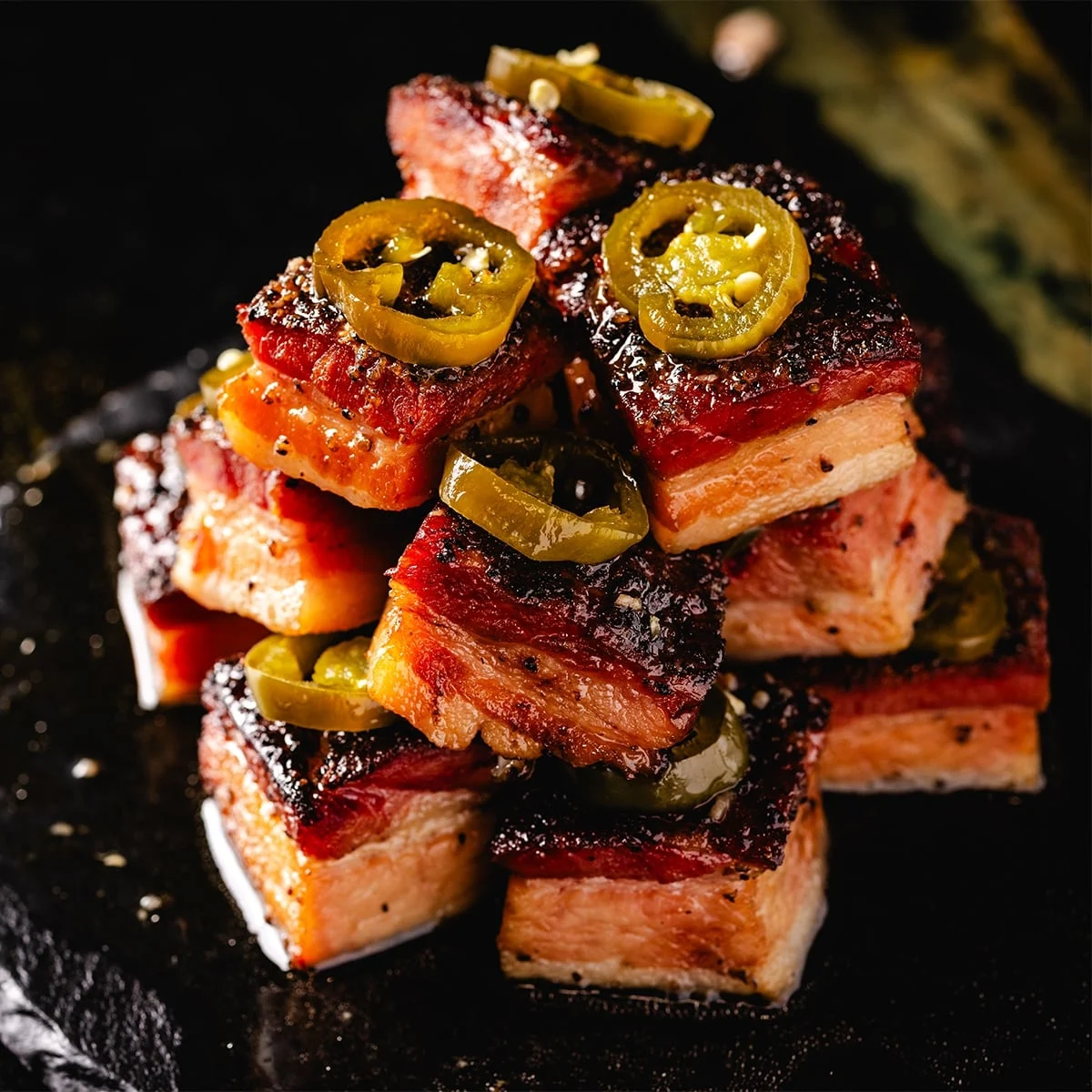
The culinary landscape of American barbecue has undergone a significant transformation over the last decade, transitioning from regional roadside staples to a sophisticated discipline characterized by artisanal techniques and complex flavor profiles. Among the most prominent innovations in this sector is the rise of pork belly burnt ends, a dish that adapts the traditional Kansas City brisket technique to the richer, more accessible cut of the pork belly. The Candied Jalapeño Pork Belly Burnt End represents the pinnacle of this evolution, utilizing a specific "sweet heat" profile that leverages the capsaicin of the jalapeño pepper and the high sugar content of a concentrated glaze to complement the high-fat content of the porcine anatomy.
The Historical Context of Burnt Ends in American Barbecue
To understand the significance of the pork belly variation, one must examine the origins of the "burnt end" itself. Historically, burnt ends were the flavorful, charred edges of a smoked beef brisket, specifically the "point" muscle. In the mid-20th century, Kansas City legendary pitmaster Arthur Bryant would often provide these trimmings to customers waiting in line as a complimentary snack. These pieces were highly prized for their concentrated bark, smoke infusion, and rendered fat.
As the popularity of these trimmings grew, they moved from a byproduct to a primary menu item. However, because a single brisket produces a limited number of traditional burnt ends, pitmasters began seeking alternatives. The pork belly, often referred to as "unsliced bacon," emerged as the ideal candidate. Its high fat-to-meat ratio mirrors the texture of the brisket point, while its shorter cooking time makes it more viable for both commercial kitchens and residential backyard enthusiasts. The integration of candied jalapeños into this dish marks a contemporary shift toward the "meat candy" trend, where sweetness and spice are used to cut through the richness of heavy animal fats.

Technical Specifications and Ingredient Composition
The preparation of Candied Jalapeño Pork Belly Burnt Ends relies on a precise balance of savory, sweet, and piquant elements. The primary protein, a whole pork belly, is typically skinless and sourced for its uniform thickness to ensure even cooking. The seasoning process utilizes a savory dry rub, such as "Beefy Sprinkles," which provides a salt-forward foundation and encourages the formation of a "bark"—the dark, flavorful crust that forms through the Maillard reaction and smoke particle adhesion.
The glazing component is arguably the most critical element of the dish. It is derived from the process of candying jalapeños, a preservation method that involves simmering sliced peppers in a heavy syrup. The specific ingredients required for the glaze and the accompanying peppers include:
- Apple Cider Vinegar: Provides the necessary acidity to balance the sugars and penetrate the fat.
- Granulated Sugar: The primary sweetening agent that allows for caramelization.
- Spices: Garlic powder, ground ginger, and turmeric are utilized to provide depth and a slight earthy undertone.
- Jalapeño Peppers: The source of heat and texture.
The chemistry of this glaze is essential; as the water content evaporates during the simmering process, the sugar concentration increases, creating a viscous syrup that adheres to the meat cubes during the final stages of smoking.
Chronological Preparation and Smoking Methodology
The production of high-quality pork belly burnt ends follows a strict chronological timeline, requiring approximately four to six hours of active thermal management.

Phase I: Preparation and Initial Smoke
The process begins with the cubing of the pork belly into uniform pieces, generally 1 to 1.5 inches square. This increase in surface area allows for maximum seasoning coverage and smoke penetration. Once seasoned, the cubes are placed in a smoker preheated to a consistent 225-250 degrees Fahrenheit. Pitmasters typically utilize hardwoods such as hickory, oak, or fruitwoods (apple or cherry) to impart specific aromatic qualities. This initial phase lasts approximately 2.5 to 3 hours, or until the meat reaches an internal temperature of roughly 165 degrees Fahrenheit.
Phase II: The Candying Process
While the pork is undergoing its initial smoke, the glaze is prepared. Sliced jalapeños are boiled in the cider vinegar and sugar mixture for 5 to 10 minutes. The peppers are then removed to prevent overcooking, while the liquid is reduced for an additional 10 to 15 minutes. This reduction is vital for achieving the "sticky" texture characteristic of authentic burnt ends.
Phase III: Glazing and Rendering
In the final phase, the smoked pork cubes are transferred to a foil pan and tossed with the concentrated jalapeño glaze. The pan is returned to the smoker, often at a slightly higher temperature, to facilitate the final rendering of fat and the "tacking up" of the glaze. This stage continues until the internal temperature of the pork reaches approximately 195 degrees Fahrenheit. At this temperature, the collagen within the meat has fully transformed into gelatin, resulting in the "melt-in-your-mouth" texture sought by connoisseurs.
Scientific Analysis of Internal Temperatures and Fat Rendering
A common misconception in domestic barbecue is that pork belly is finished once it reaches the USDA-recommended safety threshold of 145 degrees Fahrenheit. While safe for consumption at this point, the texture would be unpalatably chewy and tough.

Professional culinary analysis suggests that the "sweet spot" for pork belly burnt ends lies between 190 and 200 degrees Fahrenheit. At these elevated temperatures, the intermuscular fat undergoes a process called rendering, where it liquefies and bastes the meat from within. Simultaneously, the connective tissues break down. According to thermal data provided by food scientists, the transition of collagen to gelatin is time-and-temperature dependent, meaning a "low and slow" approach is mandatory to prevent the exterior from burning before the interior reaches the necessary structural breakdown.
The use of an instant-read digital thermometer is considered an industry standard for monitoring these transitions. Failure to reach 195 degrees Fahrenheit often results in a "rubbery" fat cap, whereas exceeding 205 degrees Fahrenheit may lead to the meat becoming overly friable and losing its distinct cube shape.
Market Trends and the Rise of "Sweet Heat"
The popularity of Candied Jalapeño Pork Belly Burnt Ends reflects broader consumer trends within the United States. According to market research in the seasoning and condiment industry, "sweet heat" (the combination of sugar and chili peppers) has seen a 25% increase in menu mentions over the last three years. This trend is driven by a consumer desire for complex sensory experiences that provide multiple flavor notes in a single bite.
Furthermore, the "backyard BBQ" sector has seen a surge in equipment sales. Data from the Hearth, Patio & Barbecue Association (HPBA) indicates that nearly 70% of U.S. households own a grill or smoker. As consumers become more educated through digital platforms and specialized apps, the demand for "competition-style" recipes—those that were once the guarded secrets of professional pitmasters—has moved into the mainstream. Pork belly, once a niche cut primarily used for bacon production, has seen a corresponding increase in wholesale demand as a result of the burnt end phenomenon.

Expert Methodologies and Pro-Tips for Quality Control
To achieve a professional-grade result, industry experts emphasize several critical "pro-tips" that differentiate standard barbecue from elite-level execution:
- Uniformity of Cut: Ensuring all cubes are of identical size is paramount for synchronized cooking. Variations in size lead to a mixture of overcooked and under-rendered pieces.
- Airflow Management: Placing the cubes on a wire cooling rack inside the smoker allows smoke and heat to circulate around all six sides of the meat, preventing "bald spots" where the seasoning fails to set.
- The "Tack" Phase: The final 30 minutes of cooking, where the meat is exposed to the glaze, must be monitored closely. The sugars in the jalapeño syrup can burn quickly if the smoker’s "hot spots" are not accounted for.
- Resting Period: Like all smoked meats, a brief resting period of 10 to 15 minutes allows the internal juices to redistribute, ensuring the glaze remains adhered to the surface rather than running off upon plating.
Broader Impact on the Culinary Community
The emergence of dishes like Candied Jalapeño Pork Belly Burnt Ends has democratized the art of smoking meat. By utilizing accessible ingredients—sugar, vinegar, and pork belly—and providing clear thermal benchmarks, the barrier to entry for high-level barbecue has been lowered.
This dish also serves as a bridge between different culinary traditions, combining the preservation techniques of the American South (candied peppers) with the smoking traditions of the Midwest and the flavor profiles often found in East Asian pork belly preparations. As social media continues to favor visually striking "food photography," the glistening, mahogany-hued cubes of glazed pork have become a viral sensation, further cementing their place in the modern American culinary canon.
In conclusion, the Candied Jalapeño Pork Belly Burnt End is more than a mere appetizer; it is a technical achievement that balances the physics of heat transfer with the chemistry of flavor infusion. As the barbecue industry continues to innovate, the reliance on high-quality data, precise temperature control, and creative glazing techniques will remain the standard for those seeking to master the craft of the smoker. For the domestic cook, these burnt ends represent a transition from simple grilling to true artisanal barbecue, providing a sophisticated result that mirrors the output of the nation’s top-tier smokehouses.
