

The United States is grappling with a significant cyclosporiasis outbreak, a gastrointestinal illness caused by the microscopic Cyclospora cayetanensis parasite, which has sickened at least 1,600 individuals across 34 states. Federal health officials have definitively traced the source of this widespread illness to contaminated shredded iceberg lettuce imported from Mexico and served at Taco Bell restaurants in five states: Indiana, Kentucky, Michigan, Ohio, and West Virginia. This confirmation has amplified public health warnings and intensified focus on the complex supply chains of fresh produce.
Understanding Cyclosporiasis: The Parasite and Its Impact
Cyclosporiasis is an infection of the small intestine caused by Cyclospora cayetanensis, a single-celled parasite. Unlike many other foodborne pathogens, Cyclospora oocysts (the infectious form of the parasite) are not immediately infectious when shed in feces; they require several days to weeks in the environment to sporulate and become infective. This characteristic makes direct person-to-person transmission unlikely, placing the emphasis on environmental contamination, particularly of water and fresh produce.
Symptoms of cyclosporiasis typically appear about a week after consuming contaminated food or water, though the incubation period can range from 2 to 14 days. Sufferers experience a range of unpleasant gastrointestinal issues, including severe, watery diarrhea—often described as "explosive"—abdominal cramps, nausea, fatigue, loss of appetite, weight loss, bloating, increased gas, and sometimes low-grade fever. If left untreated, the illness can persist for weeks or even months, with symptoms recurring in cycles. While uncomfortable for most, cyclosporiasis can pose a more serious threat to vulnerable populations, including young children, the elderly, and individuals with compromised immune systems, due to the risk of dehydration and prolonged illness. The parasite does not typically spread outside the intestines, but its persistent nature can significantly impact quality of life.
Historically, Cyclospora outbreaks in the U.S. have frequently been linked to imported fresh produce, such as raspberries, basil, cilantro, snow peas, and various types of leafy greens. A notable multi-state outbreak in 2013, for instance, sickened hundreds and was eventually linked to a salad mix. These incidents underscore the inherent challenges in ensuring the safety of globally sourced fresh produce.
A Developing Timeline of the Outbreak
The current outbreak began subtly, with initial reports of cyclosporiasis cases emerging across various states earlier this summer. As the number of reported illnesses climbed, state health departments initiated investigations, collecting epidemiological data from affected individuals. This data, which included detailed dietary histories, began to point towards a common source.
- Early Summer: Scattered cases of cyclosporiasis are reported to state health authorities.
- Late June/Early July: As case numbers rise, the Centers for Disease Control and Prevention (CDC) and the Food and Drug Administration (FDA) become actively involved, launching a multi-state investigation. Epidemiological evidence begins to suggest a link to specific food items, with a focus on fresh produce.
- Mid-July: Preliminary investigations by state health departments, notably the Michigan Department of Health and Human Services, start to identify lettuce or salad greens as potential culprits in some affected regions. Media reports highlight the ongoing investigation and the escalating number of cases.
- July 14 (Approx.): Federal and state officials publicly announce their investigation into Taco Bell lettuce as a potential source, following an increasing number of patient interviews linking the fast-food chain to the illness. In response, regional Taco Bell locations begin to voluntarily pull several ingredients, including shredded lettuce, from their menus in affected areas as a precautionary measure, even before an official confirmation.
- July 16: The CDC issues a public health warning, specifically advising consumers to avoid shredded iceberg lettuce from Taco Bell locations in Indiana, Kentucky, Michigan, Ohio, and West Virginia, based on strong epidemiological evidence.
- July 17: Federal health officials officially confirm that lettuce imported from Mexico and served at Taco Bell in the aforementioned five states is the definitive source of the outbreak. The Associated Press reports that the single supplier of this lettuce has been identified as Taylor Farms, based in Salinas, California. Officials note that while a primary source has been identified, investigations remain ongoing, and other potential sources or contributing factors may still emerge.
This rapid sequence of events highlights the intricate process of foodborne illness investigation, moving from initial case reports to widespread epidemiological analysis and, eventually, to the identification of a specific contaminated food item and its supplier.
The Supply Chain Under Scrutiny: From Farm to Fast Food
The identification of imported lettuce from Mexico as the source, supplied by Taylor Farms, places a spotlight on the vulnerabilities within the global fresh produce supply chain. Taylor Farms, a major player in the fresh-cut produce industry, processes and distributes a vast array of vegetables to restaurants and retailers across North America. While the company maintains rigorous food safety standards, the nature of Cyclospora contamination presents unique challenges.
Cyclospora oocysts are often introduced to produce through contaminated water used for irrigation or washing, or via contact with contaminated soil or infected agricultural workers. Given that lettuce is often consumed raw and its leafy structure can make thorough cleaning difficult, it becomes a high-risk vehicle for parasitic transmission if contaminated.
The complexity of tracing contamination back to its origin in a global supply chain is immense. Produce travels through multiple hands, from farm fields to harvesting, processing, packaging, distribution centers, and finally to restaurants and consumers. Pinpointing the exact point of contamination—whether at the farm level in Mexico, during transport, or at a processing facility—requires meticulous investigation, often involving environmental sampling, water testing, and supply chain audits.
This outbreak adds to a growing list of incidents that have underscored the need for enhanced traceability systems in the food industry. Current regulations, while robust in many areas, can still face hurdles when dealing with international sourcing and the rapid movement of perishable goods. Consumers’ increasing demand for fresh, year-round produce, often from diverse global sources, necessitates a corresponding strengthening of international food safety protocols and surveillance.
Official Responses and Corporate Actions
In the wake of the confirmed link, federal agencies, state health departments, and the implicated corporations have responded with various measures.
The FDA and CDC have reiterated their commitment to public health safety. Dr. Frank Yiannas, then FDA Deputy Commissioner for Food Policy and Response, typically emphasizes the agency’s collaborative approach with state and international partners to prevent foodborne illness. Both agencies continue to monitor the outbreak, provide updates to the public, and work with industry to implement corrective actions. Their messaging consistently advises consumers to stay informed and follow recommended food safety practices.
Taco Bell, a subsidiary of Yum! Brands, has publicly stated its full cooperation with federal and state health officials. Fast-food giants typically prioritize customer safety and swift action during such crises. While the initial article mentions regional Taco Bell locations pulling ingredients, a formal statement from the company would likely emphasize its commitment to food safety, the proactive measures taken (such as discontinuing the implicated lettuce), and its internal investigations to ensure product integrity. They would also likely highlight that the safety of their customers and team members is their top priority and that they are working closely with their suppliers to understand and address the issue.
Taylor Farms, as the identified supplier, would also be expected to issue a statement. Such statements from major food processors typically express full cooperation with regulatory bodies, affirm their commitment to food safety, and detail the robust safety protocols they have in place, including extensive testing, sanitation procedures, and employee training. They would likely initiate their own internal investigations to identify and rectify any potential breaches in their safety systems, collaborating with their growers and partners to ensure the integrity of their produce from farm to fork.
Expert Guidance for Navigating Produce Safety
Amidst heightened public concern, especially during the peak of fresh produce season, infectious disease experts offer crucial advice. Dr. Peter Chin-Hong, a professor and associate dean at the University of California San Francisco School of Medicine, provided valuable insights, emphasizing a balanced approach to food safety.
He advises against avoiding all raw produce entirely, noting that the CDC has not issued such guidance. While summer offers many peak-flavor fruits and vegetables, caution is warranted, particularly in areas with high case counts like Michigan. High-risk items traditionally include leafy greens (especially bagged salad mixes), fresh herbs (like cilantro), and berries, which are often consumed raw and can be difficult to clean thoroughly.
For those seeking lower-risk options, Dr. Chin-Hong recommends fruits with thick rinds or peels such as bananas, oranges, avocados, melons, and mangoes. The key here is to wash the outside of the produce thoroughly and wash hands before cutting into it, preventing contamination from the exterior to the edible interior.
Regarding processed produce, commercial canning is highly effective at killing Cyclospora due to the high temperatures involved (above 158°F or 70°C). Therefore, canned produce is a very safe option. Freezing, by itself, does not reliably kill Cyclospora. However, many frozen produce items are blanched (briefly boiled) before freezing, which would reduce the risk.
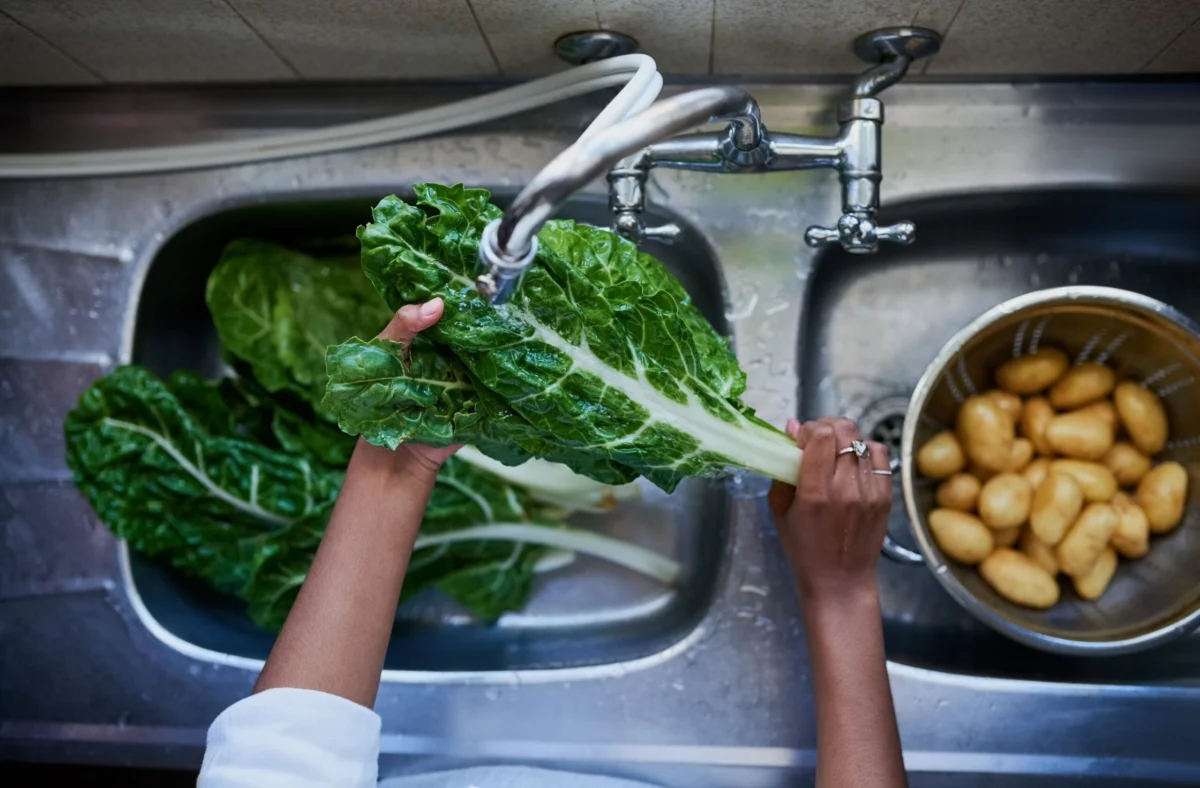
The effectiveness of washing fresh produce remains a frequent question. While washing fresh produce with water can reduce dirt and potentially some contaminants, it does not guarantee the elimination of Cyclospora oocysts. The parasite can adhere tenaciously to surfaces. Furthermore, common home remedies like soaking foods in vinegar or baking soda are not reliably effective against Cyclospora.
Cooking is generally sufficient to make produce safe. Normal home cooking temperatures—achieved through stir-frying, steaming, sautéing, roasting, or boiling—easily exceed the temperatures required to kill the parasite, making a thermometer typically unnecessary for home cooks.
For babies and children, the probability of infection is similar to adults, but they are more susceptible to dehydration, making the illness potentially more severe. While avoiding all raw produce for healthy children is not generally recommended, parents in active outbreak areas, such as Michigan, might reasonably choose to avoid raw leafy greens, herbs, and berries for infants and toddlers. General precautions for all ages include diligent hand washing, thorough washing of produce, peeling fruits and vegetables when possible, and cooking vegetables when appropriate.
Farmer’s market produce, while often perceived as safer due to its local origin, technically carries the same risk as produce from grocery stores. However, historically, many large-scale outbreaks have been linked to major distributors of imported fruits, vegetables, and herbs rather than smaller, local operations.
Broader Implications for Food Safety and Public Health
The ongoing cyclosporiasis outbreak has significant implications beyond the immediate health crisis. It can erode consumer confidence in the safety of fresh produce, particularly items sourced internationally or served in fast-food settings. This distrust can lead to economic repercussions for growers, distributors, and restaurants.
The incident also underscores the critical importance of robust public health infrastructure. The original article mentions concerns about cuts in funding to public health, which could potentially hamper the speed and effectiveness of outbreak response. Adequate funding is essential for surveillance, laboratory testing, epidemiological investigations, and public communication—all vital components in controlling and mitigating such outbreaks.
Moreover, the outbreak highlights the continuous need for improved food safety regulations and enforcement, especially for imported goods. Enhanced traceability systems, from farm to table, are crucial for quickly identifying and isolating contaminated products. This includes stricter controls on water quality used in agricultural practices and greater scrutiny of sanitation practices in foreign growing regions and processing facilities. International collaboration between regulatory bodies is paramount in a globalized food system where food products routinely cross borders.
Outlook and Prevention
Cyclosporiasis cases typically peak during the summer months in the U.S., usually between May and August. While it’s difficult to predict the exact duration of the current outbreak, the short shelf life of fresh produce means that the implicated contaminated batches are likely to cycle out of the supply chain relatively quickly. As temperatures cool in the fall, the parasite is also less likely to remain infectious in the environment. The large multi-state outbreak in 2013, for instance, tapered off between June and August.
Theoretically, it is possible to contract cyclosporiasis multiple times, as there is no evidence that infection confers long-term immunity. However, repeated exposure in the U.S. is generally uncommon.
For those who do contract cyclosporiasis, a "silver lining" exists: if diagnosed, severe symptoms can be effectively treated with antibiotics, typically for seven to ten days. This treatment is also safe and effective for babies and toddlers, helping to prevent prolonged illness and complications like dehydration.
To minimize future risks, consumers should continue to practice good food hygiene: wash hands thoroughly with soap and water before and after handling food, especially raw produce. While washing produce cannot eliminate all risk, rinsing fruits and vegetables under running water can help remove some surface dirt and contaminants. Peeling fruits and vegetables when possible adds an extra layer of protection. When in doubt about the safety of raw produce, particularly high-risk items from potentially affected areas, cooking until thoroughly heated is the most reliable method for killing the Cyclospora parasite. Staying informed about public health advisories and reporting any suspected foodborne illness to local health authorities are vital steps in protecting community health.
