

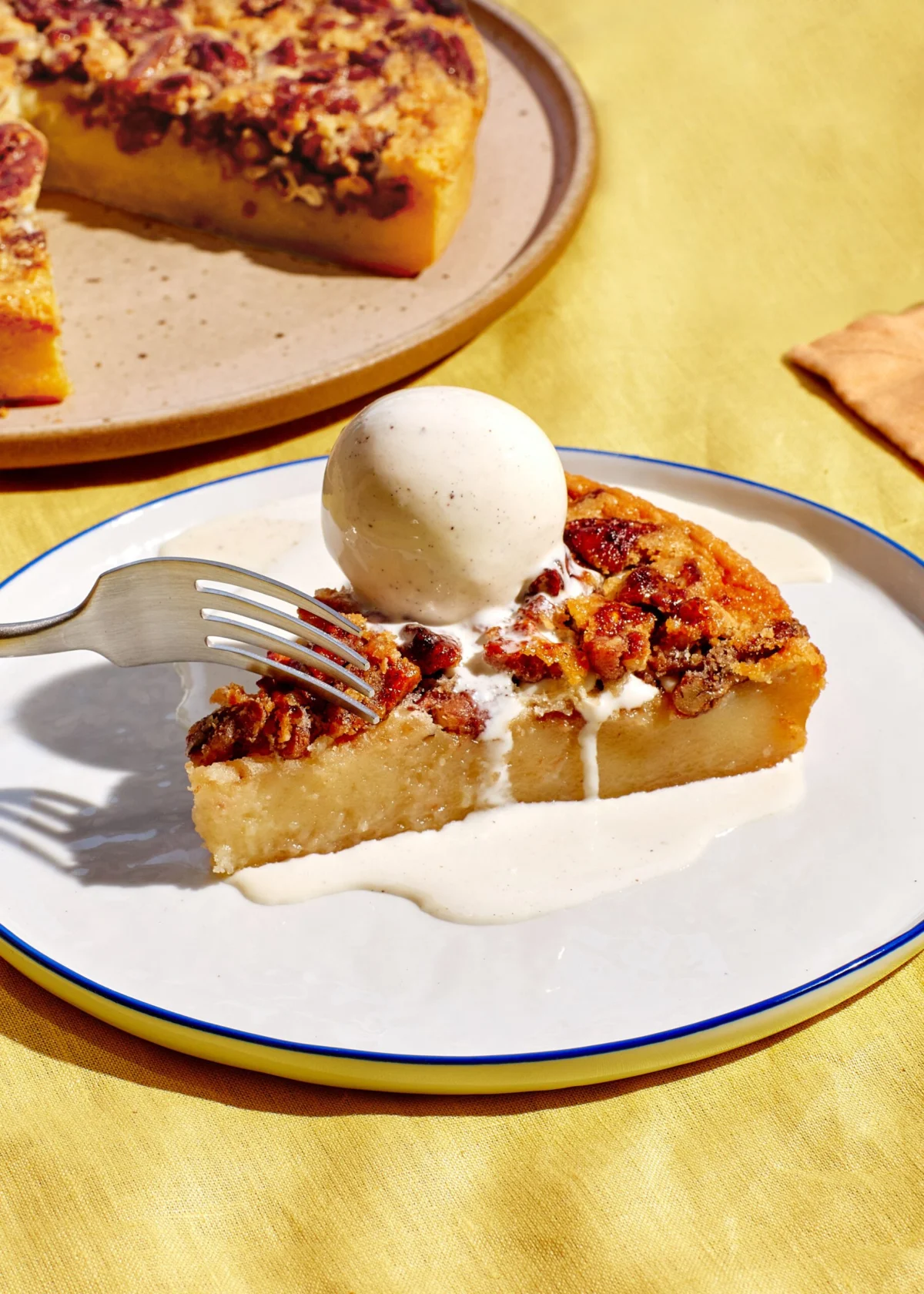
North Charleston, South Carolina – Chef Shuai Wang of King BBQ has unveiled a dessert that masterfully bridges diverse culinary landscapes, the Miso-and-Maple-Pecan Butter Mochi Cake. This innovative creation seamlessly weaves together the nostalgic, chewy essence of Hawaiian-style butter mochi with the rich, comforting depth of classic Southern pecan pie, elevated by a sophisticated maple-miso pecan topping. The dish is a testament to Chef Wang’s inventive spirit, drawing inspiration from deeply personal holiday memories and a profound appreciation for distinct regional flavors, resulting in a unique offering that challenges traditional dessert boundaries and invites diners on an unexpected gastronomic journey.
The Genesis of a Sweet Masterpiece
Chef Shuai Wang, a prominent figure in the North Charleston culinary scene and a James Beard Foundation Award nominee, is renowned for his ability to infuse traditional Southern barbecue with unexpected Asian influences at King BBQ. His latest dessert offering, the Miso-and-Maple-Pecan Butter Mochi Cake, exemplifies this signature approach to culinary innovation. The inspiration for this particular creation is deeply rooted in his personal history and culinary affections. Wang openly shares that mochi evokes vivid memories of festive holidays spent with family, a direct link to his cultural heritage and the comforting traditions of his upbringing. Simultaneously, he confesses a profound admiration for the classic Southern pecan pie, a dessert that embodies the warmth, hospitality, and rich culinary heritage of his adopted region.
The conceptualization of this cake was not merely an exercise in combining disparate elements but a thoughtful exploration of how two distinct dessert traditions could complement and enhance each other. "For me, food has always been about memory and connection," Chef Wang might explain when discussing his creative process. "Mochi reminds me of festive gatherings with my family, a taste of home and tradition. Pecan pie, on the other hand, embodies the warmth and hospitality of the American South, a flavor I’ve come to deeply appreciate since making Charleston my home. The idea was to bring these two beloved elements together, not just as a novelty, but in a way that truly harmonizes their distinct characteristics, creating a new narrative of comfort and celebration." This ethos underpins the entire menu at King BBQ, where familiar flavors are often reimagined through a global lens, fostering an environment of continuous culinary discovery for patrons.
A Tale of Two Traditions: Mochi’s Hawaiian Journey
To fully appreciate Chef Wang’s creation, it is essential to delve into the distinct lineages of its core components. Mochi, a traditional Japanese rice cake made from mochigome (short-grain glutinous japonica rice), boasts a history stretching back over a thousand years, potentially even to the Heian period (794 to 1185 AD). Initially consumed for its sustenance and spiritual significance, mochi became a staple during ceremonial occasions, particularly mochitsuki, the traditional New Year’s mochi-pounding ceremony. Its characteristic chewy, elastic texture is derived from the pounding of steamed glutinous rice, which transforms its starch structure.
The specific form of mochi featured in Wang’s cake, Hawaiian-style butter mochi, represents a fascinating cultural adaptation. When Japanese immigrants arrived in Hawaii in the late 19th and early 20th centuries, they brought their culinary traditions, including mochi. Over time, these traditions blended with local ingredients and tastes, leading to unique Hawaiian interpretations. Butter mochi, often baked in a sheet pan, emerged as a popular and accessible variant. It typically incorporates coconut milk, butter, and sugar, alongside mochiko – a specialized sweet or glutinous rice flour. This flour, distinct from regular rice flour, is crucial for achieving the cake’s signature springy, slightly sticky chew. Its high amylopectin starch content undergoes a unique gelatinization process during baking, resulting in a texture far removed from the crumbly lightness of conventional flour cakes. Butter mochi has since become a beloved potluck and celebration staple across the Hawaiian islands, symbolizing the vibrant fusion of cultures that defines the state’s culinary identity. Its increasing popularity has seen mochi-based desserts gain traction across the mainland U.S., reflecting a broader consumer appetite for diverse textures and global flavors.
The Enduring Allure of Southern Pecan Pie
Contrasting sharply with the ancient and adaptable history of mochi is the equally cherished, albeit younger, tradition of Southern pecan pie. While its precise origins are debated, often attributed to French settlers in New Orleans or early Texans, the pecan pie as we know it today firmly established itself in the American South during the early 20th century. Recipes for pecan custard pies began appearing in cookbooks around the 1920s, with the widespread availability of corn syrup playing a significant role in its popularization.
Pecan pie is more than just a dessert; it is an icon of Southern hospitality and comfort food. Its rich, gooey, sweet filling, often flavored with vanilla and sometimes a hint of bourbon, is encased in a flaky pastry crust and topped with a generous layer of toasted pecans. It is an indispensable fixture on holiday tables, particularly Thanksgiving and Christmas, symbolizing abundance and tradition. The pecan itself is native to North America, making the pie a celebration of indigenous ingredients. The economic importance of pecans to Southern states, where vast orchards contribute significantly to agricultural output, further cements its status as a regional culinary treasure. The textural contrast between the buttery, crunchy pecans and the soft, sweet filling is a hallmark of its appeal, a characteristic that Chef Wang skillfully integrates and reinterprets in his fusion dessert.
The Umami Factor: Miso’s Sweet Revelation
Perhaps the most unexpected yet brilliant element in Chef Wang’s creation is the inclusion of miso in the pecan topping. Miso, a traditional Japanese seasoning, is a fermented paste made from soybeans, koji (a fungus, typically Aspergillus oryzae), salt, and often rice, barley, or other grains. Its history dates back to ancient China, eventually making its way to Japan where it became a fundamental component of the national diet. Miso is revered for its complex flavor profile, primarily its rich umami – the "fifth taste" characterized by a savory, brothy, and often meaty depth.
There are numerous types of miso, categorized by their ingredients, fermentation period, and resulting color and flavor intensity. White miso (shiro miso) is generally the mildest and sweetest, with a shorter fermentation time and a higher rice koji content. Yellow miso (shinshu miso) offers a medium-bodied flavor, while red miso (aka miso) is saltier, bolder, and fermented for longer. In recent years, chefs globally have begun to explore miso’s versatility beyond savory dishes, incorporating it into desserts. Its umami quality acts much like salt in salted caramel, providing a profound savory counterpoint that amplifies and balances sweetness, preventing it from becoming cloying. For the Miso-and-Maple-Pecan Butter Mochi Cake, Chef Wang specifically recommends white or yellow miso. White miso, with its subtle sweetness, would lend a gentle depth, while yellow miso would introduce a more pronounced savory note, both enhancing the maple syrup and butteriness of the pecans without overpowering them. This application highlights a growing trend in contemporary patisserie: the deliberate introduction of umami to elevate and complexify sweet profiles, offering a more nuanced and sophisticated tasting experience that challenges conventional flavor pairings. The global market for fermented foods, including miso, has seen significant growth, indicating increasing consumer openness to such innovative flavor explorations.
The Art of Culinary Fusion: A Broader Perspective

Chef Wang’s Miso-and-Maple-Pecan Butter Mochi Cake is not just a delicious dessert; it is a microcosm of the broader phenomenon of culinary fusion. Fusion cuisine, generally defined as a style of cooking that blends ingredients or methods from different regional or national cuisines, has a long and storied history. Early examples can be traced back to ancient trade routes, colonial influences, and waves of immigration, which naturally led to the blending of food cultures. Modern fusion, however, has become a deliberate artistic expression, driven by globalization, increased travel, and chefs’ access to a wider array of international ingredients and techniques.
Successful fusion cuisine, like Wang’s cake, goes beyond simply putting two different foods on the same plate. It involves a thoughtful integration of flavors, textures, and culinary philosophies that results in a cohesive and harmonious dish. It respects the integrity of each contributing tradition while creating something entirely new and exciting. This approach can lead to groundbreaking flavor combinations, introduce diners to new ingredients, and foster cultural exchange through food. The challenge lies in achieving balance and avoiding combinations that feel forced or incoherent. Chef Wang’s cake, with its careful selection of complementary textures (chewy mochi, crunchy pecans) and balanced flavors (sweet maple, savory miso, rich butter, subtle coconut), stands as a prime example of successful fusion. It speaks to a globalized palate that appreciates both tradition and innovation, where boundaries are not limitations but opportunities for creativity.
Ingredient Deep Dive: The Science Behind the Chew and Crunch
The meticulous selection and preparation of ingredients are paramount to the cake’s success, particularly in achieving its unique texture profile. The batter’s signature bounce and chew are solely attributable to mochiko. As previously noted, mochiko, also known as sweet or glutinous rice flour, is fundamentally different from regular rice flour or all-purpose wheat flour. Its distinction lies in its starch composition, specifically its high amylopectin content and minimal amylose. When heated, amylopectin gelatinizes, forming a highly elastic and viscous gel structure that gives butter mochi its characteristic springy, slightly sticky, and incredibly chewy texture. In contrast, wheat flour relies on gluten development for structure, and regular rice flour, with a different starch ratio, yields a much more brittle or powdery result.
Further contributing to the cake’s richness and unique mouthfeel are coconut milk and melted butter. Coconut milk imparts a subtle tropical sweetness and creaminess, enhancing the moistness of the cake, while melted butter adds a luxurious depth of flavor and tenderizes the crumb. The pecans, integral to the Southern influence, provide a crucial textural contrast. Their inherent crunchiness breaks up the chewiness of the mochi cake, adding another layer of sensory experience. The specific preparation of the pecans is also key: a brief head start in the oven before the cake bakes ensures they develop a deeper, toasted flavor and maintain their crispness throughout the baking process, preventing them from becoming soggy. The maple syrup, a natural pairing with pecans, provides the sweet base for the miso, creating a glaze that adheres perfectly to the nuts.
Crafting Perfection: Essential Baking Insights
For aspiring home bakers eager to recreate Chef Wang’s masterpiece, attention to specific details is critical. The original recipe emphasizes several non-negotiable steps and ingredient choices to ensure the cake’s desired outcome.
-
Mochiko is Indispensable: The most crucial instruction is the absolute necessity of mochiko. Substituting it with regular rice flour or all-purpose wheat flour will fundamentally alter the cake’s texture. Regular rice flour lacks the high amylopectin content needed for the characteristic chew, resulting in a dense, crumbly, or gritty texture. Wheat flour, with its gluten-forming proteins, would yield a conventional cake crumb, entirely missing the point of butter mochi. Bakers must seek out flour specifically labeled "sweet rice flour" or "glutinous rice flour" to achieve the signature springy, slightly sticky chew.
-
Miso Selection for Nuance: When selecting miso for the pecan topping, both white and yellow miso are suitable, but they offer slightly different flavor profiles. White miso (shiro miso) is milder and sweeter, with a shorter fermentation period, making it ideal for a subtle savory background that doesn’t overwhelm the maple and pecan flavors. Yellow miso (shinshu miso) has a somewhat more pronounced savory flavor and a slightly longer fermentation, offering a bolder umami punch. The choice between the two depends on the desired intensity of the savory note. Both, however, serve to add a layer of complexity and balance the sweetness, much like salt enhances caramel.
-
The Importance of Cooling: Patience is a virtue, especially when it comes to butter mochi. The instruction to "let the cake cool completely before slicing" is paramount. This isn’t merely a suggestion for ease of handling; it’s vital for the cake’s final texture. As the cake cools, the gelatinized starch molecules in the mochiko undergo a process called retrogradation. They re-crystallize and firm up, allowing the cake to set properly and develop its full chewy, elastic character. Slicing the cake while it is still warm or hot can result in a gummy, unset, or crumbly texture that detracts significantly from the intended experience.
-
Gluten-Free Considerations: For those with dietary restrictions, butter mochi cake can be a naturally gluten-free dessert. Mochiko itself is derived from rice and contains no gluten, despite the sometimes confusing label "glutinous rice flour" (referring to its sticky, glue-like texture when cooked, not actual gluten). However, bakers must exercise caution with other ingredients. Some varieties of miso, particularly those made with barley or wheat as part of the fermentation process, are not gluten-free. It is essential to select miso explicitly labeled "gluten-free." Furthermore, all other packaged ingredients, such as baking powder, vanilla extract, and even coconut milk, should be checked for certified gluten-free labels to prevent cross-contamination or hidden gluten.
Implications and Future Trends
Chef Shuai Wang’s Miso-and-Maple-Pecan Butter Mochi Cake is more than just a standout dessert; it holds broader implications for the culinary landscape. For King BBQ, it reinforces the restaurant’s reputation as a destination for innovative and thought-provoking cuisine, attracting a wider audience interested in unique flavor experiences. It showcases Chef Wang’s continuous evolution as a chef, pushing the boundaries of what is expected from a "barbecue" establishment.
For the Charleston food scene, already recognized as a vibrant culinary hub, this dessert contributes to its dynamism and diverse offerings. It highlights local talent capable of engaging with global food trends while honoring regional traditions. It also serves as an inspiration for other chefs and home bakers, demonstrating the rich possibilities that emerge from creative cross-cultural dialogue in the kitchen.
More broadly, this cake is emblematic of several significant trends in contemporary gastronomy: the increasing acceptance and demand for global flavors, the sophisticated use of umami in sweet applications, and a growing appreciation for diverse textural experiences in desserts. As consumers become more adventurous and educated about food, the line between traditional culinary categories will continue to blur, leading to even more exciting and unexpected creations. Chef Wang’s Miso-and-Maple-Pecan Butter Mochi Cake stands as a delicious testament to this ongoing evolution, a harmonious blend of heritage and innovation that delights the palate and sparks culinary imagination.
