

The beverage known as the Purl occupies a unique, if often misunderstood, niche in the annals of British drinking culture. In the contemporary cocktail landscape, the Purl is frequently characterized by a deceptive simplicity: a pint of ale fortified with a single measure of gin. This modern iteration, often served at cellar temperature and utilizing a traditional British Bitter paired with a maltier Old Tom-style gin, is frequently cited in bar manuals like Difford’s Guide as a relic of the 18th and 19th centuries. However, a deeper investigation into historical archives, medical journals, and early mixology texts reveals a far more intricate and transformative narrative. The Purl did not begin as a simple spirit-and-beer pairing; rather, it originated as a bitter medicinal tonic, evolved into a complex heated "flip" containing eggs and spices, and survived through centuries of shifting social attitudes toward public health and recreation.
The Medicinal Genesis of the 17th Century
The earliest recorded versions of the Purl bear little resemblance to the gin-heavy concoctions of the Victorian era. In the 17th century, the term "Purl" referred primarily to an infusion of wormwood (Artemisia absinthium) in either ale or wine. During this period, wormwood was highly prized for its purported antiseptic and digestive properties. The drink’s role was solidified during one of London’s darkest periods: the Great Plague of 1665.
Historical documents, specifically the 1665 manual Directions for the Prevention and Cure of the Plague Fitted for the Poorer Sort, recommended the consumption of Purl as a preventative measure. The text advised the "poorer sort"—those who could not afford expensive physicians or exotic elixirs—to consume "a draught or two of Purle… especially in the morning." This positioning of the Purl as a morning constitutional suggests that it was both inexpensive and widely accessible. At this stage, the "bitterness" of the drink, derived from the wormwood, was its defining characteristic, intended to "fortify the stomach" against the miasma believed to spread the pestilence.
By 1690, the medicinal utility of the drink was further codified in An English Herbal, which detailed the benefits of wormwood when consumed in a Purl. These early versions were often served cold or at ambient temperatures, focusing on the botanical extraction rather than the recreational "kick" provided by distilled spirits.
18th Century Proliferation and the Rise of Spirits
As the 18th century progressed, the Purl transitioned from the apothecary’s shelf to the public house. This era marked the beginning of the "Gin Craze" in London, a period characterized by a massive increase in the consumption of distilled spirits. It was during this transition that spirits began to be added to the traditional wormwood-ale mixture, though the specific spirit was not yet standardized to gin.

The social perception of the Purl also began to shift. No longer viewed solely as a plague remedy, it became associated with the burgeoning culture of morning drinking and, eventually, social vice. A September 1733 entry in The Grub Street Journal illustrates this shift, using the consumption of Purl as a metric for a character attack. The text links the smoking of tobacco, the drinking of gin, and the habitual consumption of "Pots of Purle" as evidence of a dissolute lifestyle.
This period also saw the expansion of the Purl category to include other base liquids. In 1684, the cider industry, perhaps seeking to capitalize on the drink’s popularity, argued that a "purl with cider" was just as efficacious as the traditional ale-based version. The Aphorisms upon the New Way of Improving Cyder highlights that the bittering of cider with wormwood followed the same logic as the ale-based Purl, suggesting that the "Purl" was a method of preparation rather than a rigid recipe.

The Victorian Era: The Purl as a Complex Flip
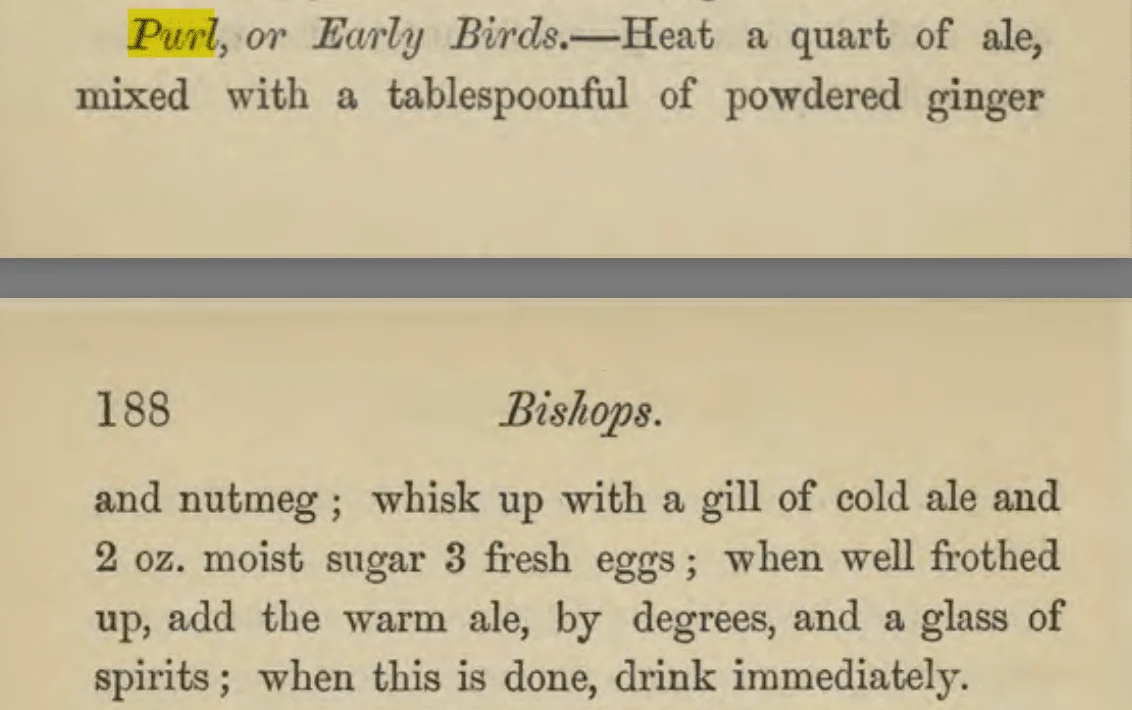
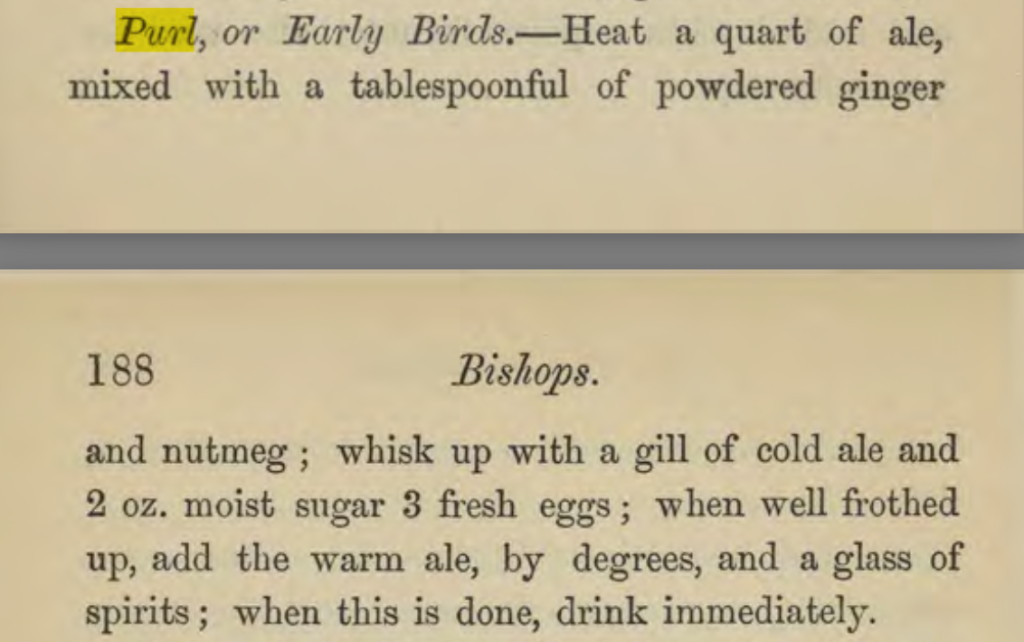
By the mid-19th century, the Purl had entered its most complex phase, often categorized alongside "flips" and "mulls." The 1869 volume Cooling Cups and Dainty Drinks by William Terrington, widely considered the first British cocktail book, provides a glimpse into this evolution. In Terrington’s era, the Purl had become a sophisticated, multi-ingredient beverage designed for warmth and sustenance.
The recipes of this time often called for warmed ale, multiple eggs, sugar, and a variety of spices such as nutmeg or ginger. While gin was a common additive, it was by no means the only option; brandy or whisky were frequently substituted based on the patron’s preference or the bar’s inventory. The preparation involved "frothing" the drink by pouring it rapidly between two vessels, a technique that integrated the eggs and created a creamy, voluminous texture.

Interestingly, Terrington’s manual also includes a recipe for an "Ale Cup," which more closely resembles the modern definition of the Purl by specifically calling for gin and ale. However, the Ale Cup remained distinct from the traditional Purl in the minds of Victorian bartenders, who still associated the latter with the bitter, herbal traditions of the past.
The 20th Century Simplification and Standardization
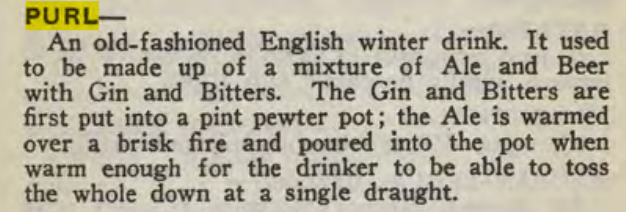
The 20th century witnessed the "streamlining" of the Purl. As modern refrigeration and a preference for lighter, clearer drinks took hold, the heavy, egg-laden flips of the Victorian era fell out of fashion. The wormwood—once the essential ingredient—began to disappear from recipes entirely, replaced by commercial bitters or omitted altogether.

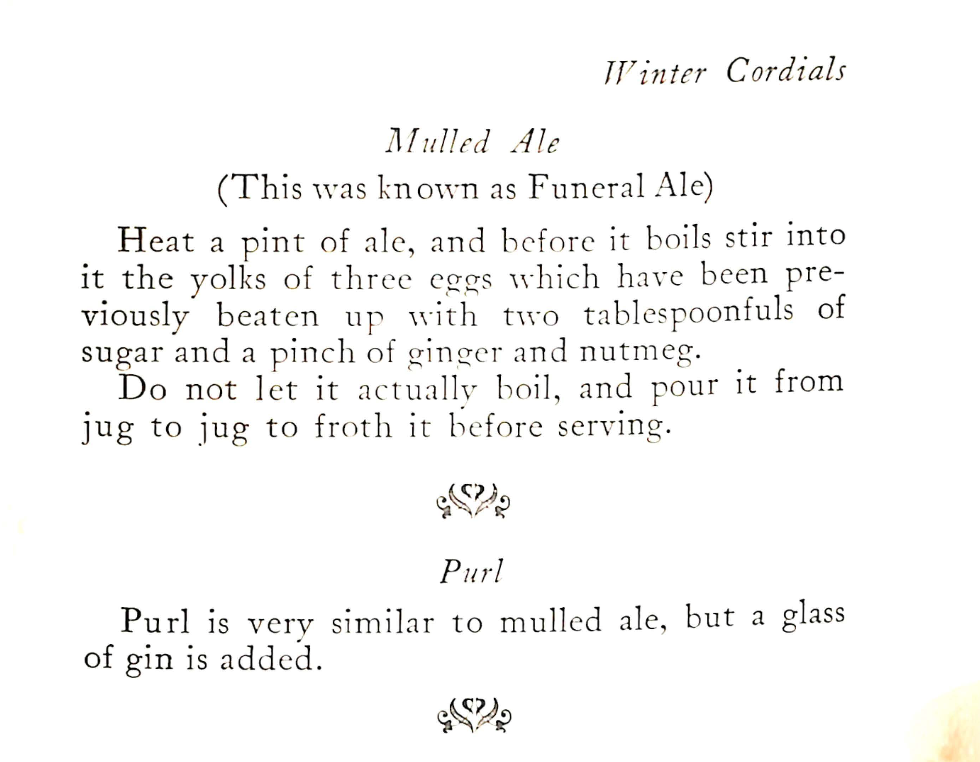
By 1925, as seen in Summer Drinks and Winter Cordials, the recipe had begun to stabilize into the gin-and-ale format, though the tradition of warming the ale persisted. The 1935 text The Art of Mixing Drinks and the 1966 The Barman’s Bible (part of the Cocktail and Wine Digest) show the final stages of this evolution. In these manuals, the Purl is presented as a simple combination: gin, ale, and sometimes a dash of bitters, served either hot or cold.
The canonical spirit became gin, specifically because the botanical profile of gin—traditionally heavy on juniper and coriander—offered a flavor bridge to the now-absent wormwood. The Old Tom style of gin, which was sweeter and more viscous than the emerging London Dry style, was the preferred choice because it stood up better to the robust flavors of 19th-century British bitters and mild ales.

Comparative Analysis of Ingredients and Preparation
To understand the Purl’s transformation, one must examine the drastic changes in its constituent parts over three centuries:
| Feature | 17th Century Purl | 19th Century Purl | Modern Purl |
|---|---|---|---|
| Base Liquid | Ale or Wine | Warmed Ale | British Bitter/Ale |
| Primary Bitter | Fresh Wormwood | Spices/Wormwood | Commercial Bitters (Optional) |
| Fortification | None | Gin, Brandy, or Whisky | Gin (Old Tom or London Dry) |
| Texture | Thin/Liquid | Creamy (via Eggs) | Effervescent/Liquid |
| Purpose | Medicinal/Plague Remedy | Recreational/Nutritive | Recreational Cocktail |
The shift from a medicinal tonic to a recreational cocktail reflects broader changes in British society. The early Purl was a functional drink, consumed by the working class to survive harsh conditions and disease. The Victorian Purl was a comfort drink, reflecting the 19th-century obsession with "restorative" beverages. The modern Purl is a minimalist cocktail, stripped of its complex preparation to suit the speed of contemporary bar service.

Implications for Modern Mixology
The history of the Purl offers a significant lesson for modern craft cocktail enthusiasts and historians. It serves as a reminder that the names of drinks often survive while their recipes undergo total metamorphosis. For a modern bartender to serve an "authentic" Purl, they must first decide which century they are attempting to replicate.
A 17th-century revival would require an infusion of wormwood, offering a bracingly bitter experience akin to a modern amaro. An 18th-century version would necessitate a morning service and perhaps a coarser, less refined spirit. A 19th-century Purl would require the skill of a chef, balancing heat and eggs to ensure the mixture does not curdle.
The modern definition—ale plus a shot of gin—is the result of a long process of cultural "shorthand." As the medicinal necessity of wormwood faded and the labor-intensive process of making flips became impractical for high-volume bars, the drink was reduced to its most basic alcoholic components. While the modern Purl remains a respected "bartender’s handshake" in some circles, its ancestry as a plague-fighting, egg-frothed, wormwood-bittered tonic remains a vital chapter in the history of liquid gold.
Ultimately, the Purl’s journey from the "poorer sort’s" medicine to a "dainty drink" and finally to a simple beer-cocktail reflects the enduring British ability to adapt and preserve tradition, even if the recipe itself is lost to time. The drink stands as a liquid timeline of London’s social, medical, and economic history, hidden within the glass of a simple pint.
