

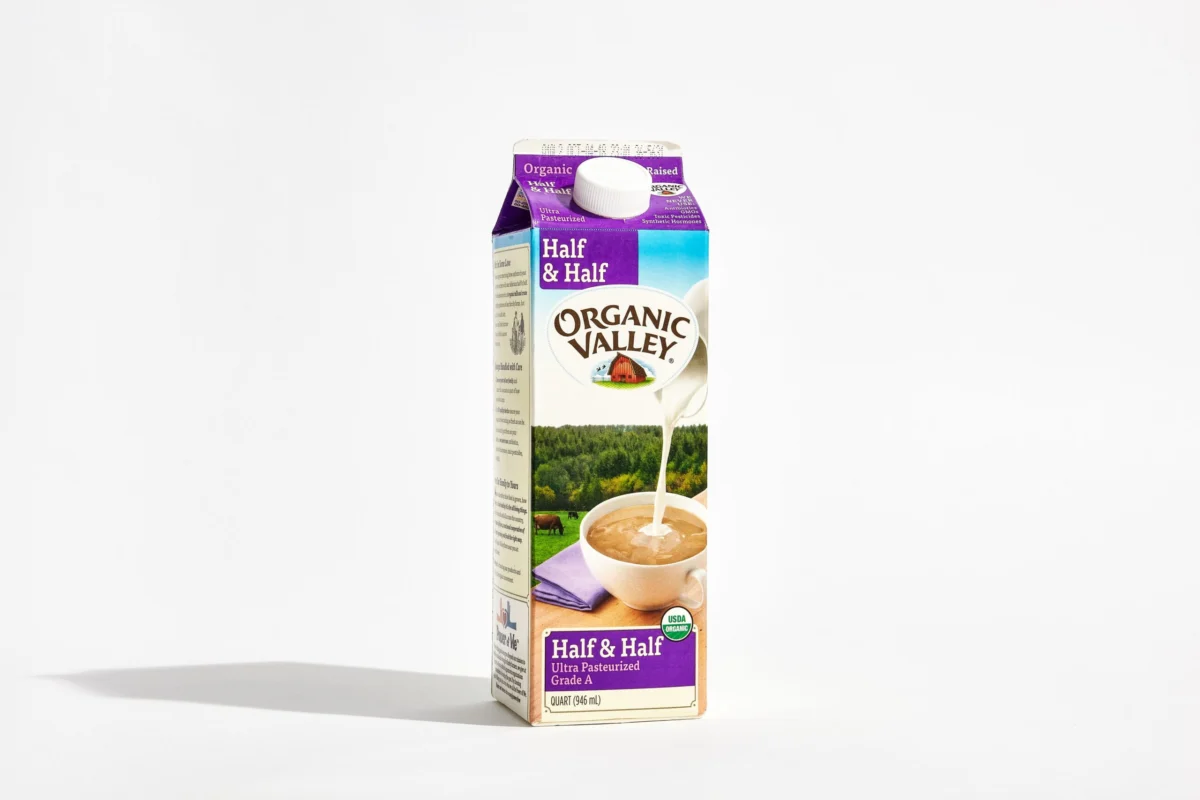
Despite the promise of its name, the half-and-half you buy at the supermarket isn’t actually equal parts heavy cream and whole milk. While the dairy-aisle staple does fall somewhere between the two, and you can get away with substituting it for one part milk and one part cream in most cases, the truth is slightly more complex, rooted in specific dairy regulations and nuanced culinary properties. This seemingly straightforward dairy product holds a position of unique versatility in kitchens worldwide, yet its precise composition and optimal usage are often misunderstood by consumers.
The Dairy Aisle Deception: Unpacking the "Half-and-Half" Misnomer
The term "half-and-half" conjures an image of a perfectly balanced blend, precisely 50% heavy cream and 50% whole milk. However, this common perception diverges significantly from the regulated reality of the product found in grocery stores. By federal law in the United States, specifically under Title 21, Chapter I, Subchapter B, Part 131, Section 131.180 of the Code of Federal Regulations (CFR), half-and-half must contain a milkfat content of not less than 10.5 percent but less than 18 percent. This legal definition establishes a wide operational window for manufacturers, resulting in products that vary in richness within this spectrum.
Most commercial half-and-half products typically land on the lower end of this spectrum, often around 11.5% milkfat. To put this into perspective, standard whole milk contains approximately 3.25% fat, while heavy cream, by definition, must contain at least 36% milkfat. If one were to manually mix equal parts whole milk and heavy cream, the resulting concoction would have a fat content significantly higher than most store-bought half-and-half, typically around 19.6% (averaging 3.25% and 36%). This homemade blend, while still delicious, would be considerably richer and thicker than the commercially available product, potentially altering the intended texture and flavor in recipes designed for standard half-and-half.
For home cooks aiming to replicate the fat content of commercial half-and-half, a more accurate blend involves different ratios. Combining two parts whole milk with one part heavy cream yields a mixture with approximately 14% milkfat, placing it firmly within the legal definition. For an even closer approximation to the leaner end of commercial half-and-half (around 11%), a ratio of three parts whole milk to one part heavy cream is more appropriate. This discrepancy between the common understanding and the regulated reality highlights the precision required in dairy product classification and the importance of understanding ingredient specifications for optimal culinary results.
Regulatory Framework and Industry Standards
The establishment of precise legal definitions for dairy products like half-and-half is a cornerstone of food safety and consumer protection. These regulations, enforced by bodies such as the U.S. Food and Drug Administration (FDA), ensure consistency in product quality, prevent mislabeling, and set standards for nutritional content. The specific range of 10.5% to 18% milkfat for half-and-half is not arbitrary; it represents a careful balance that allows for a distinct product profile, positioned between the lightness of milk and the richness of cream.
Historically, the standardization of dairy products emerged as a response to widespread adulteration and inconsistent quality in the late 19th and early 20th centuries. Consumers often received products of varying fat content and purity, leading to calls for governmental oversight. The development of pasteurization and later, homogenization, further necessitated clear definitions to categorize and label dairy products accurately. The term "half-and-half" likely arose colloquially to describe a dairy product perceived to be a compromise between milk and cream, eventually formalized into a legal definition that, while not a literal 50/50 split, captured its essence as an intermediate dairy option.
Dairy manufacturers adhere strictly to these federal guidelines. The production process involves standardizing raw milk to achieve the desired fat percentage, often through centrifugation to separate cream, followed by precise recombination with skim milk or whole milk. This standardization ensures that a carton of half-and-half from one brand is largely consistent in its fundamental properties with another, even if minor variations exist within the 10.5% to 18% fat range. This regulatory framework fosters trust in the food supply chain and empowers consumers with predictable product performance.
The Science of Dairy Fat: Texture, Flavor, and Culinary Applications
The milkfat content is the primary determinant of a dairy product’s physical and sensory characteristics, profoundly influencing its texture, flavor, and behavior in culinary applications. Half-and-half, with its intermediate fat level, offers a unique set of properties that distinguish it from both whole milk and heavy cream.
Its approximately 11.5% milkfat content provides a richness and lusciousness that surpasses whole milk. The higher fat globules contribute to a smoother, more velvety mouthfeel, making it an excellent choice for enriching coffee without the overwhelming heaviness of pure cream. Simultaneously, its fat content is significantly lower than heavy cream, resulting in a more fluid consistency. This fluidity is crucial for applications where a thick, viscous texture is undesirable but a creamy element is still required.
From a flavor perspective, the fat in half-and-half acts as a carrier for fat-soluble flavor compounds, enhancing the overall taste experience. It imparts a delicate dairy sweetness and a mild, creamy aroma that complements both sweet and savory dishes without dominating them. The specific balance of fat and water in half-and-half also impacts its emulsification properties, making it capable of forming stable emulsions in sauces and soups, contributing to a smooth, homogenous finish.

Understanding these scientific principles behind dairy fat content allows chefs and home cooks to leverage half-and-half effectively. Its intermediate nature means it can add significant body and richness to a dish without making it overly heavy or greasy, striking a delicate balance that is often ideal for a wide range of recipes.
Culinary Versatility: Half-and-Half in the Kitchen
Half-and-half is a remarkably versatile ingredient, prized in the kitchen for its ability to impart richness and creaminess without the excessive heft of heavy cream. Its unique fat profile makes it an ideal choice for numerous culinary applications.
- Soups and Sauces: It excels in enhancing the texture and flavor of soups and sauces. For instance, in a creamy cauliflower soup, half-and-half is often added to hot broth and vegetables before blending, contributing to a smooth, velvety consistency without making the soup overly thick or caloric. In pan sauces, it can be whisked in to create a luscious finish that coats ingredients beautifully.
- Mashed Potatoes and Vegetable Purees: When preparing mashed potatoes, half-and-half delivers a desirable creaminess and richness that elevates the dish beyond what milk alone can provide, yet it avoids the density that heavy cream might impart. The same applies to other vegetable purees, adding a luxurious touch.
- Custards and Desserts: For custards, puddings, and panna cotta, half-and-half is frequently specified. In dishes like coconut cream pie or caramelized banana pudding, it contributes to a tender, smooth set and a delicate mouthfeel. Its fat content is sufficient to create a stable custard base, offering a lighter alternative to recipes that might otherwise call for heavy cream.
- Egg Dishes: Half-and-half is a staple in quiches, frittatas, and other egg bakes. It enriches the egg mixture, ensuring a tender, custardy texture in the finished product. Its presence helps prevent eggs from becoming rubbery and adds a pleasant creaminess.
- Chowders and Panades: In seafood chowders, half-and-half contributes to the characteristic creamy broth, marrying flavors and textures seamlessly. It can also be incorporated into panades (mixtures of bread or breadcrumbs soaked in liquid) for meatballs or meatloaf, adding moisture and richness that results in a more tender product.
Challenges and Solutions in Cooking with Half-and-Half:
Despite its versatility, half-and-half requires careful handling in certain cooking scenarios due to its lower fat content compared to heavy cream. It is more susceptible to curdling when exposed directly to high heat or highly acidic ingredients, such as lemon juice, wine, or tomato sauce. The proteins in dairy products can coagulate under these conditions, leading to an undesirable separated texture.
To mitigate this risk, a technique known as "tempering" is often employed. This involves gradually warming the cold half-and-half by whisking a small amount of the hot liquid from the dish into it before slowly incorporating the tempered mixture back into the main pot. This gentle temperature equalization helps prevent thermal shock to the dairy proteins, reducing the likelihood of curdling. However, in many recipes, particularly those where the half-and-half is added to a simmering base and cooked gently, direct addition is perfectly acceptable, as demonstrated in recipes like creamy cauliflower soup or coconut cream pie where it’s integrated into a reduced liquid and cooked further.
Beyond the Carton: Shelf-Stable and Fat-Free Varieties
The half-and-half category extends beyond the refrigerated cartons found in the dairy aisle, encompassing specialized formulations designed for convenience and dietary preferences.
Shelf-Stable Half-and-Half:
Many individuals’ first encounter with half-and-half comes in the form of tiny, individual-serving cups distributed at diners, coffee shops, and fast-food establishments. These thimble-sized portions are engineered for shelf stability, allowing them to be stored at room temperature for extended periods. This longevity is achieved primarily through Ultra-High-Temperature (UHT) processing, a method that heats the dairy to extremely high temperatures (around 280-300°F or 138-149°C) for a very short duration, effectively sterilizing it and eliminating most spoilage-causing microorganisms. To further enhance stability and prevent separation over time, manufacturers often incorporate food-grade stabilizers like carrageenan or sodium phosphate. These stabilizers maintain the emulsion of fat and water, ensuring a consistent texture even after prolonged storage.
It’s crucial to distinguish these shelf-stable half-and-half products from similar-looking "creamers" which may contain little to no actual dairy. Many coffee creamers are non-dairy, formulated with water, corn syrup solids, and vegetable oils, along with artificial flavors and colors. While they serve a similar function of whitening and enriching coffee, their composition and taste profile are distinctly different from dairy-based half-and-half.
Fat-Free Half-and-Half:
Responding to consumer demand for lower-fat options, "fat-free half-and-half" has emerged on the market. This product, despite its name, is a significant departure from traditional half-and-half. It is typically made from skim milk, which, by definition, has virtually no milkfat. To compensate for the lack of fat and achieve a texture remotely resembling its full-fat counterpart, manufacturers rely heavily on a combination of thickeners (such as cellulose gum, carrageenan, or guar gum) and other stabilizers.
The resulting product, while visually similar in a carton, possesses a taste and texture that are notably different. Consumers often describe it as less creamy and more artificial, sometimes likened to "melted shaving cream" rather than a rich dairy product. While some manufacturers claim their fat-free versions can be substituted 1:1 for regular half-and-half in cooking, culinary experts generally advise against it. The absence of milkfat drastically alters its cooking properties, making it more prone to curdling and failing to deliver the desired richness, mouthfeel, or emulsifying capabilities crucial for many recipes. Its use is best confined to simply lightening coffee or tea, where textural nuances are less critical.
Storage and Shelf Life: Maximizing Freshness
Proper storage is paramount to maintaining the quality and safety of half-and-half. Like most dairy products, half-and-half is perishable and requires refrigeration at temperatures typically below 40°F (4°C).

- Refrigerated Half-and-Half: Once opened, the shelf life of refrigerated half-and-half can vary by brand and pasteurization method. Generally, conventional pasteurized half-and-half, once opened, should be used within 7 to 10 days. Ultra-pasteurized (UP) half-and-half, which undergoes a slightly higher heat treatment than conventional pasteurization but not as high as UHT, typically has a longer unopened shelf life due to reduced microbial load. However, once opened, its shelf life is comparable to conventionally pasteurized versions as it is exposed to ambient bacteria. Always refer to the "best by" or "use by" date printed on the carton and the manufacturer’s specific recommendations for optimal freshness.
- Freezing Half-and-Half: For longer storage, half-and-half can be frozen for up to two months. However, it’s important to note that freezing and thawing can alter the texture. The fat and water components may separate, resulting in a somewhat grainy or curdled appearance upon thawing. While this separation makes it less ideal for applications where a perfectly smooth texture is critical (like coffee), it remains perfectly safe to consume and can be effectively used in cooking. A thorough shake or blend after thawing can help recombine the components. It’s particularly well-suited for integration into soups, sauces, or batters where its texture will be further processed or masked. For convenience, freezing half-and-half in ice cube trays allows for easy portioning to add directly to pan sauces or stews, eliminating the need to thaw a larger quantity.
Substitution Strategies: When Half-and-Half Isn’t Available (or You Need Something Else)
The versatility of half-and-half means that knowing how to substitute for it, or how to use it in place of other dairy products, is a valuable kitchen skill.
When You’re Out of Half-and-Half:
- Homemade Half-and-Half: The most direct substitute is a homemade blend. For a product similar to most supermarket half-and-half (around 11-12% fat), combine ¾ cup whole milk with ¼ cup heavy cream. For a slightly richer version (closer to 14-15% fat), use ⅔ cup whole milk with ⅓ cup heavy cream. It’s important to remember that homemade versions will lack the homogenization of commercial products and may separate slightly, especially if left to sit. A quick shake or stir before use will usually resolve this.
- Whole Milk: In many recipes, especially savory ones like soups or sauces where a creamy texture is desired but not paramount, whole milk can stand in for half-and-half. The result will be noticeably less rich and thinner. To compensate for the reduced fat content in hot dishes, adding a small pat or two of butter can help restore some of the lost richness and mouthfeel.
- Heavy Cream: Heavy cream can generally replace half-and-half in a 1:1 ratio. The dish will be significantly richer and thicker. If a lighter consistency is desired, the heavy cream can be thinned with a small amount of water or whole milk before adding.
- Plant-Based Milk: For those avoiding dairy, barista-style plant-based milks (such as oat, almond, or soy) are often formulated with added fats and emulsifiers to mimic the richness and stability of dairy in coffee and some cooking applications. While they won’t replicate the exact flavor profile, they can offer a suitable dairy-free alternative for many uses.
- Canned Evaporated Milk: In a pinch, canned evaporated milk can serve as a substitute. Its richness falls somewhere between whole milk and half-and-half due to the removal of about 60% of its water content. However, evaporated milk has a distinct "cooked" or caramelized flavor profile that may not be suitable for all applications, particularly delicate desserts or beverages where a neutral dairy flavor is preferred.
When You Have Half-and-Half, But the Recipe Calls for Milk or Cream:
- Replacing Whole Milk: Half-and-half can generally replace whole milk in a 1:1 ratio in savory dishes like soups, sauces, and mashed potatoes. The outcome will be a richer, creamier version of the original recipe, which is often a desirable enhancement.
- Replacing Heavy Cream: Half-and-half can be used as a lighter substitute for heavy cream in recipes where the cream’s primary role is to add richness, such as in chowders, custards, or some sauces. The finished dish will be lighter in texture and fat content. However, it is crucial to remember a fundamental difference: half-and-half does not contain enough fat to be whipped into stiff peaks, no matter how vigorously it is agitated. For recipes requiring whipped cream, heavy cream (or whipping cream) with its higher fat content (30-36% or more) is essential.
Historical Evolution of Dairy Products and Consumer Understanding
The journey of dairy products from farm to table has been marked by significant advancements in processing, packaging, and regulatory oversight. The introduction of specific products like half-and-half reflects an evolving market demand for dairy options that cater to diverse culinary needs and preferences. Initially, consumers might have manually blended milk and cream to achieve a desired richness. The commercialization of "half-and-half" streamlined this process, offering a convenient, pre-blended product with consistent characteristics.
The role of food labeling has been pivotal in managing consumer expectations. Clear labeling of fat content, ingredients, and processing methods empowers consumers to make informed choices. However, the evocative name "half-and-half" can still create a cognitive shortcut that overrides the detailed information on the nutrition label, leading to the common misconception about its 50/50 composition. Ongoing consumer education by food journalists and culinary experts helps bridge this gap, fostering a deeper understanding of what goes into our food.
Economic and Market Implications
The precise fat content of half-and-half also carries economic and market implications for the dairy industry. Positioned between the higher volume, lower-cost whole milk segment and the lower volume, higher-cost heavy cream segment, half-and-half occupies a unique niche. Its production involves careful fat standardization, which adds a layer of processing complexity compared to simply bottling whole milk.
The price point of half-and-half generally reflects this intermediate position, making it a more accessible option for consumers seeking richness than heavy cream, while offering a premium over whole milk. Its consistent demand, particularly in the coffee and culinary sectors, underscores its value as a staple product. The introduction of shelf-stable and fat-free versions further expands market reach, catering to diverse consumer lifestyles and health considerations, albeit with different production costs and market positioning.
Conclusion
Far from being a simple 50/50 blend, half-and-half is a sophisticated, regulated dairy product with a defined milkfat range of 10.5% to 18%. Its intermediate fat content strikes a perfect balance, offering a richness that enhances dishes and beverages without the overwhelming density of heavy cream, yet surpassing the lightness of whole milk. Understanding its true composition, optimal culinary applications, storage requirements, and substitution options empowers consumers to unlock its full potential in the kitchen. Whether enriching a morning coffee, thickening a savory sauce, or crafting a delicate dessert, half-and-half remains a versatile and indispensable ingredient, a testament to the nuanced science and art of dairy.
