

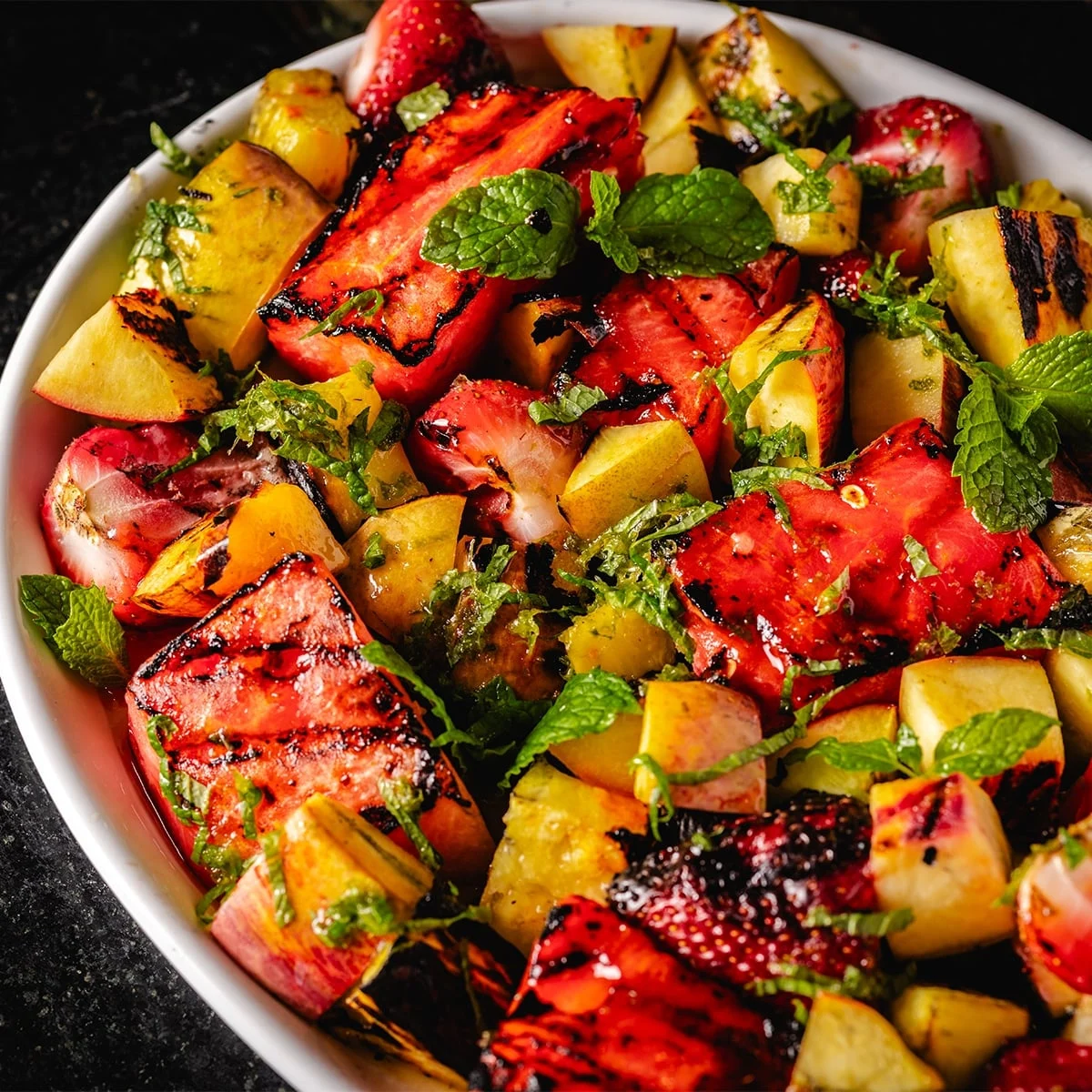
The culinary landscape of the modern American barbecue is undergoing a significant transformation, moving away from heavy, processed sides toward fresh, vibrant, and fire-transformed seasonal produce. Among the most innovative developments in this trend is the Grilled Fruit Salad, a dish that utilizes the intense heat of the grill to caramelize natural sugars and add a complex smoky dimension to traditional summer fruits. This preparation method, which features a medley of peaches, pineapple, strawberries, and watermelon, challenges the historical perception of fruit salads as sugary, gelatin-based desserts. By applying a brief "kiss of heat" to these fruits and finishing them with a bright lime and mint dressing, home cooks are discovering a sophisticated balance between sweetness, acidity, and herbaceousness that serves as a versatile accompaniment to grilled meats and breakfast staples alike.
The Culinary Transformation of Seasonal Produce
The shift toward grilling fruit represents a deeper understanding of the chemical reactions that occur during outdoor cooking. While traditional fruit salads rely on the raw crispness of the ingredients, the Grilled Fruit Salad leverages the Maillard reaction and caramelization to alter the flavor profile of the produce. When fruits like peaches and pineapple are exposed to temperatures exceeding 300 degrees Fahrenheit, the sucrose, glucose, and fructose molecules break down and reform into hundreds of new aromatic compounds. This process results in a deeper, more savory sweetness and a textural contrast between the charred exterior and the succulent interior.

The selection of fruit for this specific salad is not arbitrary; it is based on the structural integrity of the produce and its ability to withstand direct flame. Peaches and pineapples, for instance, possess a dense cellular structure that maintains its shape under heat, while watermelon develops a unique, almost steak-like consistency when seared. Strawberries, though more delicate, offer a concentrated burst of flavor when the heat softens their exterior. This combination creates a sophisticated palate that transitions seamlessly from a light side dish to a refined palate cleanser.
Technical Execution: A Chronological Framework
The preparation of a Grilled Fruit Salad is a precise exercise in time and temperature management, typically requiring approximately 30 minutes from initial preparation to final plating. The process begins with the selection of "late summer" produce, ensuring that the fruits are at their peak ripeness and sugar content.
- Preparation Phase: The fruits are washed and cut into substantial portions. A critical technical requirement is ensuring the pieces are large enough to remain secure on the grill grates. Small or thin slices risk falling into the fire, leading to carbonization rather than caramelization.
- Preheating and Cleaning: The grill must be cleaned thoroughly and preheated to a medium-high temperature. Residual proteins or fats from previous meat cookery can impart unwanted savory flavors to the fruit, so a clean surface is paramount.
- The Grilling Process: The fruit is placed directly onto the grates. Unlike meat, which requires internal temperature monitoring, fruit grilling is primarily visual and textural. The objective is to achieve distinct grill marks and a slight softening of the flesh. This typically occurs within 2 to 4 minutes per side.
- The Dressing Application: Once removed from the heat, the fruit is allowed to cool slightly to prevent the immediate evaporation of the dressing. The dressing—consisting of honey, lime juice, and fresh mint—is whisked together and tossed with the charred fruit.
- Final Resting: A brief resting period allows the lime juice to penetrate the warm fruit, while the honey provides a glossy sheen and the mint infuses the mixture with aromatic oils.
An Analysis of Flavor Profiles and Dressing Chemistry
The success of the Grilled Fruit Salad relies heavily on its dressing, which serves as a bridge between the smoky char of the grill and the inherent sweetness of the fruit. The dressing is a three-ingredient emulsion of honey, lime, and mint, each serving a specific culinary function.

Lime juice provides the necessary acidity to cut through the concentrated sugars of the grilled fruit. Citric acid acts as a flavor enhancer, brightening the overall profile and preventing the dish from becoming cloying. Honey serves as a natural glaze and a humectant, helping the dressing adhere to the varied surfaces of the sliced fruit while adding a floral depth. Finally, fresh mint introduces a cooling, herbaceous note that balances the "heat" (both literal and figurative) of the grilled components.
Culinary experts, including Susie Bulloch of Hey Grill Hey, emphasize that this dressing is designed to maintain the dish’s status as a salad rather than a dessert. By avoiding whipped creams or heavy syrups, the recipe highlights the natural integrity of the produce, making it a suitable pairing for rich BBQ meats like brisket or pulled pork, where acidity is needed to cleanse the palate.
Nutritional Analysis and Health Implications
From a nutritional standpoint, the Grilled Fruit Salad offers a nutrient-dense alternative to traditional barbecue side dishes such as potato salad or coleslaw, which are often high in saturated fats and refined sugars. Based on standardized nutritional calculations, a single serving of this salad (approximately one-eighth of the total yield) contains roughly 80 calories.

The macronutrient breakdown is as follows:
- Carbohydrates: 21 grams (largely derived from natural fruit sugars and fiber).
- Fiber: 3 grams, which aids in digestion and moderates the glycemic response.
- Protein: 1 gram.
- Fat: 0.4 grams, making it an exceptionally low-fat side dish.
Beyond the basic macros, the salad is a significant source of essential vitamins and minerals. It provides approximately 434 IU of Vitamin A and 63 mg of Vitamin C per serving, both of which are powerful antioxidants that support immune function and skin health. The presence of 247 mg of potassium and 27 mg of calcium further contributes to its profile as a heart-healthy option. The cooking process, while slightly reducing the Vitamin C content due to heat sensitivity, enhances the bioavailability of certain phytonutrients, particularly the lycopene found in watermelon.
Market Trends and the Rise of Outdoor Gastronomy
The emergence of recipes like the Grilled Fruit Salad is reflective of a broader shift in the outdoor cooking industry. Market data suggests that the "backyard BBQ hero" persona is increasingly focused on versatility. According to industry reports from the Hearth, Patio & Barbecue Association (HPBA), more consumers are using their grills for non-traditional items, including fruits, pizzas, and desserts.

This trend is driven by two factors: the "health-conscious griller" and the "culinary adventurer." The health-conscious demographic seeks ways to incorporate more produce into their diets without sacrificing the flavor benefits of flame-cooking. Meanwhile, culinary adventurers are looking for ways to maximize the utility of their outdoor equipment. The Grilled Fruit Salad sits at the intersection of these two movements, offering a dish that is both visually impressive and nutritionally sound.
Furthermore, the rise of digital platforms and apps, such as the Hey Grill Hey App, has democratized professional-grade BBQ techniques. By providing structured, easy-to-follow instructions for complex-sounding dishes like grilled fruit, these platforms have lowered the barrier to entry for home cooks, leading to a surge in creative side dishes at communal gatherings.
Expert Perspectives and Professional Tips
To achieve optimal results, culinary professionals suggest several "pro tips" that distinguish a standard fruit salad from a gourmet grilled version. Susie Bulloch, a recognized authority in the BBQ space, notes that the choice of fruit can be expanded based on seasonal availability. While peaches and pineapple are staples, varieties such as honeydew, cantaloupe, and mango also respond well to heat.

Key professional recommendations include:
- Fruit Sizing: Maintaining large, uniform pieces is essential for even cooking and ease of handling on the grill.
- Oil Application: A very light coating of neutral oil (such as grapeseed) on the fruit can prevent sticking, though many high-sugar fruits will naturally release from the grates once a sear is established.
- Temperature Control: Using a medium-high heat (approx. 375-400°F) allows for quick searing without overcooking the interior to a mushy consistency.
- The "Mint Factor": Using fresh mint is non-negotiable; dried mint lacks the essential oils required to provide the necessary aromatic lift.
Broader Impact and Conclusion
The Grilled Fruit Salad is more than just a recipe; it is a testament to the evolving sophistication of outdoor dining. It represents a move toward seasonal eating, where the grill is used not just to cook meat, but to celebrate the bounty of the harvest. By incorporating smoke and char into the fruit course, cooks are able to create a cohesive dining experience that mirrors the flavors of the main course.
As summer seasons continue to see a rise in outdoor entertaining, the demand for light, refreshing, and innovative side dishes is expected to grow. The Grilled Fruit Salad provides a blueprint for this future—one where the simplicity of fresh fruit meets the complexity of the flame. Whether served at a casual backyard cookout or as part of a structured multi-course meal, this dish stands as a significant contribution to the modern culinary repertoire, proving that with 30 minutes and a hot grill, the way we look at summer sides can be changed forever.
