

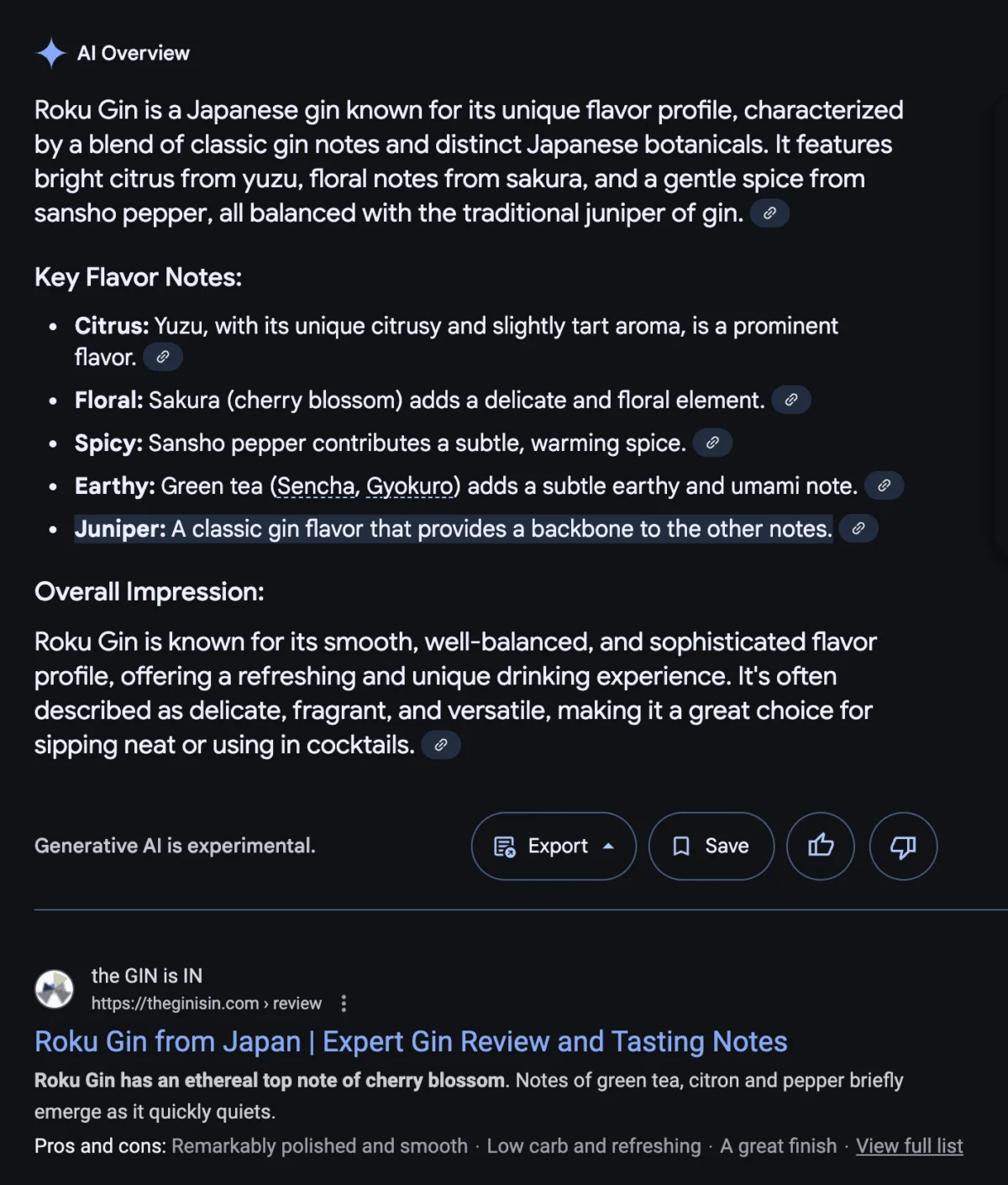
The landscape of independent digital publishing is currently undergoing a period of profound instability as the integration of generative artificial intelligence into search engines reshapes how users consume information. This transition has reached a critical juncture for long-standing niche publications, most notably exemplified by the recent announcement from Aaron Knoll, the founder and primary author of the independent gin review platform, The GIN is IN. After sixteen years of operation, the site is facing an existential threat driven by a sharp decline in referral traffic, a phenomenon attributed directly to the rise of AI-generated summaries from platforms such as Google and ChatGPT. Knoll’s struggle highlights a broader systemic shift in the digital economy, where the traditional exchange of content for visibility is being disrupted by "zero-click" search results.
The Evolution of The GIN is IN and the Niche Publishing Model
Founded in approximately 2009, The GIN is IN emerged during the early stages of the global "gin renaissance." As the spirits industry saw an explosion of craft distilleries and botanical experimentation, Knoll positioned the site as a definitive, independent resource for enthusiasts and professionals alike. Unlike many contemporary lifestyle and spirits publications, the site maintained a strict policy of independence: it does not charge distillers for reviews, nor does it accept promotional content or guest posts from brand marketers. This commitment to objective journalism allowed the site to grow significantly, at one point reaching nearly one million visitors.
For much of its history, the site relied on a traditional advertising-supported revenue model. As hosting costs escalated in tandem with the site’s popularity, Knoll integrated Google Ads to defray the financial burden of maintaining a high-traffic archive of thousands of reviews. However, the efficacy of this model began to wane as digital advertising became increasingly intrusive, often degrading the user experience. Despite these challenges, the publication remained a public service, providing free access to its database without the use of paywalls, a rarity in an era where many independent writers have migrated to subscription-based platforms like Substack.
The Emergence of Generative AI and the May 2024 Inflection Point
The trajectory of independent publishing changed fundamentally in May 2024, when major search engines began the wide-scale rollout of generative AI features. Google’s "AI Overviews" (formerly Search Generative Experience) and OpenAI’s ChatGPT started providing comprehensive answers to specific queries directly on the search results page. For specialized sites like The GIN is IN, which rely on providing specific factual data and sensory analysis, this development proved catastrophic.
In the case of a specific query, such as a "Roku Gin Review," the search engine now synthesizes the findings of the original author into a cohesive summary. While these summaries often include attributions or links to the source material, the "answer" is provided in full to the user without requiring them to click through to the original website. Knoll reported that while his content continues to rank highly in terms of impressions—meaning Google is still using his work to train and inform its AI—the actual traffic to his site has plummeted. The AI essentially acts as a layer between the creator and the audience, capturing the value of the information while bypassing the monetization mechanism of the original publisher.
Chronology of the Digital Search Transition
The current crisis is the result of a multi-year evolution in how information is indexed and presented online:
- 2008–2015: The "Golden Age" of niche blogging. High search intent leads directly to site visits. The GIN is IN builds a massive repository of unique data.
- 2016–2022: The rise of "Zero-Click" searches. Google begins introducing "Featured Snippets" and knowledge panels, reducing click-through rates (CTR) for basic factual queries.
- Late 2022: The public launch of ChatGPT. Large Language Models (LLMs) demonstrate the ability to summarize complex reviews and creative writing.
- May 2024: Google officially integrates AI Overviews into the primary search interface for millions of users. Independent publishers report immediate and significant traffic volatility.
- Early 2025: Independent creators, including Knoll, begin a public pivot toward direct-to-consumer support models (Patreon, Ko-fi) as traditional SEO-driven ad revenue becomes unsustainable.
Supporting Data: The Decline of Referral Traffic
The experience of The GIN is IN is supported by industry-wide data reflecting the impact of AI on the open web. According to a study by Gartner, search engine volume is predicted to drop by 25% by 2026 as users shift toward AI chatbots for information retrieval. Furthermore, data from SparkToro indicates that nearly 60% of Google searches now end without a click to a non-Google property.

For a site like The GIN is IN, the data indicates a "double-bind." On one hand, the site must remain public to be indexed by search engines and discovered by new readers. On the other hand, being indexed allows AI models to scrape the content and present it in a way that eliminates the need for the user to visit the site. This creates a parasitic relationship where the AI requires the high-quality, human-generated reviews of the publisher to function, yet its very function starves the publisher of the traffic needed to fund the creation of that content.
Official Responses and the Publisher’s Dilemma
The response from the tech industry has generally focused on the "efficiency" of AI for the end-user. Google has maintained that its AI Overviews are designed to help users find information more quickly and that it continues to prioritize high-quality, original reporting. However, digital rights organizations and publishing advocates argue that this constitutes a "fair use" violation, as the AI is not merely indexing content but creating a derivative work that serves as a market substitute for the original.
Knoll’s response to this shift has been a refusal to follow the industry trend toward "Substack-ification." While many writers have moved their content behind paywalls to ensure a stable income, Knoll argues that doing so would be a disservice to the distillers who provide products for review and to the general public seeking information. "I didn’t feel right about hiding their product behind a paywall and sharing it with a few hundred devoted gin followers," Knoll stated, emphasizing his commitment to remaining a public-facing service. Instead, he has turned to a voluntary contribution model, utilizing platforms such as Patreon, Venmo, and Ko-fi to bridge the financial gap created by the loss of ad revenue.
Broader Implications for the Future of Independent Media
The situation facing The GIN is IN serves as a bellwether for the future of the "Open Web." If independent, non-sponsored, and expert-led sites cannot survive the AI transition, the digital landscape may consolidate into two distinct, and perhaps less desirable, categories:
- AI-Generated Content Hubs: Sites that use AI to churn out low-quality, high-volume content designed solely to game the remaining search algorithms, often lacking the sensory expertise and nuance of human reviewers.
- Gated Communities: High-quality content that is locked behind expensive paywalls, accessible only to an elite group of subscribers, thereby ending the era of the internet as a free and open repository of specialized knowledge.
The loss of niche experts like Knoll would also have a tangible impact on the spirits industry. Independent reviewers provide a level of scrutiny that marketing departments and AI aggregators cannot replicate. AI models, by their nature, are retrospective; they can summarize existing opinions but cannot conduct the primary research of tasting a new, unreleased spirit and providing a fresh, original critique.
Analysis of the Reader-Supported Pivot
The move to a "lifeline" support model—relying on the goodwill of a loyal audience—is a high-stakes gamble. While it preserves the independence of the publication and keeps the content accessible, it shifts the burden of sustainability from corporations (advertisers) to individuals. For The GIN is IN to survive, it must convert a significant percentage of its historical "casual" search traffic into a "community" of supporters.
This strategy mirrors the successful models used by public radio and some non-profit newsrooms. However, for a single-author niche site, the scale is much smaller and the margin for error much thinner. The outcome of Knoll’s appeal will likely be watched closely by other independent publishers in the culinary, travel, and hobbyist sectors who are currently navigating similar traffic declines.
As generative AI continues to evolve, the relationship between content creators and search platforms remains fraught. Without legislative intervention regarding AI training data and "fair use" compensation, or a significant shift in consumer behavior toward supporting original sources, the era of the independent, ad-supported niche website may be drawing to a close. For now, the survival of The GIN is IN depends entirely on whether the value of sixteen years of independent journalism is enough to compel a fragmented digital audience to provide direct financial support.
