

The global spirits industry has witnessed a significant transformation in the gin category over the past decade, moving from a rigid adherence to traditional London Dry styles toward a more experimental, botanical-forward approach. Gin serves as a versatile canvas for distillers, requiring only the presence of juniper to maintain its classification, which allows for an expansive range of seasonal expressions. In the last five years, the market has transitioned from general "winter" gins to highly specialized "Christmas" gins, which incorporate traditional holiday flavors such as spices, dried fruits, and even baked goods. This shift reflects a broader consumer demand for limited-edition, artisanal products that align with seasonal celebrations and gift-giving traditions.
As the "Ginnaissance" continues to influence global consumption patterns, craft distilleries are increasingly leveraging the holiday season to showcase technical innovation and creative storytelling. From vacuum distillation techniques to the use of century-old wine barrels, the production of Christmas gin has become a sophisticated endeavor. This report examines the leading holiday expressions currently available, the technical processes behind their creation, and the market trends driving the popularity of these festive spirits.
The Evolution of the Seasonal Spirit Market
Historically, gin was viewed as a perennial spirit, often associated with refreshing summer cocktails like the Gin and Tonic or the Tom Collins. However, the rise of the craft distillery movement in the United Kingdom, the United States, and Australia has redefined the spirit’s seasonal utility. Market data indicates that the flavored and seasonal gin segment has grown at a faster rate than the traditional gin category over the last three fiscal years. Analysts suggest that the "collectibility" factor of seasonal releases drives significant revenue during the fourth quarter, often accounting for a substantial portion of a craft distillery’s annual turnover.
The transition from "winter" to "Christmas" branding represents a narrowing of the niche. While winter gins often focus on heavy earth tones and warming spices like black pepper or cardamom, Christmas gins are more literal, often attempting to replicate the organoleptic profile of holiday desserts, specifically Christmas puddings and gingerbread.
Corgi Spirits: A Figgy Pudding Homage
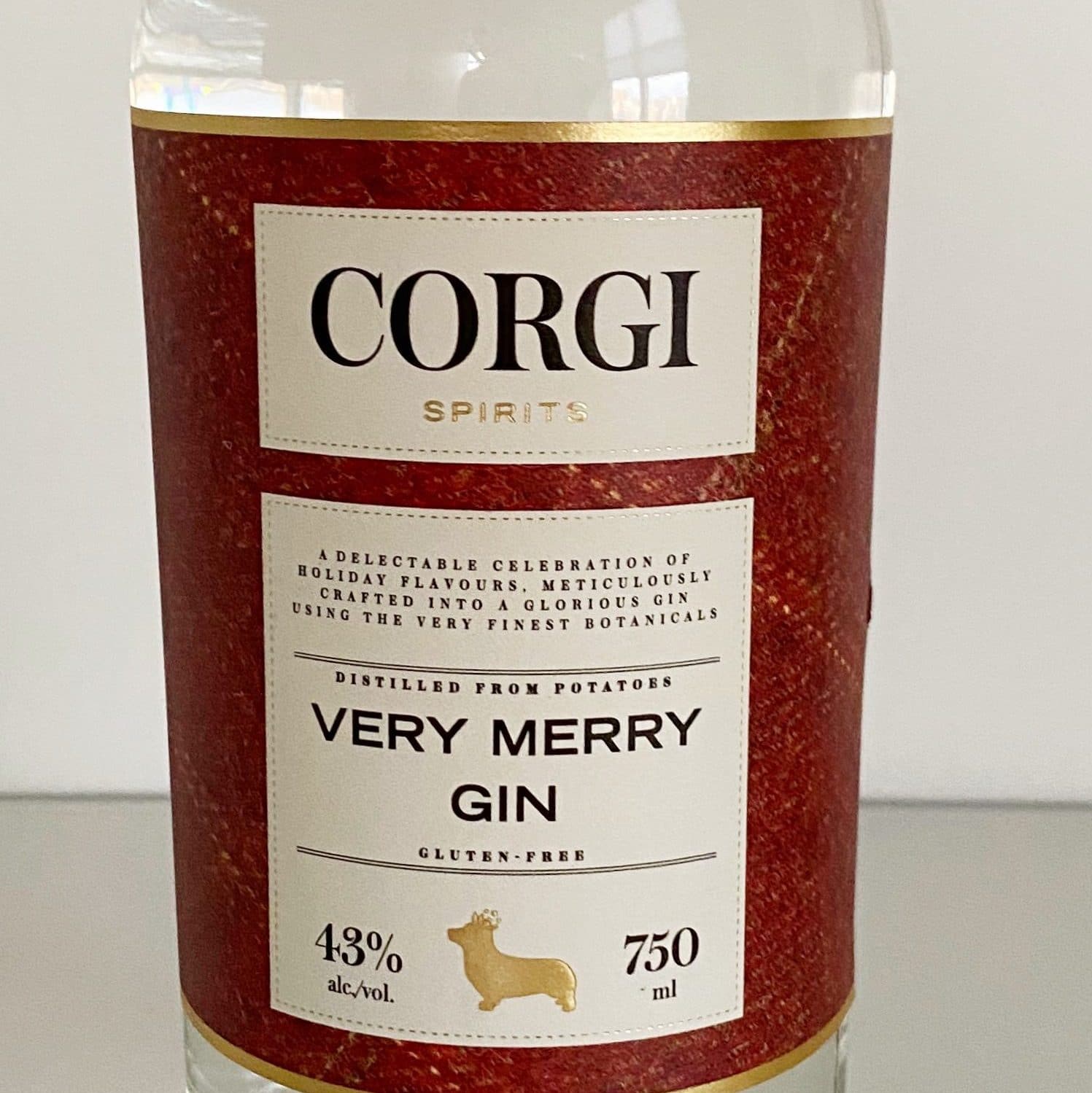
Corgi Spirits, based in Jersey City, New Jersey, has established a reputation for blending British distilling traditions with American craft sensibilities. Their "Very Merry Gin" is a primary example of a botanical bill designed to evoke a specific culinary memory: the figgy pudding. The distillery incorporates a complex array of botanicals, including figs, currants, and vanilla, alongside the mandatory juniper berries.
The resulting spirit is described by industry professionals as spice-forward and warming. Unlike traditional gins that prioritize citrus or floral notes, the Very Merry Gin leans into the richness of the fruit. Technical analysis of the spirit suggests a high concentration of essential oils from the dried fruits, which provides a weighted mouthfeel. Mixologists recommend utilizing this gin in heavy-duty cocktails such as the Hot Toddy, where the heat of the drink can further release the volatile aromatics of the cinnamon and vanilla. Alternatively, it serves as a robust substitute for darker spirits in a Gin and Cola, offering a botanical complexity that traditional rums or whiskies may lack.
That Boutique-y Gin Company: Literal Interpretations of Yuletide
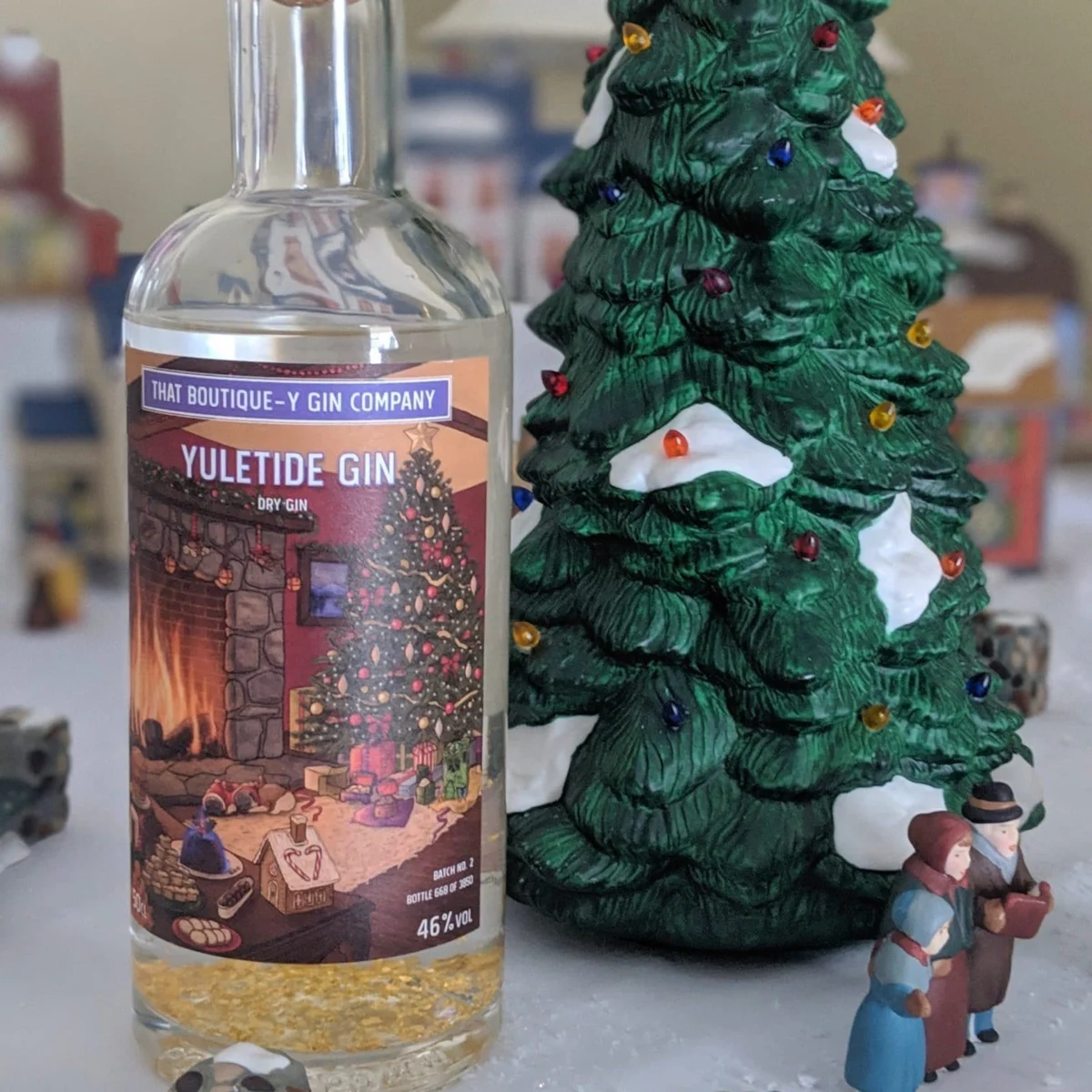
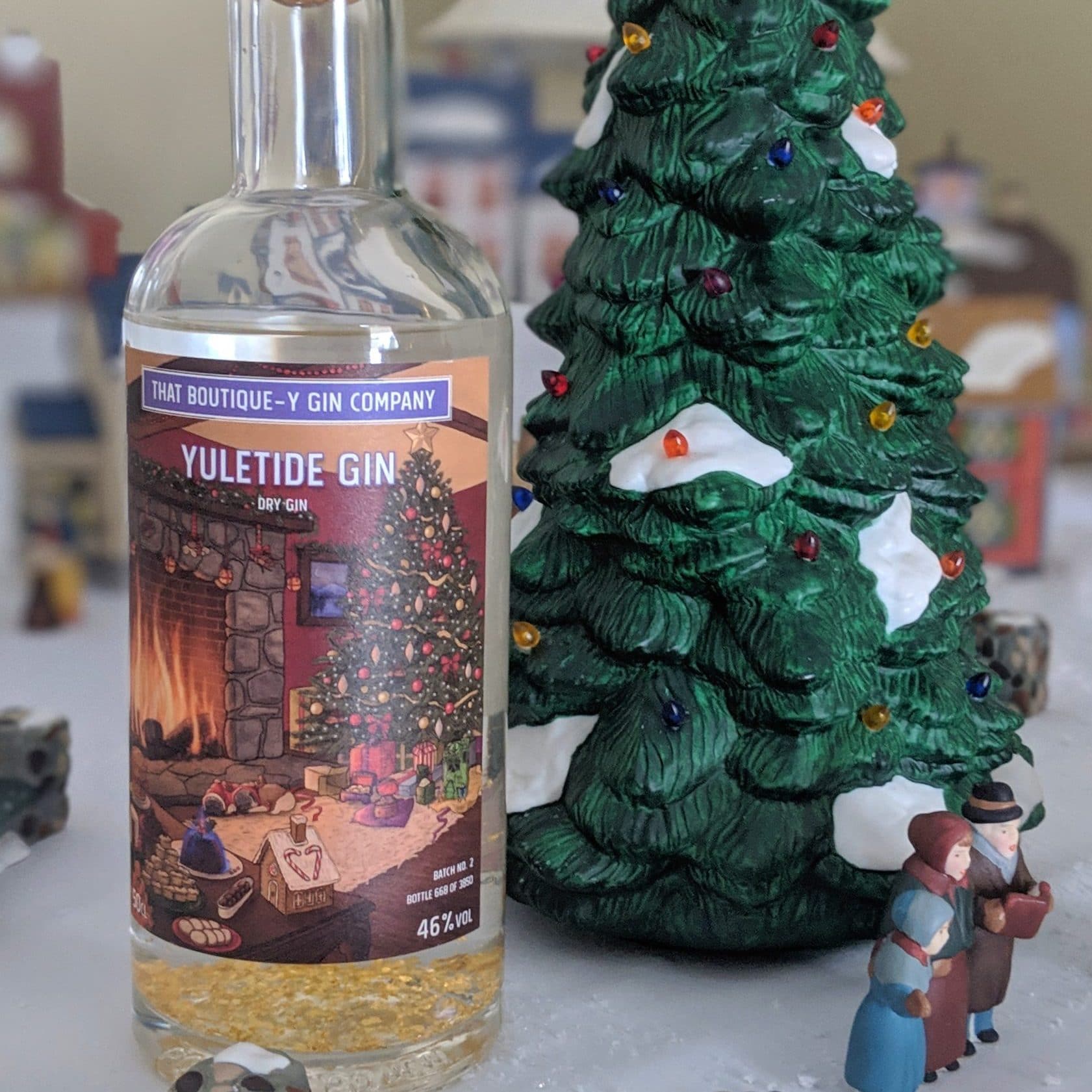
That Boutique-y Gin Company (TBGC) is known for its unconventional approach to gin production, often collaborating with various distillers to create small-batch, experimental releases. Their "Yuletide Gin" is perhaps the most literal interpretation of the holiday theme currently on the market. The production process involves macerating an entire gingerbread house within the still, a technique that challenges traditional distillation norms but results in a distinctively "baked" flavor profile.
Beyond the confectionery elements, TBGC incorporates the "Gifts of the Magi" into the botanical bill. Frankincense and myrrh provide a resinous, balsamic depth to the spirit, while edible gold leaf is added to the final bottling to provide a visual "snow globe" effect. This product targets the premium gift market, combining technical distilling skill with high-concept marketing. The inclusion of frankincense, in particular, adds a unique terpene profile that complements the piney notes of the juniper, creating a bridge between ancient resins and modern spirits.
Sacred Spirits: Vacuum Distillation and Heritage Recipes
In London, Sacred Spirits has taken a more traditional culinary approach, albeit with a highly modern technical execution. Distiller Ian Hart utilized his aunt’s specific Christmas pudding recipe as the foundation for the "Sacred Christmas Pudding Gin." This process involves steaming full Christmas puddings for eight hours to develop deep, caramelized flavors before macerating them in a high-proof grain spirit alongside juniper.
The distinguishing factor for Sacred Spirits is the use of high-pressure vacuum distillation. Unlike traditional pot stills that use high heat, vacuum distillation allows the spirit to boil at much lower temperatures (often room temperature). This "cold distillation" process preserves the delicate, fresh flavors of the fruits and spices that might otherwise be "cooked" or scorched by traditional methods. The result is a gin that maintains the rich, bready notes of the pudding while retaining a bright, clear finish. This expression is frequently cited by connoisseurs as one of the most authentic representations of the holiday season due to its reliance on actual food products rather than synthetic flavorings.
Eden Mill: The Intersection of Peppermint and Visual Aesthetics
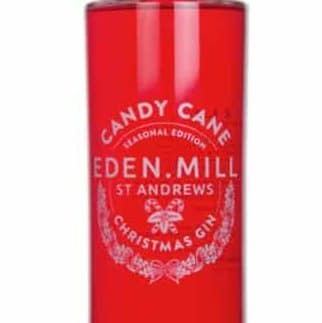
Scotland’s Eden Mill distillery, located in St. Andrews, has taken a different thematic route with its "Candy Cane Gin." While many Christmas gins focus on the "brown" spices of the season (nutmeg, clove, cinnamon), Eden Mill focuses on the sharp, cooling profile of peppermint. This choice makes the gin a rare seasonal expression that is versatile enough for both hot winter drinks and refreshing summer cocktails like the Southside.
One of the most notable features of the Candy Cane Gin is its vibrant red hue. In an industry where many colored spirits rely on artificial dyes, Eden Mill achieves this color naturally through the post-distillation maceration of bilberries and hibiscus flowers. These ingredients do more than provide color; they contribute a tart, tannic backbone that balances the sweetness of the peppermint. This dual-purpose use of botanicals reflects a growing trend toward "clean label" spirits in the craft sector.
Four Pillars: A Cross-Hemisphere Approach to Christmas
The Australian distillery Four Pillars offers a unique perspective on the holiday spirit with its "Australian Christmas Gin." Because Christmas occurs during the Australian summer, the distillery sought to create a spirit that could be enjoyed in warmer climates while still honoring traditional flavors.
The production of this gin is a multi-stage process. First, Christmas puddings are distilled to create a base spirit. This spirit is then blended with a gin that has been aged for twelve months in century-old Muscat wine barrels. These barrels, which previously held fortified wine, imbue the gin with notes of dried fruit, oak, and a subtle sweetness. The use of ex-Muscat casks is a sophisticated nod to the tradition of drinking fortified wines during the holidays. The final product is a complex, barrel-aged gin that bridges the gap between a clear spirit and a light brandy, making it suitable for sipping neat or as a base for a festive Negroni.
Beyond Gin: The Role of Akvavit in Holiday Traditions
While gin dominates the seasonal market in the UK and US, Akvavit (or Aquavit) remains the traditional holiday spirit of choice in Scandinavia. Knaplund’s "Yuletide Akvavit" serves as a bridge between these categories. Like gin, Akvavit is a grain-based spirit flavored with botanicals, though it prioritizes caraway or dill over juniper.
The Knaplund expression is designed to mimic the aroma of "holiday cookies." The botanical profile is dominated by caraway but supported by sweet anise, clove-pierced orange, and dill seed. This combination creates a savory-sweet profile that is historically paired with heavy holiday meals, such as roasted meats and pickled herrings. The inclusion of Akvavit in the "Christmas spirit" conversation highlights the increasing globalization of regional traditions, as consumers look beyond gin for unique holiday experiences.
Market Analysis and Consumer Trends
The proliferation of Christmas-themed spirits is supported by several key consumer trends. First is the "premiumization" of the spirits market, where consumers are willing to pay a higher price point for spirits with a clear provenance and unique flavor profile. Second is the rise of home mixology; as consumers become more adept at making cocktails, they seek out specialized ingredients that can simplify the process of creating a "signature" holiday drink.
Data from retail analysts suggests that seasonal gins often serve as an entry point for consumers into a brand’s wider portfolio. A customer who purchases a Christmas expression as a gift or for a holiday party is statistically more likely to purchase the brand’s standard London Dry later in the year. Furthermore, the limited-time availability of these products creates a "fear of missing out" (FOMO), which accelerates sales cycles during the months of November and December.
Production Methodology: The Technical Demands of Seasonal Infusions
Creating a Christmas gin presents unique technical challenges for a master distiller. The heavy use of dried fruits and "warm" spices can easily overwhelm the delicate notes of juniper, resulting in a spirit that tastes more like a liqueur or a flavored vodka. Achieving balance requires precise control over the maceration time and the distillation temperature.
For instance, the use of vanilla and currants—as seen in Corgi Spirits—requires a careful calculation of the "tails" of the distillation run, where the heavier, oilier compounds reside. Conversely, the peppermint notes in Eden Mill’s Candy Cane Gin are highly volatile and must be captured in the "hearts" of the run to ensure a clean, crisp aroma. The trend toward using actual food items, such as gingerbread houses or puddings, also requires distillers to manage the sugar content and potential "clogging" of the still, often necessitating specialized equipment or labor-intensive cleaning processes.
Future Outlook for the Specialty Gin Category
As the market for Christmas gins reaches a level of maturity, industry experts predict a shift toward even more hyper-local and sustainable seasonal expressions. This may include the use of foraged winter botanicals, such as pine needles or hardy berries, and a move toward carbon-neutral production methods.
The success of these seasonal gins has also paved the way for other holidays to receive the "botanical treatment," with some distilleries exploring expressions for Easter, Halloween, and even specific regional festivals. However, the Christmas season remains the pinnacle of the seasonal spirits calendar, providing a unique opportunity for distillers to push the boundaries of flavor and for consumers to experience the holiday season through the lens of craft distillation.
In conclusion, the rise of Christmas gins represents a sophisticated intersection of culinary tradition, technical innovation, and strategic marketing. By utilizing the flexible "canvas" of gin, distillers have successfully captured the essence of the holiday season in a bottle, offering a diverse array of spirits that cater to every palate—from the peppermint-fresh to the pudding-rich. As the category continues to evolve, these spirits will likely remain a staple of the global holiday experience, reflecting the ongoing creativity of the craft spirits movement.
