

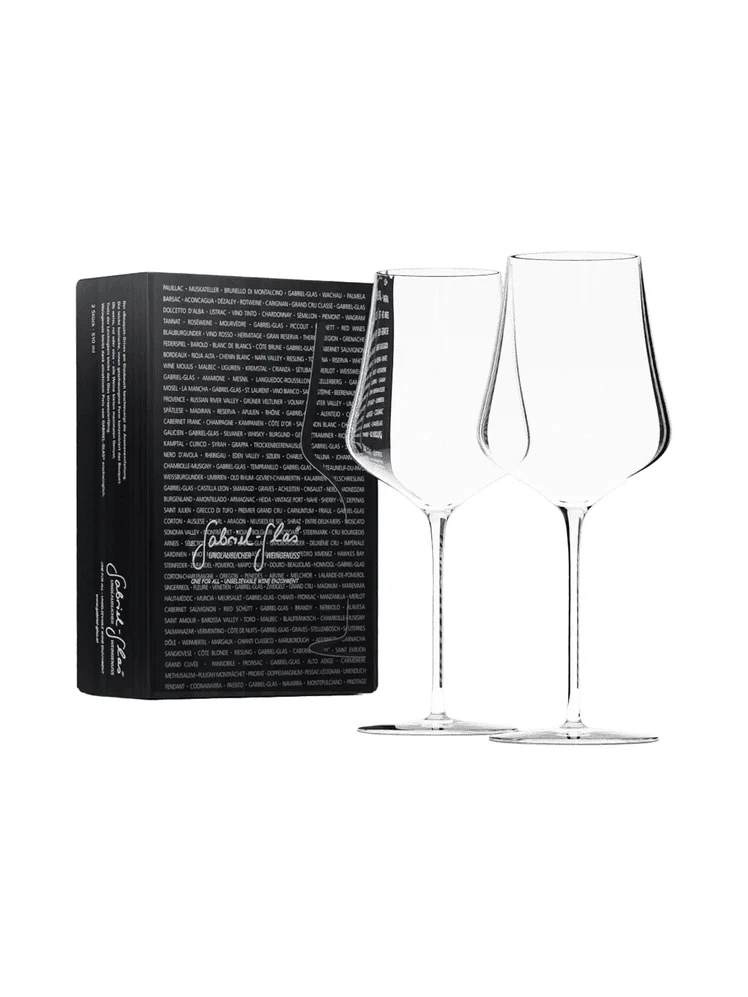
The contemporary home kitchen, once a purely functional space, has evolved into a central hub for both daily life and sophisticated entertaining. This shift has driven a significant consumer demand for kitchenware that marries aesthetic appeal with uncompromising durability. Within this evolving landscape, wine glasses have long presented a particular challenge, often embodying a trade-off between delicate elegance and practical resilience. However, recent advancements in glassware manufacturing are now enabling consumers to acquire elegant, high-performance wine glasses that withstand the rigors of regular use, exemplified by innovations like the Gabriel-Glas StandArt All Purpose Wine Glass.
The Evolving Landscape of Home Kitchens and Entertaining
Over the past decade, and particularly following global shifts that emphasized home-centric lifestyles, consumers have significantly re-evaluated their domestic environments. The kitchen, in particular, has seen substantial investment, transforming from a utilitarian area into a curated space reflecting personal style and a commitment to quality. This transformation extends beyond major appliances and cabinetry to the finer details, including dishware, storage solutions, and glassware.
A growing segment of consumers, previously accustomed to an eclectic assortment of mismatched items accumulated over years of shared living or ad hoc purchases, is now actively seeking to elevate their home aesthetics. This includes a move towards organized pantries featuring uniform food storage containers, cohesive sets of everyday dinnerware, and meticulously arranged serving accoutrements for hosting. The desire for a "put-together" home extends to the dining experience, where every element, from table linens and flatware to water glasses and candles, is chosen with intentionality. Yet, for many, wine glasses remained a persistent point of frustration, often characterized by a cycle of breakage and replacement.
A History of Fragility: The Consumer Conundrum
Historically, the perception of a high-quality wine glass has been synonymous with thin, delicate crystal, often hand-blown, designed to enhance the sensory experience of wine. While these traditional pieces excel in conveying aromatic nuances and providing a refined tactile experience, their inherent fragility has presented a significant practical challenge for everyday use and even special occasions. The delicate stems and fine rims, while aesthetically pleasing and functionally optimal for wine tasting, are notoriously susceptible to breakage from minor impacts, temperature changes, or even careful washing.
Consumer surveys consistently highlight durability as a primary concern when purchasing glassware. Reports from home goods retailers indicate that breakage is a leading cause of customer dissatisfaction and repeat purchases in the wine glass category. This cycle of acquiring, breaking, and replacing delicate stemware not only represents a recurring financial outlay for consumers but also contributes to environmental waste. Many individuals have, out of sheer frustration, opted for stemless tumblers or more robust, less elegant alternatives, effectively sacrificing the traditional wine-drinking experience for the sake of practicality. This dilemma underscored a clear market need for wine glasses that could deliver both the sophisticated form and enhanced function without the constant threat of shattering.
Innovation in Glassware Manufacturing: The Rise of Machine-Blown Crystal
The persistent demand for elegant yet robust wine glasses has spurred significant innovation within the glassware industry. A pivotal development has been the advancement in machine-blown crystal manufacturing, which offers a compelling solution to the traditional fragility problem. Unlike traditional multi-part glasses, where the bowl, stem, and foot are often separately crafted and then fused together—creating inherent stress points and weak zones—modern machine-blown techniques allow for the creation of a single, seamless piece of crystal.
This sophisticated process involves blowing molten crystal into a mold, which is then precisely shaped and stretched to form the entire glass, from foot to rim, in one continuous operation. The result is a glass with uniform strength distribution, significantly reducing the common points of failure found in joined glassware. Furthermore, machine-blown production offers superior consistency in shape, thickness, and balance across an entire set, a level of uniformity often difficult to achieve with hand-blown methods. This technological leap allows manufacturers to produce incredibly thin, lightweight, and elegant glasses that paradoxically boast superior strength and resilience compared to their traditional counterparts. The precision of laser-cut rims, another feature of advanced manufacturing, contributes to a smooth, enjoyable sipping experience while maintaining structural integrity.
The economic implications of machine-blown crystal are also noteworthy. By streamlining the manufacturing process and reducing labor intensity, the cost per glass can be significantly lowered. This makes high-quality, elegant crystal stemware more accessible to a broader consumer base, shifting it from a luxury item to an attainable everyday enhancement.

The Gabriel-Glas StandArt: A Case Study in Functional Design
Among the brands at the forefront of this manufacturing revolution is Gabriel-Glas, with its acclaimed StandArt All Purpose Wine Glass serving as a prime example of this innovative approach. Engineered in Austria, the StandArt glass is crafted from lead-free crystal using the advanced machine-blown single-piece method. This design philosophy directly addresses the dual consumer demand for elegance and durability.
The StandArt features a sleek, slightly conical bowl that is meticulously designed to be "all-purpose," meaning it is optimized to enhance the aromatic and flavor profiles of a wide spectrum of wines, including reds, whites, and rosés. This eliminates the need for multiple specialized glasses, simplifying storage and usage for the modern consumer. The subtle curve between the bowl and the rim adds a distinctive touch of personality to an otherwise classic silhouette, appealing to contemporary aesthetic sensibilities.
Crucially, the glass boasts a stem thin enough to convey a sense of refined elegance, yet it is engineered to be surprisingly robust, significantly mitigating the common fear of breakage associated with delicate stemware. The laser-cut rim provides a fine, smooth contact point for the lips, enhancing the drinking experience without compromising the glass’s structural integrity. This combination of thoughtful design, material science, and advanced manufacturing positions the Gabriel-Glas StandArt as a benchmark for modern wine glassware, offering a sophisticated and practical solution for everyday enjoyment and special occasion hosting. Available in sets of two or six, these glasses represent a strategic investment for consumers seeking to elevate their home bar with reliable, elegant stemware.
Expert Perspectives on Durability and Sensory Experience
Industry experts widely acknowledge the significance of these advancements in glassware. Material scientists emphasize that the single-piece, machine-blown construction inherently minimizes stress points, making the glass far more resistant to the thermal shocks and mechanical stresses that commonly lead to breakage. "The homogeneous structure of a single-piece crystal glass dramatically improves its tensile strength and overall resilience," explains Dr. Lena Petrova, a leading researcher in advanced glass composites. "This is not just about thicker glass; it’s about eliminating the inherent weaknesses that occur at the joints of multi-part constructions, allowing for incredibly thin yet durable designs."
From a sommelier’s perspective, the evolution towards high-quality all-purpose glasses is also seen as a positive development. While purists may still advocate for highly specialized varietal-specific stemware, many acknowledge the practical benefits of a well-designed universal glass. "The StandArt’s conical shape and tapered rim are excellent for concentrating aromas and directing the wine to the palate effectively, regardless of varietal," notes Master Sommelier Antoine Dubois. "For the vast majority of wine drinkers and home entertainers, a glass that performs exceptionally well across the board, without the anxiety of constant breakage, is a superior choice. It encourages more frequent enjoyment of wine in appropriate stemware, rather than resorting to sub-optimal alternatives."
Market analysts further corroborate the trend. "We’re seeing a clear shift in consumer behavior where functionality and longevity are increasingly prioritized alongside aesthetics," states Sarah Chen, a senior analyst at Home Goods Trends. "Products like the Gabriel-Glas StandArt tap directly into this demand, offering premium quality and design without the traditional fragility penalty. This fosters greater consumer confidence and encourages investment in higher-quality household items, knowing they will last."
Broader Implications: Sustainability and Consumer Confidence
The emergence of durable, elegant glassware carries broader implications for both consumer culture and environmental sustainability. From a sustainability standpoint, a longer product lifespan inherently means less waste. Fewer broken glasses translate directly to reduced consumption of raw materials, lower energy expenditure in manufacturing replacements, and decreased landfill contributions. This aligns with a growing global consciousness towards sustainable living and responsible consumption. Consumers are increasingly seeking products that offer longevity, viewing durability not just as a convenience but as an ethical choice.
For consumers, the availability of resilient yet refined glassware cultivates a sense of confidence and liberation. The psychological barrier of using delicate items daily is removed, encouraging individuals to fully enjoy their curated kitchen spaces and entertain without apprehension. This enhanced confidence translates into greater satisfaction with purchases and a willingness to invest in quality items that genuinely enrich their daily lives. The trend suggests a future where the compromise between beauty and practicality in home goods becomes obsolete, paving the way for a new generation of products that seamlessly integrate both.
In conclusion, the evolution of glassware, particularly with innovations such as the Gabriel-Glas StandArt, signifies a pivotal moment in home goods. It represents the successful convergence of sophisticated design, advanced material science, and cost-effective manufacturing, delivering products that meet the modern consumer’s demand for both aesthetic excellence and enduring functionality. This trend is set to redefine how individuals approach home entertaining and everyday living, fostering a greater appreciation for resilient elegance in all aspects of the domestic sphere.
