

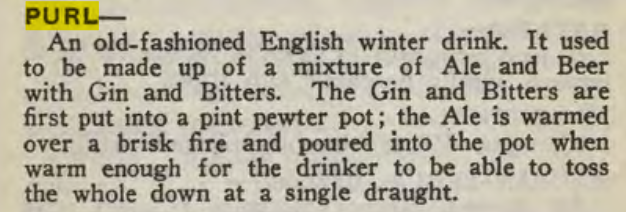
In the landscape of modern mixology, the Purl is frequently characterized by its simplicity: a pint of British ale fortified with a sharp measure of gin. This contemporary iteration, often served at cellar temperature and occasionally enhanced with a dash of bitters, is a staple of traditional British bar culture, appearing in definitive guides such as Difford’s Guide as a historical curiosity. Yet, a deeper investigation into the historical record reveals that the Purl was once a significantly more complex and varied concoction. Over the course of four centuries, the drink has transformed from a medicinal necessity during the Great Plague of London into a decadent Victorian "flip" containing eggs and spices, before finally settling into its current, streamlined form. The history of the Purl is not merely a history of a cocktail, but a reflection of shifting public health crises, the rise of the British spirit industry, and the evolution of social drinking habits across the United Kingdom.
The Medicinal Genesis: Wormwood and the Plague
The earliest recorded mentions of the Purl do not involve gin, which had not yet achieved its cultural dominance in England. In the mid-17th century, a "Purl" referred to a mixture of ale or wine infused with wormwood (Artemisia absinthium). This bitter herb was prized for its supposed tonic properties, believed to stimulate the appetite and fortify the blood. During the 1660s, as London grappled with the devastating impact of the Bubonic Plague, the Purl transitioned from a common tonic to a critical preventative measure.
The 1665 publication Directions for the Prevention and Cure of the Plague Fitted for the Poorer Sort provided specific dietary and lifestyle advice to the city’s vulnerable populations. On its opening pages, the manual recommended that citizens consume "a draught or two of Purle… especially in the morning." Because the recipe was targeted at the "poorer sort," it suggests that the drink was an inexpensive, accessible form of self-medication. At this time, the bitterness of the wormwood was the defining characteristic of the drink, serving as a rudimentary precursor to the modern cocktail bitter.
The use of wormwood was so prevalent that it appeared in botanical texts of the era. In the 1690 volume An English Herbal, the benefits of wormwood were extolled, particularly when consumed as a Purl. This medicinal association persisted for decades, though the beverage began to diverge into regional variations. By 1684, the cider industry sought to capitalize on the drink’s popularity. The text Aphorisms upon the New Way of Improving Cyder argued that "purl-wide cider"—cider infused with the same bitter herbs—was just as efficacious and palatable as the ale-based version, indicating a competitive market for bittered fermented beverages.
The 18th Century: From Medicine to Vice
As the 18th century dawned, the Purl began to shed its strictly medicinal reputation and entered the realm of recreational consumption. This period coincided with the "Gin Craze," a time of massive social upheaval in London characterized by the widespread availability of cheap, potent spirits. It was during this era that spirits—initially brandy or early forms of gin—began to be added to the traditional wormwood-ale mixture.

The transition was not without social friction. By the 1730s, the Purl had become a "morning constitutional," a drink consumed early in the day by laborers and socialites alike. However, this habit drew the ire of moralists. A September 1733 edition of The Grub Street Journal featured a scathing character attack on individuals whose daily routines revolved around smoking, gin drinking, and the consumption of "Pots of Purle." The journal’s commentary highlights a shift in perception: what was once a plague-time necessity was now viewed as a sign of urban decay and personal vice.
Despite the stigma, "Purl-shops" began to proliferate across London. These establishments specialized in the beverage, which was now increasingly served warm. The addition of heat helped to integrate the bitter herbs with the malty sweetness of the ale, creating a robust, invigorating drink that provided a temporary reprieve from the damp, cold London climate.

The Victorian Era and the Rise of the "Flip"
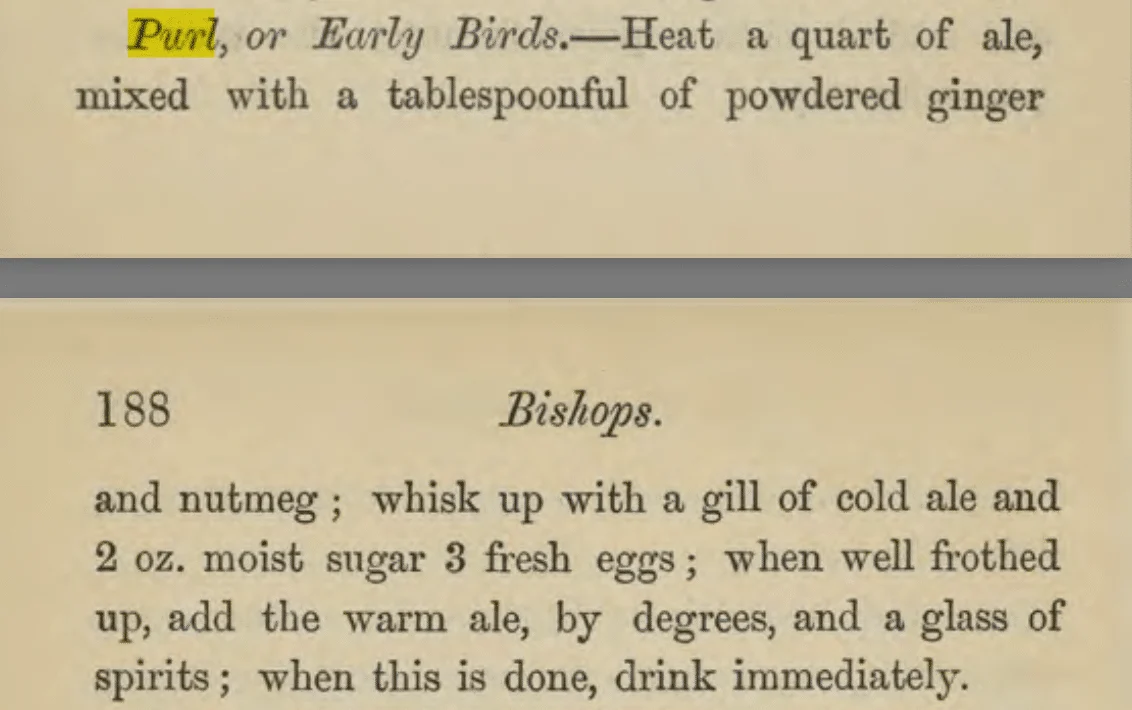
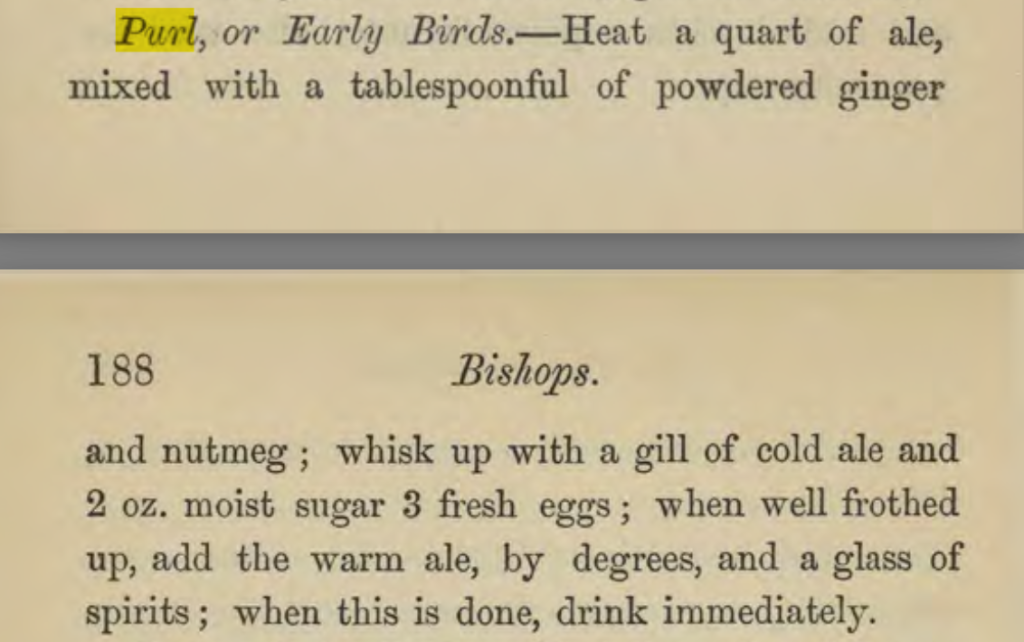
By the mid-19th century, the Purl had reached its peak of complexity. No longer a simple medicinal ale, it had evolved into a sophisticated beverage categorized alongside "flips" and "cups." The most definitive record of this era comes from William Terrington’s 1869 volume, Cooling Cups and Dainty Drinks, which is widely regarded as the first British cocktail book.
Terrington’s recipes illustrate a dramatic departure from the 17th-century original. The Victorian Purl was often a heated concoction involving:

- Warmed Ale: Usually a British Bitter or a mild ale.
- Spirits: While gin was common, Terrington noted that brandy or whisky could also be used.
- Eggs: Multiple eggs were beaten into the mixture to create a frothy, creamy texture.
- Sugar and Spices: Nutmeg, ginger, and sugar were added to balance the bitterness of the hops and any remaining herbal elements.
Terrington also documented a specific variation known as the "Ale Cup." While many Purls of the time were agnostic regarding the choice of spirit, the Ale Cup specifically called for gin. This distinction is crucial, as it marks the point where gin began to pull ahead of other spirits as the canonical partner for ale. The gin used during this period was typically "Old Tom," a slightly sweetened style of gin that bridged the gap between the harsh, early "Bathtub" gins and the crisp, dry London Dry styles that would later dominate the market.
The 20th Century: Simplification and Standardization
The 20th century saw a contraction in the complexity of the Purl. The labor-intensive process of heating ale and tempering eggs fell out of favor in high-volume bars, and the use of raw wormwood largely disappeared from the beverage industry due to changing tastes and new regulations regarding the herb (largely driven by the mid-century backlash against absinthe).

As the "flip" elements faded away, the Purl converged toward the definition we recognize today: gin and ale. In Mrs. Celeyel’s 1925 book Summer Drinks and Winter Cordials, the recipes began to emphasize simplicity, though the tradition of warming the ale persisted for "winter" versions. By the time The Art of Mixing Drinks was published in 1935, the Purl was firmly established as a spirit-fortified beer.
The mid-20th century solidified this status. In the 1966 edition of The Barman’s Bible (part of the Cocktail and Wine Digest), the Purl was presented as a straightforward mix. The inclusion of bitters became the final nod to the drink’s wormwood-infused origins. Rather than steeping herbs in the ale for days, bartenders simply added a few dashes of commercial bitters to provide the necessary depth and historical "bite."

Chronology of the Purl’s Transformation
- 1665: The Purl is established as a medicinal tonic of ale and wormwood to combat the Great Plague.
- 1684–1690: Variants using cider emerge; the drink is codified in herbal manuals as a health aid.
- 1733: The drink becomes a social staple in London; the addition of spirits begins, and the "morning Purl" becomes a target of social reformers.
- 1869: William Terrington publishes the first complex recipes involving eggs, sugar, and heat, aligning the Purl with the "flip" family of drinks.
- 1925–1935: The recipe simplifies; eggs and wormwood are removed, and gin becomes the primary spirit.
- 1966–Present: The Purl is defined as a mixture of ale, gin, and bitters, served either warm or at cellar temperature.
Analytical Implications: Why the Purl Survived
The survival of the Purl, albeit in a simplified form, provides insight into the resilience of traditional British flavors. The transition from wormwood to hops as the primary bittering agent in beer mirrored the transition of the Purl from a medicine to a cocktail. Furthermore, the persistence of gin as the preferred spirit for the Purl speaks to the deep-seated cultural link between the "English spirit" and the "English ale."
From a modern mixological perspective, the Purl represents a bridge between the culinary-heavy drinks of the pre-industrial era and the spirit-forward cocktails of the modern age. The current trend toward "historical" or "vintage" cocktails has seen a resurgence of interest in the Victorian-style Purl, with craft bartenders once again experimenting with heated ale, local honey, and whole eggs.

Broader Impact on Bar Culture
The Purl’s evolution serves as a case study in how "canonical" definitions of drinks are often historical accidents. While a modern patron might expect a simple "gin in beer," the true Purl is a multifaceted beverage with a lineage tied to public health, class struggle, and the birth of the British pub.
For the modern beverage industry, the Purl offers a template for the "beer cocktail" category, which has seen significant growth in the 21st century. By understanding the Purl’s history, brewers and distillers can better appreciate the synergy between malt-forward ales and botanical-forward spirits. Whether served as a "morning constitutional" to ward off a 17th-century contagion or as a warming winter draught in a 21st-century gastropub, the Purl remains a testament to the enduring British preference for bitter, fortified, and communal drinking.
