

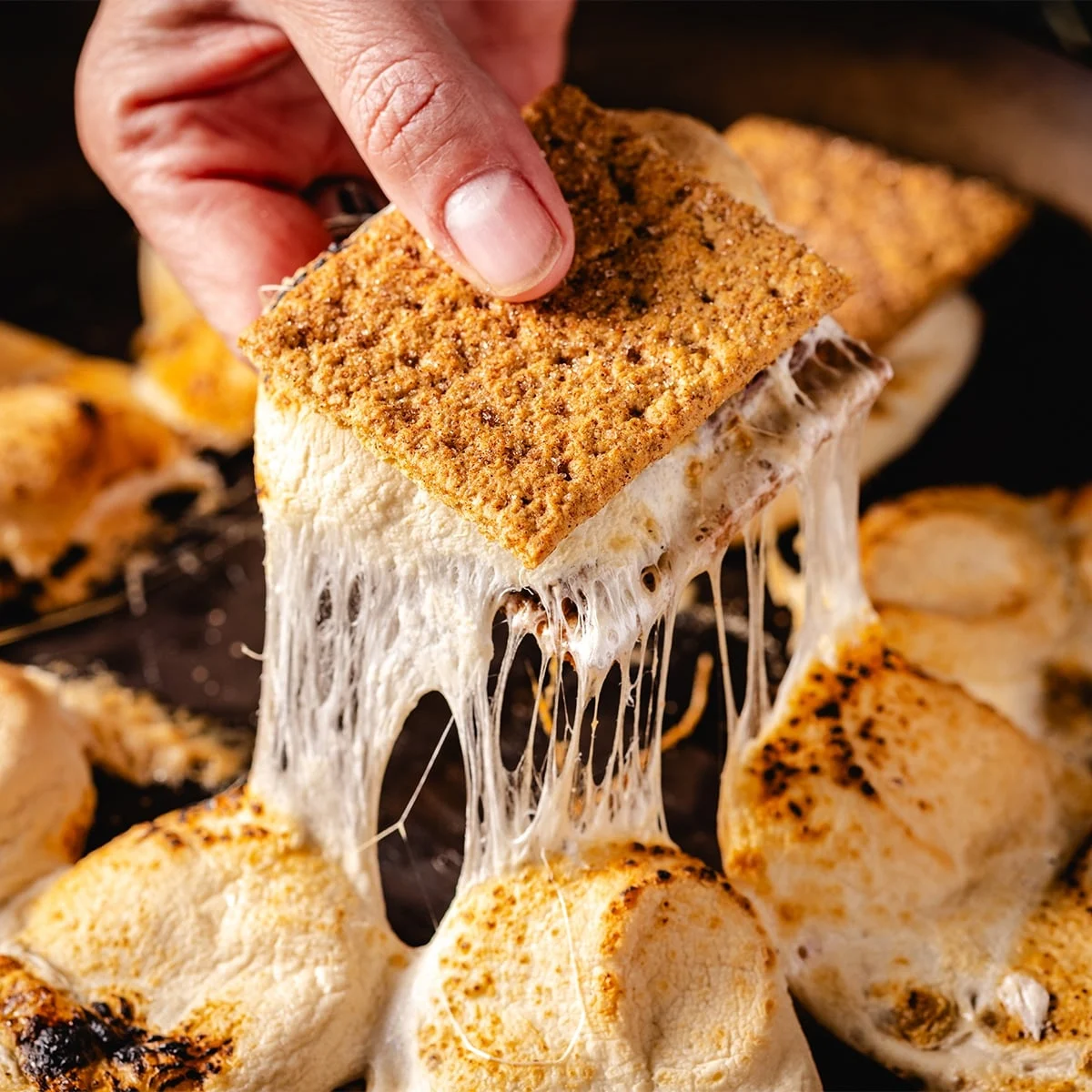
The landscape of American outdoor culinary practices is undergoing a significant transformation as enthusiasts shift from traditional open-flame methods toward controlled-environment smoking. At the forefront of this movement is the adaptation of the s’more, a staple of North American youth culture and camping tradition, into a sophisticated dessert prepared within the confines of a wood-fired smoker. This shift represents a broader trend in the barbecue industry where the "low and slow" philosophy, traditionally reserved for proteins like brisket and pork shoulder, is being applied to confectionery items. By utilizing a smoker instead of a campfire, cooks are able to achieve a level of thermal consistency and flavor infusion that was previously unattainable through conventional roasting techniques.
Historical Context and the Origin of the S’more
To understand the significance of the smoked s’more, one must examine the history of its components. The term "s’more" is a contraction of the phrase "some more," first appearing in documented form in the 1927 publication Tramping and Trailing with the Girl Scouts. While the recipe was credited to Loretta Scott Crew, the individual components have much deeper roots. Graham crackers were developed in the early 19th century by Sylvester Graham as a health food, while marshmallows transitioned from medicinal lozenges derived from the Althaea officinalis plant to the gelatin-based confections we recognize today in the late 1800s.
The traditional method of preparation involves skewering a marshmallow and holding it over an open flame until the exterior is charred and the interior is molten. This method, while culturally iconic, is fraught with technical inconsistencies, including uneven heating and the frequent combustion of the marshmallow. The introduction of the smoker into this process addresses these mechanical failures, providing a convection-style heat that softens the marshmallow uniformly while simultaneously melting the chocolate and warming the graham cracker base.

Technical Specifications and Thermal Regulation
The transition to smoked s’mores requires a precise understanding of temperature control. Unlike the intense, direct radiant heat of a campfire, which can exceed 1,000 degrees Fahrenheit, the smoking process utilizes a stabilized environment, typically set to 275 degrees Fahrenheit. This temperature is critical as it sits above the melting point of chocolate (approximately 86 to 90 degrees Fahrenheit) and the softening point of marshmallow sugars, yet remains below the threshold for rapid carbonization.
In a recent analysis of dessert smoking, culinary experts noted that a duration of 10 to 15 minutes at 275 degrees Fahrenheit allows for the "puffing" of the marshmallow—a physical expansion caused by the heating of air pockets within the gelatin structure. This timeframe also facilitates the absorption of smoke particulates. Depending on the wood source used—such as apple, cherry, or hickory—the s’mores can take on subtle aromatic profiles that contrast with the high sugar content of the ingredients.
Ingredient Analysis and Culinary Innovation
While the basic s’more consists of three ingredients, the move toward smoked preparation has encouraged the use of premium variations to withstand the longer cooking times.
Graham Cracker Substrates
The traditional honey graham cracker remains the standard; however, the use of cinnamon-infused graham crackers has seen a rise in professional barbecue circles. The presence of additional surface sugar and cinnamon on these crackers allows for a mild caramelization process on the bottom of the skillet during the 15-minute smoke cycle. This adds a structural rigidity and a complex flavor profile that standard crackers lack.

Marshmallow Dynamics
The selection of the marshmallow is perhaps the most critical factor in the success of a smoked dessert. Industry standards suggest the use of "extra-large" or "jumbo" marshmallows. The increased surface area allows for greater smoke absorption, while the larger internal volume ensures that the center remains gooey even if the exterior does not reach the charred state typical of a campfire.
Chocolate and Additives
A primary criticism of traditional s’mores is the "cold chocolate" phenomenon, where the marshmallow is hot but the chocolate bar remains solid. Smoking the s’mores in a cast-iron skillet solves this by ensuring the chocolate reaches a fully tempered, melted state. This has opened the door for culinary experimentation, including the substitution of standard milk chocolate bars with peanut butter cups, dark chocolate with sea salt, or artisanal ganaches.
The Role of the Cast-Iron Skillet in Convection Cooking
The use of a cast-iron skillet is not merely aesthetic; it is a functional necessity in the smoking process. Cast iron possesses high thermal mass and excellent heat retention properties. When placed inside a smoker, the skillet acts as a secondary heat source, providing conductive heat to the bottom of the graham crackers while the smoker’s ambient air provides convective heat to the marshmallows.
This dual-heating method ensures that the s’more is warmed through entirely. Furthermore, the skillet allows for the preparation of large batches simultaneously, moving the s’more from an individual activity to a communal dining experience. This efficiency is particularly relevant for large-scale social gatherings and professional catering events where individual roasting is impractical.

Market Trends and the Growth of the Outdoor Kitchen
The rise of recipes like smoked s’mores is reflective of the booming global grill and smoker market. Valued at over $5 billion in 2023, the market is seeing a shift toward pellet grills and digital smokers that allow for precise temperature increments. Consumers are increasingly viewing their smokers as outdoor ovens capable of handling entire meal cycles, from appetizers to desserts.
Data from outdoor living associations indicates that "all-season grilling" is on the rise, with a 15% increase in winter grill usage over the last five years. Smoked s’mores provide an accessible entry point for consumers looking to utilize their equipment beyond meat preparation. The ability to "finish the cookout" on the same piece of equipment used for the main course reduces cleanup time and maximizes fuel efficiency, whether using wood pellets, charcoal, or offset logs.
Nutritional Data and Consumer Considerations
As with any confectionery item, the nutritional profile of the smoked s’more is a point of consideration for health-conscious consumers. A standard serving of smoked s’mores, calculated across a 12-serving batch, contains approximately 303 calories.
The breakdown of macronutrients is as follows:

- Total Fat: 9g (with 4g of saturated fat)
- Carbohydrates: 52g (with 25g of sugar)
- Protein: 4g
- Sodium: 246mg
While high in carbohydrates and sugars, the smoked version offers no significant nutritional divergence from the traditional campfire version. However, the controlled environment of the smoker may prevent the ingestion of excessive carbon and carcinogens associated with heavily charred or "burnt" marshmallows.
Broader Implications for the Barbecue Community
The popularization of smoked desserts by figures such as Susie Bulloch, founder of Hey Grill Hey, underscores a shift in the democratization of barbecue knowledge. Through digital platforms and mobile applications, complex smoking techniques are being translated into "low-effort, high-reward" recipes for the general public. This has fostered a new identity for the "Backyard BBQ Hero," an individual who masters the technical aspects of fire management to provide a comprehensive culinary experience.
Industry analysts suggest that the "social media effect" has also played a role. The visual appeal of a "marshmallow pull"—the stretching of molten sugar between two crackers—is highly compatible with video-centric platforms like Instagram and TikTok. This has created a feedback loop where visual trends drive culinary innovation, leading to even more creative iterations of the smoked s’more.
Conclusion: The Future of Smoked Confections
The smoked s’more is more than a simple snack; it is a testament to the versatility of modern outdoor cooking equipment and the enduring appeal of nostalgic flavors. By applying scientific principles of heat transfer and flavor infusion to a century-old recipe, the barbecue community has successfully modernized a classic. As outdoor kitchen technology continues to evolve, it is likely that the boundary between traditional baking and wood-fired smoking will continue to blur, leading to a new era of "smoke-infused" pastry and dessert arts. For now, the smoked s’more stands as the definitive bridge between the rustic past of the campfire and the high-tech future of the backyard patio.
